

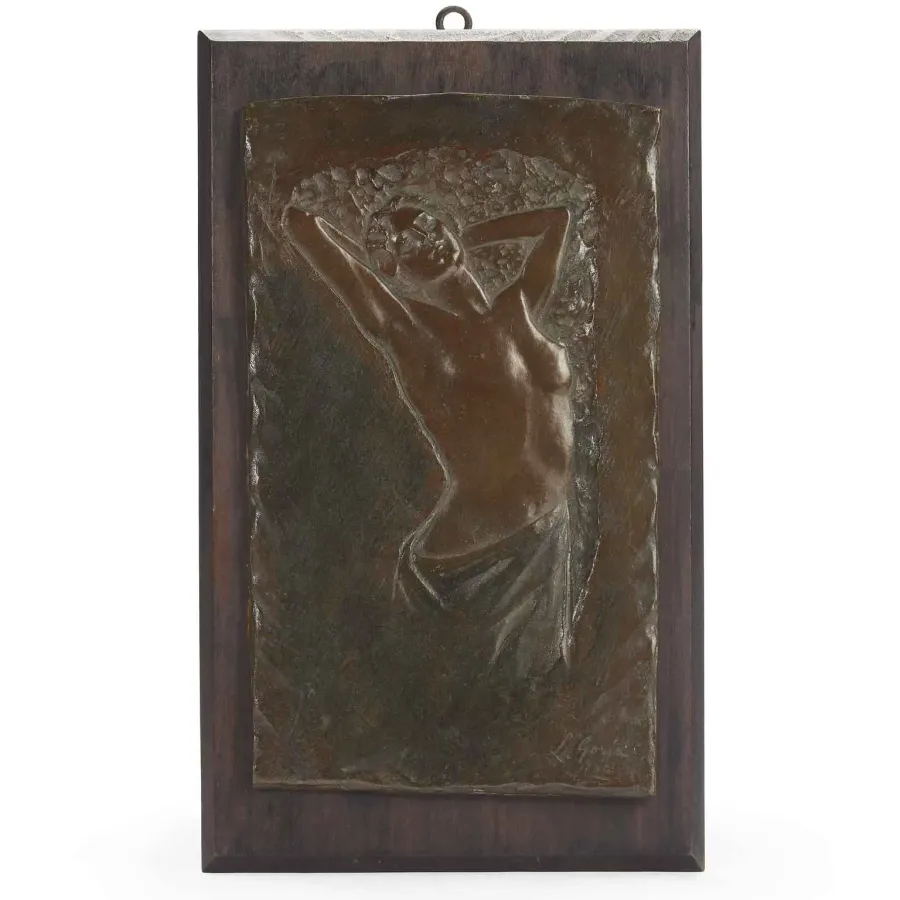
Woman in ecstasy from the 20th century
Luxury antiques
SKU: ANT-A917
See other products from category Bronze sculptures or from manufacturer Antyki with shipping within 24 hours
Related products by category
Lamberto Goria Woman in Ecstasy First half of 1900s, bronze cast signed by the artist L. Goria Asti (Tortona 1863 – Asti 1927). Mounted on a wooden panel, in good condition.Original antique furnitur
Luxury Gifts Brand - More love for youOur customers' and recipients' satisfaction is our top priority. We make every effort to create unique and high-quality gift art pieces.We firmly believe that val
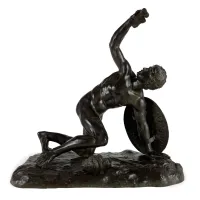
A brown gladiator statue by a master from the 19th century. A bronze wounded gladiator, an Italian sculpture from the second half of the 19th century, in good condition. The figurine is inspired by He
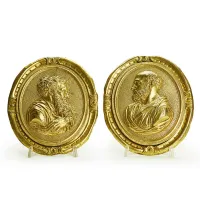
Pair of gilded bronze plaques featuring saint profiles, a pair of 18th-century gilded bas-reliefs with an oval shape, composed of two overlapping elements; cast profile and stamped frame made of sheet
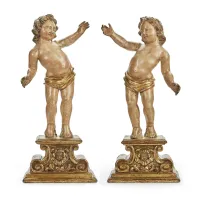
Figurines on a carved base from 1700 depict two naked cherubs covered only by a golden loincloth; they are most likely two angels announcing something, but they lack wings; they stand on tiptoe, adopt
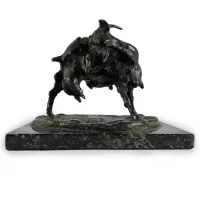
Ernesto Bazzaro bronze goat – a sculpture by Ernesto Bazzaro, an important Lombard sculptor and engraver active at the end of the 19th and beginning of the 20th century. Bazzaro (Milan 1859-1937) wa
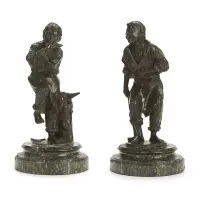
Satyric bronze sculptures by Giovanni Fabbrini, early 20th century, resting on two turned black marble bases. Here is a pair of young boys engaged in blacksmithing, probably as apprentices; one stands
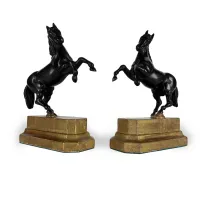
For the pair of brown horses, the Grand Tour Figural sculptures from the early 19th century depict standing horses of Italian origin, cast in bronze with a dark patina, resting on wooden bases, turned
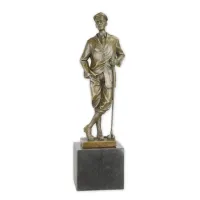
Manufaktura Luxury Gifts - More love for youOur customers' satisfaction and that of the recipients of our gifts is our top priority. We make every effort to create unique and high-quality gift art pi

Luxury Gifts Company - More love for youOur customers' and recipients' satisfaction is our top priority. We make every effort to create unique and high-quality gift art pieces.We firmly believe that
Description
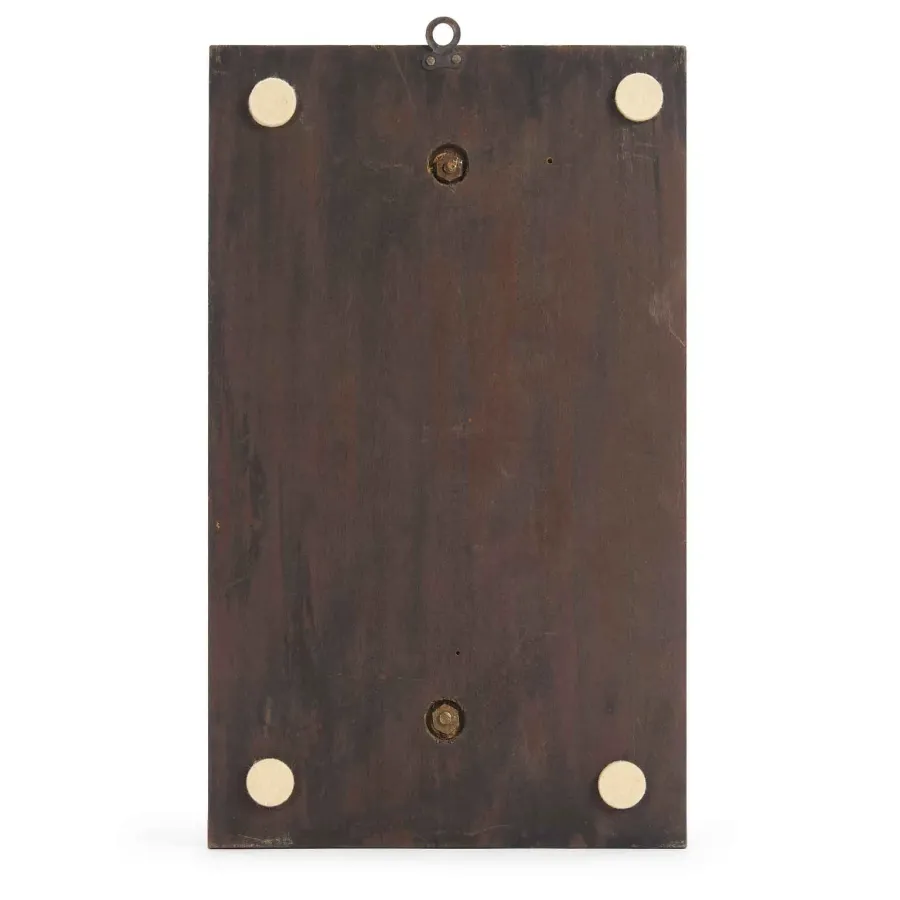
Lamberto Goria Woman in Ecstasy First half of 1900s, bronze cast signed by the artist L. Goria Asti (Tortona 1863 – Asti 1927). Mounted on a wooden panel, in good condition.
Original antique furniture and accessories can be an excellent idea for decorating our interiors. Today, there is an increasing number of enthusiasts of high-quality vintage products that possess a distinct character and soul. It’s a nod to history, craftsmanship, and the design of classic and timeless furniture. There are many different styles in antique furniture, each with its own distinctive features.
Many styles characterize antique furniture, but we can highlight a few key ones. Eclectic furniture refers to the 19th century, marked by the prevailing Biedermeier style. Its early 20th-century variants include neo-Gothic, Gothic, Rococo, Louis Philippe style, and finally the English Victorian style. By the end of the century, these styles evolved into pseudo styles of Classicism, Renaissance, and Baroque.
Original Empire-style furniture dates from the late 18th to early 19th century. It originated during Napoleon’s reign, characterized by significant similarities and references to Roman and Greek ornamentation.
Neoclassical furniture reflects the Louis XVI style, which also strongly references ancient architecture. Noteworthy are antique products in Rococo and Louis XV styles. Baroque, whose name derives from the Portuguese ‘barocco’—meaning an irregularly developed pearl—was very ornate furniture designed to radiate splendor and serve a luxurious role. Unique materials were selectively used to emphasize the grandeur of these pieces.
Today, we can observe how much influence the Baroque style has had on modern classic furniture, which is designed with a strong resemblance to the historical period. The Renaissance style is also significant, flourishing in the 15th and 16th centuries and leaving a profound mark on furniture craftsmanship. Renaissance furniture was quite heavy and massive, often using brown stains, cornices, sturdy bases, and reliefs. These products were quite distinctive but also introduced new possibilities, such as the construction of cabinets and broadly speaking, chest-type furniture. During this period, mythology and ancient times were also of interest, so supports and legs often took animal forms.
Lion paws, eagle heads—these are common motifs in Renaissance style. Currently, many global brands reproduce furniture inspired by Italian and French artisans, reflecting admiration and respect for the history of the most beautiful Renaissance antiques. It’s important to remember that furniture production was perceived differently in each country, giving each style a unique character. This is especially important when searching for a luxurious antique that suits your interior.
The key aspect of stylish antique furniture is originality. This is ultimately crucial from the customer’s perspective, as many counterfeits circulate on the market. Luxury Products provides documentation confirming the product’s authenticity and compliance with the description and photos. We also have appraisers, art experts, historians, and specialists from around the world at your disposal.
Attributes / Details
| SKU | ANT-A917 |
| Manufacturer | Antyki |
| Model | A917 |
| Material | brown |
| Size | Height: 27.8 cm Width: 16.5 cm Depth: 1 cm |
| Age | XX |
| Year | 1900 |
| Destiny | To home |
See catalog
Reviews
No reviews for this product.