

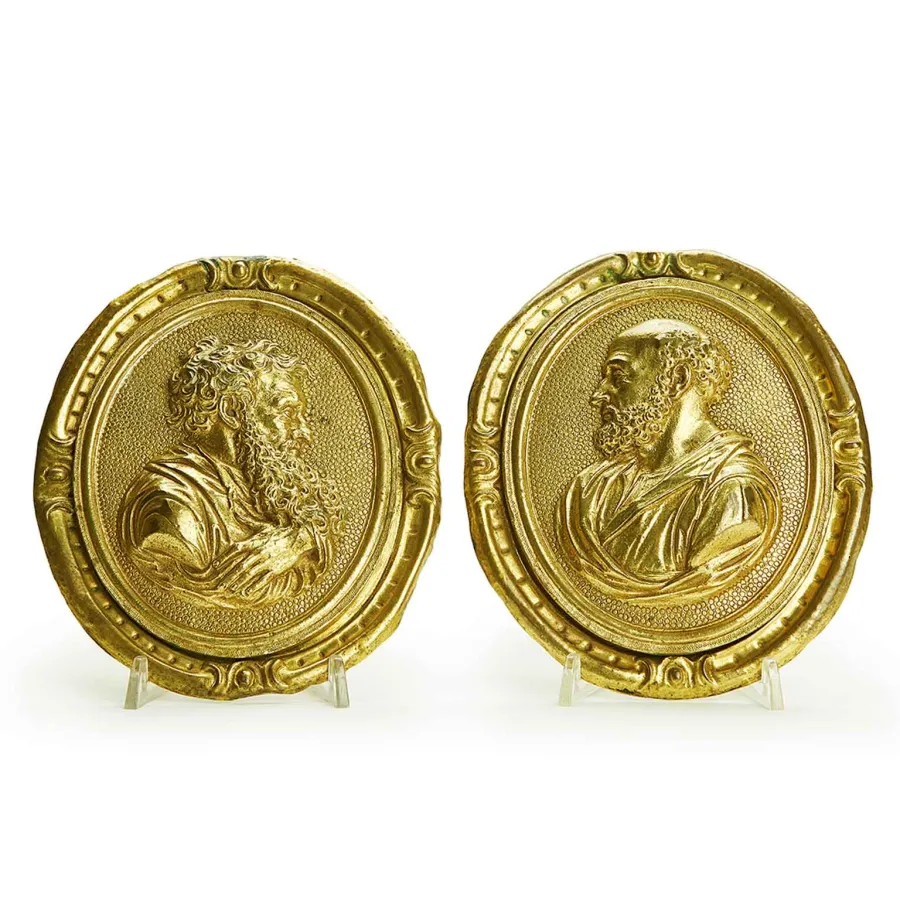
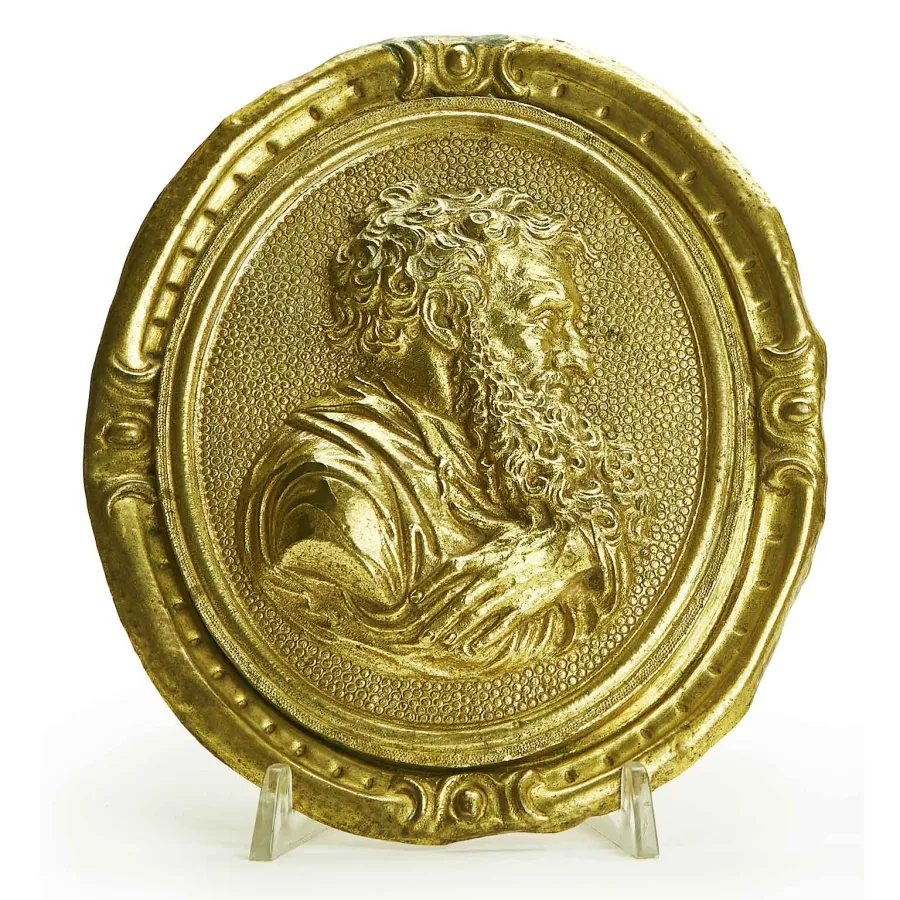
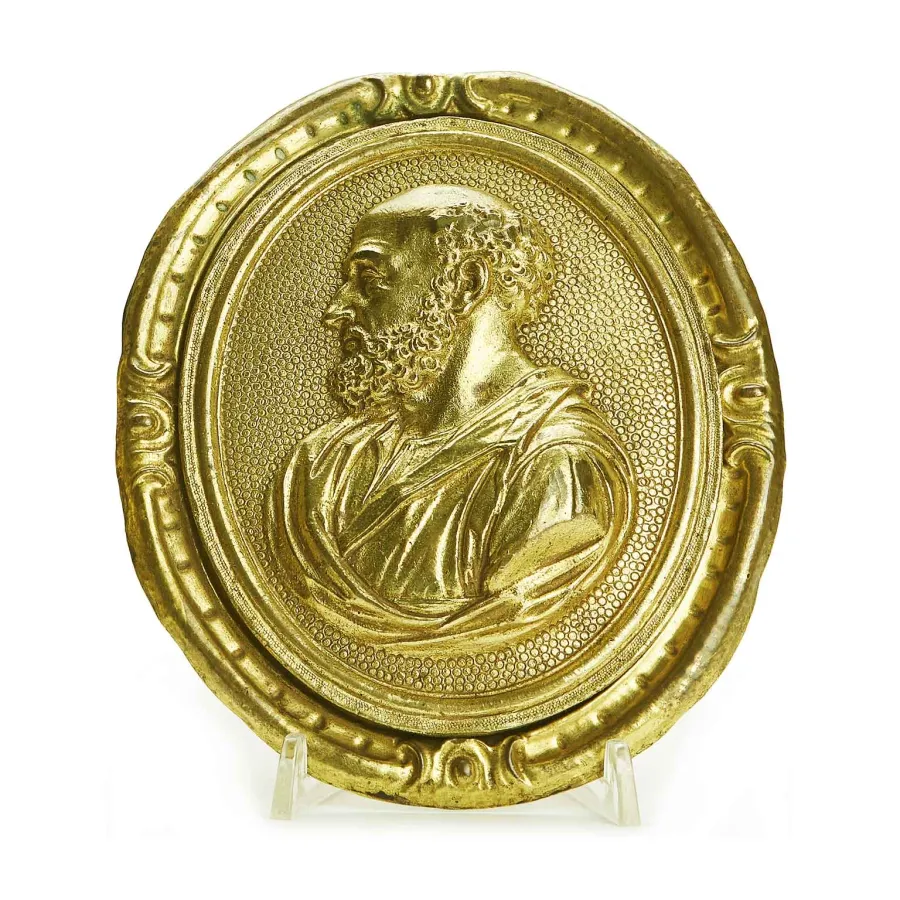
A pair of gilded bronze plaques with profiles of 18th century saints
Luxury antiques
SKU: ANT-A1116
See other products from category Sculptures of human figures or from manufacturer Antyki with shipping within 24 hours
Related products by category
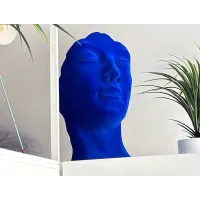
Gorillas Popart is a unique approach to designing and creating luxury sculptures and functional art pieces. Upon request, the manufacturer will customize the product by selecting the appropriate
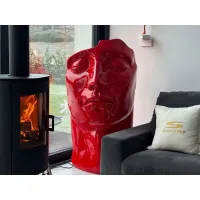
Manufaktura Gorillas Popart offers a unique approach to designing and creating luxury sculptures and functional art pieces. Upon request, the manufacturer will customize the product by selecting
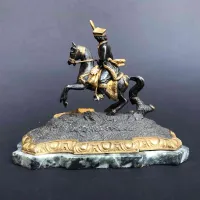
Cast from bronze, this knight with a shaped base made of green marble depicts a mounted figure, probably inspired by the famous painting of King Gioacchino Murat of Naples in one of his uniforms.The
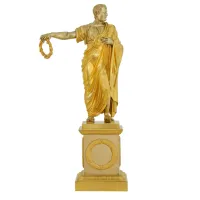
Eric Stepniewski's fascinating journey with bronze began in 1973 in his family’s hometown of Paris, where he started working as an antique dealer. After many years managing his Gallery, he took over
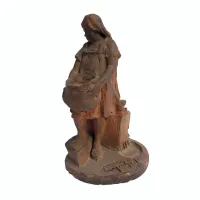
Michieli Guglielmo Terracotta sculpture from the early 20th century depicting a scoop, a modestly dressed girl with a cauldron or container in her hand. The figure is well modeled in terracotta, perfe
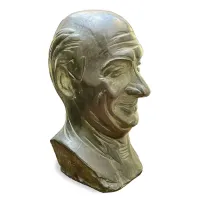
Prestigious antique furniture and accessories can be an excellent idea for decorating our interiors. Today, there is an increasing number of enthusiasts of high-quality vintage products that possess a
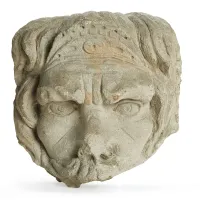
Fountain mask Pietra Serena depicting a stylized lion's head or a grim Tatar face; it is not easy to interpret due to the missing lower part corresponding to the fountain outlet, which makes identific
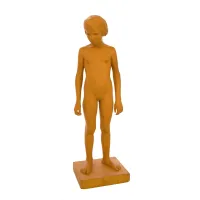
Original antique furniture and accessories can be an excellent idea for decorating our interiors. Today, there is an increasing number of enthusiasts of high-quality vintage products that possess a di
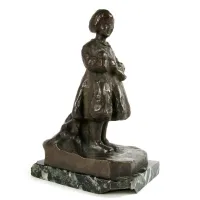
R. Zacchetti Girl with a Doll. Antique bronze sculpture from the Fascist era, circa 1938, depicting a girl holding a doll in her arms. On the front and back, there is a print with the title "Bambole,"
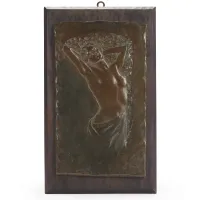
Lamberto Goria Woman in Ecstasy First half of 1900s, bronze cast signed by the artist L. Goria Asti (Tortona 1863 – Asti 1927). Mounted on a wooden panel, in good condition.Original antique furnitur
Description
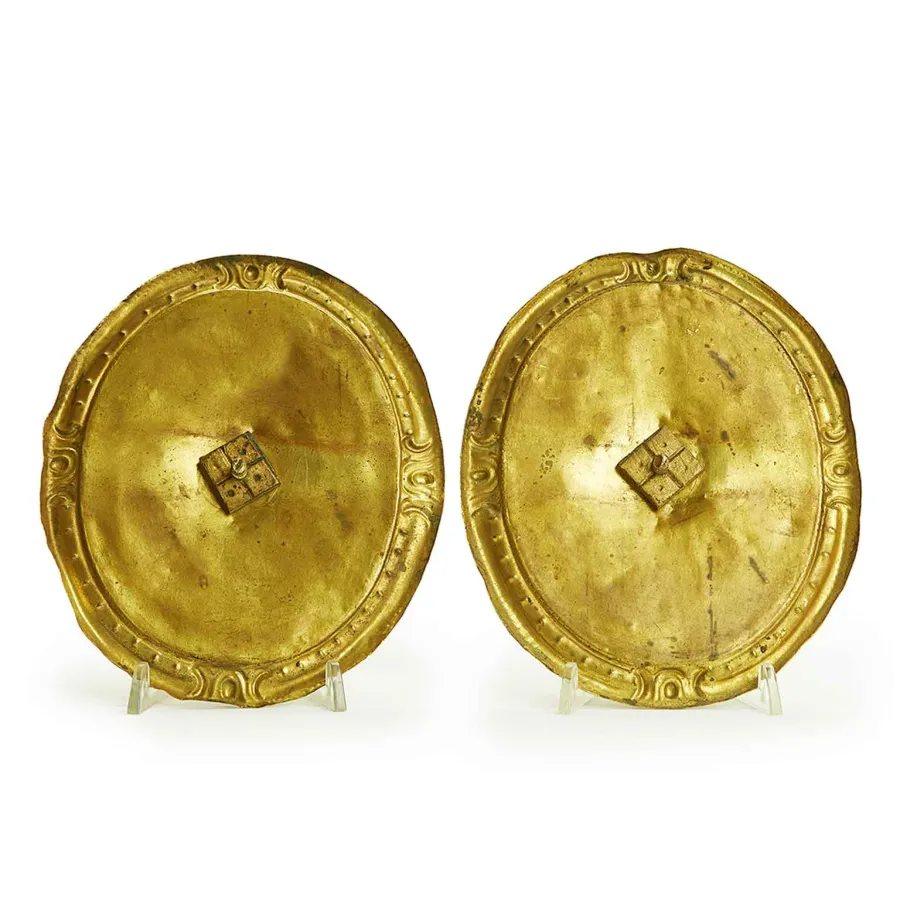
Pair of gilded bronze plaques featuring saint profiles, a pair of 18th-century gilded bas-reliefs with an oval shape, composed of two overlapping elements; cast profile and stamped frame made of sheet metal with corner decorations. Both parts are connected by a screw with a securing nut, welded to the casting. They feature beautiful mercury gilding and originally adorned an iron altar gate, to which they were attached with a central screw. Well-preserved, with only a minor dent. They originate from the first half of the 18th century and come from Lombardy.
Original antique furniture and accessories can be an excellent idea for decorating our interiors. Today, there is an increasing number of enthusiasts of high-quality vintage products that possess a specific character and soul. It’s a nod to history, craftsmanship, and the design of traditional and timeless furniture. There are many different styles in antique furniture, each with its distinctive features.
Many styles characterize antique furniture, but a few key ones stand out. Eclectic furniture refers to the 19th century, marked by the prevailing Biedermeier style. Its early variations include neo-Gothic, Gothic, Rococo, Louis Philippe style, and finally the Victorian style. Toward the end of the century, these styles evolve into pseudo-classicism, Renaissance, and Baroque styles.
Original Empire-style furniture dates from the late 18th to early 19th century. It was influenced by Napoleon’s reign, which imposed a resemblance to Roman and Greek decorative motifs.
Neoclassical furniture, associated with Louis XVI, also draws heavily from ancient architecture. Noteworthy are antique products in Rococo and Louis XV styles. The next is Baroque, a term derived from the Portuguese 'barocco'—meaning an irregularly developed pearl. These were highly decorative pieces meant to shine with splendor and play a significant role in luxury. Materials were selectively chosen to emphasize the grandeur of these items.
Today, we can observe how much the Baroque style influenced modern classical furniture, which is designed with a strong resemblance to the historical period. The Renaissance style is also significant. Flourishing in the 15th and 16th centuries, it left a substantial mark on furniture craftsmanship. Renaissance furniture was quite heavy and robust, often using brown stains, cornices, sturdy bases, and bas-reliefs. These products were quite distinctive but also introduced new possibilities, such as the construction of credenzas and broadly speaking, chest-type furniture. Mythology and ancient themes were also popular, with supports and legs often taking animal forms.
Lion paws and eagle heads are common motifs in Renaissance style. Currently, many global brands reproduce such furniture, inspired by Italian and French artisans. This reflects admiration and respect for the history of the most beautiful Renaissance antiques. It’s important to remember that furniture production was perceived differently in each country, giving each style a unique character. This is especially important when searching for a luxurious antique that suits your interior.
The key to stylish antique furniture is originality. Ultimately, this is crucial from the customer’s perspective, as many counterfeits circulate on the market. Luxury Products provides a certificate confirming the product’s compliance with the actual description and photos. We have appraisers, art experts, historians, and specialists from around the world at your disposal.
Attributes / Details
| SKU | ANT-A1116 |
| Manufacturer | Antyki |
| Model | A1116 |
| Material | brown |
| Size | Height: 19.5 cm Width: 16 cm Depth: 2.5 cm |
| Age | XVIII |
| Year | 1700 |
| Destiny | To home |
See catalog
Reviews
No reviews for this product.