

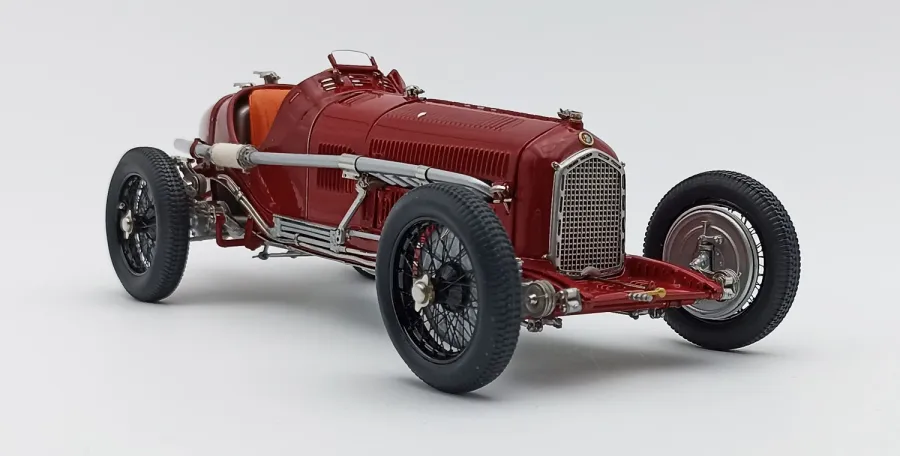
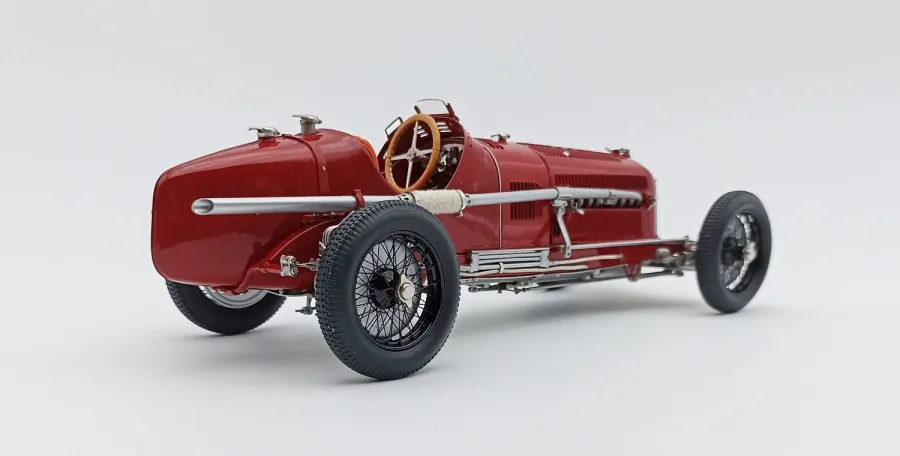
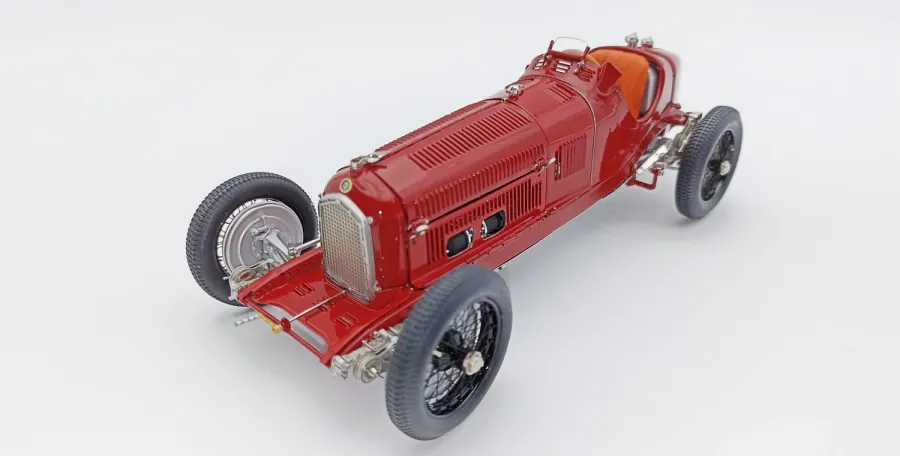

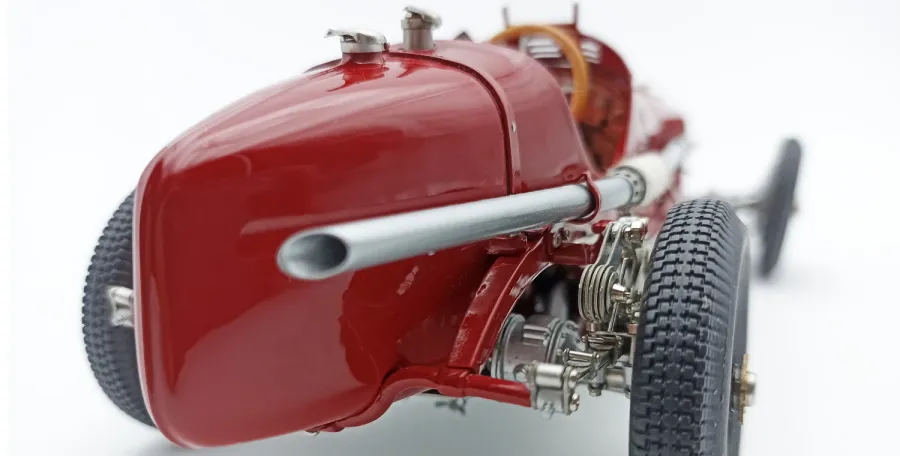
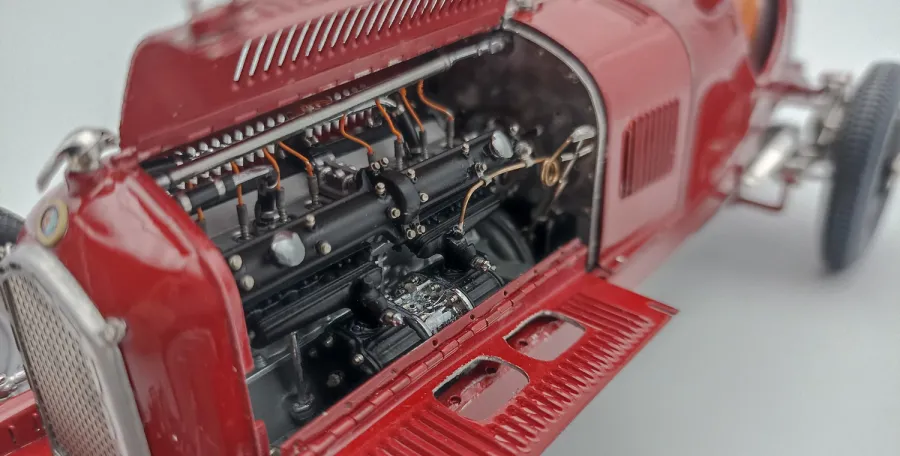
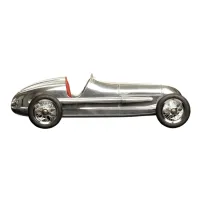
Original replica of the Alfa-Romeo P3 Nuvolari car, winner of the 1932 Italian GP
Original replicas of classic cars
SKU: Cmc-M-219
See other products from category Gifts for fans of cars, yachts and motorbikes or from manufacturer CMC GmbH & Co. KG
Related products by category
,,Legends of Toru" - A unique framed poster depicting a classic scene from the 1930s Grand Prix races, showcasing the emotions, passion, and spirit of the bygone racing masters. A high-quality reprodu
For Ettore Bugatti, building cars was simply a matter of seeking perfection, an art that must be presented in an aesthetic way. The Type 35 marked the beginning of an era in which Bugatti became the m
Authentic classic designs combined with high-quality materials create interiors with a history behind them by Authentic Models. It’s an incredible story about beautiful products that fascinate lover

Authentic models combined with the highest quality materials create interiors with a company history. It’s an incredible story about beautiful products that fascinate lovers of good design worldwide
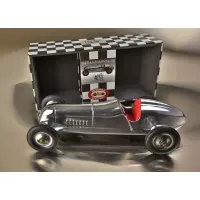
Authentic models combined with high-quality materials create interiors with a story behind them. It’s an incredible story about beautiful objects that fascinate lovers of good design worldwide.Our i

Authentic classic designs combined with high-quality materials create interiors with a history behind them by Authentic Models. It’s an incredible story about beautiful products that fascinate lover
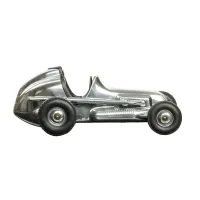
Authentic models combined with the highest quality materials create interiors with a company history. It’s an incredible story about beautiful products that fascinate lovers of good design worldwide
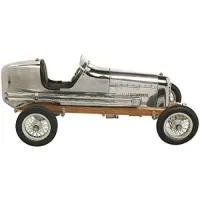
Authentic models combined with high-quality materials create interiors with a story behind the brand Authentic Models. It’s an incredible story about beautiful products that fascinate lovers of good
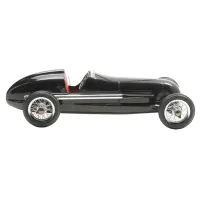
Authentic models combined with the highest quality materials create interiors with a story behind them. It’s an incredible story about beautiful objects that fascinate lovers of good design worldwid
Authentic models combined with high-quality materials create interiors with a story behind them. It’s an incredible story about beautiful objects that fascinate lovers of good design worldwide.Our i
Description
Alfa Romeo Tipo B was the most successful single-seater Grand Prix racing car of its era. Alfa Romeo built and raced it from 1932 to 1936. Initially as a factory racing car for Alfa Romeo, later under the Scuderia Ferrari brand, after Alfa Romeo's racing activities were taken over. The car, designed by legendary engineer Vittorio Jano, was based on the equally legendary Alfa Romeo 8C models. The P3 was the second single-seater Alfa Romeo after the Tipo-A monoposto from 1931.
10. The Italian Grand Prix was part of the European Championship in 1932. It featured fifteen of the best European drivers, with the competition primarily between Nuvolari in the new lightweight 2.65-liter Alfa Romeo Tipo B and Fagioli in a 16-cylinder Maserati. Frequent position changes made this race very exciting to watch, with all records being broken. Among the main rivals were Chiron and Varzi competing in Bugattis, Nuvolari, Campari, Borzacchini, and Caracciola racing for Alfa Romeo, and Fagioli for Maserati. Ultimately, Alfa Romeo proved superior and won.
On June 5, 1932, at the famous 10-kilometer Autodromo di Monza (4.5 km of a fast oval track plus 5.5 km of asphalt road), the 10th Italian Grand Prix took place. Along with the French and German Grand Prix, it counted towards the European Championship, and all three events were to be held under the same 5-hour format. Cars could participate without restrictions on weight or engine capacity.
Single-seater racing cars were now permitted, and Societá Anonima Alfa Romeo debuted with 8-cylinder monopostos of 2650 cc capacity (P3s). Tazio Nuvolari and Giuseppe Campari were created to drive these entirely new single-seaters, while Mario Umberto Borzacchini and Rudolf Caracciola were assigned to pilot older 8-cylinder Monzas of 2300 cc capacity. Bugatti fielded its most renowned drivers, Louis Chiron and Achille Varzi, in two of its 5-liter models, which demonstrated incredible speed at the Avusrennen. Officine A. Maserati was the third factory team to participate in the race, with Luigi Fagioli in a massive 16-cylinder Maserati of 5 liters capacity.
Besides the three factory teams, there were many independent entries, including Hans Stuck with his Mercedes, skilled Bugatti drivers René Dreyfus, Marcel Lehoux, Jean-Pierre Wimille, Emilio Romano, and Guglielmo Peri, Clemente Biondetti with his special M.B. car, and representatives of Scuderia Ferrari Pietro Ghersi and Eugenio Siena in two 2300 cc Alfa Romeo Monzas, among others.
The race was scheduled to start at 9:30 AM and end at 2:30 PM. Estimated attendance ranged from over 50,000 to 100,000. Fifteen confirmed entries lined up on the grid. When the checkered flag was dropped at 9:42, the cars started with roaring turbochargers and a dense, bluish smoke cloud.
After 3 minutes and 34 seconds, Nuvolari in the Alfa Romeo Tipo B completed the first lap ahead of Chiron in the large light blue Bugatti and Campari in the second sleek Tipo B P3. On the second lap, Nuvolari still led, followed by Campari and Chiron. However, on the third lap, Chiron set a new lap record at 3m24s with an average speed of 176.125 km/h.
The battle for the lead was intense and constantly changing hands. After 10 laps, Fagioli took the lead in his Maserati ahead of Nuvolari, Varzi, and Chiron. Fagioli felt at home on the Monza track and maintained the lead for many laps. Even Nuvolari’s multiple attempts to overtake the 16-cylinder Maserati were unsuccessful. W.F. Bradley described the situation in Autocar: “The race was very exciting. The leaders, at intervals of less than two minutes, darted by on the inside or outside of the two parallel tracks, at speeds of 140 miles per hour, sometimes side by side, wondering who would yield at the turns, but never more than a few lengths apart.”
The heavy 5-liter Bugattis driven by Varzi and Chiron proved to be the fastest on the straights, but on the curves, the Alfa-Tipo B P3 was able to overtake them effortlessly. After 30 laps, Nuvolari was back in the lead. He and Campari maintained the front, with Fagioli in third after 40 laps. On the 45th lap, Nuvolari increased his lead over Campari from just 16 seconds to 1 minute and 11 seconds.
After 50 laps, Nuvolari had to make another pit stop for new tires, fuel, and servicing, allowing Fagioli to move forward and take the lead. Undoubtedly, Maserati was the fastest car on the track. But on the 61st lap, Fagioli had to stop for new tires. This pit stop cost him 4 minutes and 10 seconds and a reasonable chance to win the race. W.F. Bradley wrote in The Autocar: “He changed all four tires, filled with petrol, oil, and water, rinsed his mouth, and poured water over his head, staggered for a few seconds, then handed the car over to Ernesto Maserati, with a deficit of 4 minutes and 15 seconds.” It is unknown whether Ernesto Maserati managed to make up the time lost by Fagioli in the Fagioli car.
On the 71st lap, Nuvolari was now one lap ahead of Dreyfus in second place. Fagioli was in fourth and, with great determination, set out to make up the lost time. The persistent Italian managed to improve his lap time for seven consecutive laps to regain second place. His record lap was three seconds faster than Nuvolari’s best in the Alfa-Tipo B P3. Fagioli’s relentless pursuit brought new life to the race. On the 77th lap, Fagioli overtook Dreyfus and took second place.
After completing 83 laps over five grueling hours, Nuvolari crossed the finish line in bright colors amid wild cheers from the spectators. Fagioli finished second about two and a half minutes later. With this victory, Nuvolari cemented his position as the most decorated driver of the 1932 season. For the third time in two months, the 40-year-old Italian led in the most challenging races—Monte Carlo, Targa Florio, and now Monza. It was a great achievement for Alfa Romeo to win the first race with their brand-new single-seater – Tipo B P3.
Information about Classic Model Cars (CMC)
Exclusive products combined with the highest quality finishings make us synonymous with the German brand Classic Model Cars. It’s a true tribute to handcrafted products that impress with their unique elegance and luxury.
CMC is one of the leading brands producing miniature vintage cars. The company creates classic and collector’s models using authentic materials and fabrics.
Since 1995, CMC has had its own manufacturing facility with highly qualified engineers and staff in China. The result of months of research is a variety of classic car models, assembled by hand from over 1800 individual parts. The manufactory uses high-quality materials to fully preserve the “faithfulness to the original” of each vehicle model.
The company focuses on all major and popular collector scales: 1:12, 1:18, 1:24, 1:43. The first model produced by the company was in 1:24 scale – the iconic Mercedes-Benz SSK from 1930. Built in 1995, it has won numerous prestigious awards.
Each component is carefully assembled by hand. Instruments on the dashboard are mounted separately. The seats are covered with fabric or leather. The flooring is laid inside and in the trunk. The replicas replicate even the smallest details according to the original plans of the vehicle.
Attributes / Details
| SKU | Cmc-M-219 |
| Manufacturer | CMC GmbH & Co. KG |
| Model | M-219 |
| Material | metal, rubber, others |
| engraver | YES |
| Guarantee | 24 months |
| Additional information | Handmade. Possibility to attach a nameplate |
See catalog
Reviews
No reviews for this product.