

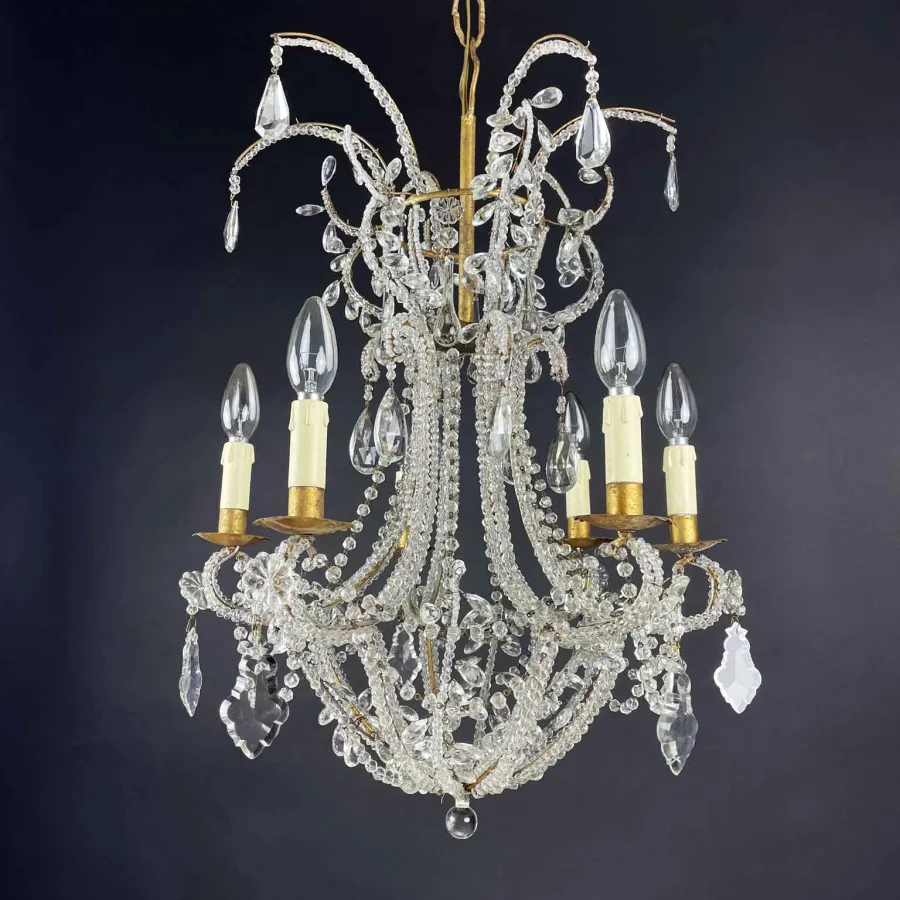
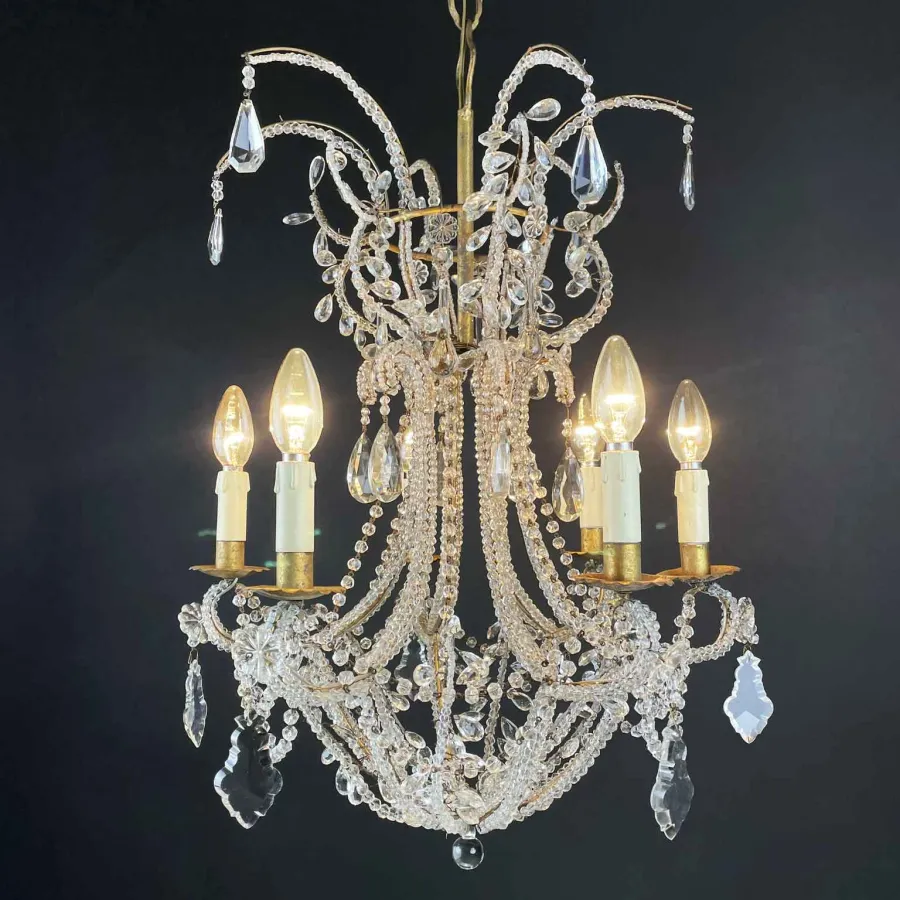
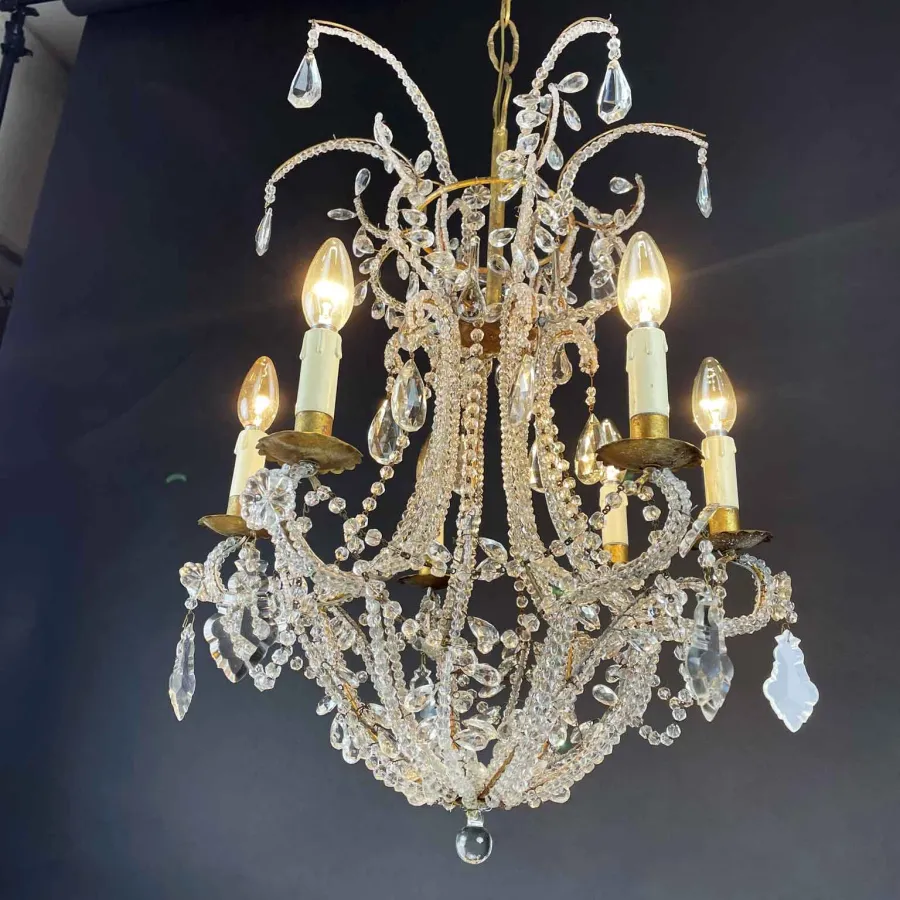


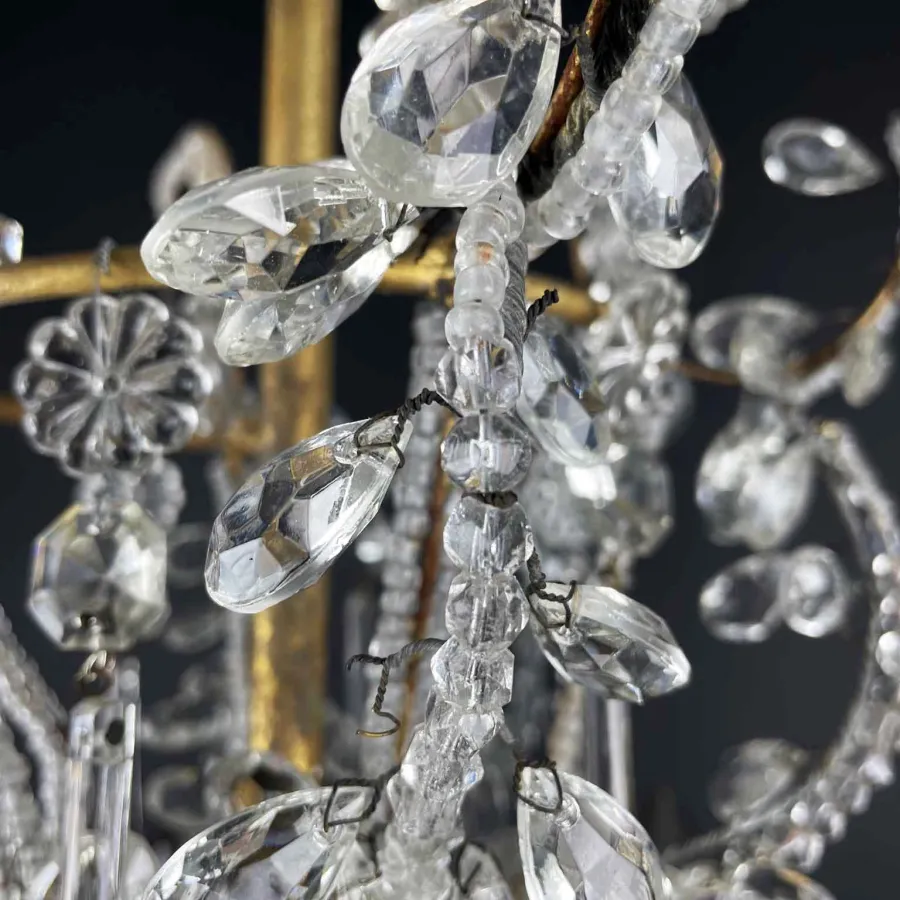
Italian crystal chandelier from the early 20th century
Fantastic antique furniture and accessories
SKU: ANT-A896
See other products from category Antique chandeliers or from manufacturer Antyki
Related products by category
Empire-style crystal chandelier from the late 20th century with beaded accents, featuring a classic round brass construction and three E27 lights inside.Bulbs can be replaced by unscrewing the bronze
Chandelier made of brass and crystal from 1800, a stunning Italian chandelier crafted from gilded brass and crystal from the mid-19th century, with six entirely handcrafted lights designed for candle
A large empire-style chandelier made of gilded iron and crystal, with sixteen lights, circa 1780. A monumental, antique chandelier suitable for a salon from the late 18th century. Originating from Pie
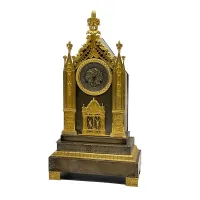
Original antique furniture and accessories can be an excellent idea for decorating our interiors. Today, there is an increasing number of enthusiasts of high-quality vintage products that possess a di
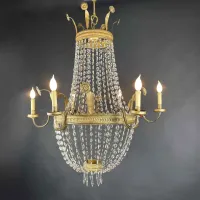
Magnificent Italian-origin crystal chandelier from the early 19th century. Good condition, functional wiring compliant with European standards for six Edison 14 bulbs.Brass repoussé, iron, and crysta
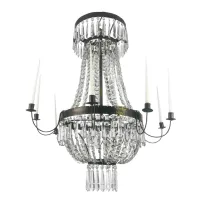
Charming, classic Italian Empire-style chandelier designed for candle lighting, with nine arms ending in candles, without electrical wiring, can be used as candle holders or decorative candlesticks.L
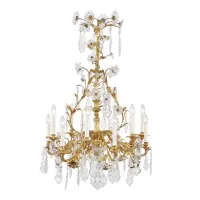
Exceptional chandelier made of gilded bronze and French-origin crystal, a two-tier, twelve-arm hanging fixture from 1870, originally designed for candles, featuring unique ormolu branches and a floral
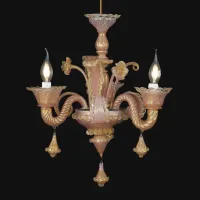
Venetian chandelier made of pink and gold blown glass with three white-lacquered wooden candles featuring E14 Mignon sockets. Fully restored electrical system with a maximum power of 500 watts. The ch
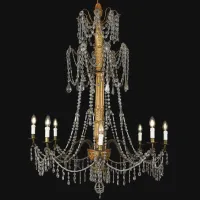
Genuine Louis XVI Genoese chandelier made of gilded wood and crystals, late 18th century, eight lights, originating from the late 18th century and in good condition, consistent with its age. This chan
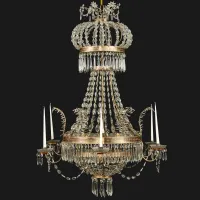
Historic, original Empire-style crystal chandelier, dating from the late 18th century, of Italian origin, from a private palazzo in Piedmont.The handcrafted, circular structure consists of round brass
Description
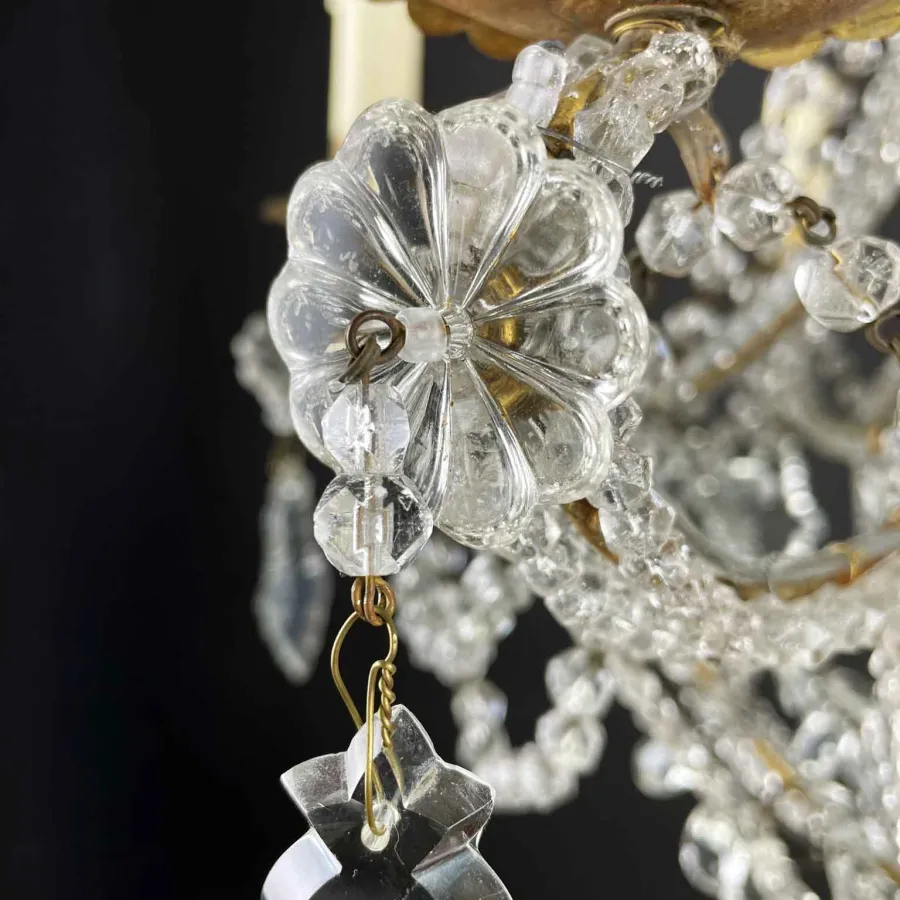
Romantic crystal chandelier with beads from the early 20th century, a six-arm Italian chandelier with an extraordinary, handcrafted crystal frame. Wired to European standards, with a maximum power of 500 watts, suitable for 6 E14 bulbs.
Luxurious antique furniture and accessories can be an excellent idea for interior decoration. Today, there is an increasing number of enthusiasts of high-quality vintage items that possess a distinct character and soul. This is a nod to history, craftsmanship, and the design of classic and timeless furniture. There are many different styles in antique furniture, each with its own distinctive features.
Many styles characterize antique furniture, but a few are particularly prominent. Eclectic furniture dates back to the 19th century, during the reign of the Biedermeier style. Its early 20th-century variants include neo-Gothic, Gothic, Rococo, Louis-Philippe style, and the Victorian English style. Toward the end of the century, these styles evolved into pseudo-classicism, Renaissance, and Baroque.
Empire-style furniture corresponds to the period between the late 18th and early 19th centuries. It originated during Napoleon’s reign, characterized by significant similarities and references to Roman and Greek ornamentation.
Neoclassical furniture reflects the Louis XVI style, which also draws heavily on ancient architecture. Notable and noteworthy are antique products in Rococo and Louis XV styles. Baroque, derived from the Portuguese word 'barocco'—meaning an irregularly developed pearl—was highly ornate, designed to radiate splendor and play a significant role in luxury. Materials were selectively used to emphasize the grandeur of these pieces.
Today, we can observe how much influence the Baroque style has had on modern classical furniture, which is designed with a strong resemblance to the historical period. The Renaissance style, flourishing in the 15th and 16th centuries, also left a significant mark on furniture design. Renaissance furniture was quite heavy and massive, often using brown stains, cornices, sturdy bases, and reliefs. These products were quite distinctive but also introduced new possibilities, such as the construction of credenzas and broadly defined chest furniture. Mythology and ancient times were also of interest, with supports and legs often taking animal forms.
Common motifs in Renaissance style include lion paws and eagle heads. Currently, many global brands recreate such furniture, inspired by Italian and French artisans, as a tribute to the beauty of Renaissance antiques. It’s important to remember that furniture production was perceived differently across countries, giving each style a unique character. This is especially important when searching for an exclusive antique that suits your interior.
The key to stylish antique furniture is originality. Ultimately, this is crucial for buyers, as the market is flooded with counterfeits. Luxury Products provides documentation confirming the product’s authenticity and compliance with the description and photos. We also have appraisers, art experts, historians, and specialists from around the world at your disposal.
Attributes / Details
| SKU | ANT-A896 |
| Manufacturer | Antyki |
| Model | A896 |
| Material | crystal, metal, others |
| Size | height 71 cm, diameter 50 cm |
| Age | XX |
| Year | 1900 |
See catalog
Reviews
No reviews for this product.