

Related products by category
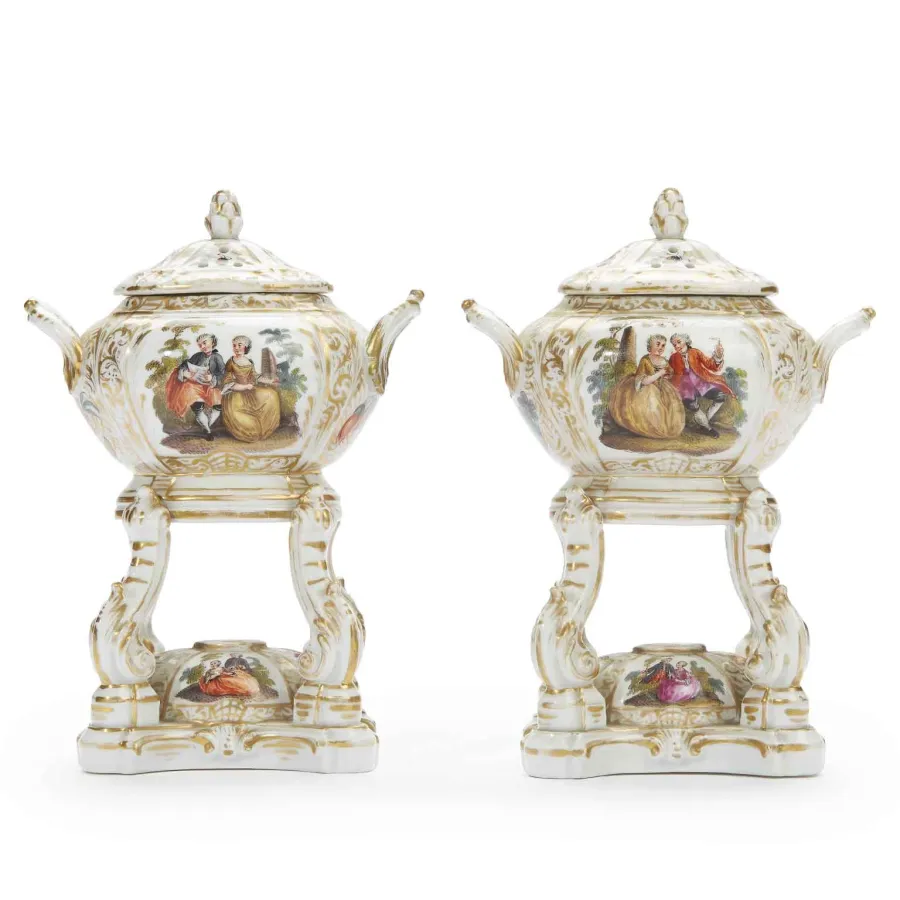
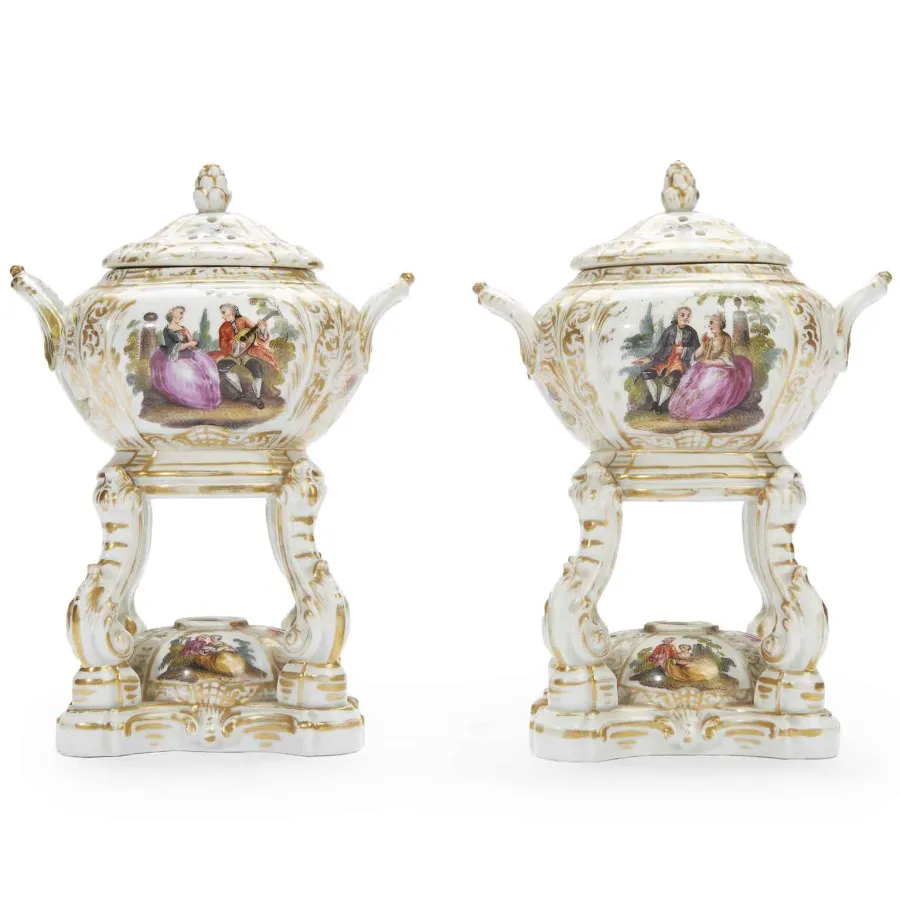
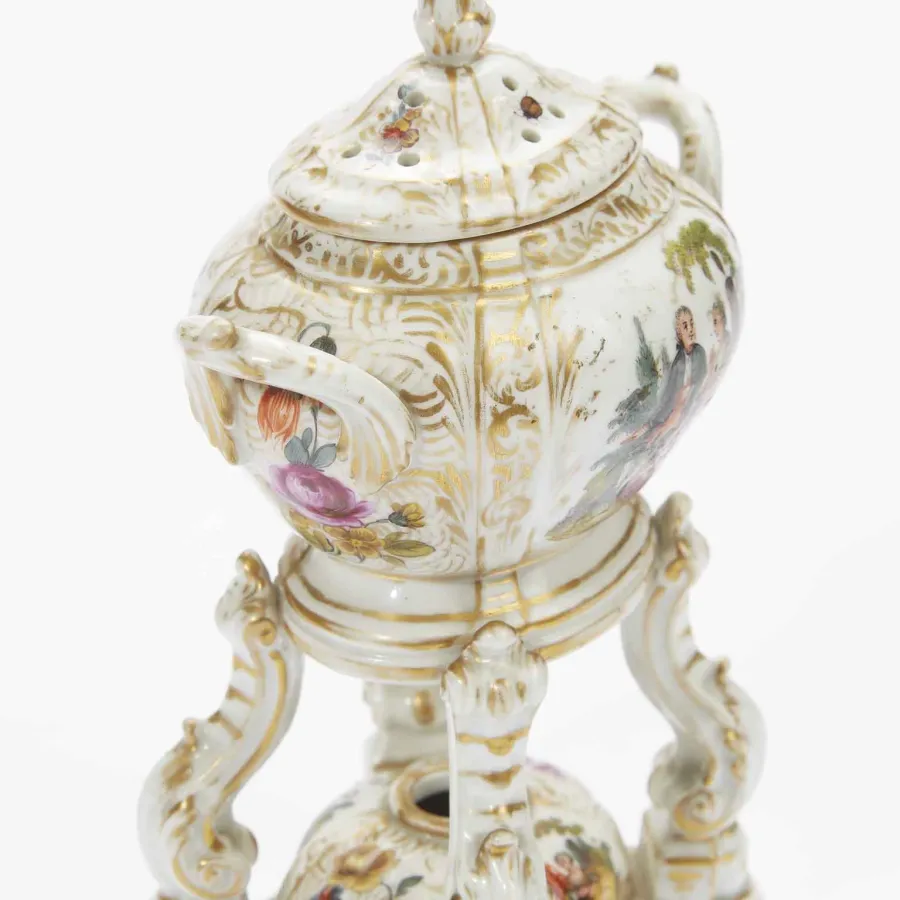
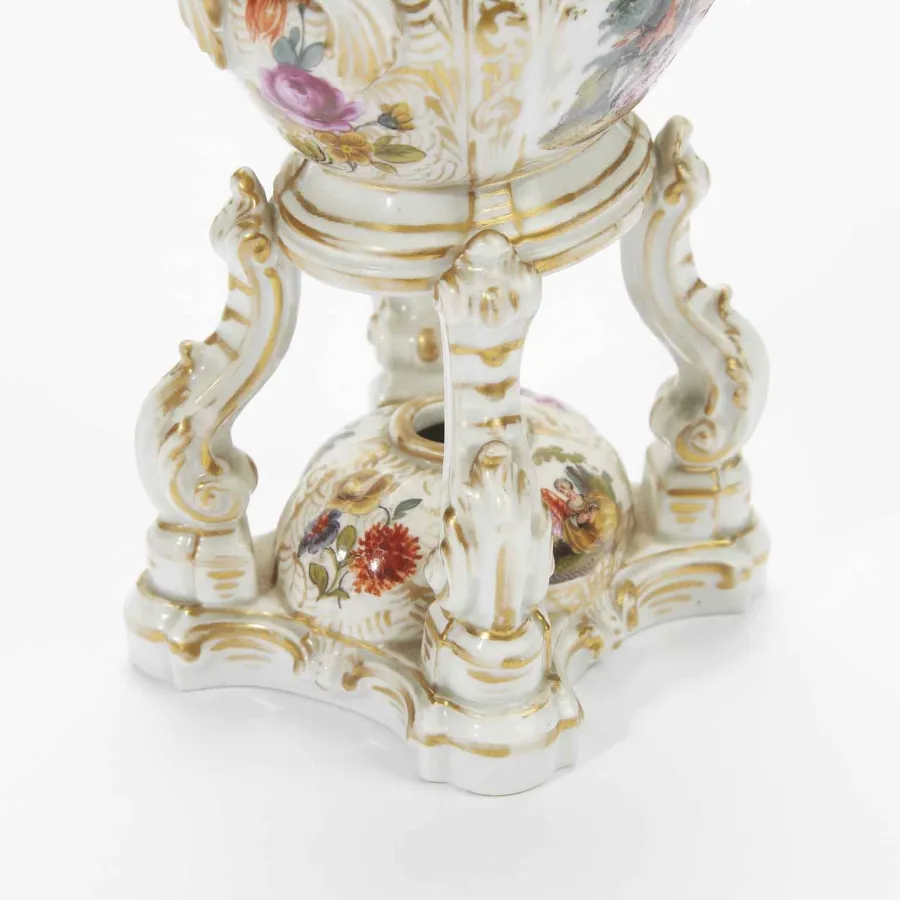
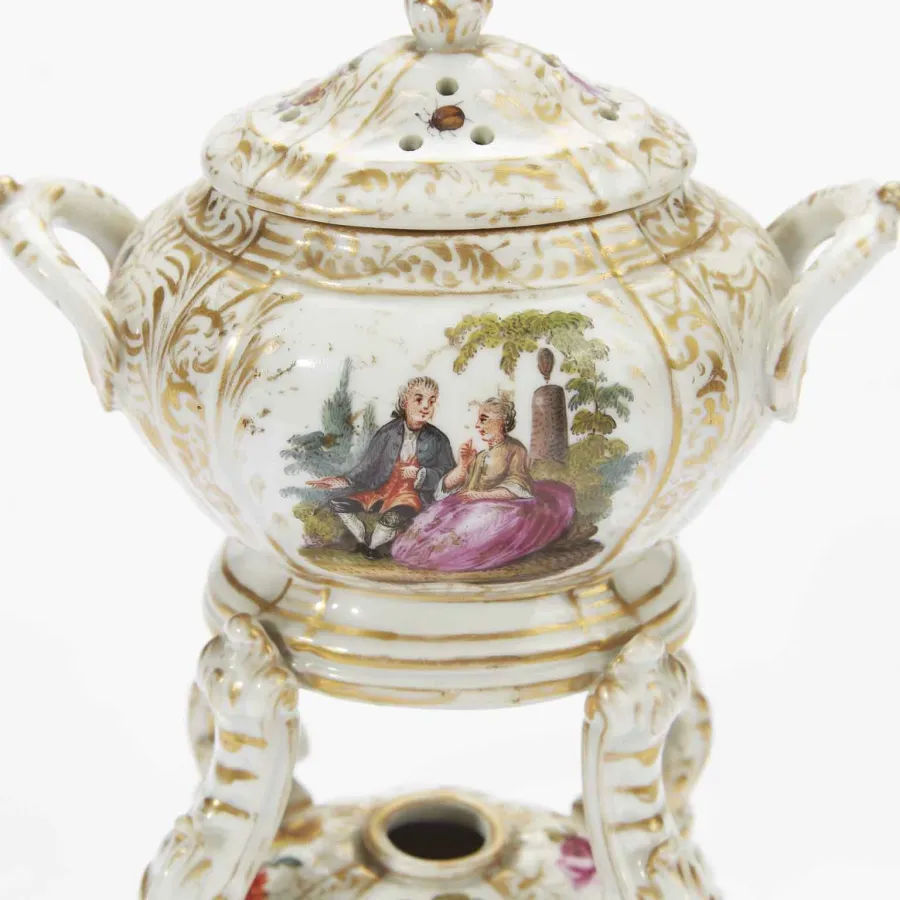
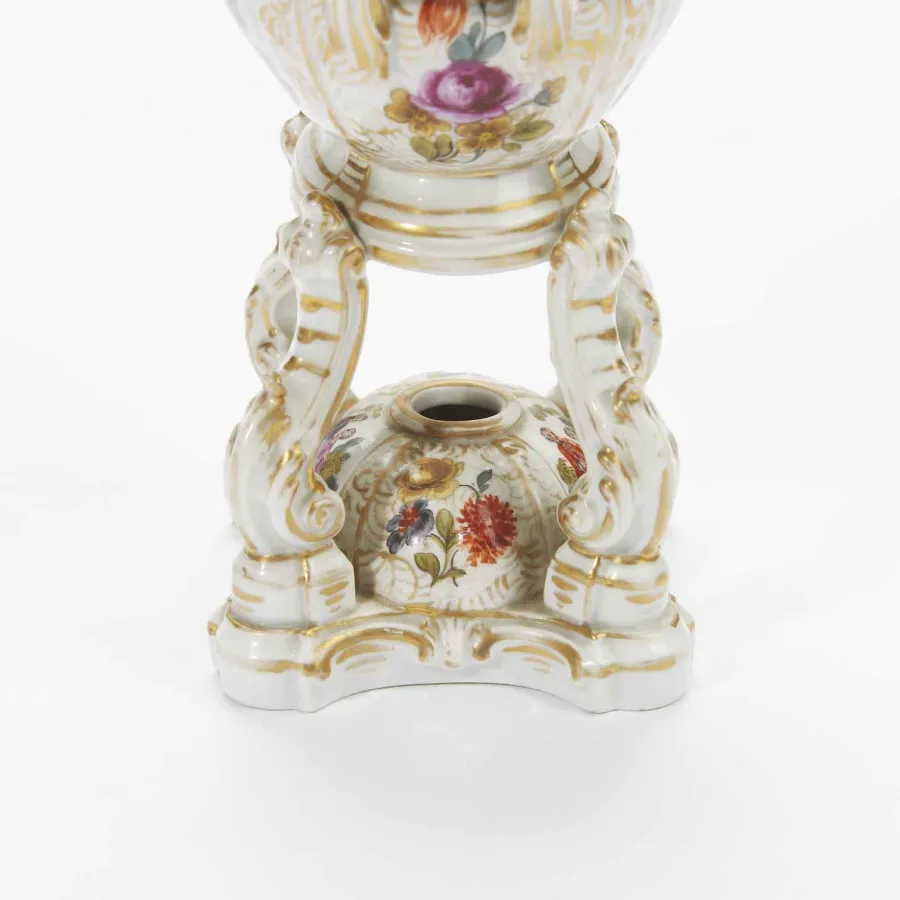
Charming pair of Berlin porcelain perfume burners by KPM from the early 19th century, two antique oval perfume containers with pierced lids, pine cone-shaped covers over the oval burners. Painted with
Ancient porcelain biscuit figurines depicting two women in flowing garments, seemingly about to hold a hat. Southern Italy. Excellent condition. Originates from the first half of 1900. No brand. Bea
Principe has 200 years of experience.Seeking innovation and tradition combined with Neapolitan flair gives us a truly porcelain delight.Holistic approach to creating these luxurious figurines invo
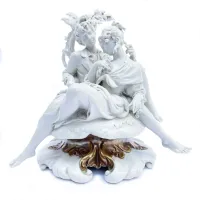
Giuseppe Cappé, Scene of Love, 1960s, white and gold porcelain, a group depicting a couple of lovers. It shows a leather-goods scene featuring a lady with a rose in her hand, sitting on her belovedâ€
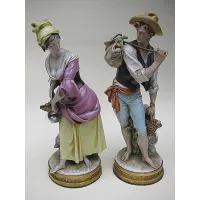
Porcelain figurine pairs by Giuseppe Cappè from the 1960s, depicting a farmer and a peasant. Perfect except for a small flaw. Prestigious antique furniture and accessories can be an excellent idea
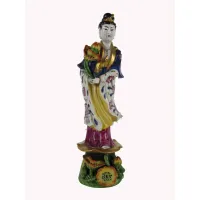
Figure of an Oriental woman made of polychrome porcelain, with gilded parts in perfect condition. Under the base, there is a black ideogram. It is probably a European manufactory from the early 20th c
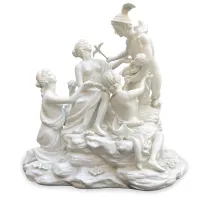
The central element of bisque porcelain from the early 1900s. This triumph of bisque porcelain dates back to the early decades of the 20th century. Bisque porcelain is a special manufacturing techniqu
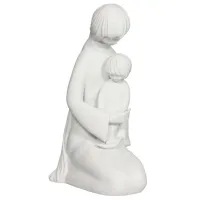
The Vista Alegre factory was the first industrial unit dedicated to porcelain production in Portugal. The determination of its founder, José Ferreira Pinto Basto, contributed to the brand's enormous
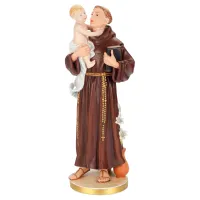
Manufactory Vista Alegre was the first industrial unit dedicated to porcelain production in Portugal. The determination of its founder, José Ferreira Pinto Basto, contributed to the brand's enormous
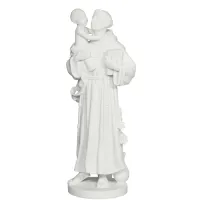
The Vista Alegre Factory was the first industrial unit engaged in porcelain production in Portugal. The determination of its founder, José Ferreira Pinto Basto, contributed to the tremendous success
Description
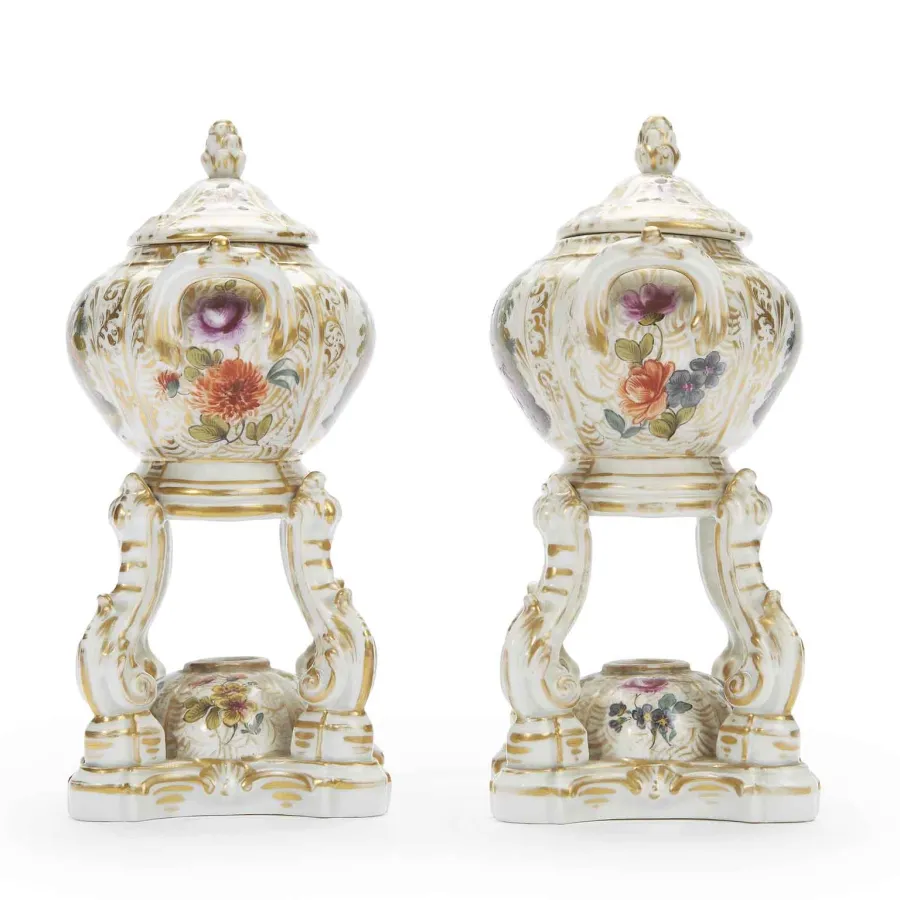
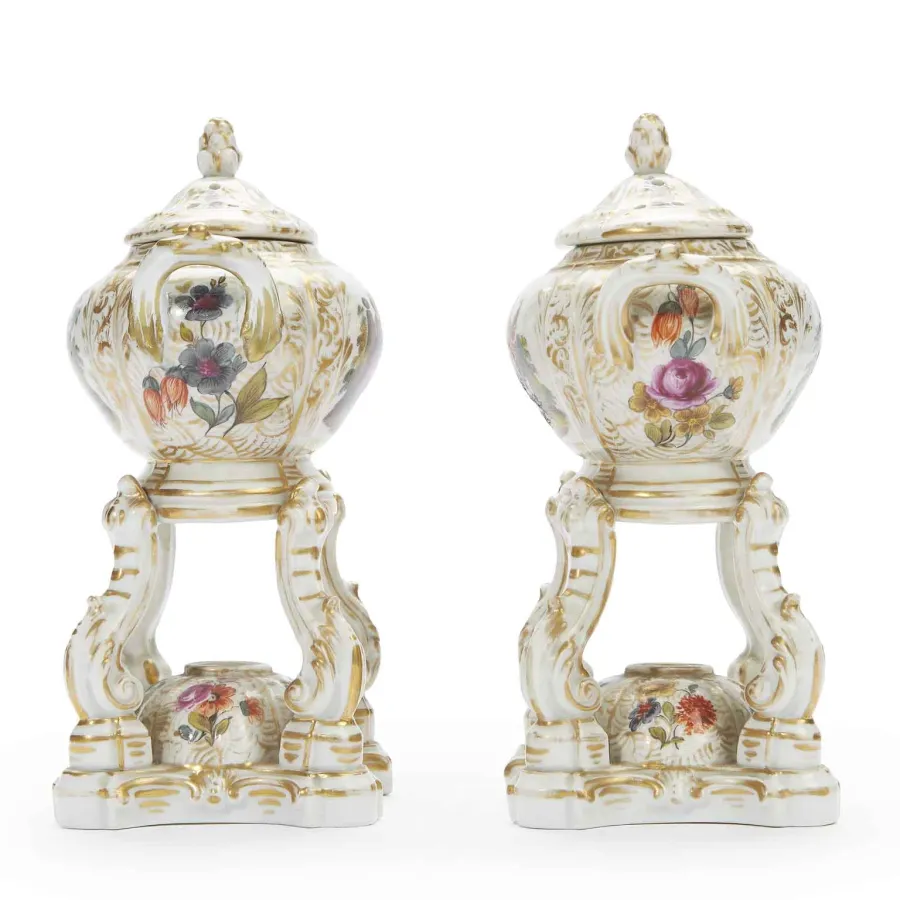
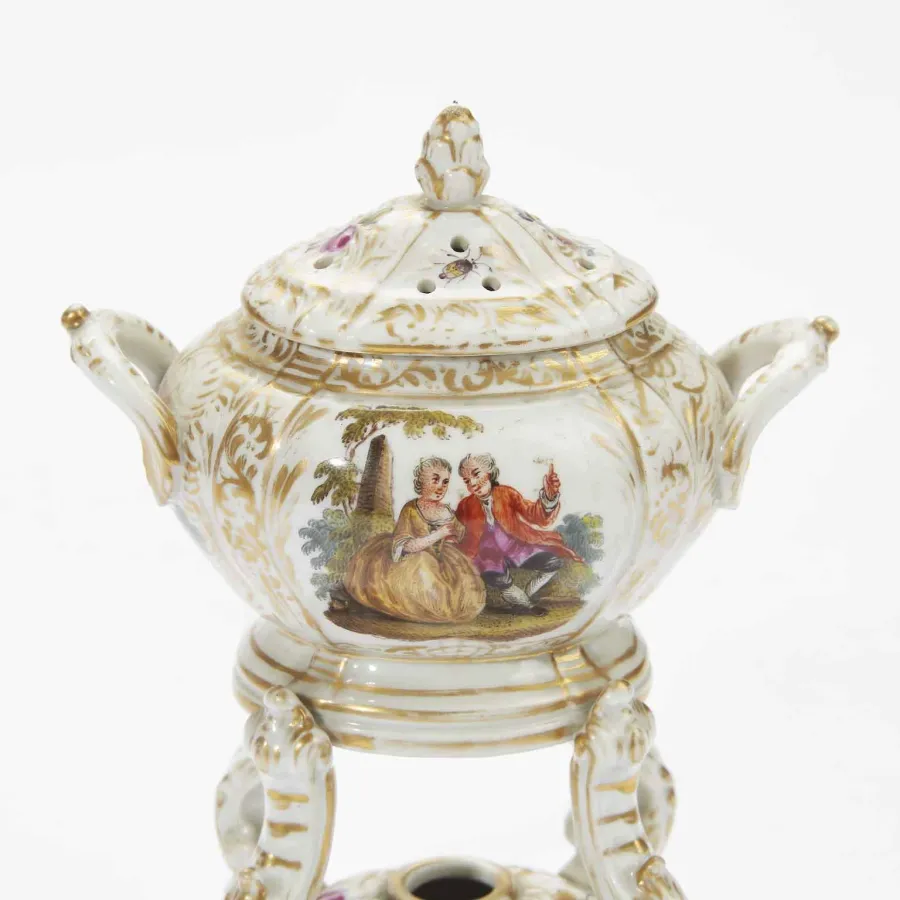
Charming pair of Berlin porcelain perfume burners by KPM from the early 19th century, two antique oval perfume containers with pierced lids, pine cone-shaped covers over the oval burners. Painted with naturalistic flowers. Signed with a blue sceptre, stamped with the numbers 5 and 6 from the 1820s-30s. Richly decorated with gilding and hand-painted panels on the front and back in a romantic Watteau style, depicting couples in rural scenes.
Hand-painted floral decoration on the sides. The covers feature charming gilded decoration with polychrome flowers and ladybugs. Used, good condition with no chips or dents, slight wear of gilding and old restoration near the handle, see detailed photo.
Exclusive antique furniture and accessories can be an excellent idea for interior decoration. Today, there is an increasing number of enthusiasts of high-quality vintage items that possess a specific character and soul. It’s a nod to history, craftsmanship, and the design of classic and timeless furniture. There are many different styles in antique furniture, each with its distinctive features.
Many styles characterize antique furniture, but a few are particularly prominent. Eclectic furniture refers to the 19th century, marked by the prevalent Biedermeier style. Its early variations include neo-Gothic, Gothic, Rococo, Louis Philippe style, and finally the Victorian English style. By the end of the century, these styles evolved into pseudo-classicism, Renaissance, and Baroque.
Empire-style furniture dates from the late 18th to early 19th century, inspired by Napoleon’s reign. It features significant similarities and references to Roman and Greek ornamentation.
Neoclassical furniture, associated with Louis XVI, also draws heavily from ancient architecture. Noteworthy are antique products in Rococo and Louis XV styles. Next is Baroque, derived from the Portuguese word 'barocco'—meaning irregularly developed pearl. These were highly decorative, luxurious pieces meant to radiate splendor and serve a prominent role in opulence. Materials were selectively used to emphasize the grandeur of these items.
Today, we can observe how much influence the Baroque style has had on modern classic furniture, which is designed with a strong resemblance to the historical period. The Renaissance style, flourishing in the 15th and 16th centuries, also left a significant mark on furniture craftsmanship. Renaissance furniture was quite heavy and massive, using brown stains, cornices, sturdy bases, and reliefs. These products were quite distinctive but also introduced new possibilities, such as the construction of credenzas and broadly defined chest furniture. Mythology and ancient times inspired these designs, with supports and legs often taking animal forms.
Lion paws, eagle heads—these are common features in Renaissance style furniture. Currently, many global brands reproduce such furniture, inspired by Italian and French artisans. This reflects admiration and respect for the history of the most beautiful Renaissance antiques. It’s important to remember that furniture styles were perceived differently across countries, each with its unique character. This is especially crucial when searching for an exclusive antique that suits your interior.
The key aspect of authentic antique furniture is originality. Ultimately, this is vital for buyers, as many counterfeits circulate on the market. Luxury Products provides documentation confirming the product’s authenticity and correspondence to the description and photos. We also have experts—art appraisers, historians, and specialists from around the world—at your disposal.
Attributes / Details
| SKU | ANT-A877 |
| Manufacturer | Antyki |
| Model | A877 |
| Material | porcelain |
| Size | height: 16.3 cm, width: 11 cm, depth: 7.5 cm |
| Age | 19th century |
See catalog
Reviews
No reviews for this product.