

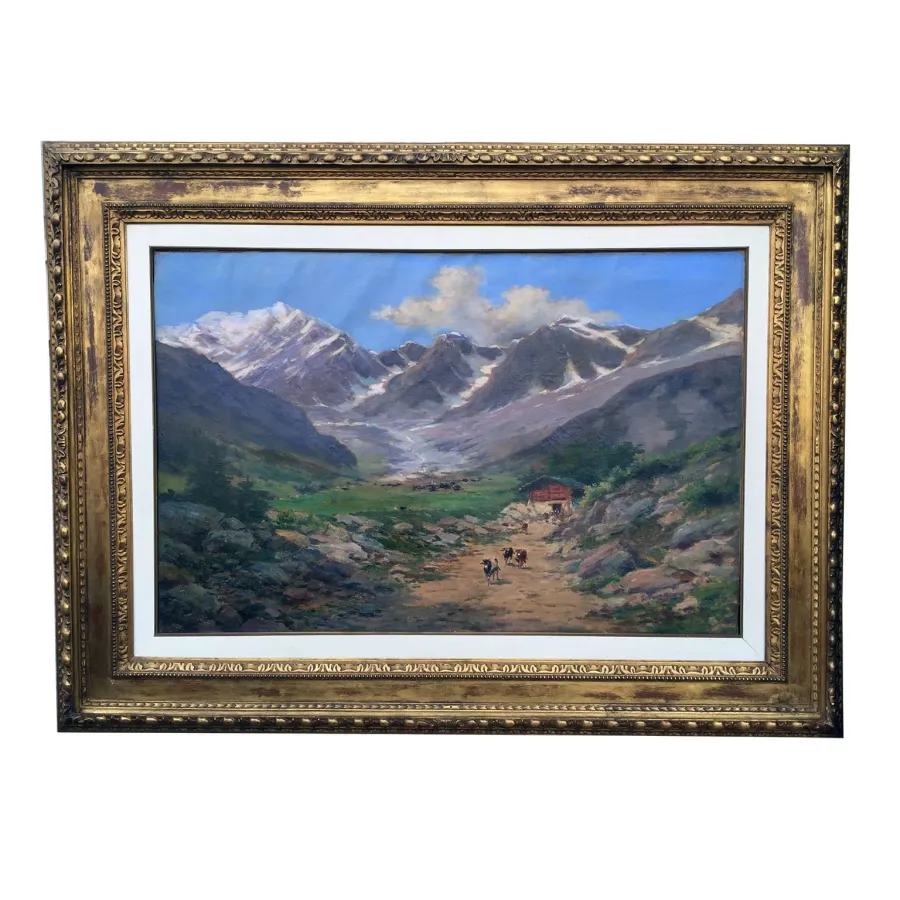
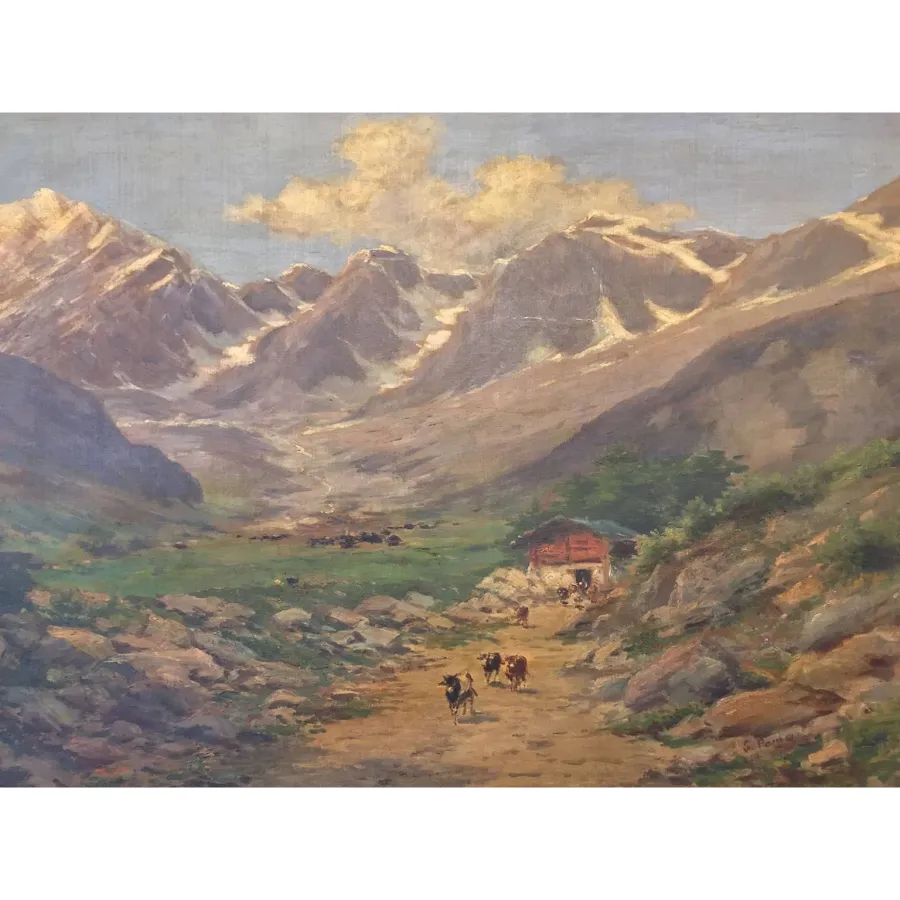
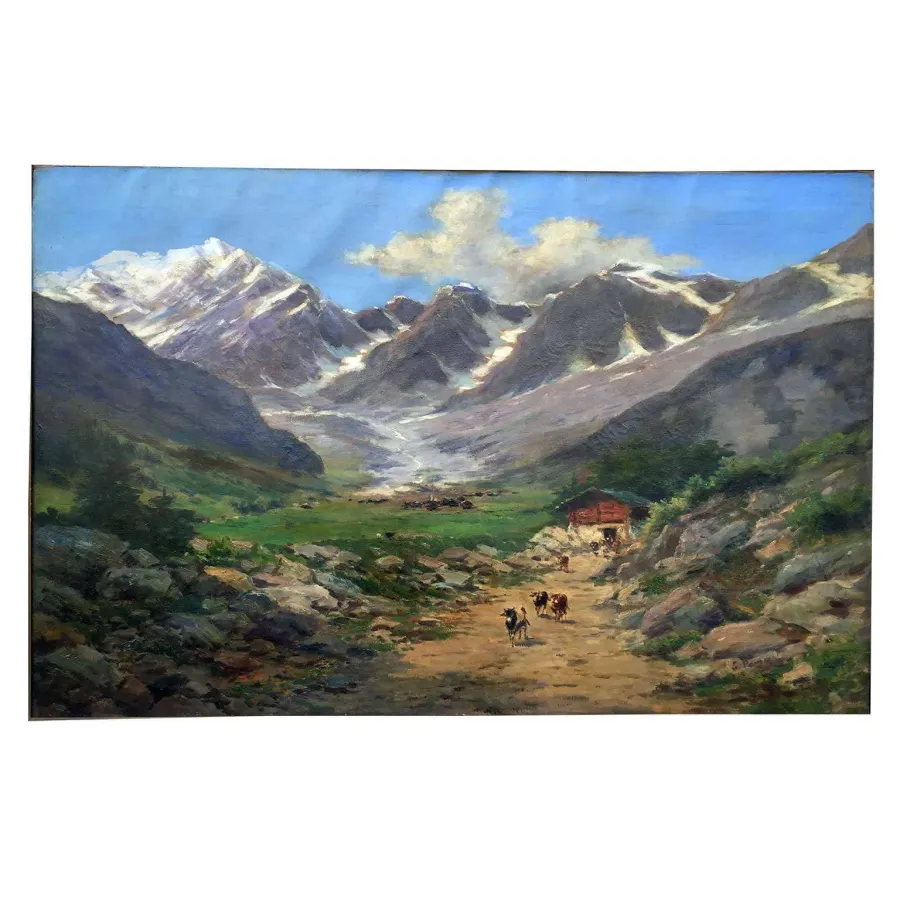
Silvio Poma - an oil painting depicting a mountain landscape, a mountain pasture and grazing cows
Elegant antique furniture and accessories
SKU: ANT- A93
See other products from category Antique paintings or from manufacturer Antyki
Related products by category
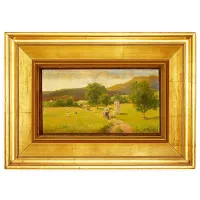
Silvio Poma, Mountain Landscape with a Walk along a Path from the late 19th century, oil painting on birch plywood depicting a pathway traversed by pedestrians in a wooded area at the foot of hills. E

Original antique furniture and accessories can be an excellent idea for decorating our interiors. Today, there is an increasing number of enthusiasts of high-quality vintage products that possess a di
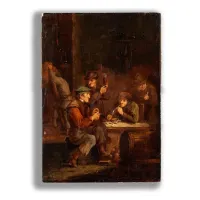
Beautiful antique furniture and accessories can be an excellent idea for decorating our interiors. Today, there is an increasing number of enthusiasts of high-quality vintage products that possess a d
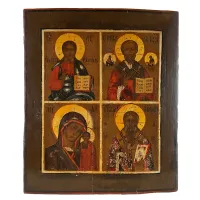
Unique antique furniture and accessories can be an excellent idea for decorating our interiors. Today, there is an increasing number of enthusiasts of high-quality vintage products that possess a dist
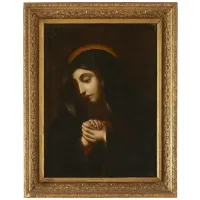
Image of Our Lady of Sorrows on canvas from 1700 in good condition, in a gilded frame with pastiglia from the early 20th century. The painting has been backed and depicts Our Lady of the Seven Sorrows
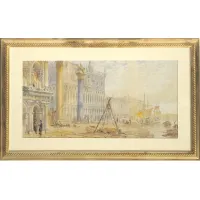
Unique antique furniture and accessories can be an excellent idea for decorating our interiors. Today, there is an increasing number of enthusiasts of high-quality vintage products that possess a dist
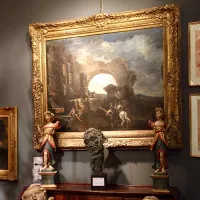
Grand landscape with ruins from 1700. Capriccio with ruins and figures, oil painting on canvas, early 18th century, in good condition. Capriccio is a term coined at the end of the Renaissance and has
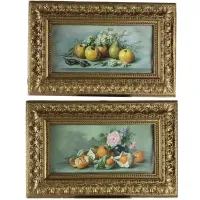
Exclusive antique furniture and accessories can be an excellent idea for decorating our interiors. Today, there is an increasing number of enthusiasts of high-quality vintage items that possess a dist
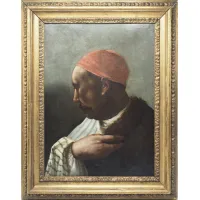
Original antique furniture and accessories can be an excellent idea for decorating our interiors. Today, there is an increasing number of enthusiasts of high-quality vintage products that possess a di
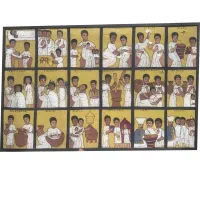
Ancient Ethiopian painting brought to Italy by a diplomat during the Italian occupation of Ethiopia in the late 1930s. This genre scene is divided into eighteen squares surrounded by a black frame and
Description
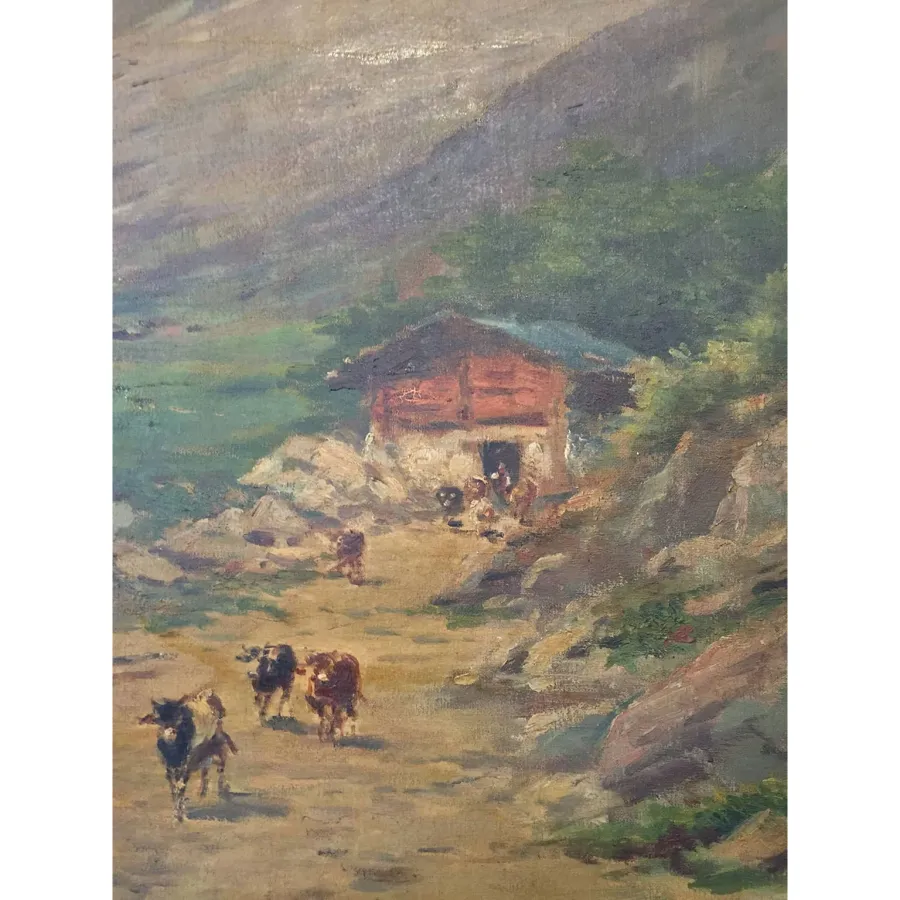
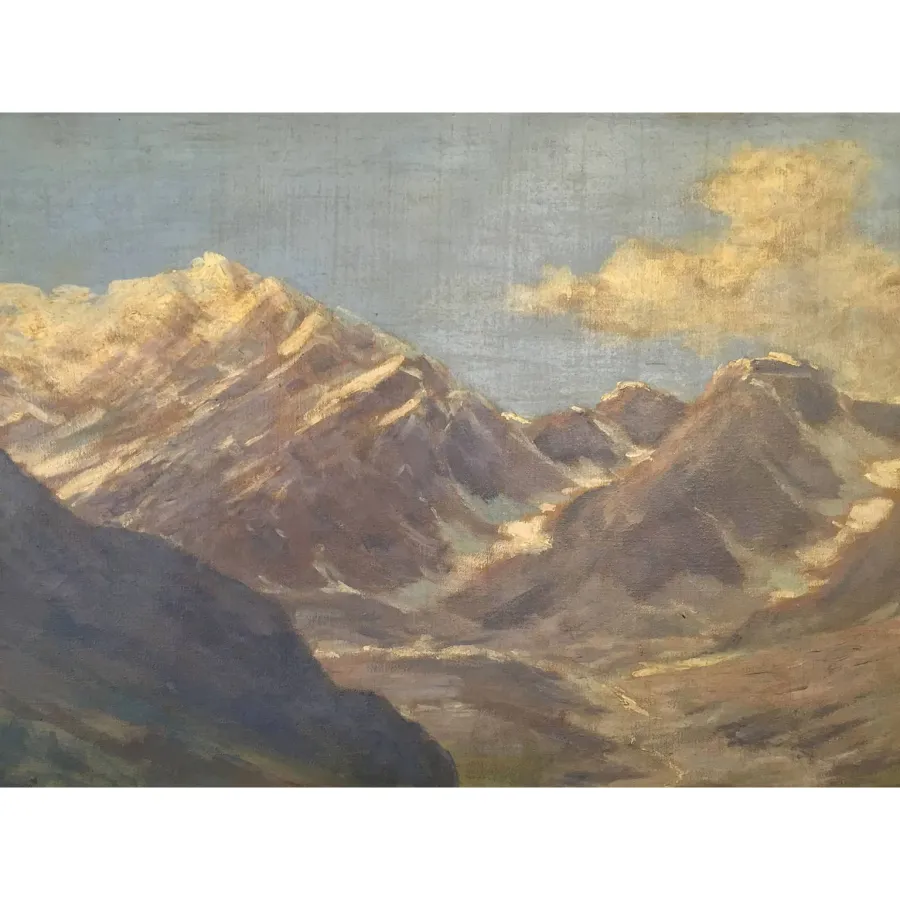
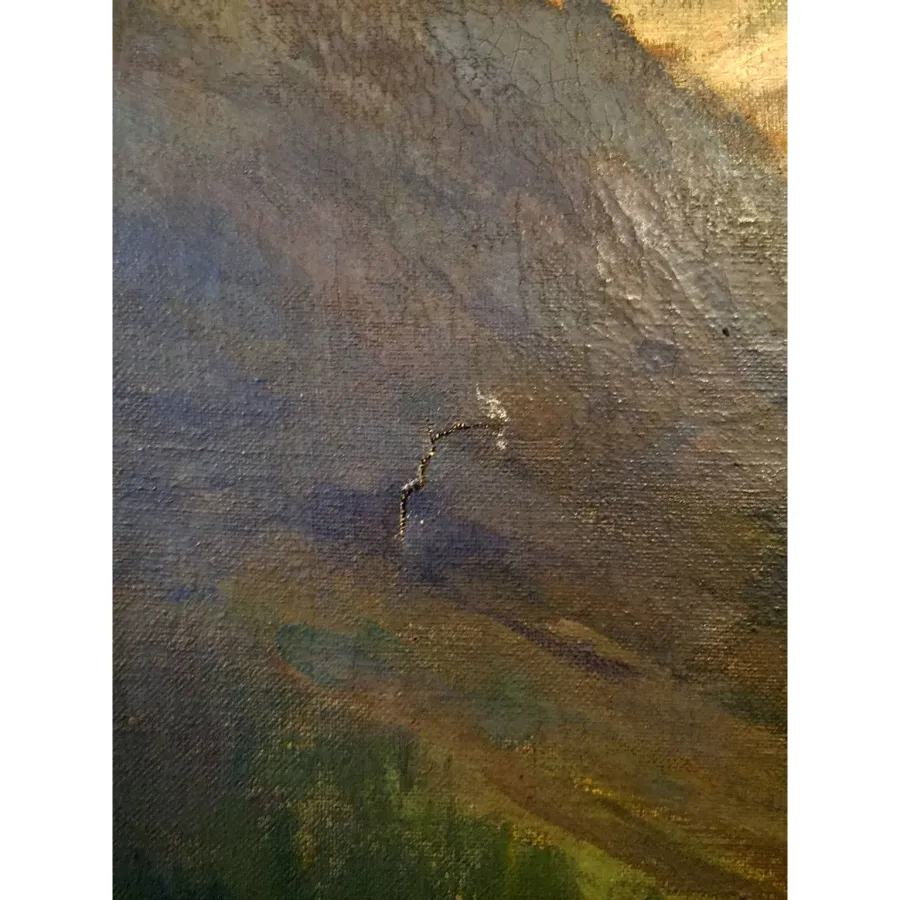
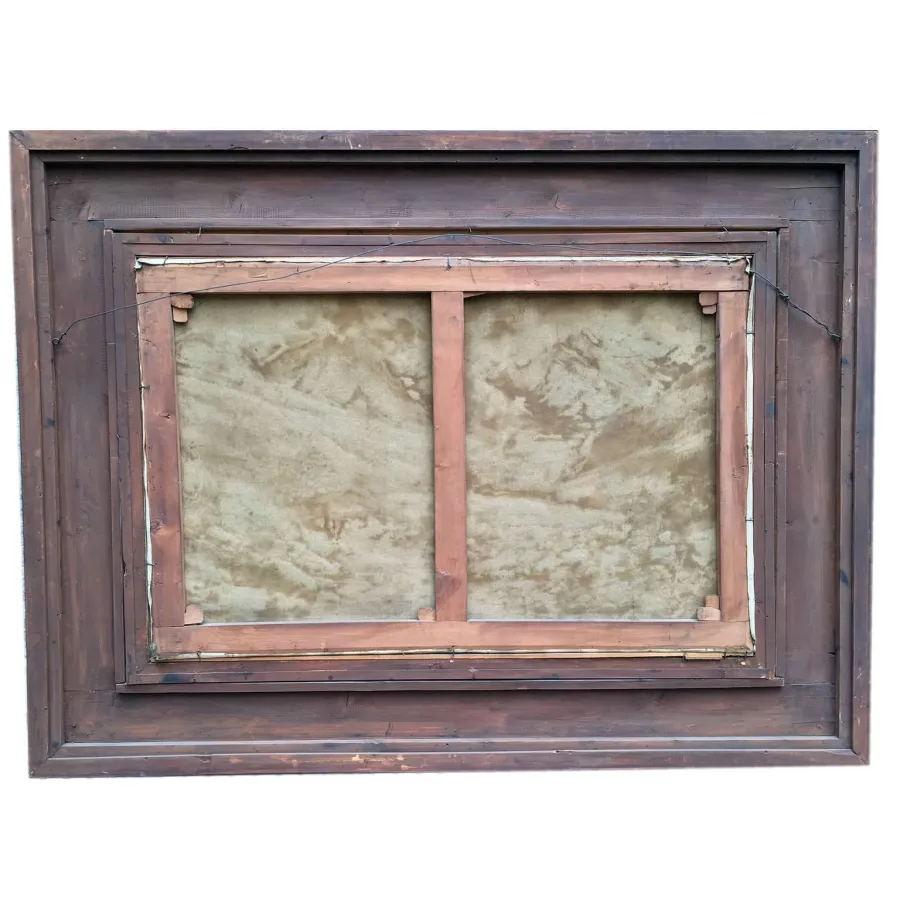
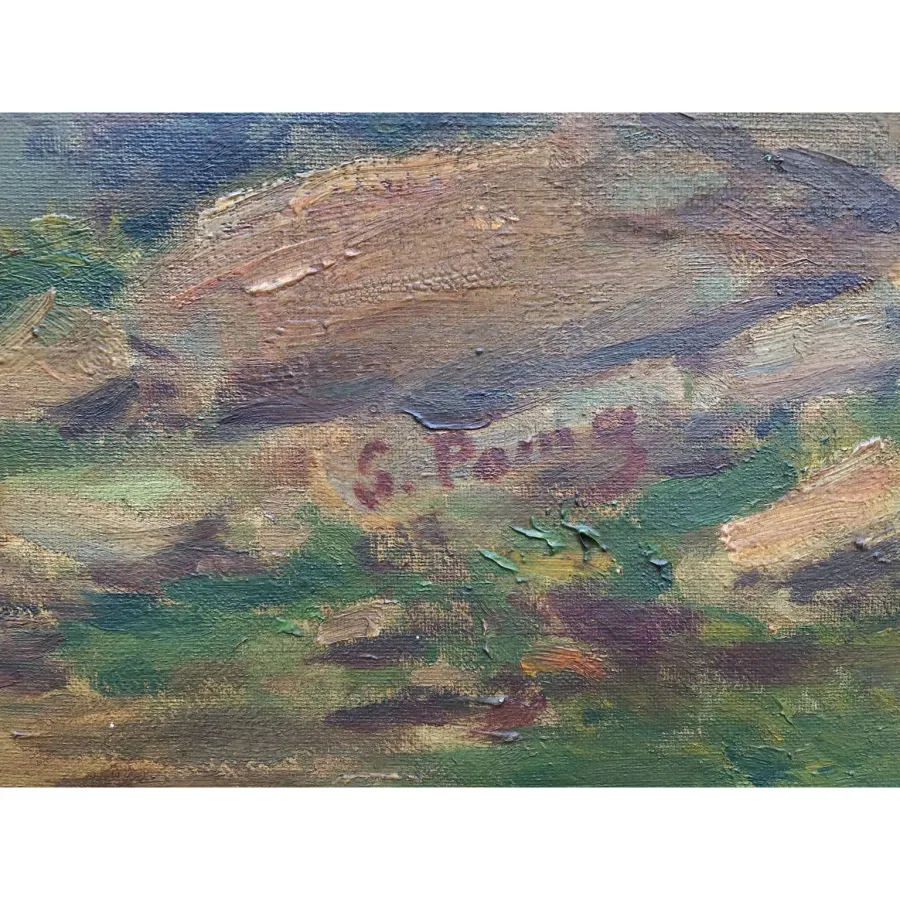
Silvio Poma Mountain Landscape View of Monte Rosa Beginning of the 1900s. Large oil painting, the first canvas depicting a mountain landscape with partially snow-capped peaks, a mountain pasture, and grazing cows. Signed S. Poma in the lower left corner, the work dates from the early 20th century and has its original canvas and has never been restored; this is an advantage because it preserves the painting in its original entirety, though it has a minor flaw in that the canvas is slightly loose, visible through the folds at the top, also seen in published images, and a certain "grooving" of the paint ending in the central part of the painting (to the left of the cows). Furthermore, after cleaning, the original pigment colors would resurface, and the painting would gain different brightness and depth (to give a very basic idea, the snow on the mountain peaks would return to white, thus affecting the entire chromatic scale of the work). The frame is original, made of carved and gilded wood, from which we only removed the velvet covering the passe-partout, which had become irreparably worn and was replaced with ivory-colored varnish.
Silvio Poma (Trescore Balneario, 1840 – Turate, 1932) was an Italian painter considered one of the most prominent landscape painters of Lombard Verismo at the end of the 19th century.
This relaxing view of the mountains, Monte Rosa and the broad valley below the eastern slopes of the massif, taken from the Piedmont side, probably from Macugnaga, comes from a private collection in Milan and is in good condition.
The canvas has been cleaned and a small tear repaired. The painting is now presented as a photographic reproduction; slight looseness and minimal nicks on the outer edges, masked and protected by the frame, can only be repaired by relining the canvas.
The Verbano landscape appears frequently in Poma’s works. The piece again features a veristic language that characterizes his painting, which has been evident since the artist’s early days, from the early seventies until almost the end of the century. The depicted view uses a traditional compositional structure, providing an indefinite foreground with a slightly blurred urban agglomeration, enlivened by some patches of grazing cows, contrasted with the panoramic depiction of the majestic background landscape.
He volunteered in the Second War of Independence and later pursued a military career, but in 1866, after contracting malaria, he left the army. Upon returning to Milan, he attended the studios of Giovan Battista Lelli and Gerolamo Induno, both soldier-painters, whom he encountered during the military campaign of 1859. Several historical paintings were removed; most of his production consists of landscapes and seascapes, including Monte Rosa and the Prealps from Lake Maggiore, exhibited in Milan at the National Art Exhibition in 1906.
He debuted at the Fine Arts Exhibition in Brera in 1869, but his first official awards came only in the mid-1870s: in 1876, he won the Mylius Prize from the Brera Academy of Fine Arts for a canvas with a historical theme set in a broad natural and romantic context; in 1877, one of his landscapes was purchased at the National Exhibition in Naples by Vittorio Emanuele II. He was a modest and kind person. In Bergamo, at the Galleria della Permanente, a commemorative exhibition was held in 1946, featuring twenty-four works, some of which are very significant.
Prestigious antique furniture and accessories can be an excellent idea for decorating our interiors. Currently, there is a growing number of enthusiasts for high-quality vintage items that have a distinct character and soul. This is a nod to history, craftsmanship, and the creation of classic and timeless furniture. There are many different styles in antique furniture, each with its own distinctive features.
Many styles characterize antique furniture, but a few of the most important can be distinguished. Eclectic furniture refers to the 19th century, marked by the popular Biedermeier style. Its variants in the early years of this century include neo-Gothic, Gothic, Rococo, Louis Philippe style, and finally the English Victorian style. By the end of the century, these styles evolved into pseudo-styles of classicism, Renaissance, and Baroque.
Furniture and accessories in the Empire style date back to the period between the late 18th and early 19th centuries. Everything originated from Napoleon's reign, which imposed a significant resemblance and references to Roman and Greek ornamentation.Neoclassical furniture is associated with the Louis XVI style, which also strongly references ancient architecture. Interesting and noteworthy are all antique products in the Rococo style and Louis XV. Next is Baroque, whose name derives from the Portuguese *barocco* – which translates to an irregularly developed pearl. These were highly representative pieces of furniture, literally dripping with glamour and playing a significant role in luxury. Materials were selectively used to further emphasize the grandeur of these items.
Today, we can observe how much influence the Baroque style had on modern classic furniture, which is designed with a strong resemblance to the former era. An important style is also the Renaissance, which flourished in the 15th and 16th centuries and also left a significant mark on furniture-making art. Renaissance style was quite heavy and bulky. Brown stains, moldings, sturdy bases, and bas-reliefs were used. It can certainly be said that these were quite specific products, but they opened up many new possibilities, such as the construction of cabinets or broadly speaking, chest furniture. Here, too, there was an interest in mythology and ancient times, so supports or legs often took animal forms.
Lion paws, eagle heads – these are common features in Renaissance style. Currently, many global brands reproduce such furniture, drawing inspiration from Italian and French creators. This is a manifestation of admiration and respect for the history of the most beautiful Renaissance antiques. It is important to remember that furniture production was perceived differently in each country, so each style had its own distinct character. This is especially important when searching for an elegant antique suitable for your interior.
The most important aspect of elite antique furniture is originality. This is ultimately crucial from the buyer’s perspective, as many counterfeits circulate on the market. Luxury Products provides a certificate confirming the product’s compliance with the actual description and photographs. We have appraisers, art experts, historians, and specialists from around the world at your disposal.
Attributes / Details
| SKU | ANT- A93 |
| Manufacturer | Antyki |
| Model | A93 |
| Size | Height: 137 (86) cm Width: 182 (130) cm |
| Age | XX |
| Year | 1901 |
| Destiny | To living room |
See catalog
Reviews
No reviews for this product.