

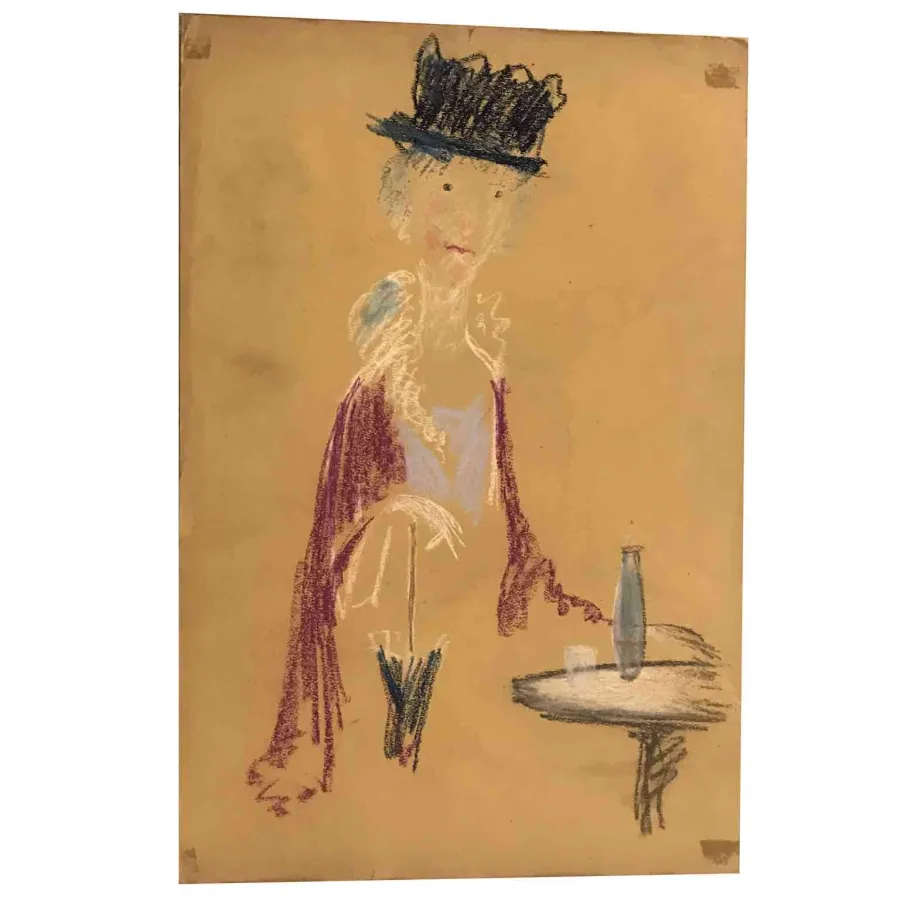
Antonio Vangelli Portrait of a girl from around 1950, drawn with chalk on paper, in good condition
Luxury antique furniture and accessories
SKU: ANT-A529
See other products from category Antique paintings or from manufacturer Antyki
Related products by category
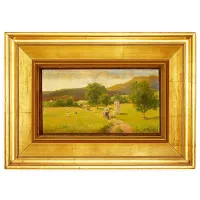
Silvio Poma, Mountain Landscape with a Walk along a Path from the late 19th century, oil painting on birch plywood depicting a pathway traversed by pedestrians in a wooded area at the foot of hills. E
Original antique furniture and accessories can be an excellent idea for decorating our interiors. Today, there is an increasing number of enthusiasts of high-quality vintage products that possess a di
Beautiful antique furniture and accessories can be an excellent idea for decorating our interiors. Today, there is an increasing number of enthusiasts of high-quality vintage products that possess a d
Unique antique furniture and accessories can be an excellent idea for decorating our interiors. Today, there is an increasing number of enthusiasts of high-quality vintage products that possess a dist
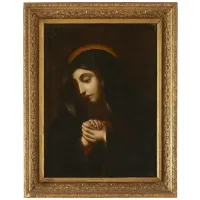
Image of Our Lady of Sorrows on canvas from 1700 in good condition, in a gilded frame with pastiglia from the early 20th century. The painting has been backed and depicts Our Lady of the Seven Sorrows
Unique antique furniture and accessories can be an excellent idea for decorating our interiors. Today, there is an increasing number of enthusiasts of high-quality vintage products that possess a dist
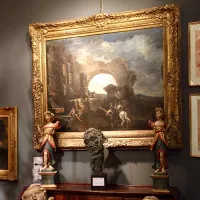
Grand landscape with ruins from 1700. Capriccio with ruins and figures, oil painting on canvas, early 18th century, in good condition. Capriccio is a term coined at the end of the Renaissance and has
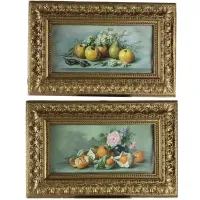
Exclusive antique furniture and accessories can be an excellent idea for decorating our interiors. Today, there is an increasing number of enthusiasts of high-quality vintage items that possess a dist
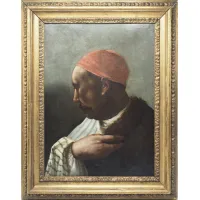
Original antique furniture and accessories can be an excellent idea for decorating our interiors. Today, there is an increasing number of enthusiasts of high-quality vintage products that possess a di
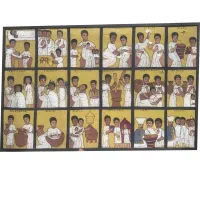
Ancient Ethiopian painting brought to Italy by a diplomat during the Italian occupation of Ethiopia in the late 1930s. This genre scene is divided into eighteen squares surrounded by a black frame and
Description
Antonio Vangelli Portrait of a Girl from around 1950. Drawn with chalk on paper in good condition.
Antonio Vangelli De Cresci was born in Rome (in 1915, according to the Roman Quadriennale archive) and began his painting career in 1938 under the guidance of his father and brothers. His artistic maturity developed at the “Roman School” from 1943 alongside painters Giulio Turcato and Emilio Vedova. He shared acquaintances with them in Rome during the 1940s, such as Giuseppe Ungaretti, Leonardo Sinisgalli, Cesare Zavattini, Giorgio Caproni, and Carlo Betocchi. He attended the main artists of that time: painters including Pericle Fazzini, Orfeo Tamburi, Toti Scialoja, and Renato Guttuso. During World War II, he participated in the Roman resistance movement as an supporter, together with Giulio Turcato, Mimmo Spadini, Giovanni Omiccioli, Domenico Purificato, and others. He began exhibiting in 1943, participating in the IV National Art Quadriennale with a work titled “Bozzetto”. In 1948, he was among the exhibitors at the V Quadriennale in Rome with the piece “Landscape”, and at the IX Quadriennale in Rome, inaugurated on November 20, 1965, he exhibited “Rhapsody No. 8 in Red”. That same year, at the “La Saletta” gallery in Frosinone, Antonio Vangelli took part in a group exhibition with Vincenzo Ciardo, Antonio Enotrio, Giulio Turcato, Michele Rosa, Pier Carlo Pantieri, and Mario Russo.
From 1945 to 1950, he abandoned Roman landscapes to focus on industrial scenes and themes such as “railways, suburban roads, gas and industrial complexes, river ports, gasometers, various factories, and railway bridges” with colors drawing from “the sound of intense blue or dark red on brown or black masses…”. Between 1950 and 1952, Vangelli’s works depict fields, scenes, and circus figures. The years 1955-1965 mark a period during which he was particularly interested in a cycle of works on the Tower of Babel, galaxies, and the atomic bomb.
He passed away in Rome on December 14, 2003.
Luxurious antique furniture and accessories can be an excellent idea for decorating our interiors. Currently, there is a growing number of enthusiasts for high-quality vintage items that possess a specific character and soul. This is a nod to history, craftsmanship, and the design of classic and timeless furniture. There are many different styles in antique furniture, each with its distinctive features.
Many styles characterize antique furniture, but a few key ones stand out. Eclectic furniture belongs to the 19th century, during which the beloved Biedermeier style prevailed. Its early 20th-century variants include neo-Gothic, Gothic, Rococo, Louis-Philippe style, and finally the English Victorian style. By the end of the century, these styles evolved into pseudo-classicism, Renaissance, and Baroque styles.
Empire-style furniture and accessories date from the late 18th to early 19th centuries. Everything was influenced by Napoleon’s reign, which imposed a resemblance and references to Roman and Greek ornamentation.
Neoclassical furniture is associated with Louis XVI style, which also strongly references ancient architecture. Interesting and noteworthy are antique products in Rococo style and Louis XV. Next is Baroque, whose name derives from the Portuguese “barocco”—meaning an irregularly developed pearl. These were highly ornate, luxurious furniture pieces designed to radiate splendor and play a significant role in opulence. Exclusive, selectively used materials were employed to further emphasize the grandeur of these items.
Today, we can observe how much the Baroque style has influenced modern classical furniture, which is often designed with a strong resemblance to the historical period. An important style as well is Renaissance, which flourished in the 15th and 16th centuries and also left a significant mark on furniture design. Renaissance furniture was quite heavy and massive, using brown stains, moldings, sturdy bases, and reliefs. These were distinctive products that opened new possibilities, such as the construction of cupboards and broadly speaking, chest furniture. The Renaissance also drew inspiration from mythology and ancient times, with supports and legs often taking animal forms.
Lion paws, eagle heads – these are common sights in Renaissance style. Currently, many global brands recreate furniture crafted in this manner, drawing inspiration from Italian and French artisans. This reflects admiration and respect for the history of the most beautiful Renaissance antiques. It is important to remember that furniture production was perceived differently in each country, so each style had its own distinct character. This is especially important when searching for the perfect exclusive antique for your interior.The most important aspect of elite antique furniture is originality. And this ultimately matters to the buyer, as the market is filled with many forgeries. Luxury Products provides a certificate confirming the product's compliance with the actual description and photographs. We have at your disposal art appraisers, historians, and experts from around the world.
Attributes / Details
| SKU | ANT-A529 |
| Manufacturer | Antyki |
| Model | A529 |
| Age | XX |
| Year | 1950 |
| Destiny | To living room |
See catalog
Reviews
No reviews for this product.