

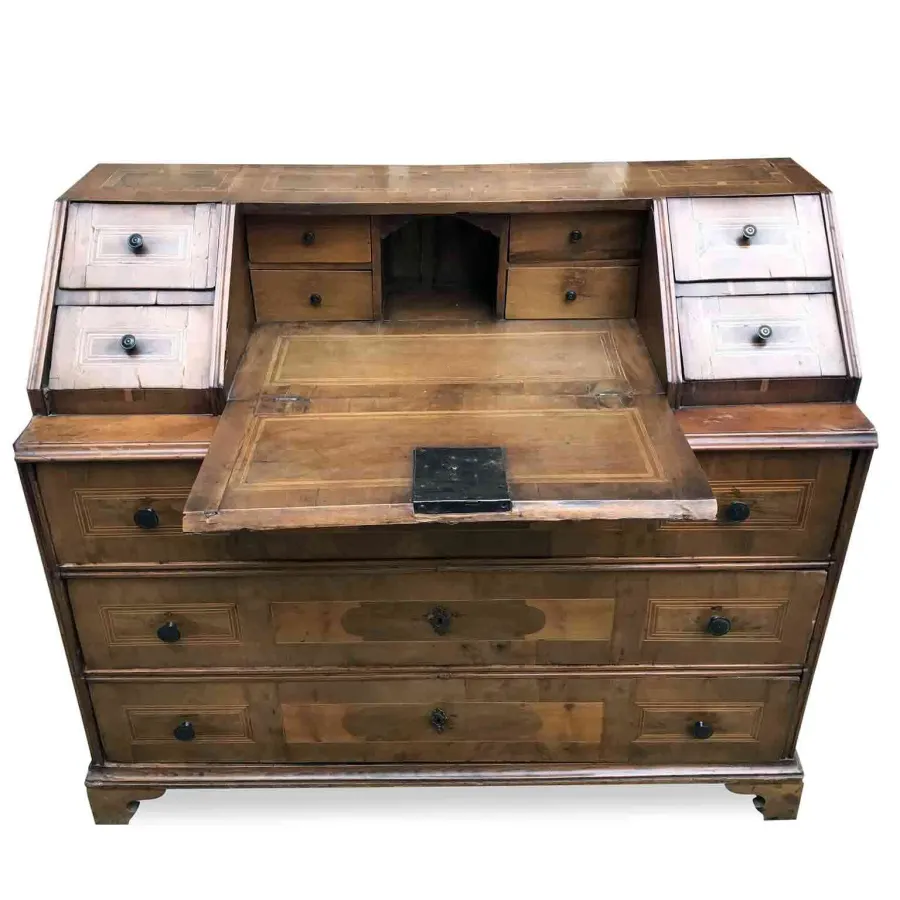
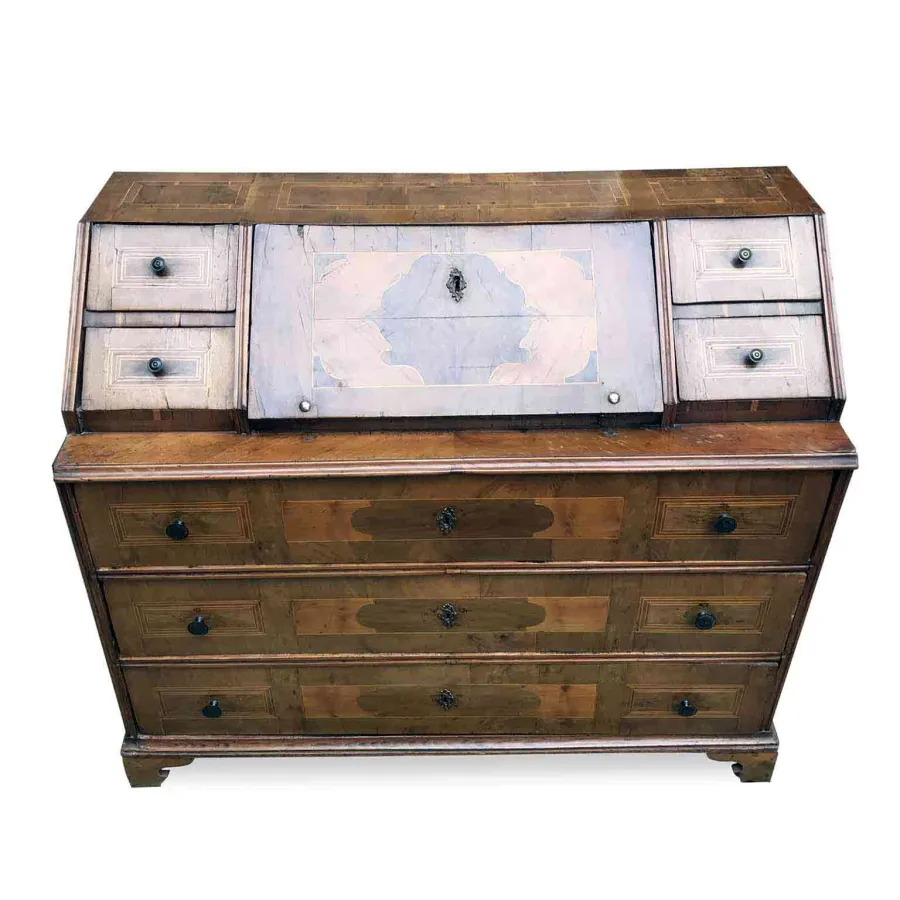
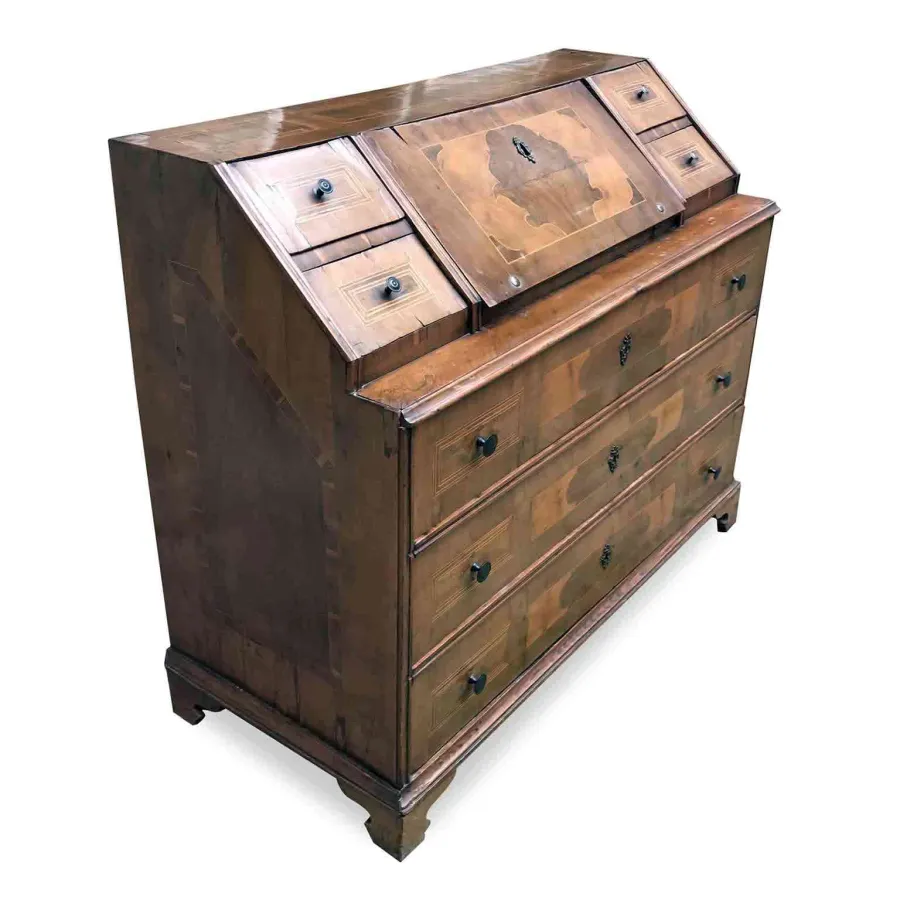
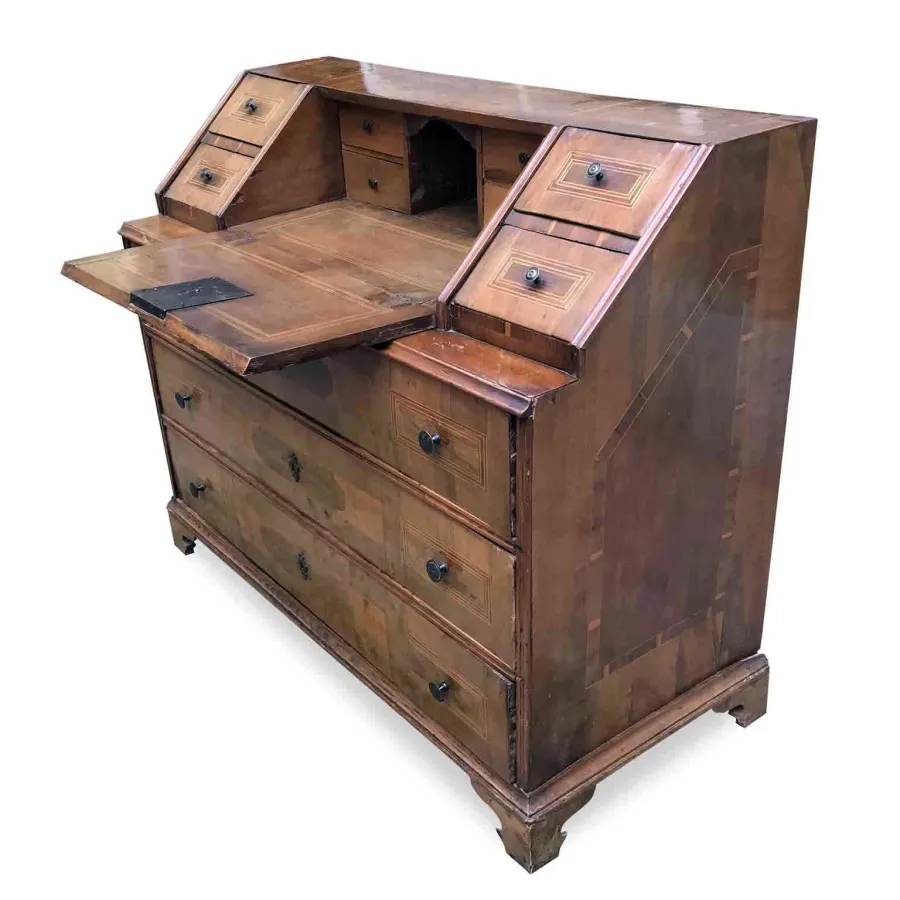
Trentina Lastronata secretary desk - an antique from a private collection in Milan
Elite antique furniture and accessories
SKU: ANT-A608
See other products from category Antique chests of drawers or from manufacturer Antyki with shipping within 24 hours
Related products by category
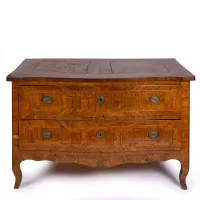
Emilian dresser from 1700, with two drawers, slightly curved, entirely veneered with walnuts, and decorated with inlays of fruitwood, ebony, and boxwood. This masterpiece of Emilian carpentry
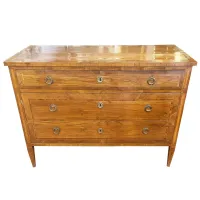
Louis XVI dresser with three drawers and tapered legs in the shape of a truncated pyramid, veneered with various types of wood and featuring square embellishments. The combination of walnut, boxwood,
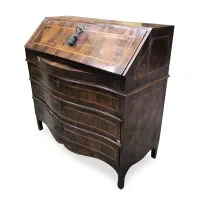
Fully veneered walnut and walnut, featuring a wavy front with three drawers separated by a frame made of cut wood and a profiled apron. A simple hatch conceals two compartments, two drawers, and centr
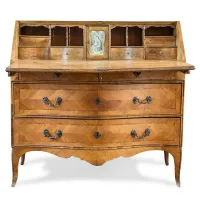
Luigi XV Ligure Half 1700 cabinet, fully veneered and fluted on a wavy front, with two large drawers and two rounded drawers side by side, designed with reduced dimensions for a calatoia. The extraord
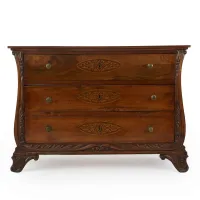
Lyre-shaped box with three drawers, walnut, 1800s, originating from Piedmont, in excellent condition, restored approximately twenty years ago. The support legs are decorated with a front carved motif
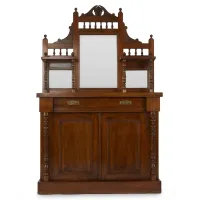
Teak wardrobe with mirror, early 20th century, two-door piece with one drawer, originating from England, in Victorian style, made at the turn of the 19th and 20th centuries. The stand is intricately c
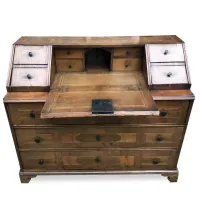
Antica Trentina Lastronata cabinet door made of walnut wood, decorated with geometric threads of maple and cherry. The front of this XVIII-century foldable commode features three large drawers
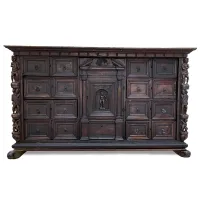
Magnificent, carved in the Genoese style, a walnut coin cabinet with twenty-one drawers, created for storing secrets from the 17th century. This Italian Louis XIV coin cabinet features an extraordinar
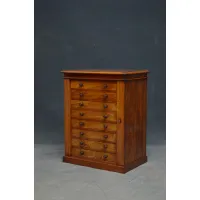
High-quality Victorian-style walnut pattern cabinet, with a figurine on top, above an 8 mahogany drawer lined with original, rotating knobs and flanked by a lock with an original functioning lock and
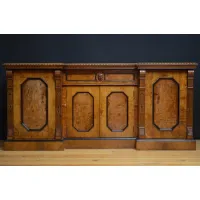
Truly impressive, Victorian, aesthetic movement, breaking center, oak sideboard with ebonized edges, featuring dog-tooth detailing for the upward-facing dog, a single panel drawer with floral decorati
Description
Antica Trentina Lastronata cabinet door made of walnut wood, decorated with geometric threads of maple and cherry.
The front of this XVIII-century foldable commode features three large drawers, topped with a calatoia, and two rows of slanted drawers. It rests on support legs.
It comes from a private collection in Milan, is in good conservation condition, with pull-out drawers and minimal signs of wear, tears, or missing panels, fully functional and dated to the mid-18th century.
Exquisite antique furniture and accessories can be an excellent idea for interior decoration. Currently, there is a growing number of enthusiasts for high-quality vintage items that possess a distinct character and soul. This is a nod to history, craftsmanship, and the creation of classic and timeless furniture. There are many different styles in antique furniture, each with its own distinctive features.
Many styles characterize antique furniture, but a few are particularly prominent. Eclectic furniture belongs to the 19th century, during which the prevailing Biedermeier style emerged. Its early 20th-century variants include neo-Gothic, Gothic, Rococo, Louis-Philippe style, and the English Victorian style. By the end of the century, these styles evolved into pseudo-classicism, Renaissance, and Baroque styles.
Empire-style furniture dates from the late 18th to early 19th century. It originated during Napoleon’s reign, characterized by strong references to Roman and Greek ornamentation.
Neoclassical furniture reflects the Louis XVI style, which also draws heavily from ancient architecture. Noteworthy are antique pieces in Rococo and Louis XV styles. Next is Baroque, a term derived from the Portuguese 'barocco'—meaning an irregularly developed pearl. These were highly decorative pieces meant to radiate splendor and play a significant role in luxury. Materials were carefully selected to emphasize the grandeur of these works.
Today, we can see how much influence the Baroque style has had on modern classical furniture, which is designed with a strong resemblance to the historical period. The Renaissance style is also significant, flourishing in the 15th and 16th centuries and leaving a lasting mark on furniture design. Renaissance furniture was quite heavy and robust, using brown stains, moldings, sturdy bases, and bas-reliefs. These products were quite distinctive but also opened new possibilities, such as the construction of credenzas and broadly speaking, chest-type furniture. Mythology and ancient times also inspired these designs, with supports and legs often taking animal forms.
Lion’s paws, eagle heads—these are common motifs in Renaissance style. Currently, many global brands reproduce furniture inspired by Italian and French artisans, demonstrating admiration and respect for the history of the most beautiful Renaissance antiques. It’s important to remember that furniture production was perceived differently in each country, giving each style a unique character. This is especially important when searching for an elegant antique that suits your interior.
The key aspect of elite antique furniture is originality. Ultimately, this matters most to the buyer, as the market is flooded with fakes. Luxury Products provides documentation confirming the authenticity of each item, matching the description and photos. We also have access to art appraisers, historians, and experts worldwide.
Attributes / Details
| SKU | ANT-A608 |
| Manufacturer | Antyki |
| Model | A608 |
| Material | walnut wood |
| Size | Height: 108 cm Width: 131 - Only the Calatoio top is 67 cm wide Depth: 57 - With the open Calatoio top It is 81 cm deep |
| Age | XVIII |
| Year | around 1700 |
| Condition | Good condition |
| Destiny | To living room |
See catalog
Reviews
No reviews for this product.