

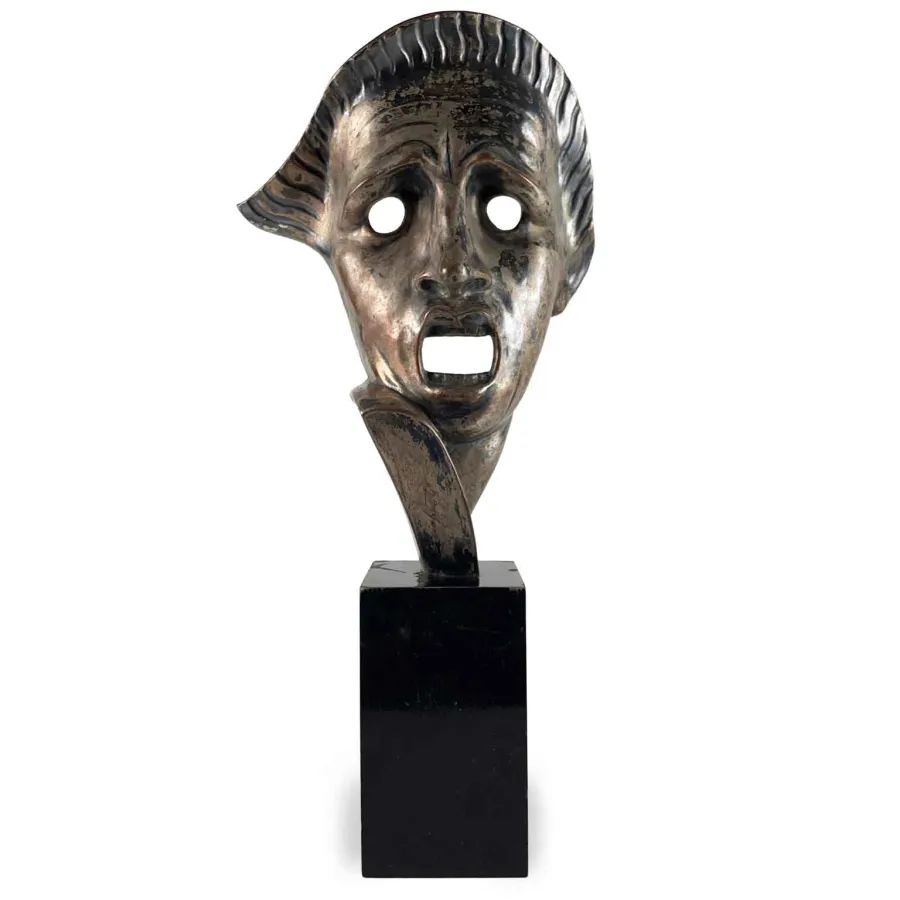
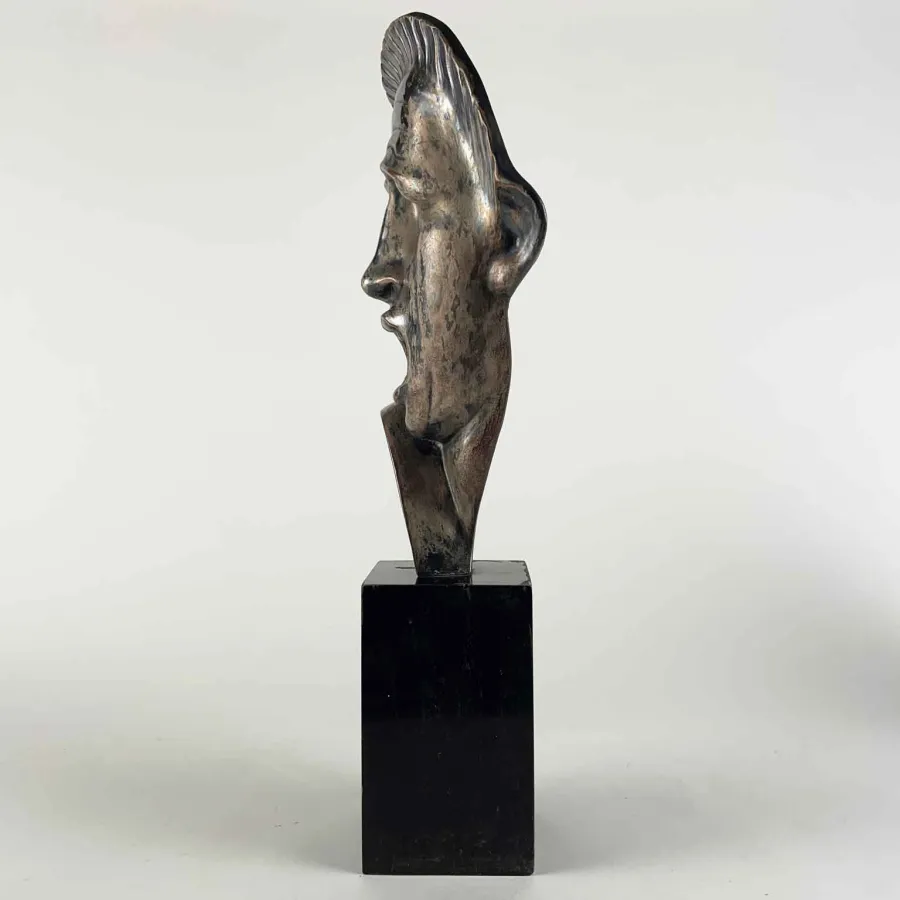

Tragic mask of Cacciapuoti from the 20th century
Luxury antiques
SKU: ANT-A1399
See other products from category Vintage porcelain and ceramics or from manufacturer Antyki with shipping within 24 hours
Related products by category
Ancient porcelain biscuit figurines depicting two women in flowing garments, seemingly about to hold a hat. Southern Italy. Excellent condition. Originates from the first half of 1900. No brand. Bea
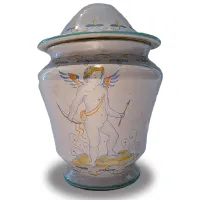
Pair of Deruta vases. One of two ceramic vases from the Deruta manufactory, jars with a polychrome ceramic lid, decorated with putti. Circa 1970. Very good condition.Luxurious antique furniture and a
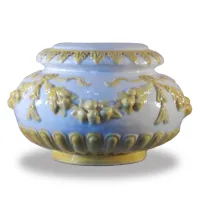
Base of a lamp made of white and yellow ceramics with embossed fruits. Available as a pair. In perfect condition. Circa 1970.Beautiful antique furniture and accessories can be an excellent idea for
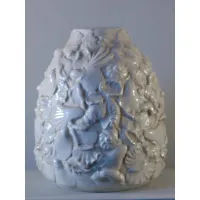
Base lamp made of ceramic with embossed shells.Elegant antique furniture and accessories can be an excellent idea for decorating our interiors. Currently, there is a growing number of enthusiasts of h
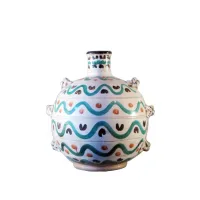
Ceramic vase for a table lamp. The lamp base made of ceramic decorated with geometric motifs in shades of green, ochre, and brown, with side inserts. 1970.Elegant antique furniture and accessories c
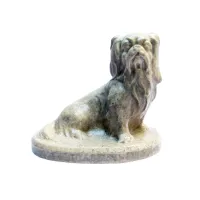
Fontinelle Louis 1886-1964 Pekingese in ceramics. Pekingese dog figure with monochromatic ceramic signed on the back L. FONTINELLE, masterfully designed by Parisian artist Louis Fontinelle (1886-1964
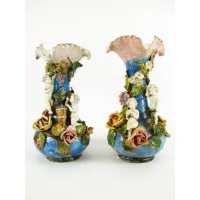
Para of Liberty vases made of polychrome ceramic, bottle-shaped vases with jagged and wavy edges, crafted from polychrome ceramic, Aleksandrian manufactory, with light blue and white-pink backgrounds
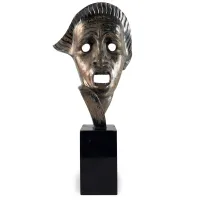
The tragic mask by Cacciapuoti, a figural Art Deco sculpture by Neapolitan artist Guido Cacciapuoti (Naples 1892 - Milan 1953), depicting a tragic mask, made of ceramic, hand-modeled and silver-plated
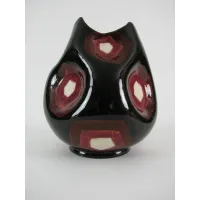
Robbia Gualdo Tadino Vase. A round ceramic flower vase from the mid-20th century with handcrafted niches decorated on a brown background with ivory embellishments; the brand in blue on the bottom from
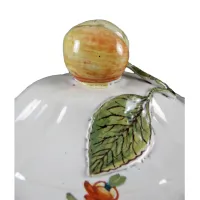
White majolica lid for a vase with an oval shape, featuring ribs and a profiled edge. Painted with polychrome floral, botanical, and zoomorphic motifs. Knob with an apple. Losses and restorations. Ve
Description
The tragic mask by Cacciapuoti, a figural Art Deco sculpture by Neapolitan artist Guido Cacciapuoti (Naples 1892 - Milan 1953), depicting a tragic mask, made of ceramic, hand-modeled and silver-plated on the front.
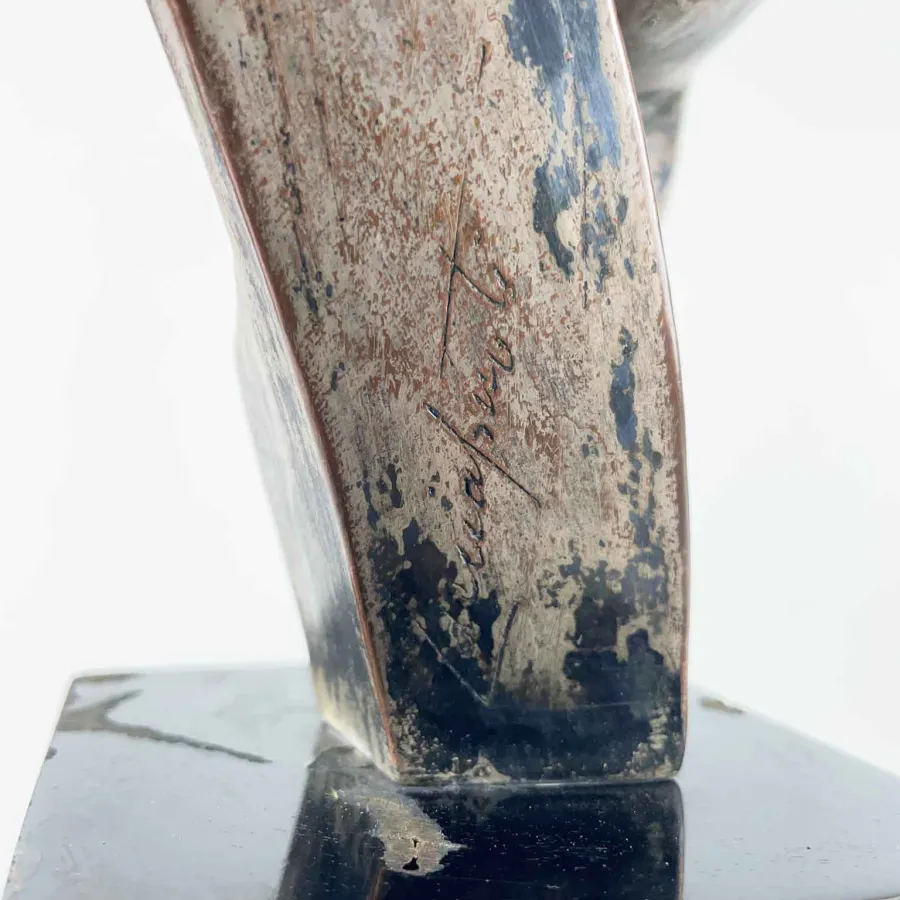
The sculpture is signed on the back by Cacciapuoti and rests on a black lacquered wooden base measuring 16 x 10 x 10 cm in height. It comes from the private collection of a Milanese set designer and is in good condition, with a beautiful oxidized patina.
This tragic mask is a sculptural decorative element representing a human face with exceptional expression, simplified form, stylized and dramatic features. Like a shadow, the mask evokes the category of the double, acting as a curtain that hides to reveal. Dualism is essentially a symbol of Greek masks—the joyful mask of comedy and the sad mask of tragedy. The double meaning of unveiling and hiding is well expressed by the dual etymology of this word: in Latin, *maschera* means person, while in Arabic, *maskharah* means caricature or parody.
Original antique furniture and accessories can be an excellent idea for decorating our interiors. Today, there is a growing number of enthusiasts for high-quality vintage items that possess distinctive character and soul. It’s a nod to history, craftsmanship, and the design of traditional and timeless furniture. There are many different styles in antique furniture, each with its own characteristic features.
Many styles distinguish antique furniture, but a few are particularly prominent. Eclectic furniture refers to the 19th century, especially the Biedermeier style. Its early 20th-century variants include neo-Gothic, Gothic, Rococo, Louis Philippe style, and the English Victorian style. By the end of the century, these styles evolved into pseudo-classicism, Renaissance, and Baroque styles.
Original Empire-style furniture dates from the late 18th to early 19th century, originating from Napoleon’s reign. It is characterized by significant resemblance and references to Roman and Greek ornamentation.
Neoclassical furniture reflects the Louis XVI style, which also strongly references ancient architecture. Noteworthy are antique products in Rococo and Louis XV styles. The next is Baroque, derived from the Portuguese *barocco*—meaning irregularly developed pearl. These were highly decorative pieces meant to radiate splendor and play a significant role in luxury. Selectively used materials emphasized the grandeur of these works.
Today, we can observe how much the Baroque style influenced modern classical furniture, which is designed with a strong resemblance to the historical period. The Renaissance style, flourishing in the 15th and 16th centuries, also left a significant mark on furniture design. Renaissance furniture was quite heavy and massive, often using brown stains, moldings, sturdy bases, and reliefs. These products were quite distinctive but also introduced new possibilities, such as the construction of cupboards and broadly defined chest furniture. Mythology and ancient times inspired these designs, with supports and legs often taking animal forms.
Lion’s paws, eagle heads—these are common features in Renaissance-style furniture. Currently, many global brands reproduce such furniture, inspired by Italian and French creators. This reflects admiration and respect for the history of the most beautiful Renaissance antiques. It’s important to remember that furniture production was perceived differently in each country, so each style had its unique character. This is especially important when searching for a luxurious antique that suits your interior.
The key to stylish antique furniture is originality. Ultimately, this is crucial from the customer’s perspective, as many fakes circulate on the market. Luxury Products provides a certificate confirming the product’s authenticity and compliance with the description and photos. We have appraisers, art experts, historians, and specialists from around the world at your disposal.
Attributes / Details
| SKU | ANT-A1399 |
| Manufacturer | Antyki |
| Model | A1399 |
| Material | ceramics, wood |
| Size | Height: 48 cm Width: 22.5 cm Depth: 11 cm |
| Age | XX |
| Year | 1900 |
| Destiny | To home |
See catalog
Reviews
No reviews for this product.