

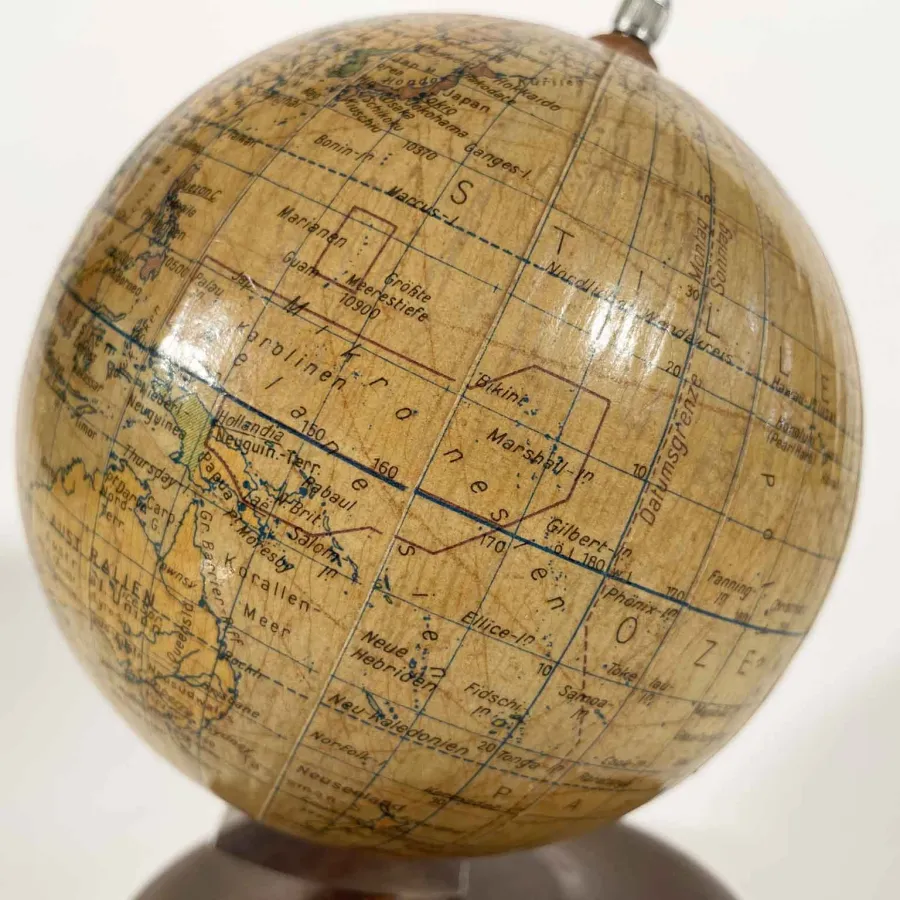
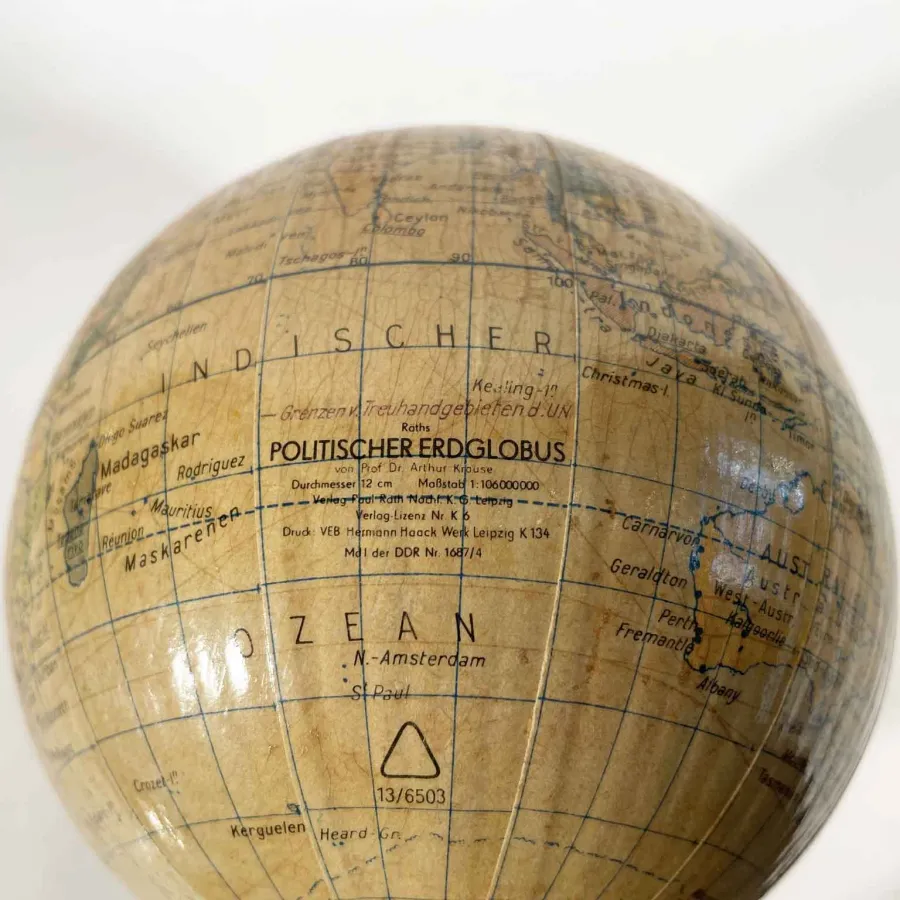
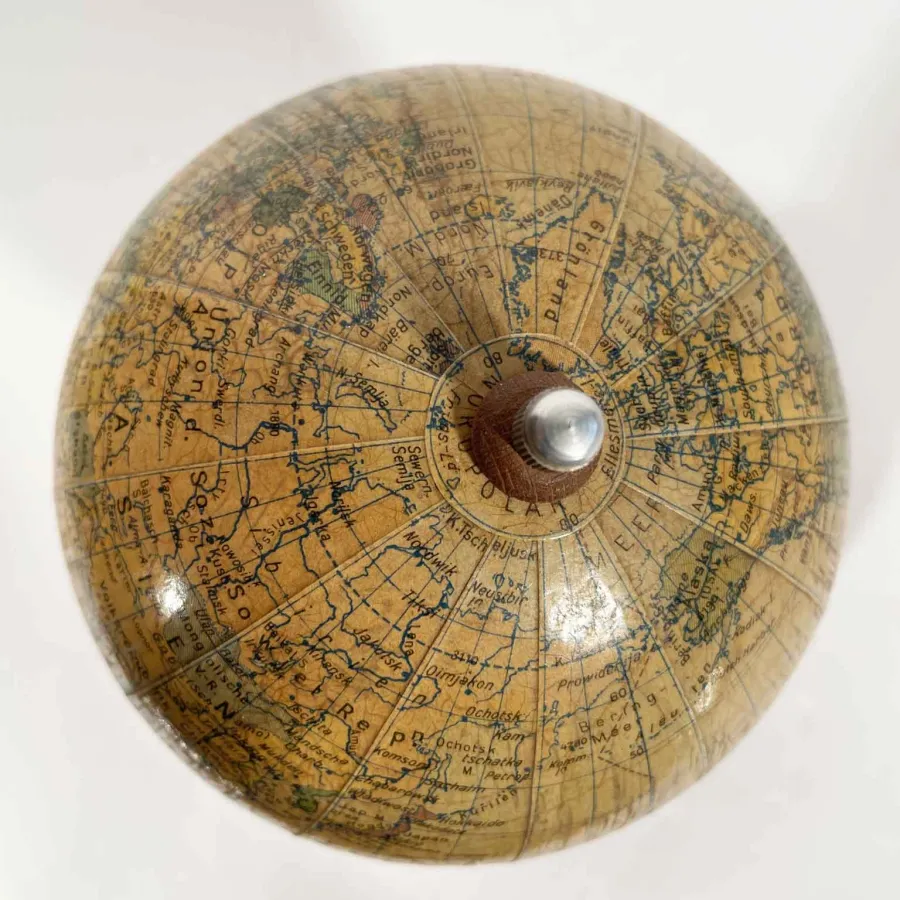
The phenomenal German Globe Räths Arthur Krause from the 20th century
Luxury antiques
SKU: ANT-A1307
See other products from category Decorative globe or from manufacturer Antyki with shipping within 24 hours
Related products by category
Authentic classic designs combined with the highest quality materials create interiors with a history behind them by Authentic Models. It’s an extraordinary story about beautiful objects that fascin
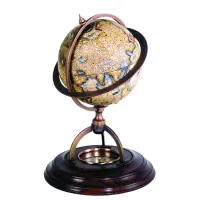
Authentic Models' genuine vintage pieces combined with high-quality materials create interiors with a story behind the brand. It’s an extraordinary story about beautiful products that fascinate love
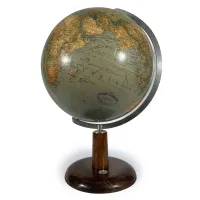
Globus by Paula Oestergaard from around 1950, published by Columbus Verlag, is a geographical globe with a diameter of 33 centimeters, made by the Columbus company based in Berlin and Stuttgart, and u
We are pleased to present to you a renowned brand in the art of sculpture. Since 1988, the well-growing Spanish company Anglada specializes in handcrafted production of exceptionally exclusive
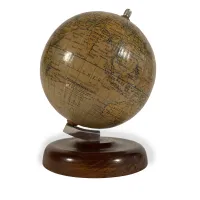
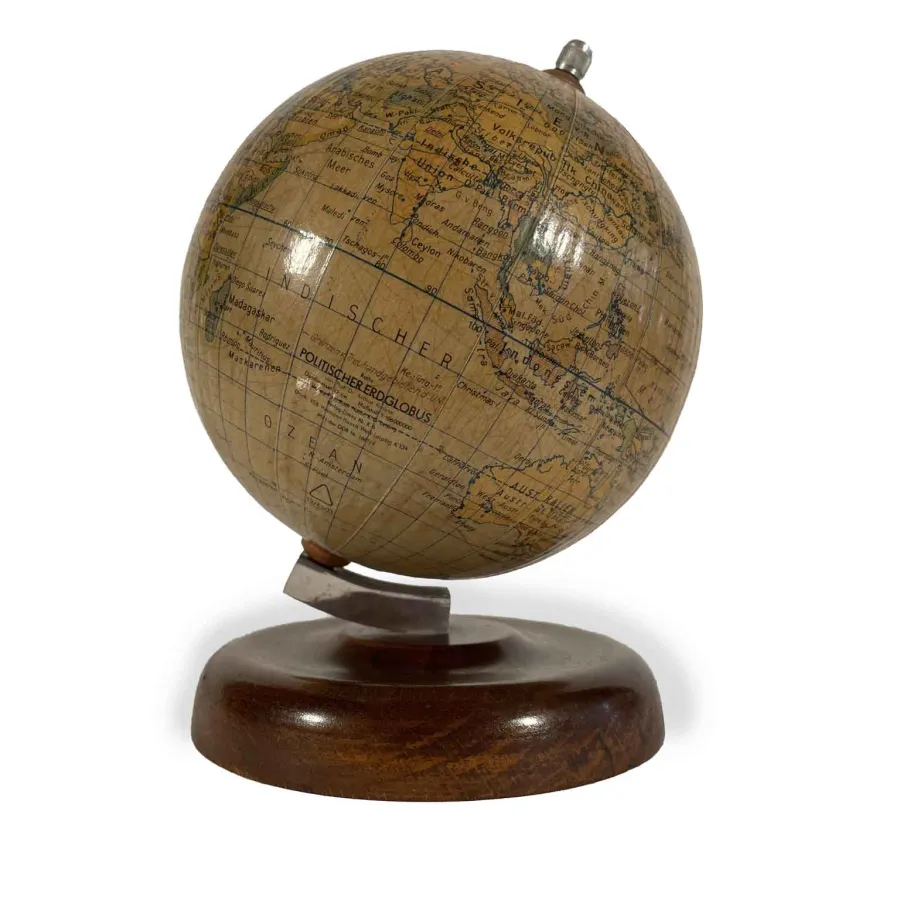
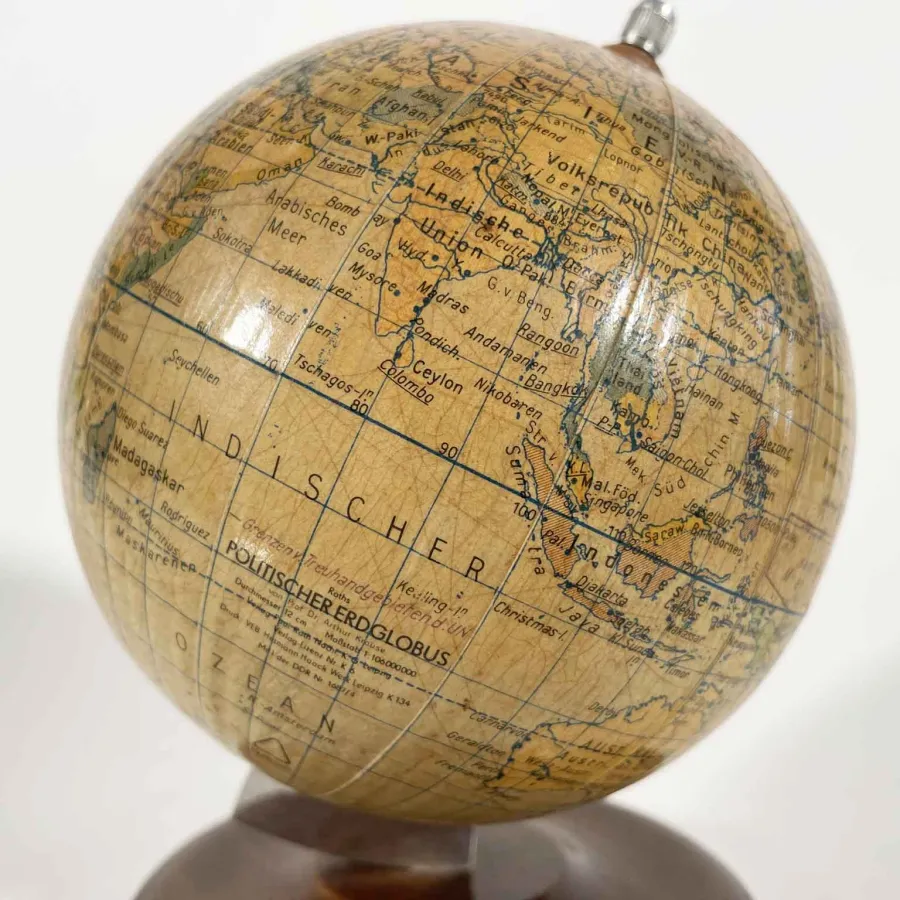
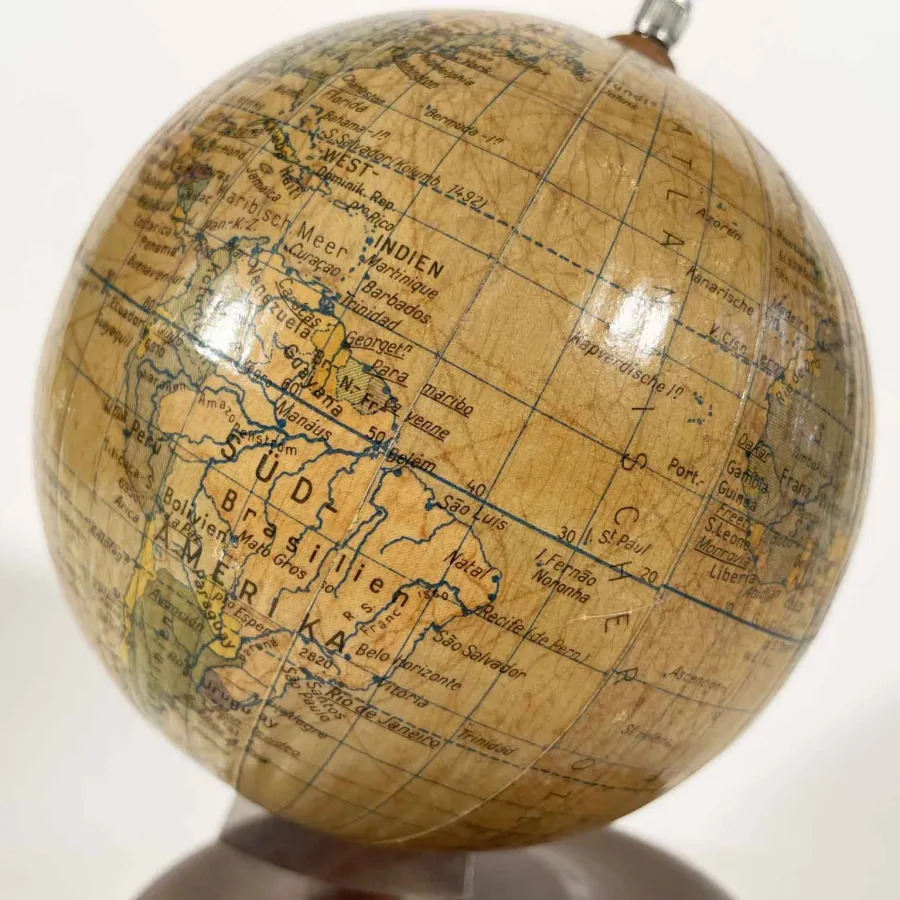
The German globe Räth Arthur Krause, published in Leipzig, GDR 1950, is a small, antique desk globe with a diameter of 12 cm. It features a map printed on twelve segments, mounted on a cardboard sphe
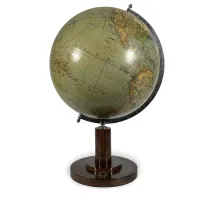
Globus Columbus Terracqueo, circa 1950, mounted on a wooden base consisting of three turned elements; the base element features a recess for a compass, which is missing. The large cardboard globe is d
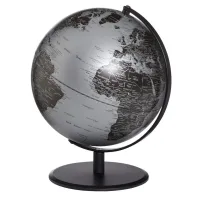
Original design combined with the highest quality materials gives us the synonym of the Emform brand. Which for over 40 years has been developing timeless and modern accessories for desks and homes. I
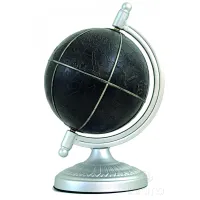
Italfama is one of the world's leading manufacturers specializing in the professional creation of chess boards, pieces, and luxury chess tables. Perfect for players who spend hours at the game as well
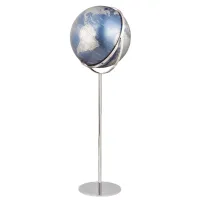
Original design combined with the highest quality materials gives us the synonym of the Troika brand. The German brand has been focusing on the development and sale of globes for about 25 years.Curren
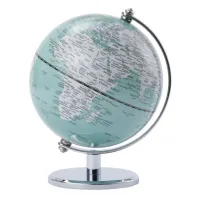
Designer craftsmanship combined with the highest quality materials gives us the synonym of Troika. The German brand has been focusing on the development and sale of globes for about 25 years.Currently
Description
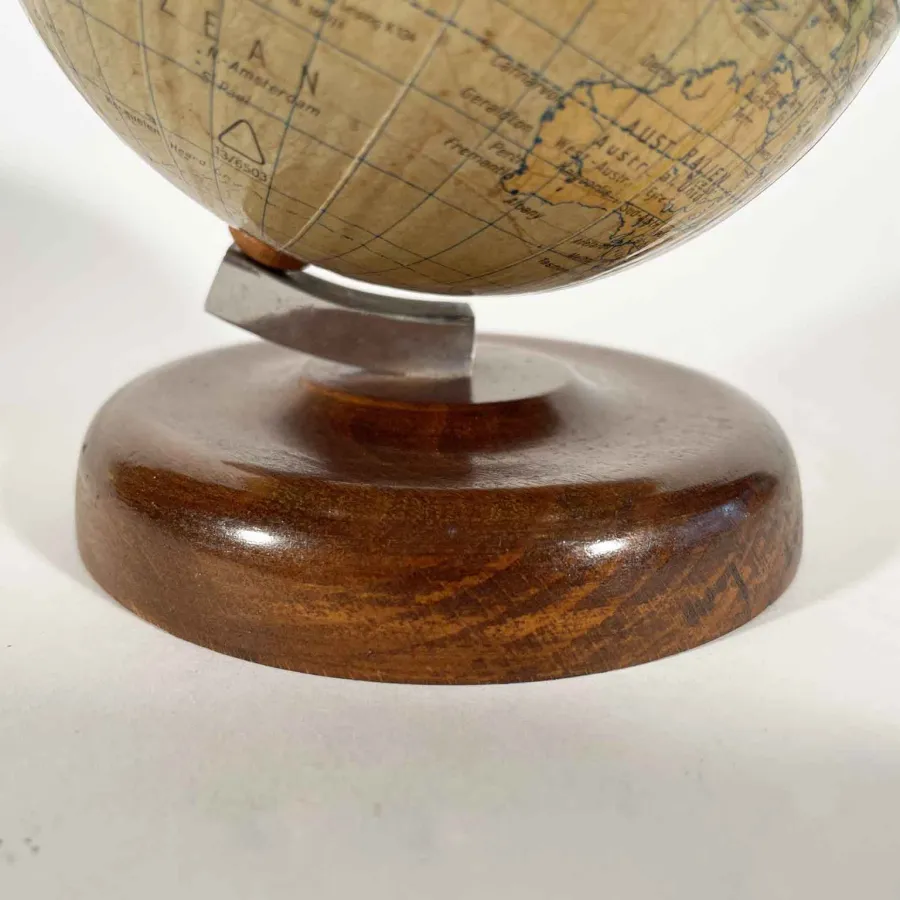
The German globe Räth Arthur Krause, published in Leipzig, GDR 1950, is a small, antique desk globe with a diameter of 12 cm. It features a map printed on twelve segments, mounted on a cardboard sphere; the globe rotates around a central axis with a metal support and is held by a round, turned oak base with a diameter of 11 cm. The item is in good condition, with a beautiful original patina.
The Räth company, specializing in globe production, was founded in 1917 by Paul Räth (1881-1929). After the founder's death, the company was taken over by the Leipzig geographer, Professor Dr. Arthur Krause. The company still operates today, having survived two world wars and the dissolution of GDR. Some Räth globes are exhibited in major museums, for example, the first electrically illuminated globe from 1921 can be seen at the Globe Museum in the Austrian National Library.
This is an antique German-language globe from the 1950s. It shows the political division of the world, borders of individual countries, and the names of nations. It is an important cartographic tool providing information about global political geography and is used for educational and research purposes.
Original antique furniture and accessories can be an excellent idea for decorating our interiors. Today, there is an increasing number of enthusiasts of high-quality vintage products that have a distinct character and soul. It is a nod to history, craftsmanship, and the design of traditional and timeless furniture. There are many different styles in antique furniture, each with its own distinctive features.
Many styles characterize antique furniture, but a few are particularly notable. Eclectic furniture refers to the 19th century, especially the Biedermeier style. Its early variations include neo-Gothic, Gothic, Rococo, Louis-Philippe style, and the Victorian English style. By the end of the century, these styles evolved into pseudo-classicism, Renaissance, and Baroque styles.
Original Empire-style furniture dates from the late 18th to early 19th century, originating from Napoleon’s reign. It features significant similarities and references to Roman and Greek ornamentation.
Neoclassical furniture, associated with Louis XVI, also draws heavily from ancient architecture. Noteworthy are antique products in the Rococo style and Louis XV. Baroque, whose name derives from the Portuguese 'barocco'—meaning an irregularly developed pearl—was characterized by highly ornate furniture designed to radiate splendor and play a significant role in luxury. Materials were selectively used to emphasize the grandeur of these pieces.
Today, we can observe how much the Baroque style influenced modern classical furniture, which is designed with a strong resemblance to the historical period. The Renaissance style, flourishing in the 15th and 16th centuries, also left a significant mark on furniture design. Renaissance furniture was quite heavy and massive, often using brown stains, with moldings, strong bases, and relief decorations. These products were quite distinctive but also opened new possibilities, such as the construction of credenzas and broadly defined chest furniture. Mythology and ancient times inspired these designs, with supports and legs often taking animal forms.
Lion paws, eagle heads—these are common motifs in Renaissance-style furniture. Currently, many global brands reproduce such furniture, inspired by Italian and French creators. This reflects admiration and respect for the history of the most beautiful Renaissance antiques. It is important to remember that furniture production was perceived differently in each country, giving each style a unique character. This is especially important when searching for luxurious antique pieces suitable for your interior.
The most important aspect of stylish antique furniture is originality. Ultimately, this is crucial from the customer’s perspective, as many forgeries circulate on the market. Luxury Products provides documentation confirming the product’s authenticity and compliance with the description and photos. We also have experts in art appraisal, history, and specialists from around the world at your disposal.
Attributes / Details
| SKU | ANT-A1307 |
| Manufacturer | Antyki |
| Model | A1307 |
| Material | cardboard, metal, wood-oak |
| Size | Height: 16.5 cm Width: 12 cm |
| Age | XX |
| Year | 1900 |
| Destiny | To office |
See catalog
Reviews
No reviews for this product.