

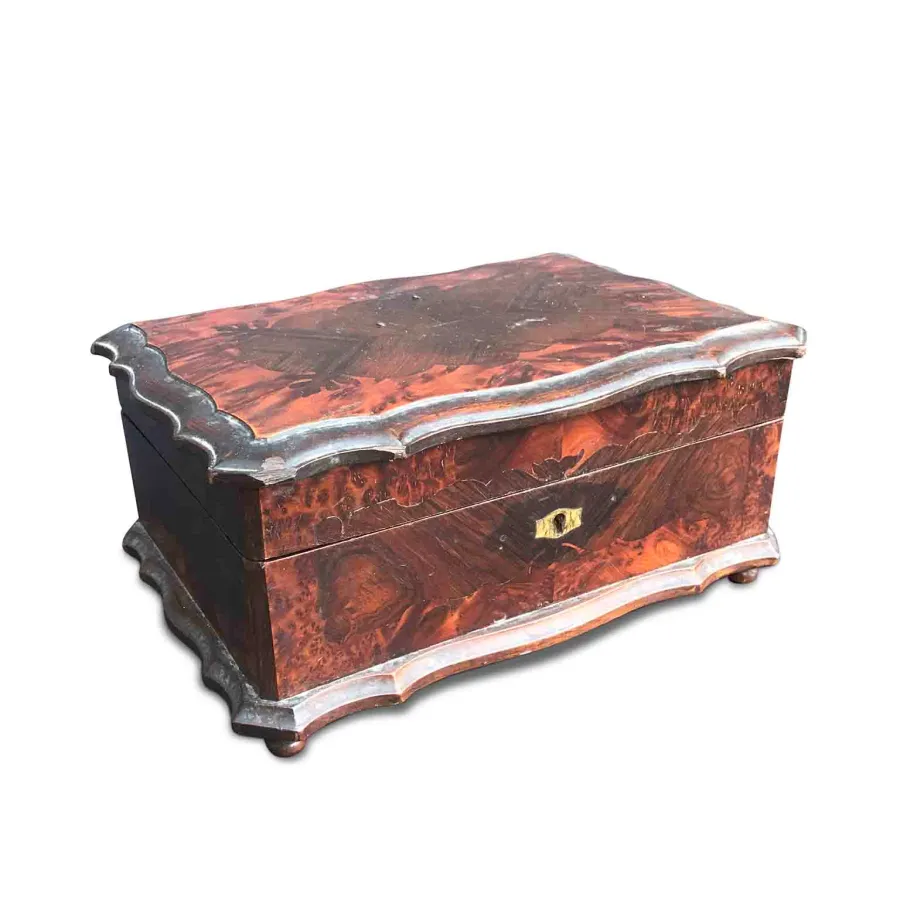
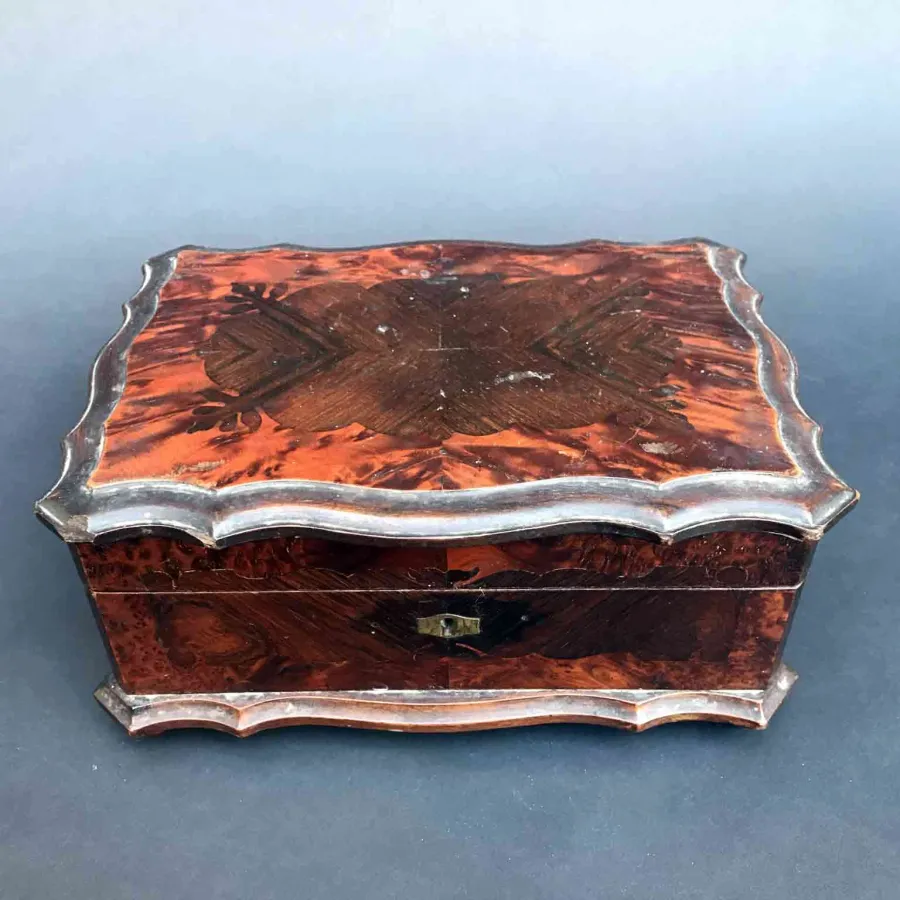
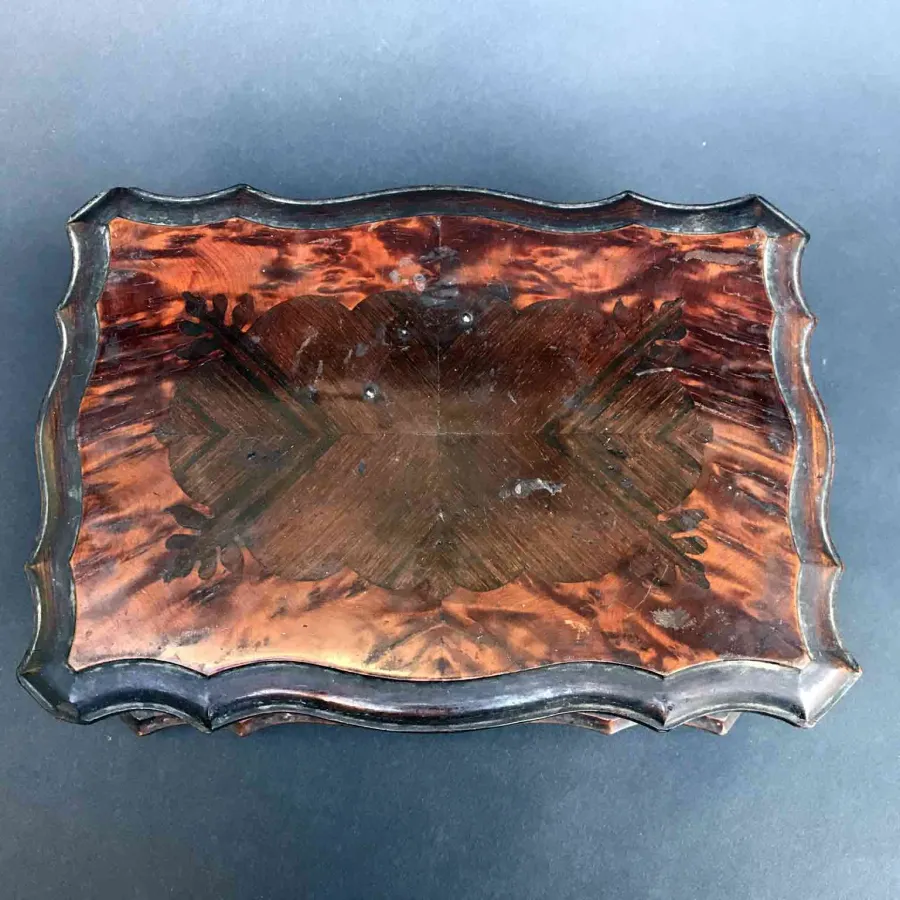
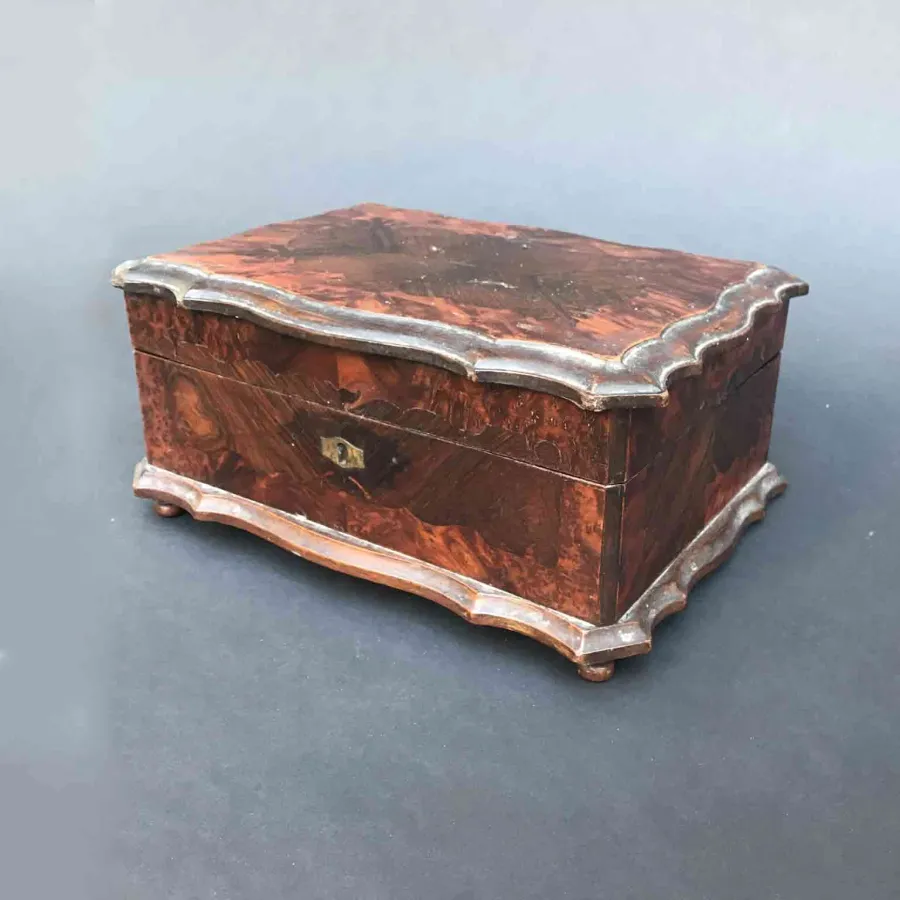
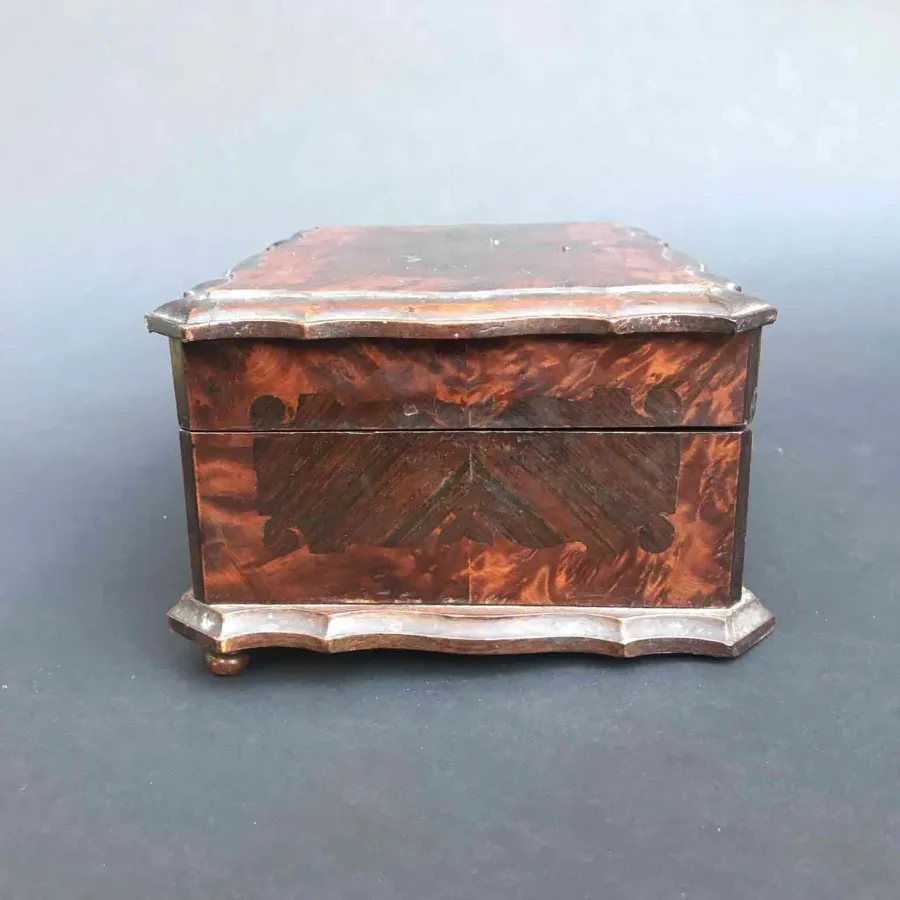
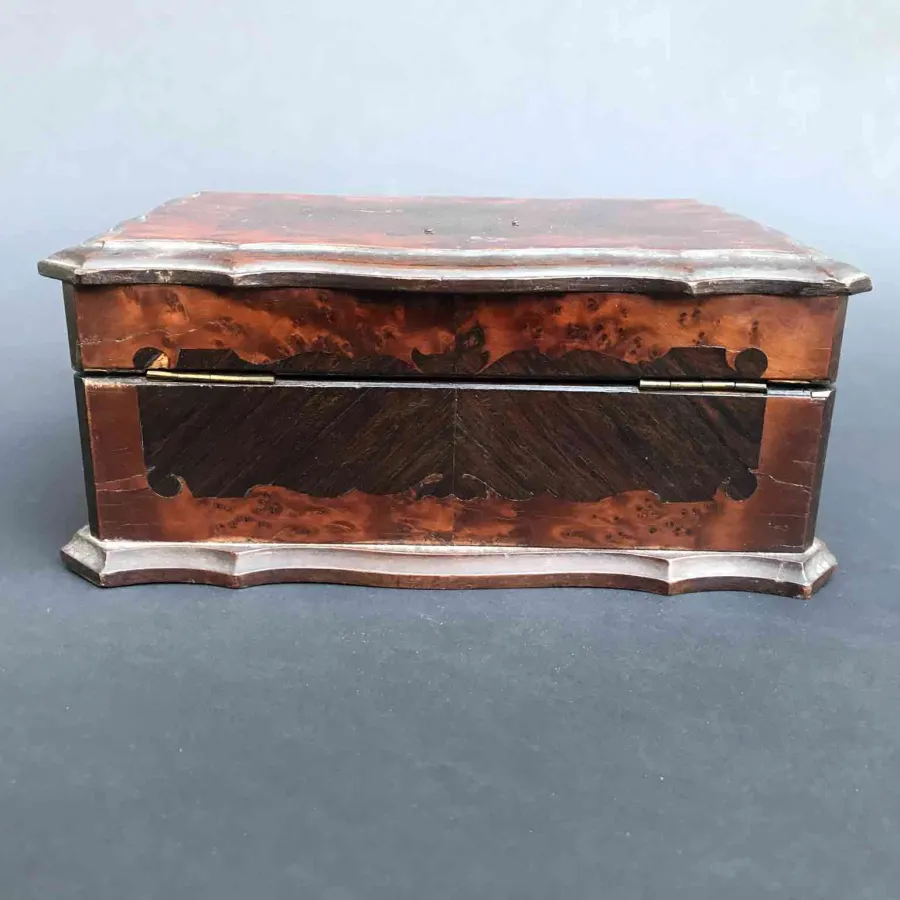
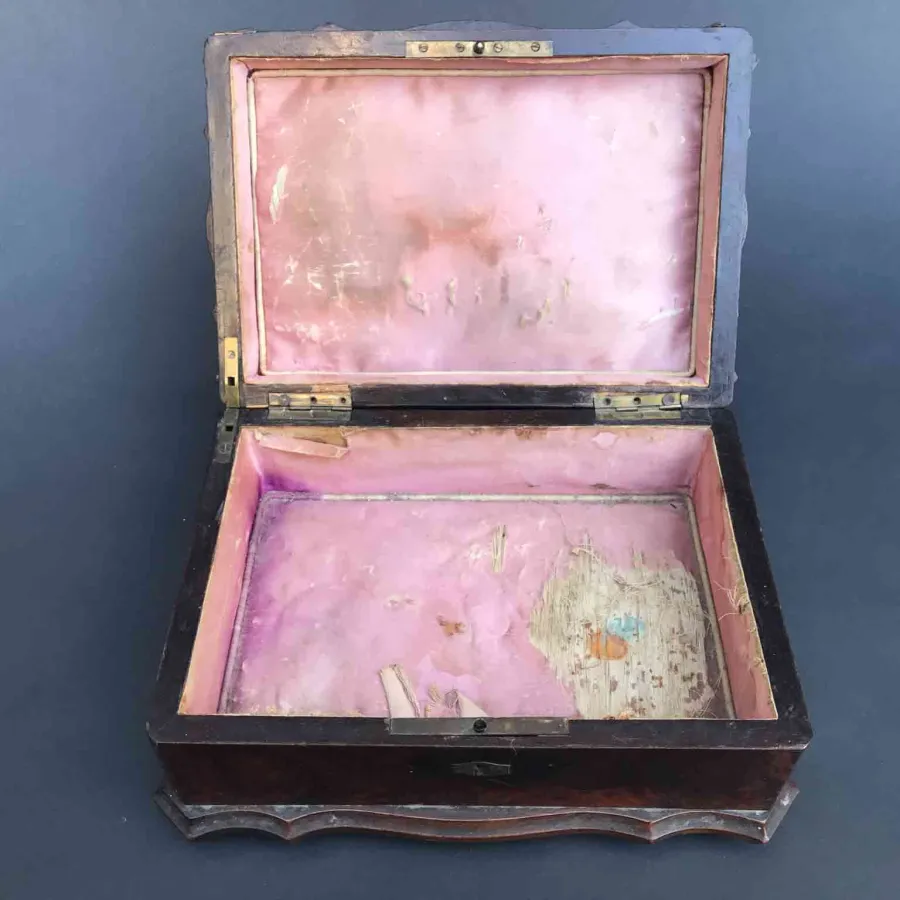
Lastronato jewelry box, 19th century
Stylish antique furniture and accessories
SKU: ANT-A491
See other products from category Antique caskets and boxes or from manufacturer Antyki
Related products by category
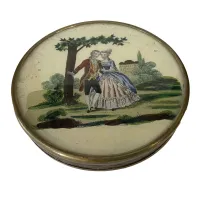
French candy box from the late 19th century, decorated on the lid with an elegant gentleman holding a sword, depicted standing in the middle of a rural landscape with architecture. The round-shaped bo
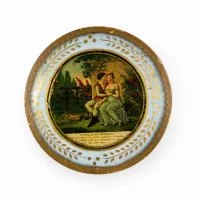
French confetti box, early 19th century, with a round shape, depicting a pair of lovers sitting and embracing in a flower garden. They are surrounded by a triple gold-black border, as well as a beauti
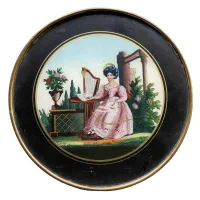
Sweet box from a French restaurant era, decorated on the lid with an elegant woman sitting in a flower garden with a harp in the background. The box is entirely made of cardboard, with two brass rings
Luxury antique furniture and accessories can be an excellent idea for decorating our interiors. Today, there is a growing number of enthusiasts of high-quality vintage products that possess a distinct
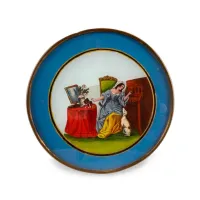
Confetti box, France, early 19th century, round, decorated on the lid depicting a woman sitting in an armchair between a girl and a small table with a vase of flowers and various objects. A dog at the
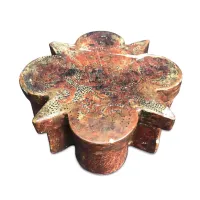
Polylobed Silvered and Bulinata box from the late 18th century, made of bent and curved wood, up to a four-rayed polylob. The finish was originally silver, now almost completely oxidized. The decorati
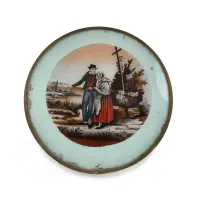
French box of the early 19th century, decorated on the lid with a scene depicting a young couple shown in a rural setting, in a flat landscape, beside a cross and small shrubs. The scene is surrounded
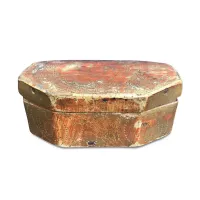
Ancient Golden and Bulinata box made from white walnut with an octagonal shape, gilded along the edges and lid, decorated with engraving that creates a pleasing decorative frame. The box is in good c
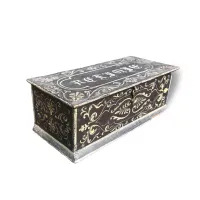
A lacquered reliquary box of French origin from the 19th century, made of oak wood and lacquered with a gray background / monk's robe decorated with palmettes and racemes in shades of white; on the l
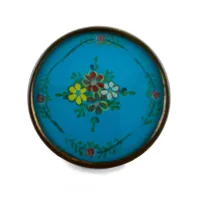
Round candy box from the early 19th century with double decoration on the lid and base featuring small wildflowers painted in white, red, and yellow, surrounded by an outer pattern of flowers and leav
Description
Lastronato jewelry box from the late 1800s. A small mahogany veneered box with a lid, featuring palisander mirrors with a sheet thickness of approximately 2 mm. Missing two rear legs and a key for the lock. Minor chips in the profiling of the frame of the base and supporting rear legs. Interior lined and upholstered with silk (to be refurbished). Originates from France, requires restoration.
Beautiful antique furniture and accessories can be an excellent idea for decorating our interiors. Currently, there is a growing number of enthusiasts of high-quality vintage products that possess a distinct character and soul. This is a nod to history, craftsmanship, and the creation of classic and timeless furniture. There are many different styles in antique furniture, each with its own distinctive features.
Many styles characterize antique furniture, but we can highlight a few of the most important. Eclectic furniture refers to the 19th century, during which the prevailing Biedermeier style was popular. Its early 20th-century variants include neo-Gothic, Gothic, Rococo, Louis-Philippe style, and finally the English Victorian style. By the end of the century, these styles evolved into pseudo-classicism, Renaissance, and Baroque styles.
Empire-style furniture dates from the late 18th to early 19th century. It originated during Napoleon’s reign, characterized by significant similarities and references to Roman and Greek ornamentation.
Neoclassical furniture reflects the Louis XVI style, which also draws heavily from ancient architecture. Interesting and noteworthy are antique products in Rococo and Louis XV styles. Next is Baroque, a term derived from the Portuguese 'barocco'—meaning an irregularly developed pearl. These were highly decorative pieces designed to radiate splendor and play a significant role in luxury. Materials were chosen selectively to emphasize the grandeur of these items.
Today, we can observe how much influence the Baroque style has had on modern classical furniture, which is often designed with a strong resemblance to the historical period. An important style is also Renaissance, which flourished in the 15th and 16th centuries and left a significant mark on furniture-making. Renaissance furniture was quite heavy and robust, often using brown stains, moldings, sturdy bases, and bas-reliefs. These products were quite distinctive but also opened new possibilities, such as the construction of credenzas and broadly defined chest furniture. Mythology and ancient themes were also popular, with supports and legs often taking animal forms.
Lion paws, eagle heads—these are common motifs in Renaissance-style furniture. Many global brands now reproduce such pieces, inspired by Italian and French artisans. This reflects admiration and respect for the history of the most beautiful Renaissance antiques. It’s important to remember that furniture production was perceived differently in each country, giving each style a unique character. This is especially important when searching for an exclusive antique that suits your interior.
The most important aspect of stylish antique furniture is originality. Ultimately, this is crucial for buyers, as many forgeries circulate on the market. Luxury Products provides documentation confirming the product’s authenticity and compliance with the description and photos. We have experts in art appraisal, historians, and specialists from around the world at your disposal.
Attributes / Details
| SKU | ANT-A491 |
| Manufacturer | Antyki |
| Model | A491 |
| Material | wood, silk |
| Size | Height: 12.5 cm Width: 27 cm Depth: 19 cm |
| Age | 19th century |
| Year | 1801 |
| Destiny | On the desk |
See catalog
Reviews
No reviews for this product.