

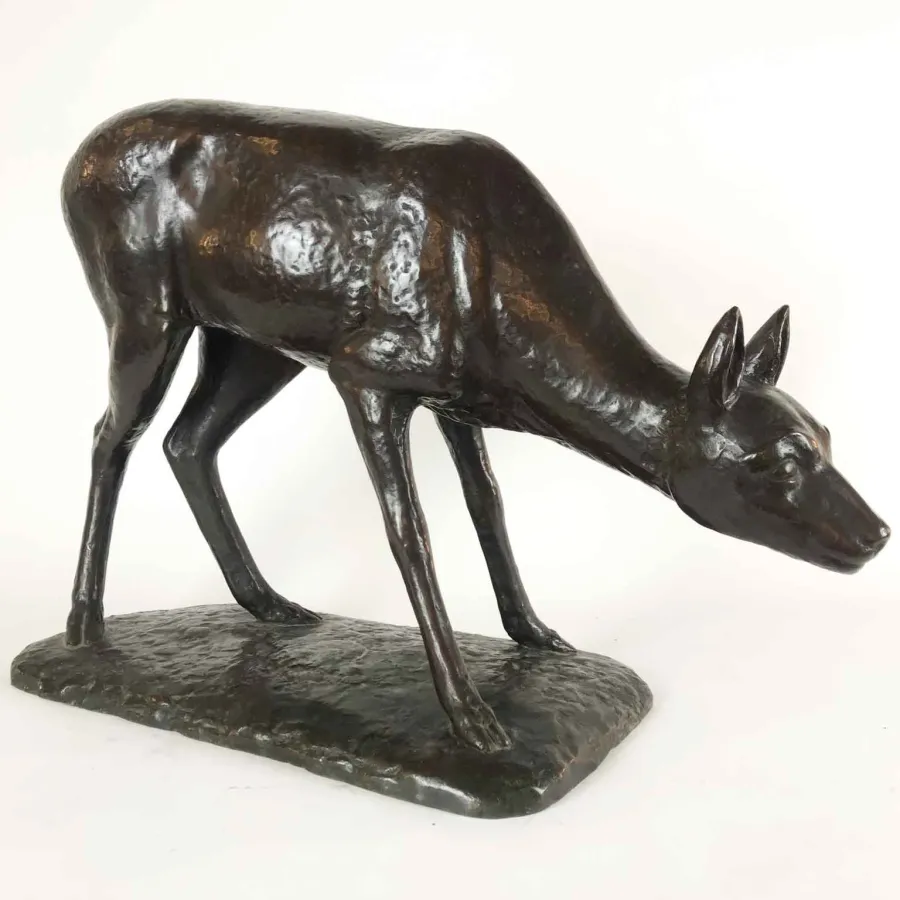
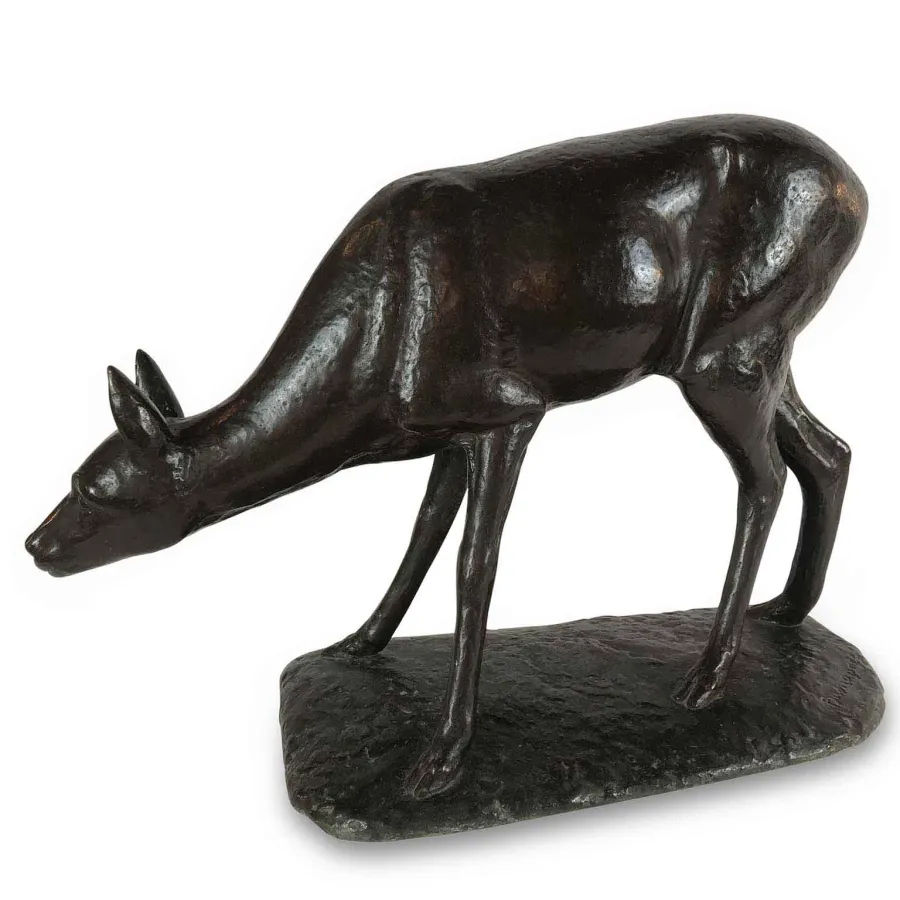
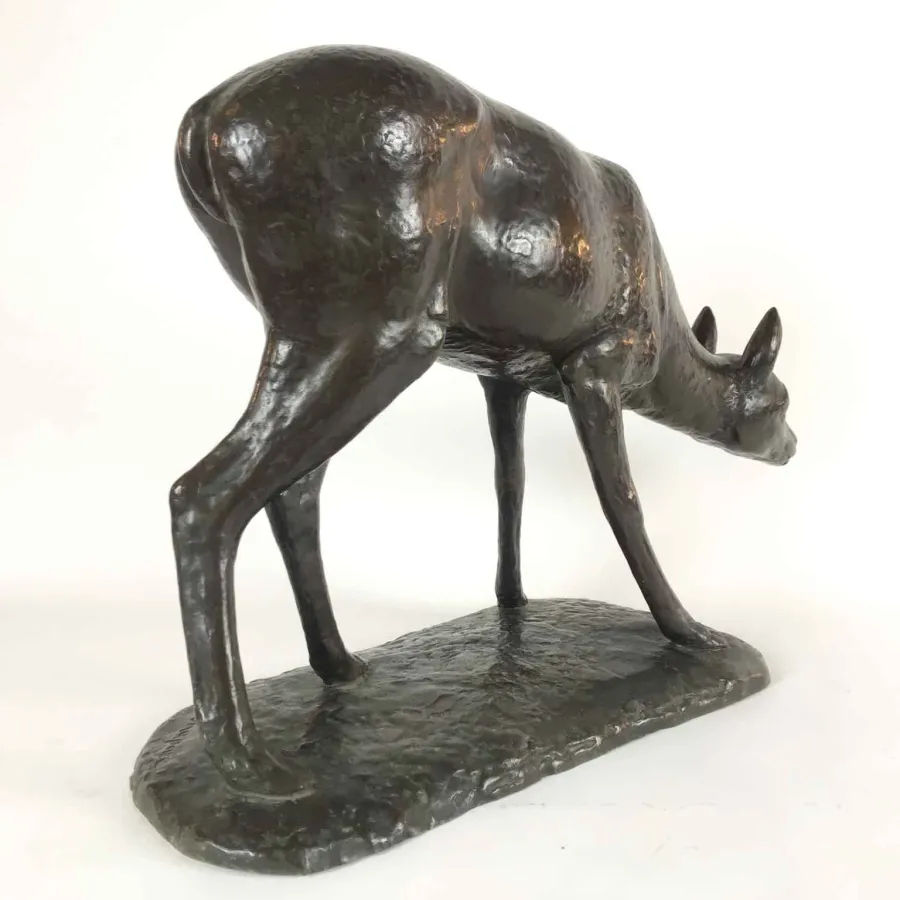
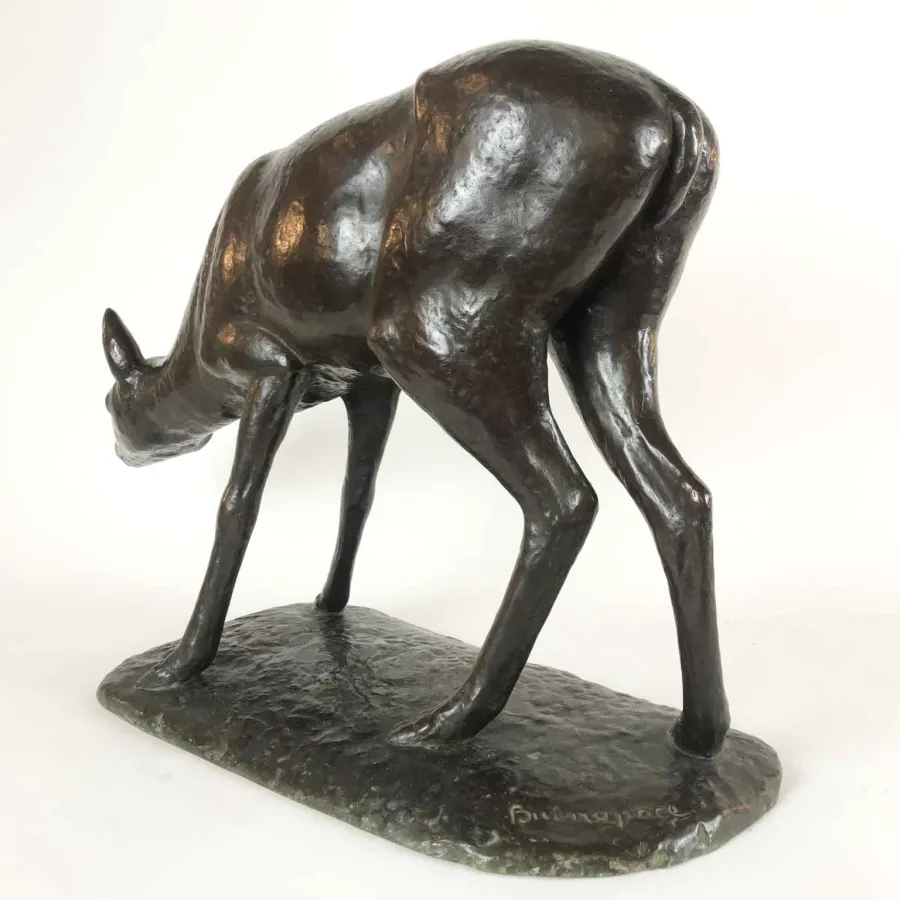
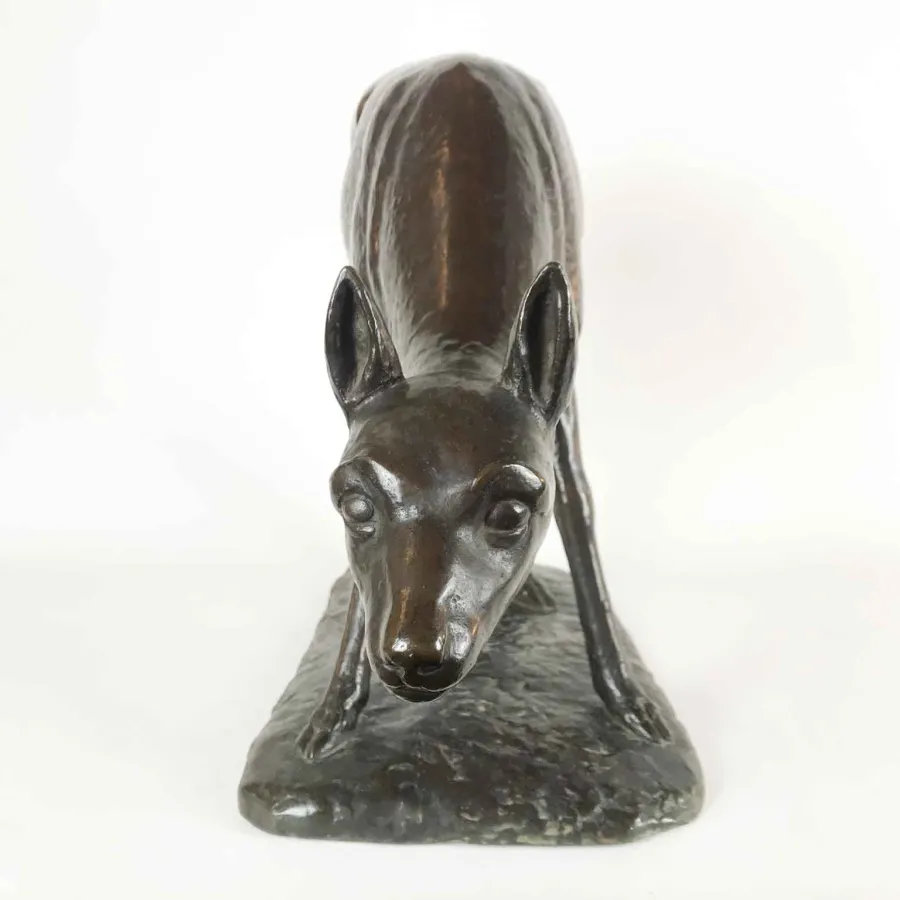
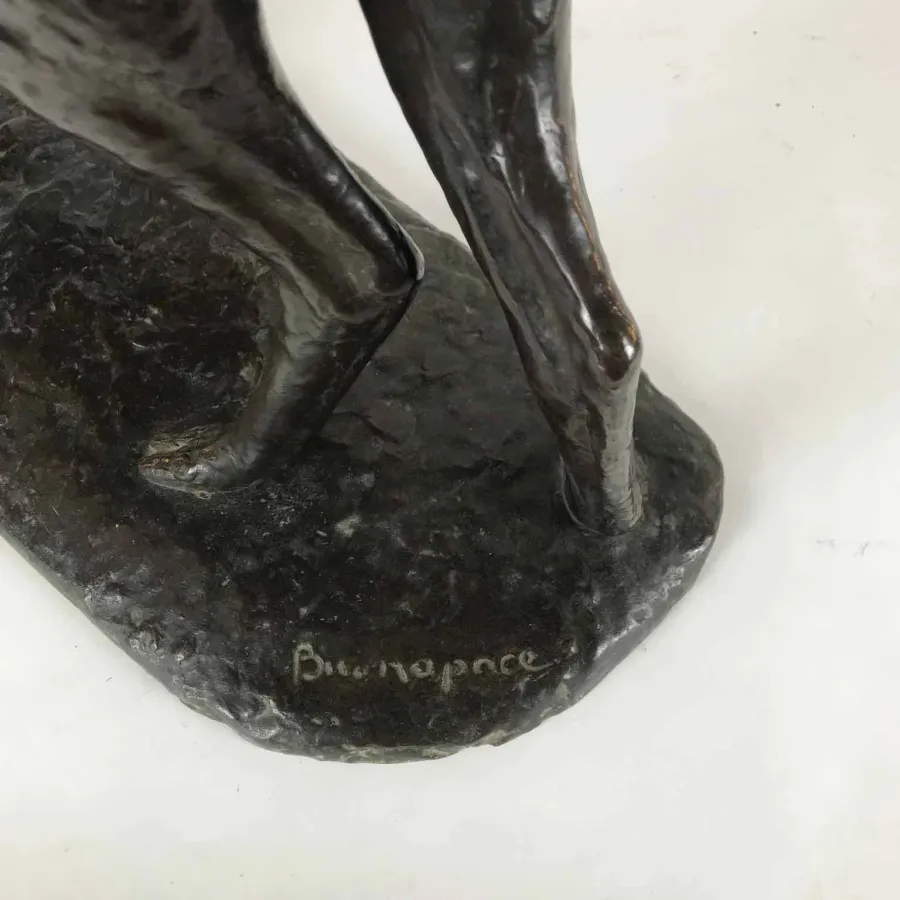
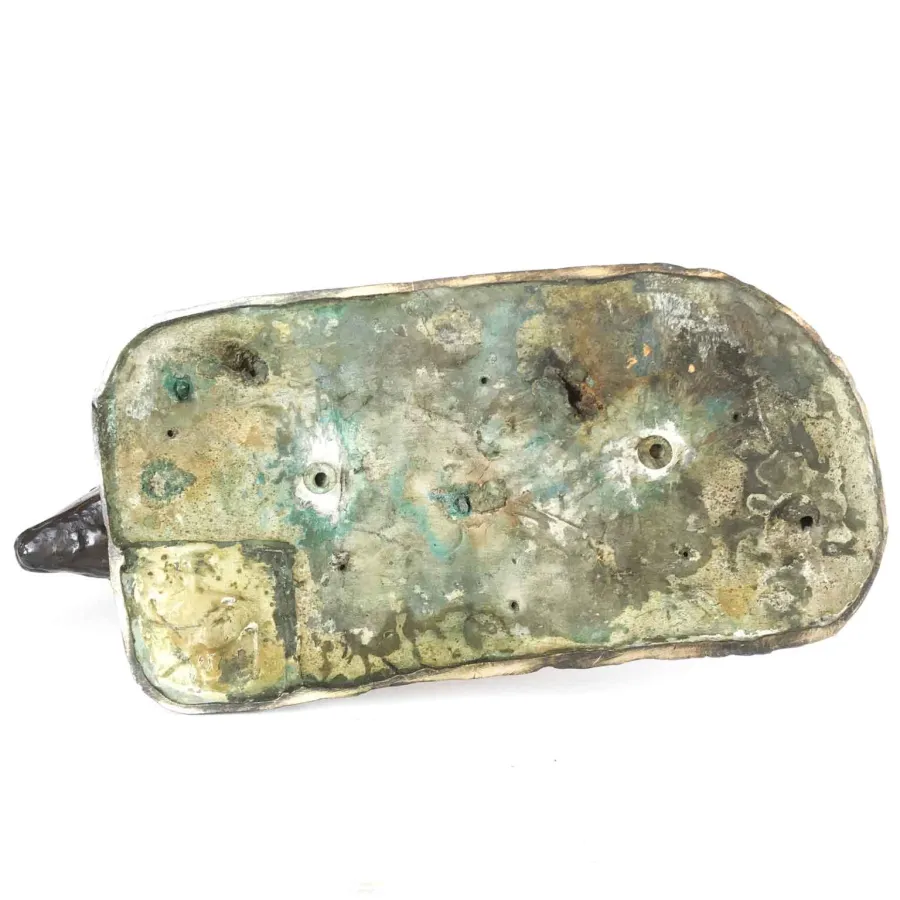
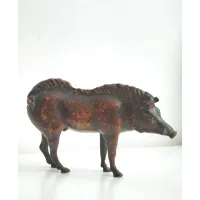
Francesco Buonapace Bronze Deer circa 1930
Stylish antique furniture and accessories
SKU: ANT-A691
See other products from category Animal sculptures or from manufacturer Antyki with shipping within 24 hours
Related products by category

The Gorillas Popart brand offers an extraordinary approach to designing and creating luxury sculptures and functional art pieces. Upon request, the manufacturer can customize the product by sele
We would like to present to you a handcrafted sculpture of a Doberman dog. The primary material used for production is 1.5mm steel sheet. All joints are perfectly finished during grinding (TIG welding
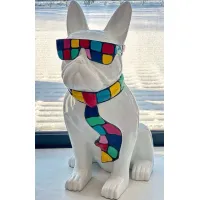
Gorillas Popart offers a unique approach to designing and creating luxury sculptures and functional art pieces. Upon request, the manufacturer will personalize the product by selecting the color, comp
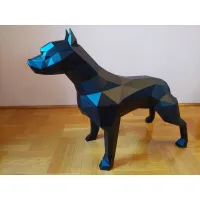
We are pleased to present a handcrafted sculpture of a Doberman dog. The primary material used for production is 1.5mm steel sheet. All joints are perfectly finished during grinding (TIG welding). Fin
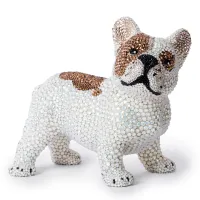
We are pleased to present to you the exceptional French Bulldog figurine, adorned with original Preciosa crystals. These are beautifully shimmering crystals used in the decoration of many products.The
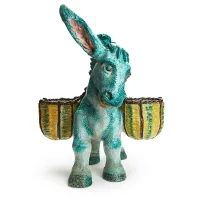
Large ceramic donkey with egg baskets Perugia 1950, used in the confectionery industry for luxurious packaging of Easter eggs. The donkey is in excellent condition, except for an old restoration of th
Original antique furniture and accessories can be an excellent idea for decorating our interiors. Today, there is an increasing number of enthusiasts of high-quality vintage products that possess a di

Manufaktura Gorillas Popart is an extraordinary approach to designing and creating beautiful sculptures and functional art pieces. Upon request, the manufacturer will customize the product by se
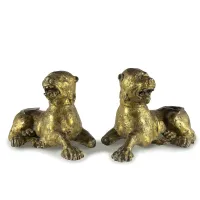
Luxury antique furniture and accessories can be an excellent idea for decorating our interiors. Today, there is a growing number of enthusiasts of high-quality vintage products that possess a distinct
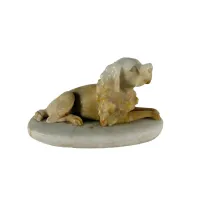
Breton Epagneul sculpture carved from alabaster. A figurine of a Breton Epagneul dog made from carved alabaster with amber patina, lying on a rectangular base made of white alabaster. It depicts minim
Description
Francesco Buonapace Brown Deer approx. 1930s. In good condition, signed near the left rear paw of the animal. Francesco Buonapace (Lecce 1902 - Bologna 1975) attended the Royal Art School in the capital of Salento, where he was a student of Tuscan sculptor Almo Mercanti. Later, he moved first to Milan, then to Florence, where he studied at the Academy of Fine Arts under Domenico Trentacoste.
He completed his artistic studies in Monza, a city he moved to in 1923 after receiving an important scholarship. The artist, strongly influenced by the style and form of Greek and Roman statues, was appreciated by representatives of the Fascist party and received important commissions during Mussolini's regime.
The moderate influence of various schools from the first half of the 20th century results in original works in bronze, terracotta, plaster, and marble, mainly busts and portraits of well-known personalities. Numerous reliefs and animal figurines.
His drawings are also very interesting.
Buonapace participated in major Italian exhibitions: from the Venice Biennale in Lecce to those in Milan and Tuscany, earning notable awards.
Among his numerous works, notable is the piece that is part of the decoration of the Palazzo degli Uffici Finanziari in Bari, the impressive and elegant statue of “The Fisherman”.
Beautiful antique furniture and accessories can be an excellent idea for decorating our interiors. Today, there is a growing number of enthusiasts for high-quality vintage products that have a distinct character and soul. This is a nod to history, craftsmanship, and the design of classic and timeless furniture. There are many different styles in antique furniture, each with its own distinctive features.
Many styles characterize antique furniture, but a few are particularly prominent. Eclectic furniture refers to the 19th century, during which the Biedermeier style was dominant. Its early 20th-century variants include neo-Gothic, Gothic, Rococo, Louis Philippe style, and finally the English Victorian style. By the end of the century, these styles evolved into pseudo-classicism, Renaissance, and Baroque styles.
Empire-style furniture dates from the period between the late 18th and early 19th centuries. It originated during Napoleon’s reign, characterized by significant similarities and references to Roman and Greek ornamentation.
Neoclassical furniture reflects the Louis XVI style, which also strongly references ancient architecture. Antique products in Rococo and Louis XV styles are also interesting and worth noting. Next is Baroque, a term derived from the Portuguese 'barocco'—meaning an irregularly developed pearl. These were highly decorative pieces designed to radiate splendor and play a significant role in luxury. Unique materials were selectively used to emphasize the grandeur of these items.
Today, we can see how much influence the Baroque style has had on modern classical furniture, which is designed with a strong resemblance to the historical period. An important style is also Renaissance, which flourished in the 15th and 16th centuries and left a significant mark on furniture design. Renaissance furniture was quite heavy and robust, often using brown stains, moldings, sturdy bases, and reliefs. These were quite distinctive products but also opened new possibilities, such as the construction of cupboards and broadly speaking, chest furniture. There was also an interest in mythology and ancient times, with supports and legs often taking animal forms.
Lion paws, eagle heads—these are common motifs in Renaissance style. Currently, many global brands reproduce furniture inspired by Italian and French creators, demonstrating admiration and respect for the history of the most beautiful Renaissance antiques. It’s important to remember that furniture production was perceived differently in each country, giving each style a unique character. This is especially important when searching for exclusive antiques suitable for your interior.
The most important aspect of stylish antique furniture is originality. This is ultimately crucial from the buyer's perspective, as many counterfeits circulate on the market. Luxury Products provides a certificate confirming that the product matches the actual description and photographs. We have at your disposal art appraisers, historians, and experts from around the world.Attributes / Details
| SKU | ANT-A691 |
| Manufacturer | Antyki |
| Model | A691 |
| Material | brown |
| Size | Height: 39 cm Width: 56 cm Depth: 23 cm |
| Age | XX |
| Year | 1930 |
| Destiny | To living room |
See catalog
Reviews
No reviews for this product.