

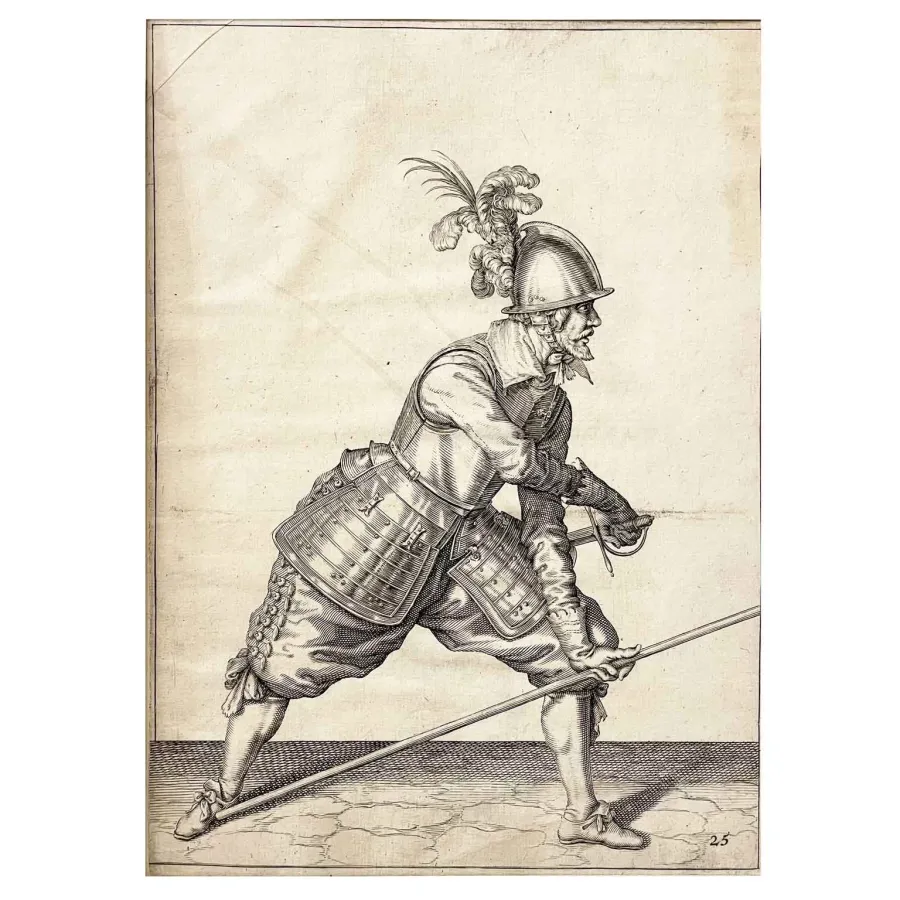
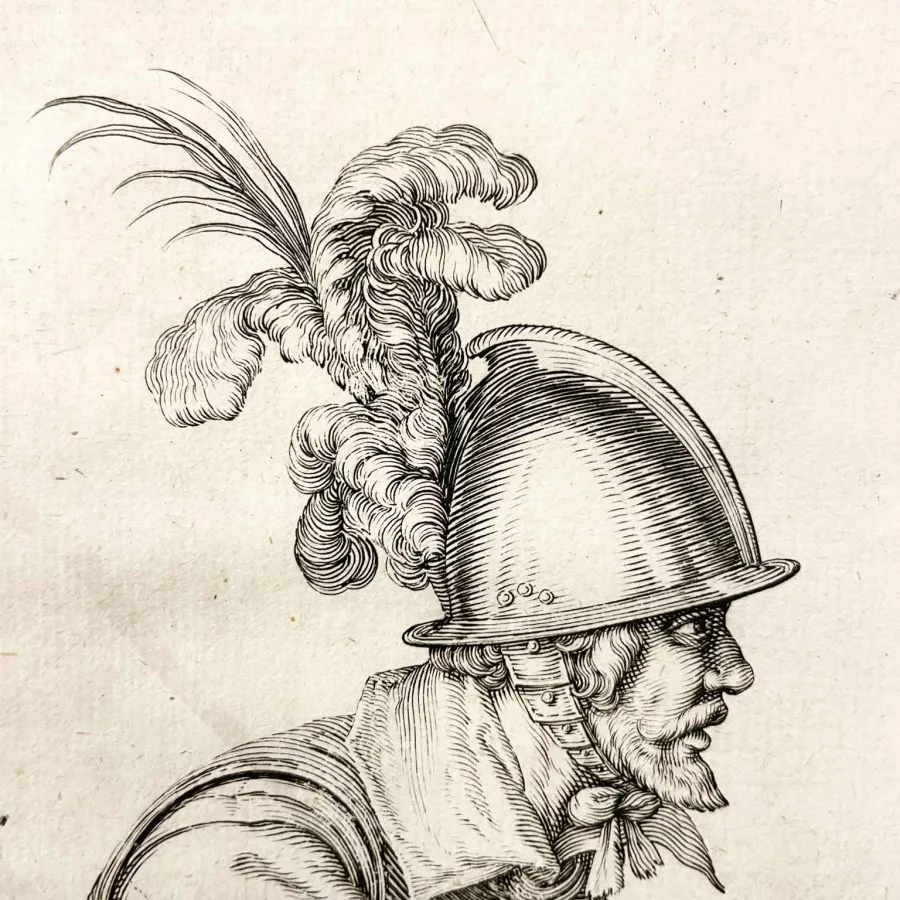
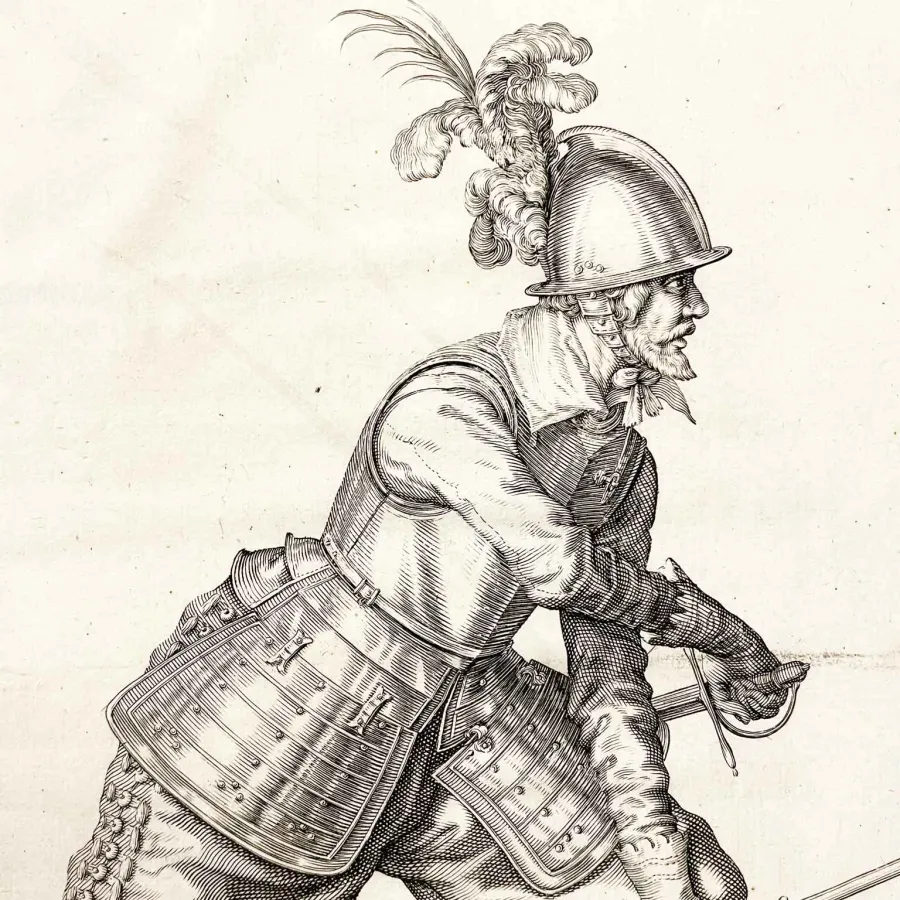
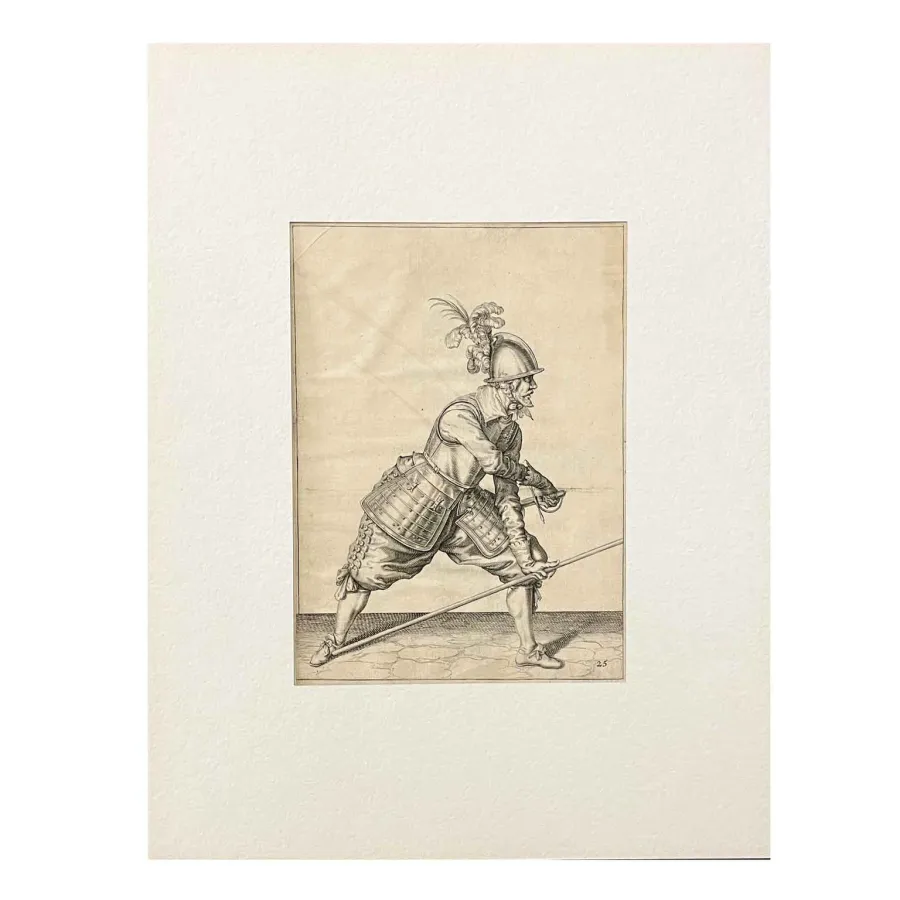
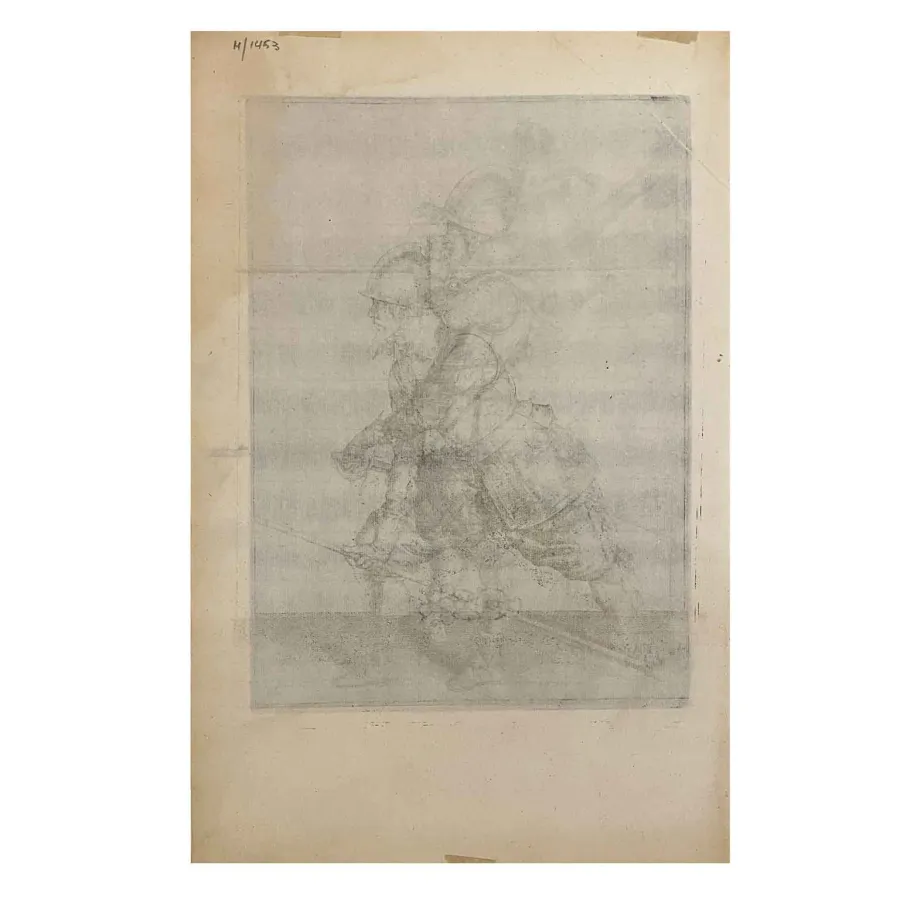
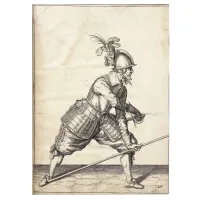
Engraving by Jacob de Gheyn Soldier in combat, 17th century
Luxury antiques
SKU: ANT-A1380
See other products from category Antique prints or from manufacturer Antyki with shipping within 24 hours
Related products by category
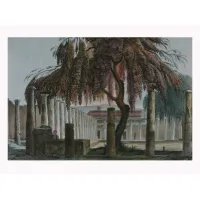
De Vegni View of Pompeii. A beautiful engraving made by L. de Vegni, depicting the soldier district in Pompeii.In good condition with original colors. At the bottom left, an oval embossed mark within

Jacob De Ghein, a knight with a spear, 1607 Etching by Jacob de Gheyn titled “Knight with a Spear”, from 1607, is an important example of late Mannerist engraving art. De Gheyn, one of the most in
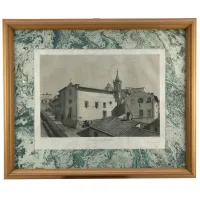
André Durand, Church of Misericordia in Portoferraio, 1862. A lithograph printed in two colors by Eugène Ciceroni at the request of André Durand, published in Paris by Lemercier and included in the
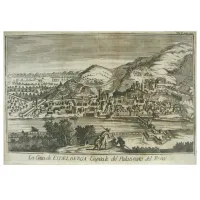
Heidelberg View Antique print with frame 1740. "City of Eidelberg, capital of the Palatinate of the Rhine". Copperplate engraving taken from T. Salmona's work: "The current state of all countries and

View of the San Martino Imperial Villa on the island of Elba. A two-color lithograph printed by Eugène Ciceroni according to instructions by André Durand, published in Paris by Lemercier and include
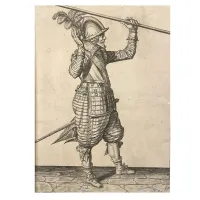
A 17th-century figure of a soldier with a halberd and sword, an engraving by Jacob de Gheyn, representing an important example of late Mannerist printmaking. De Gheyn, one of the most influential engr
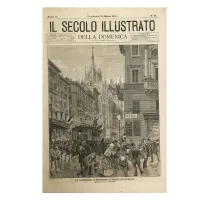
Demonstration of a presentation near the cathedral in 1890, woodcut made by A. Bonamore for Secolo Illustrato della Domenica, a weekly magazine published by Sonzogno since 1889. Under the illustrated
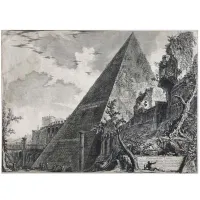
Giovan Battista Piranesi Pyramid of Gaius Cestius, circa 1756. A large-format copperplate engraving depicting the pyramid built between 18–12 BC as the tomb of Gaius Cestius Epulone. This neoclassic
Jacob de Gheyn Soldier in Combat, an engraving from 1607 depicting a soldier in military uniform. It is an important example of printmaking art from the late Mannerist period. De Gheyn, a Dutch painte
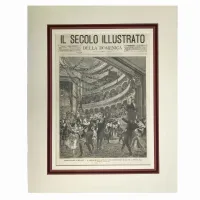
Carnevalone from Milan at the Teatro Lirico di Milano in 1895. Woodcut created by Antonio Bonamore for Secolo Illustrato della Domenica, a weekly magazine published by Sonzogno since 1889. Illustrated
Description
Jacob de Gheyn Soldier in Combat, an engraving from 1607 depicting a soldier in military uniform. It is an important example of printmaking art from the late Mannerist period. De Gheyn, a Dutch painter and engraver, one of the most influential Flemish artists of his time, dedicated a significant part of his career to depicting military themes, a subject particularly relevant in 17th-century Europe, marked by conflicts and wars.
The engraving is part of the work Wapenhandelinghe van Roers, Musquetten ende Spiessen, a manual on the use of weapons, which not only contains instructions on their handling but also serves as a historical document providing information about the customs and life of soldiers of that era. The engravings in the volume illustrate a wide range of military figures, with particular attention to details of uniforms and weapons, reflecting the evolution of tactical and military practices after the Utrecht Union in 1579.
The central figure of this Baroque work, a soldier with a halberd, symbolizes not only authority and nobility but also the era in which innovative combat strategies and infantry organization, promoted by figures like Maurice of Nassau, changed the battlefield landscape in Europe. The sheet of paper with a watermark measures mm. 355 x 230, is in good condition, and is packaged in a cardboard box in ivory color.
Beautiful antique furniture and accessories can be an excellent idea for decorating our interiors. Today, there is a growing number of enthusiasts of high-quality vintage products that have a distinct character and soul. This is a nod to history, craftsmanship, and the design of traditional and timeless furniture. There are many different styles in antique furniture, each with its own distinctive features.
Many styles characterize antique furniture, but a few are particularly notable. Eclectic furniture belongs to the 19th century, during which the Biedermeier style was dominant. Its early 20th-century variants include neo-Gothic, Gothic, Rococo, Louis-Philippe style, and finally the English Victorian style. By the end of the century, these styles transitioned into pseudo styles of classicism, Renaissance, and Baroque.
Beautiful Empire-style furniture dates from the late 18th to early 19th century. It originated during Napoleon’s reign, which imposed a significant resemblance to and references from Roman and Greek ornamentation.
Neoclassical furniture is associated with Louis XVI style, which also strongly references ancient architecture. Interesting and noteworthy are antique products in Rococo style and Louis XV. Next is Baroque, a term derived from the Portuguese barocco – meaning an irregularly developed pearl. These were highly decorative pieces designed to exude splendor and play a significant role in luxury. Materials were selectively chosen to emphasize the grandeur of these items.
Today, we can observe how much influence the Baroque style has had on modern classical furniture, which is often designed with a strong resemblance to the historical period. An important style is also Renaissance, which flourished in the 15th and 16th centuries and left a significant mark on furniture design. Renaissance furniture was quite heavy and massive, using brown stains, moldings, sturdy bases, and reliefs. These products were quite distinctive but also opened new possibilities, such as the construction of cupboards and broadly speaking, chest furniture. They also reflected an interest in mythology and ancient times, with supports and legs often taking animal forms.
Lion’s paws, eagle heads – these are common motifs in Renaissance style. Currently, many global brands reproduce furniture inspired by Italian and French artisans. This is a sign of admiration and respect for the history of the most beautiful Renaissance antiques. It’s important to remember that furniture production was perceived differently in each country, so each style had its unique character. This is especially important when searching for a luxurious antique that suits your interior.
Attributes / Details
| SKU | ANT-A1380 |
| Manufacturer | Antyki |
| Model | A1380 |
| Size | Height: 45 cm Width: 35 cm |
| Age | XVII |
| Year | 1607 |
| Destiny | For the office and office |
See catalog
Reviews
No reviews for this product.