

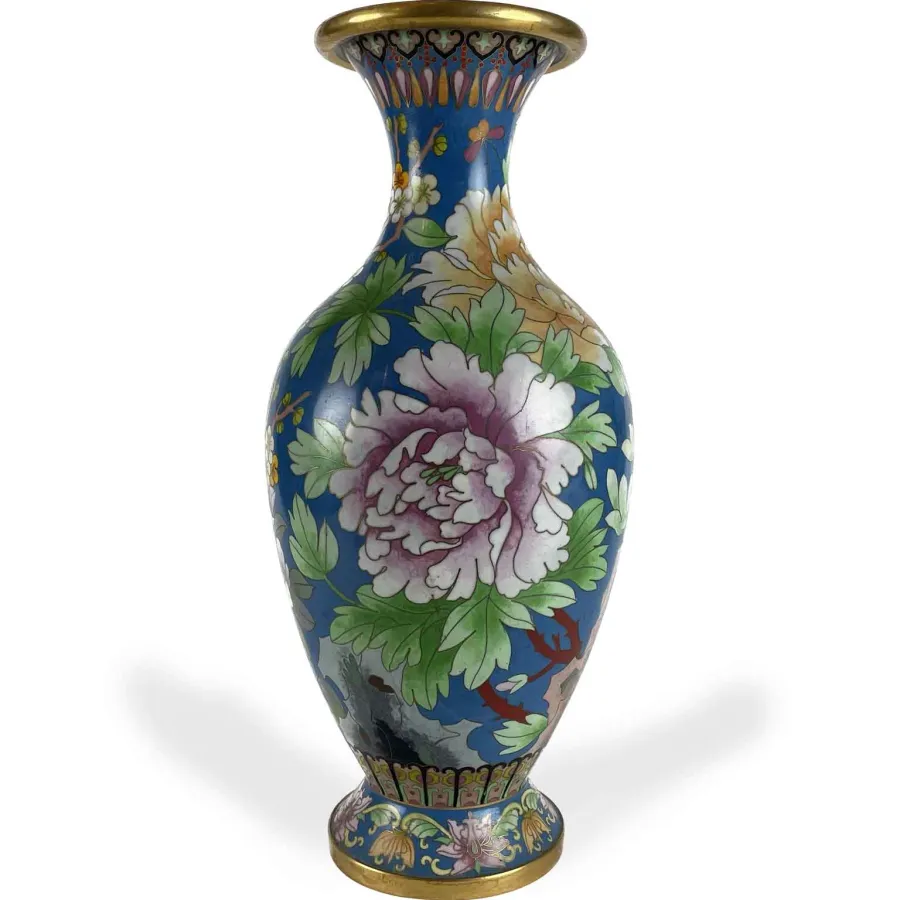
A unique porcelain vase from the 20th century
Luxury antiques
SKU: ANT-2195
See other products from category Other items or from manufacturer Antyki with shipping within 24 hours
Related products by category
Ancient Chinese porcelain plate with a dense pattern of yellow, coiled decorations, from which a central flower and four outer ones emerge, connected by leaves and ideograms. As seen in the photos, th
Chinese red porcelain plate with a dense pattern of green, swirling flowers featuring three large white flowers intertwined with smaller ones. It has a round shape, a slightly scalloped edge, and is d
Para of six Chinese hexagonal vases, Qing dynasty, 19th century, decorated with polychrome depicting peonies and birds, with two handles made from fruits and grapes. On the sides of the Qing dynasty v
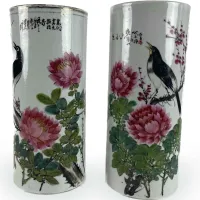
Pair of early 20th-century Chinese porcelain vases, cylindrical in shape, with a white background and decoration featuring a branch with a large pink peony and a small bird. Each of the two vases has
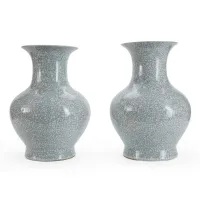
Set of Chinese vases made of gray porcelain with a bulbous shape and a wide, spread-out artificial crackled surface. They are in excellent condition, produced in China, and date back approximately fif
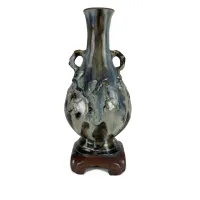
Chinese porcelain vase, early 20th century, in the shape of a bottle with side handles and a square base in dark brick color. The body features embossed floral motifs starting from the handles; the en
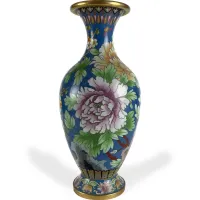
Turquoise Cloisonné vase with a brass base and neck edge, featuring rich floral decoration in shades of pink, white, and green. The edges of the base and neck are also adorned with a band of geometri
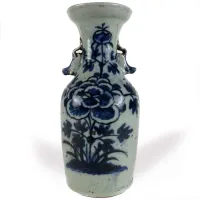
White and blue vase made of Chinese porcelain from the early 20th century, decorated with floral motifs only in the central part and small handles on the neck. This small two-handled vase, crafted fro
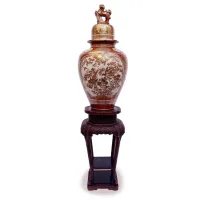
The large Kutani porcelain vase from the Meiji period is an outstanding example of Japanese art, reflecting the rich tradition of Kutani ceramics, which developed in the 17th century in the city of th
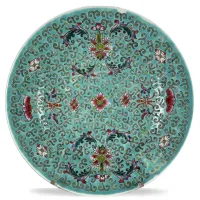
Richly decorated Chinese plate made of green porcelain, with a flat rim and a dense pattern of yellow, swirling decorations, from which a central flower and four outer ones emerge, connected by leaves
Description
Turquoise Cloisonné vase with a brass base and neck edge, featuring rich floral decoration in shades of pink, white, and green. The edges of the base and neck are also adorned with a band of geometric and floral patterns.
Exceptional antique furniture and accessories can be an excellent idea for decorating our interiors. Today, there is an increasing number of enthusiasts of high-quality vintage items that possess a distinct character and soul. This is a nod to history, craftsmanship, and the design of classic and timeless furniture. There are many different styles in antique furniture, each with its own distinctive features.
Many styles characterize antique furniture, but a few key ones stand out. Eclectic furniture dates back to the 19th century, during the reign of the Biedermeier style. Its early 20th-century variants include neo-Gothic, Gothic, Rococo, Louis-Philippe style, and finally the English Victorian style. By the end of the century, these styles evolved into pseudo-classicism, Renaissance, and Baroque styles.
Beautiful Empire-style furniture originates from the period between the late 18th and early 19th centuries. It was influenced by Napoleon’s reign, which imposed a resemblance to Roman and Greek decorative motifs.
Neoclassical furniture reflects the Louis XVI style, which also draws heavily from ancient architecture. Interesting and noteworthy are antique products in Rococo and Louis XV styles. Next is Baroque, a term derived from the Portuguese 'barocco'—meaning an irregularly developed pearl. These were highly ornate pieces designed to exude splendor and play a significant role in luxury. Selectively used materials were employed to emphasize the grandeur of these items.
Today, we can observe how much the Baroque style influenced modern classic furniture, which is often designed with a strong resemblance to the historical period. An important style is also Renaissance, which flourished in the 15th and 16th centuries and left a significant mark on furniture craftsmanship. Renaissance furniture was quite heavy and robust, often using brown stains, moldings, strong bases, and reliefs. These products were quite distinctive but also introduced new possibilities, such as the construction of credenzas and broadly defined chest furniture. Mythology and ancient times also inspired these designs, with supports and legs often taking animal forms.
Lion paws, eagle heads—these are common features in Renaissance-style furniture. Currently, many global brands recreate such furniture, drawing inspiration from Italian and French artisans. This reflects admiration and respect for the history of the most beautiful Renaissance antiques. It’s important to remember that furniture production was perceived differently in each country, giving each style a unique character. This is especially important when searching for a luxurious antique that suits your interior.
The key aspect of stylish antique furniture is originality. Ultimately, this is crucial for buyers, as the market is flooded with counterfeits. Luxury Products provides documentation confirming the product’s authenticity and compliance with the description and photos. We also have appraisers, art experts, historians, and specialists from around the world at your disposal.
Attributes / Details
| SKU | ANT-2195 |
| Manufacturer | Antyki |
| Model | 2165 |
| Material | porcelain |
| Size | Height: 26 x 12 cm |
| Age | XX |
| Year | 1900 |
| Destiny | To living room |
See catalog
Reviews
No reviews for this product.