

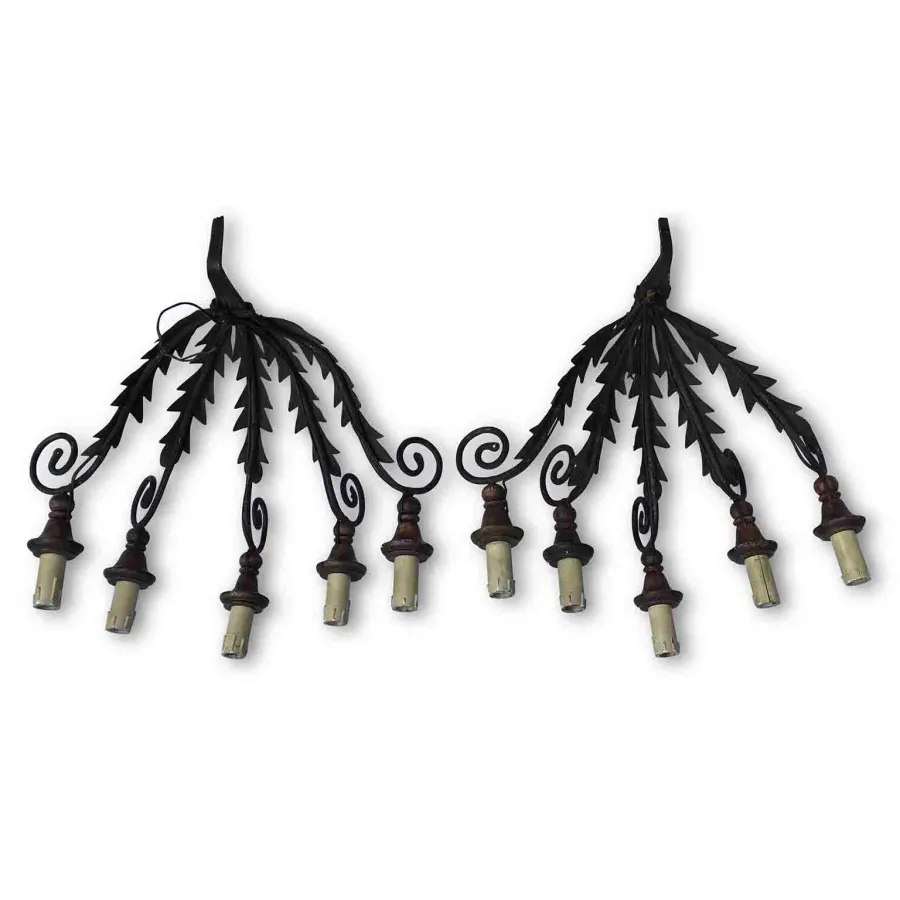
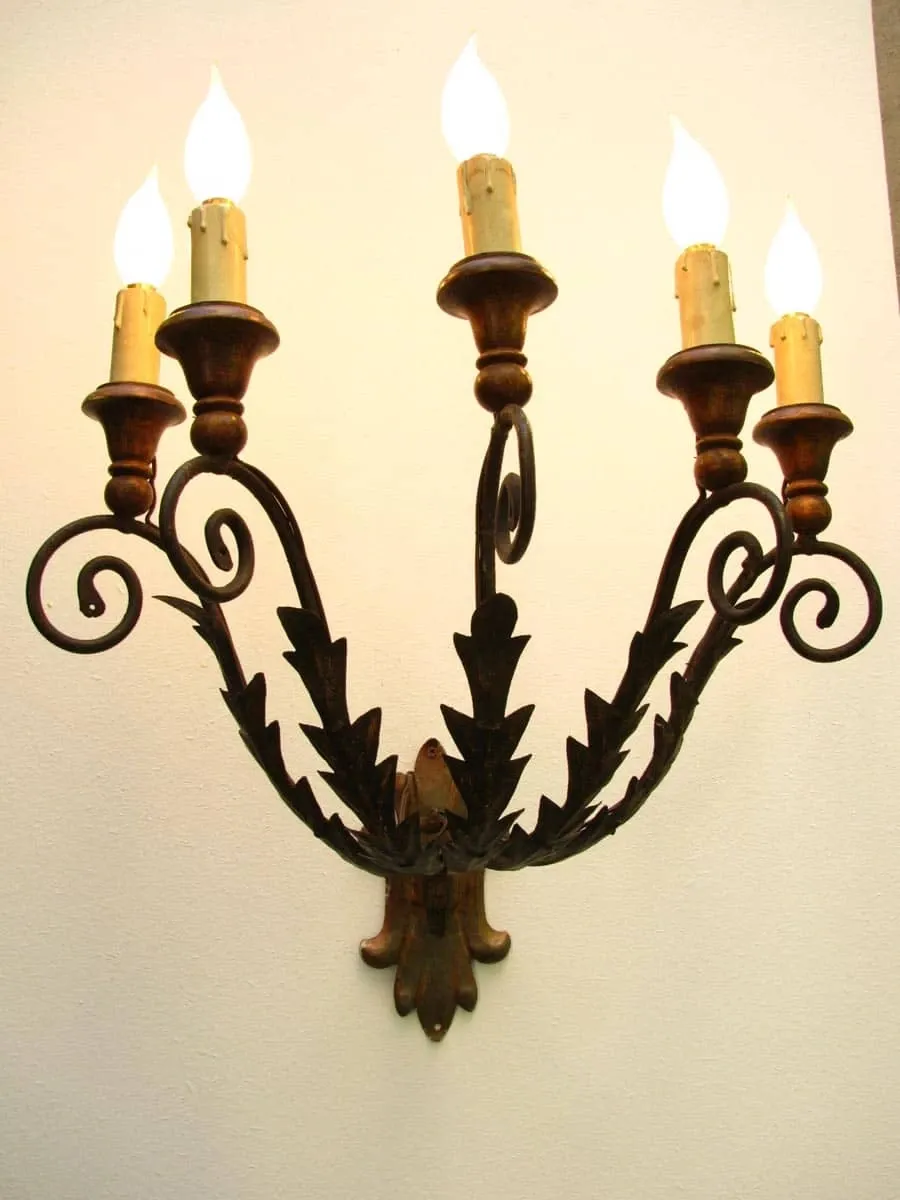
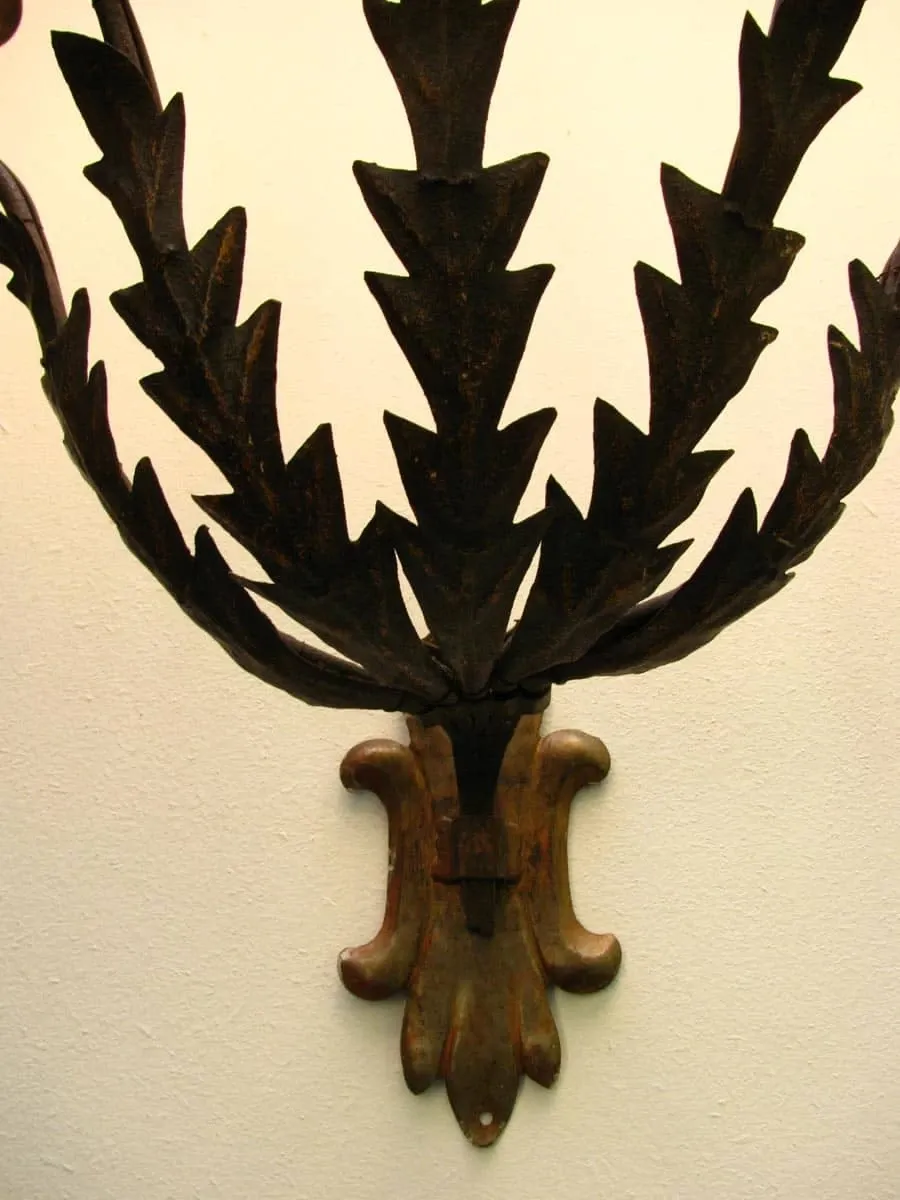
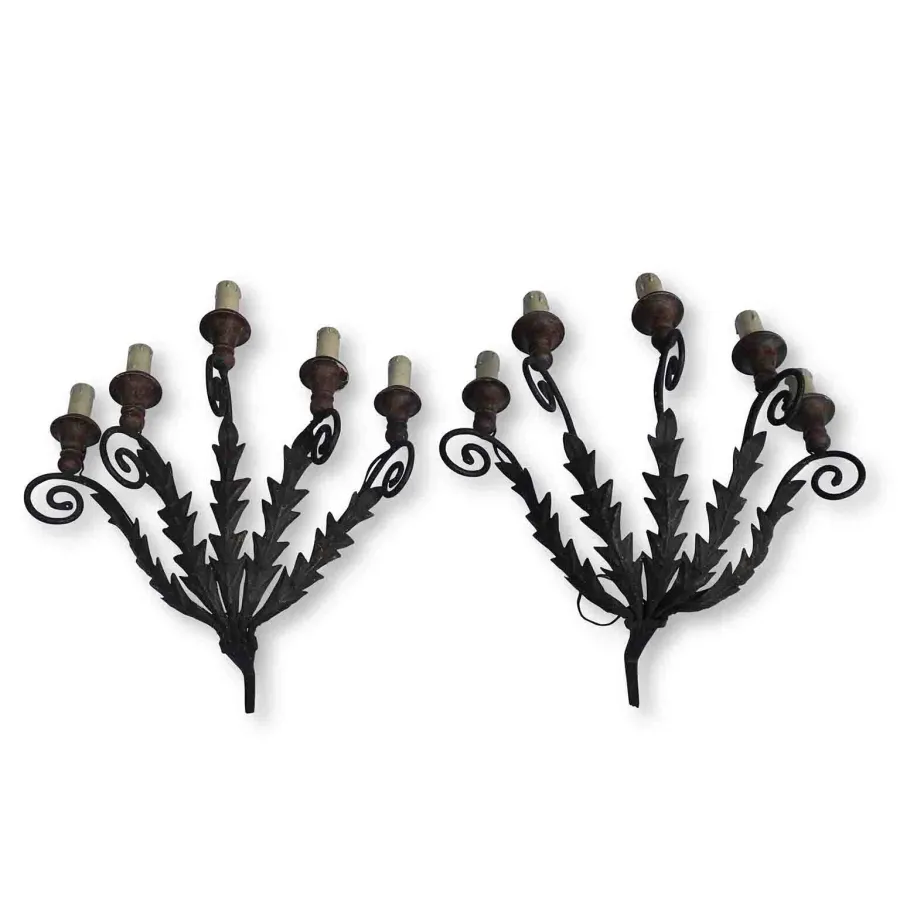
A pair of wrought iron wall lamps from the 19th century
Elite antique furniture and accessories
SKU: ANT-2948
See other products from category Vintage wall lamps or from manufacturer Antyki with shipping within 24 hours
Related products by category
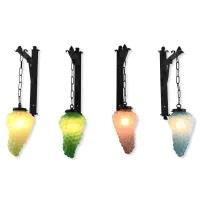
Four glass applications with grape clusters made from printed glass in green, blue, yellow, and amethyst colors, with a socket holder for E14 bulb inside, accessible after unscrewing three pressure sc
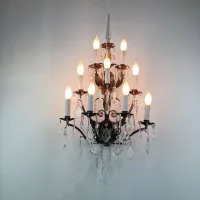
Application made of golden alloy and crystal with 9 pyramidal flames in the shape of branches, with lights arranged in three rows of height and topped with a crystal obelisk. Completely re-electrified
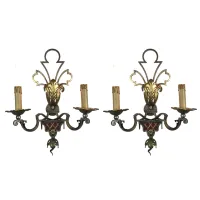
Set of silver and gold iron appliqué perfect for illuminating all types of classic furniture, made from wrought and shaped square iron, decorated with embossed and gilded leaves, and finished with a
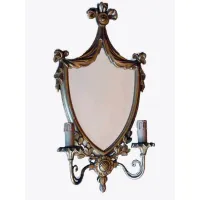
A carved and gilded wooden sconce with two E14 lamps (max. 120 watts) in perfect condition. Circa 1970. Luxurious antique furniture and accessories can be an excellent idea for interior decoration.
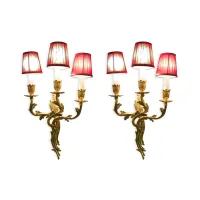
Set of gilded bronze appliqué in Louis XV style, shaped and with plant shoots featuring three arms ending with flower-shaped bobeigs and candle holders in the form of buds. The quality of the gilding
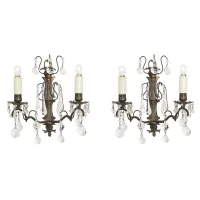
Para brass and crystal wall lamps from the early 20th century, consisting of a cast plate with a contoured shape, on which three small brackets are mounted, from which lamp supports and arms with mini
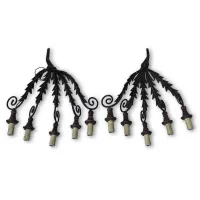
Made from cast iron from the 19th century, with five curved arms decorated with gilded elements and a bobèche, ending with E14 sockets.Functional, with electrical wiring in good condition, these ant
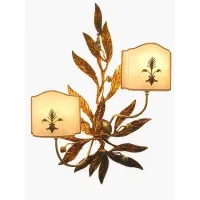
Modern wall sconce, leaves made of wrought iron in a gold finish, with two brass arms. Very good condition. Connection for 2 E27 bulbsBeautiful antique furniture and accessories can be an excellent id
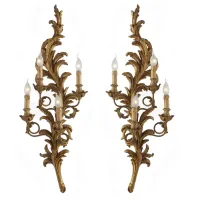
Large Florentine-style wall sconces in Louis XV style, carved and gilded with rocaille floral motifs. These wall lamps stand over a meter tall, measuring 106 cm in length, with four curved arms featur
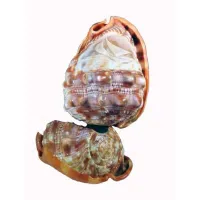
The lamp is made of two overlapping shells. The upper part glows from the inside and features an engraved sailing ship.Beautiful antique furniture and accessories can be an excellent idea for decorati
Description
Made from cast iron from the 19th century, with five curved arms decorated with gilded elements and a bobèche, ending with E14 sockets.
Functional, with electrical wiring in good condition, these antique fixtures with a rustic charm are mounted on the wall using an embossed iron plate; (there is only one, the second is missing and can be custom-made).
Beautiful antique furniture and accessories can be an excellent idea for interior decoration. Today, there is an increasing number of enthusiasts of high-quality vintage products that possess a distinct character and soul. This is a nod to history, craftsmanship, and the design of classic and timeless furniture. There are many different styles in antique furniture, each with its own distinctive features.
Many styles characterize antique furniture, but a few are particularly prominent. Eclectic furniture originates from the 19th century, during the reign of the Biedermeier style. Its early 20th-century variants include neo-Gothic, Gothic, Rococo, Louis Philippe style, and finally the English Victorian style. By the end of the century, these styles evolved into pseudo-classicism, Renaissance, and Baroque styles.
Empire-style furniture and accessories date from the late 18th to early 19th century. This style was influenced by Napoleon's reign, emphasizing Roman and Greek decorative motifs.
Neoclassical furniture reflects the Louis XVI style, which also draws heavily from ancient architecture. Notable and interesting are antique products in Rococo and Louis XV styles. Next is Baroque, a term derived from the Portuguese 'barocco'—meaning an irregularly developed pearl. These were highly ornate, luxurious pieces designed to radiate splendor and serve as symbols of opulence. Materials were chosen selectively to emphasize the grandeur of these items.
Today, we can see how much the Baroque style influenced modern classical furniture, which is often designed with a strong resemblance to the historical period. The Renaissance style also had a significant impact, flourishing in the 15th and 16th centuries and leaving a lasting mark on furniture design. Renaissance furniture was quite heavy and robust, often using brown stains, with moldings, sturdy bases, and relief decorations. These products were quite distinctive but also opened new possibilities, such as the construction of cabinets and broadly speaking, chest furniture. Mythology and ancient themes were also popular, with supports and legs often taking animal forms.
Lion paws, eagle heads—these are common motifs in Renaissance style. Currently, many global brands reproduce furniture inspired by Italian and French artisans, reflecting admiration and respect for the history of the most beautiful Renaissance antiques. It is important to remember that furniture production was perceived differently in each country, giving each style a unique character. This is especially important when searching for an exclusive antique that suits your interior.
The key aspect of stylish antique furniture is originality. Ultimately, this matters most to the buyer, as the market is flooded with counterfeits. Luxury Products provides documentation confirming the product’s authenticity and compliance with the description and photos. We also have experts, art appraisers, and historians from around the world at your disposal.
Attributes / Details
| SKU | ANT-2948 |
| Manufacturer | Antyki |
| Model | 2948 |
| Material | iron |
| Size | Height: 50 cm Width: 40 cm Depth: 35 cm |
| Age | 19th century |
| Year | 1801 |
| Destiny | To living room |
See catalog
Reviews
No reviews for this product.