

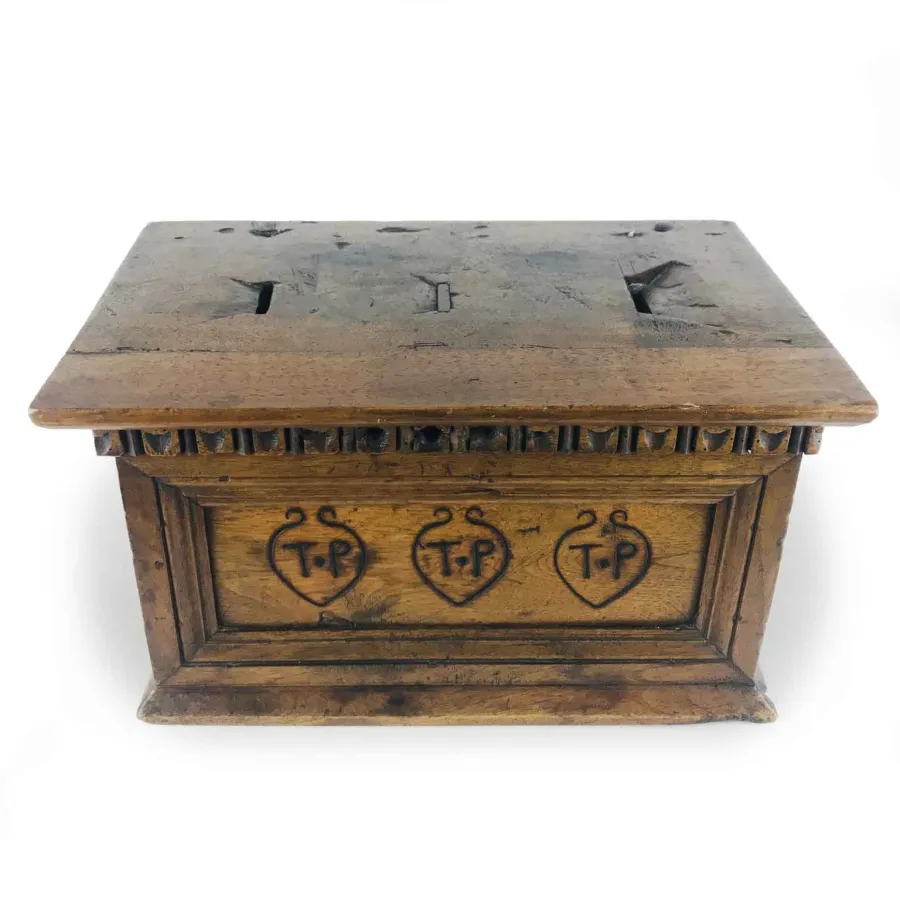
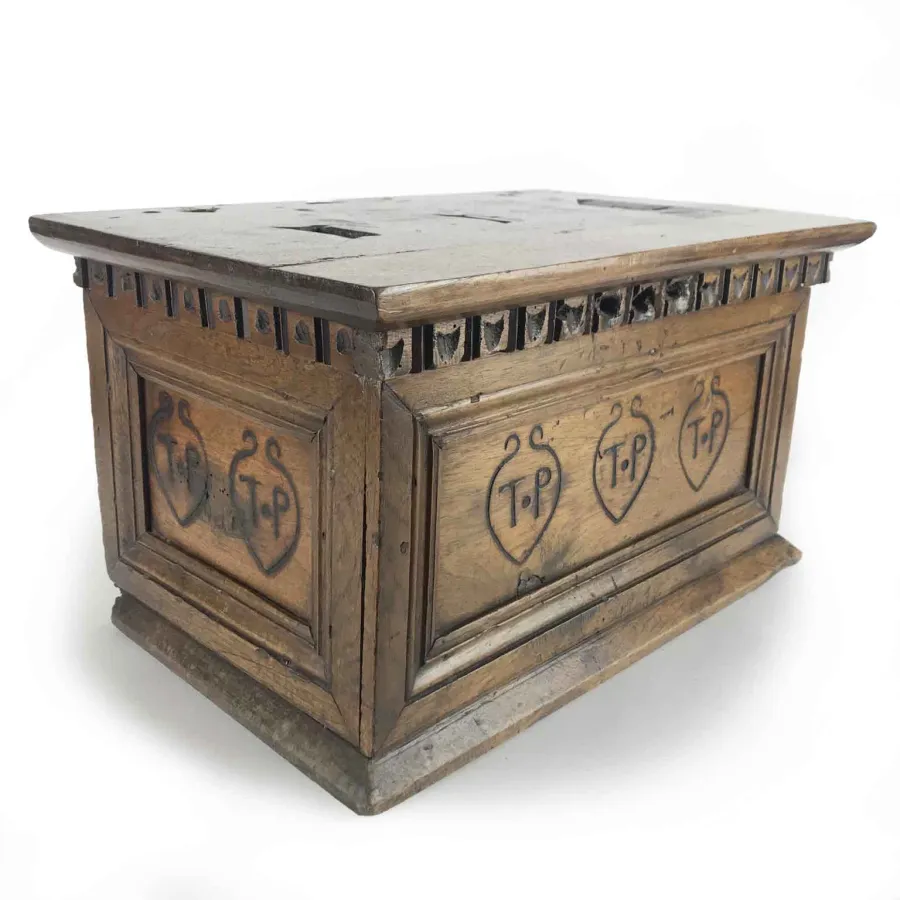
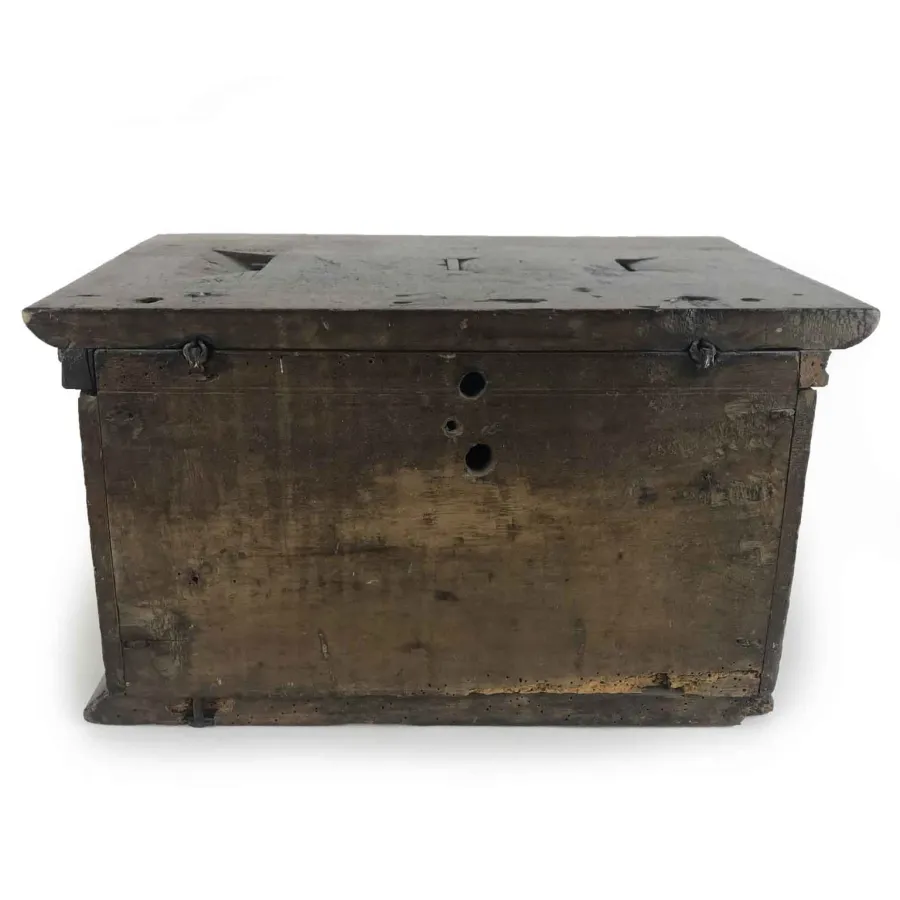
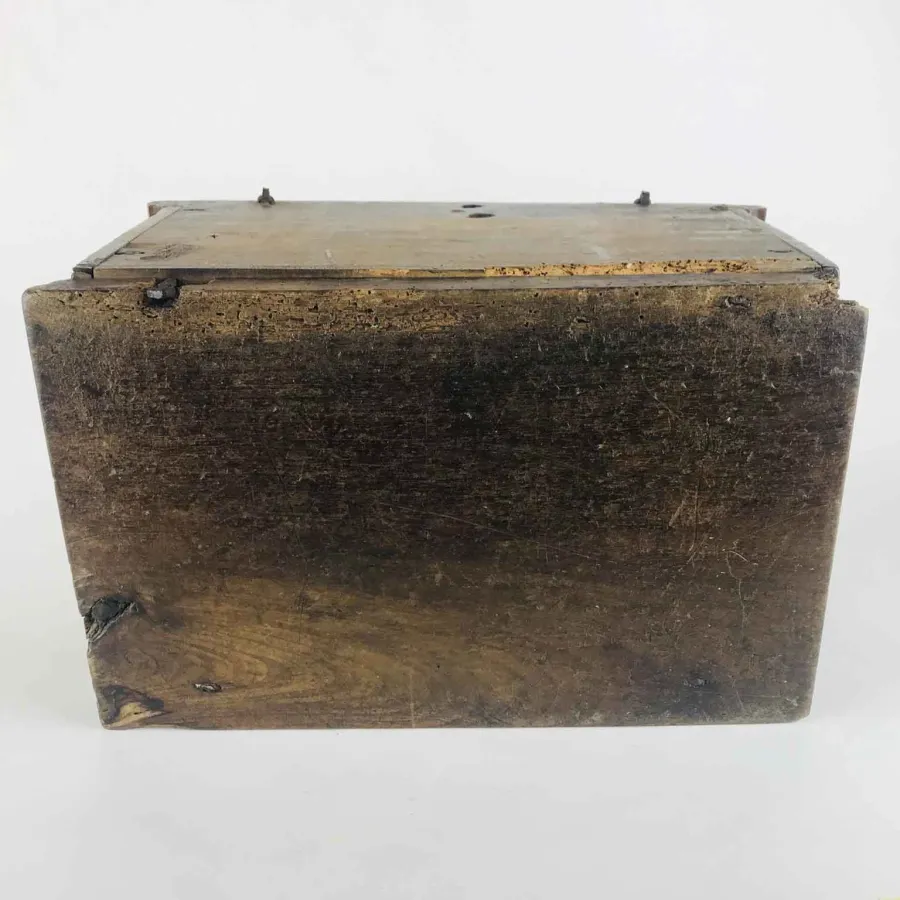
A 17th century walnut almoner in the shape of a chest
Elite antique furniture and accessories
SKU: ANT-A722
See other products from category Antique caskets and boxes or from manufacturer Antyki
Related products by category
A box for chocolates from a French restaurant era, decorated on the lid with a rural scene depicting a seated girl and a boy with a fishing rod. The box is entirely made of cardboard, with two brass r
A dragee box, early 19th century, with a decoration on the lid depicting an elegantly dressed couple
Box for dragees, early 19th century, decorated on the lid depicting an elegantly dressed couple standing in a garden with a balustrade on the left and stairs on the right, against a backdrop of archit
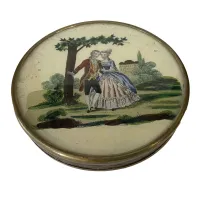
Luxury antique furniture and accessories can be an excellent idea for decorating our interiors. Today, there is a growing number of enthusiasts of high-quality vintage products that possess a distinct
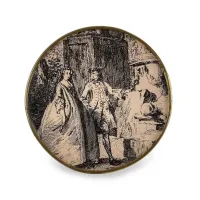
Confetti box from France, period of restoration, with a decoration on the lid originating from an English lithograph depicting a pair of figures in 18th-century costumes (probably non-original). The b
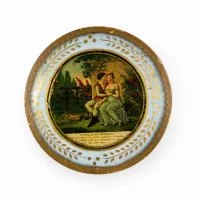
French confetti box, early 19th century, with a round shape, depicting a pair of lovers sitting and embracing in a flower garden. They are surrounded by a triple gold-black border, as well as a beauti
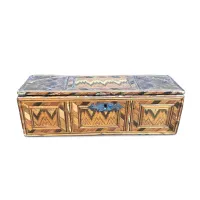
An antique woven straw box constructed within prison or monastery frameworks on a wooden structure, entirely covered with strands of straw in various colors, interconnected to form a geometric decora
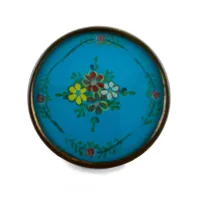
Round candy box from the early 19th century with double decoration on the lid and base featuring small wildflowers painted in white, red, and yellow, surrounded by an outer pattern of flowers and leav
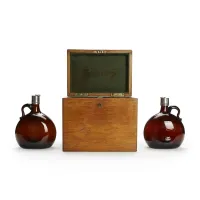
Oak chest with bottles of alcohol 1800, English captain Edward John Ward's chest, a soldier of the Royal Academy, with a brass hidden handle engraved with the inscription Capt. E.J. Ward R. A. and pri
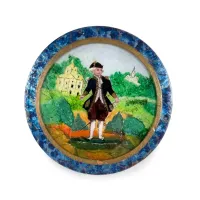
French candy box from the late 19th century, decorated on the lid with an elegant gentleman holding a sword, depicted standing in the middle of a rural landscape with architecture. The round-shaped bo
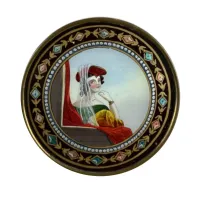
Boite à Dragée, or almond boxes in sugar or chocolates, decorated on the lid with an elegantly dressed woman seen from behind, framed by a geometric border adorned with small diamonds on a black bac
Description
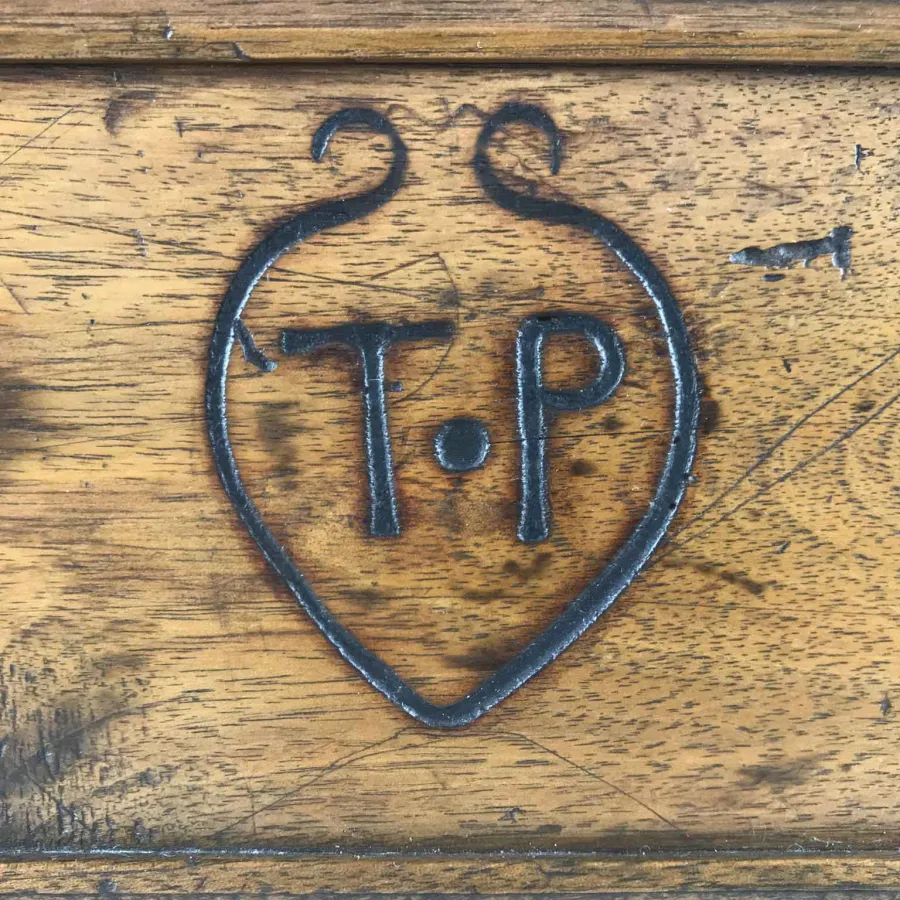
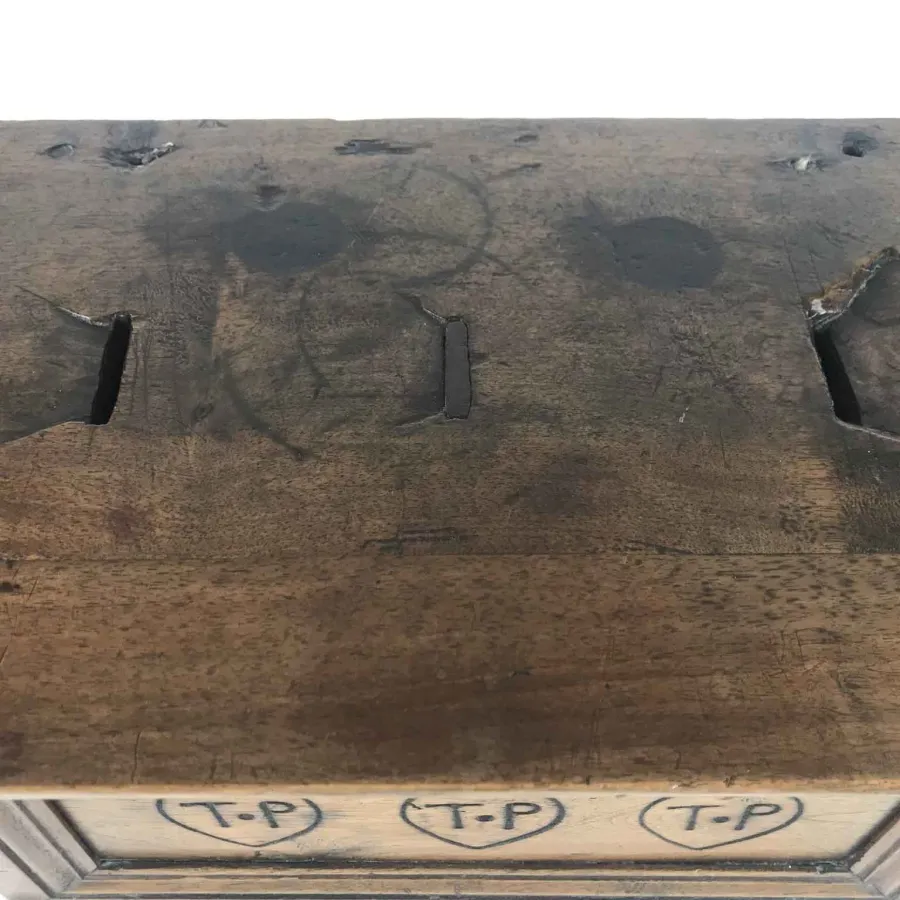
Seventeenth-century Italian donation box in the shape of a chest with square sides and rectangular frames, inside which we find repeated markings of fire symbols with large letters T-P in the form of a stylized heart. The lid features a grooved frame and has three slots at the top for inserting coins (the middle one is closed). The donation box does not have a lock and is secured with a clasp (absent), with hallmarks preserved on the central part of the frame on the longer side. The case was hung, as evidenced by the rear holes and the lack of wear at the bottom. Italy, 1600.
Exclusive antique furniture and accessories can be an excellent idea for decorating our interiors. Today, there is an increasing number of enthusiasts of high-quality vintage products that possess a distinct character and soul. This is a nod to history, craftsmanship, and the design of classic and timeless furniture. There are many different styles in antique furniture, each with its own distinctive features.
Many styles characterize antique furniture, but we can highlight a few of the most important. Eclectic furniture refers to the 19th century, during which the prevailing Biedermeier style was popular. Its early variations include neo-Gothic, Gothic, Rococo, Louis Philippe style, and finally the Victorian English style. By the end of the century, these styles evolved into pseudo-classicism, Renaissance, and Baroque styles.
Empire-style furniture and accessories date from the late 18th to early 19th century. Everything was influenced by Napoleon’s reign, which imposed significant similarities and references to Roman and Greek ornamentation.
Neoclassical furniture is associated with Louis XVI style, which also strongly references ancient architecture. Notable and worth mentioning are antique products in Rococo style and Louis XV. Next is Baroque, a term derived from the Portuguese 'barocco'—meaning an irregularly developed pearl. These were highly representative pieces designed to exude splendor and play a significant role in luxury. Unique materials were selectively used to emphasize the grandeur of these items.
Today, we can observe how much the Baroque style influenced modern classical furniture, which is designed with a strong resemblance to the historical period. An important style is also Renaissance, which flourished in the 15th and 16th centuries and left a significant mark on furniture-making. Renaissance furniture was quite heavy and robust, using brown stains, cornices, sturdy bases, and bas-reliefs. These products were quite distinctive but also opened new possibilities, such as the construction of cupboards and broadly speaking, chest-type furniture. Mythology and ancient times also inspired these designs, with supports and legs often taking animal forms.
Lion paws, eagle heads—these are common motifs in Renaissance style. Currently, many global brands reproduce furniture inspired by Italian and French artisans, demonstrating admiration and respect for the history of the most beautiful Renaissance antiques. It’s important to remember that furniture production was perceived differently in each country, so each style had its unique character. This is especially important when searching for a luxurious antique that suits your interior.
The most important aspect of elite antique furniture is originality. This is ultimately crucial for buyers, as the market is flooded with many forgeries. Luxury Products provides documentation confirming the product’s authenticity and compliance with the description and photos. We have appraisers, art experts, historians, and specialists from around the world at your disposal.
Attributes / Details
| SKU | ANT-A722 |
| Manufacturer | Antyki |
| Model | A722 |
| Material | walnut |
| Size | Height: 22 cm Width: 39.3 cm Depth: 25.3 cm |
| Age | XVII |
| Year | 1601 |
| Destiny | To living room |
See catalog
Reviews
No reviews for this product.