

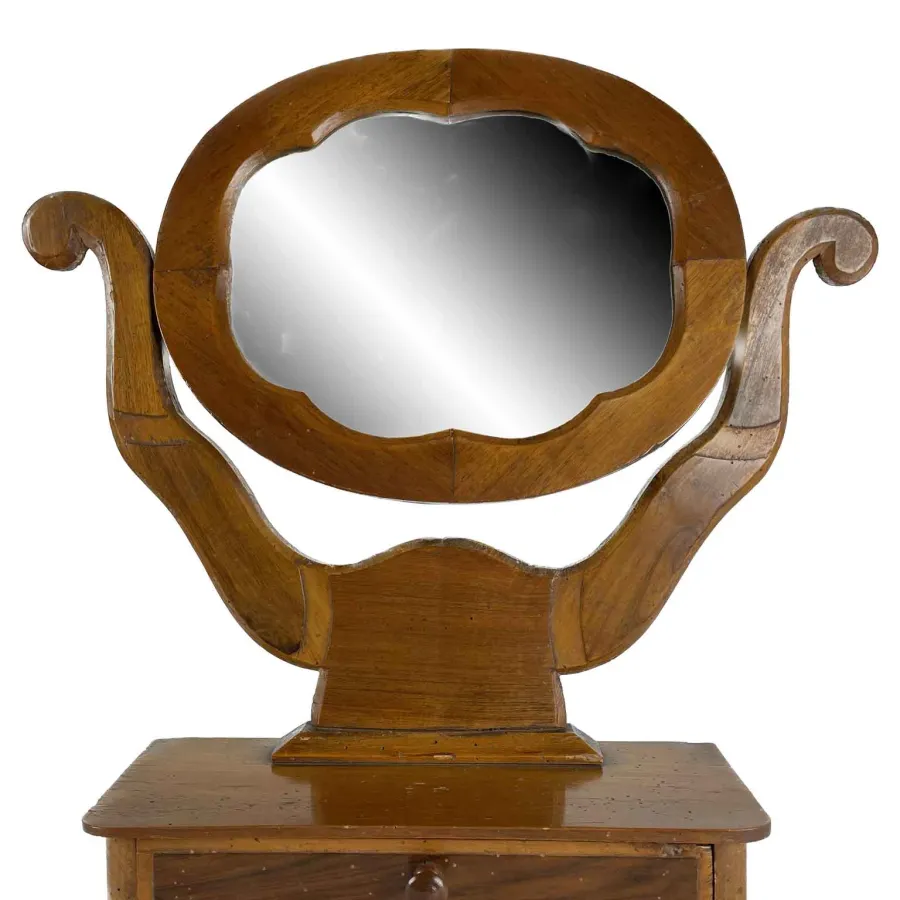
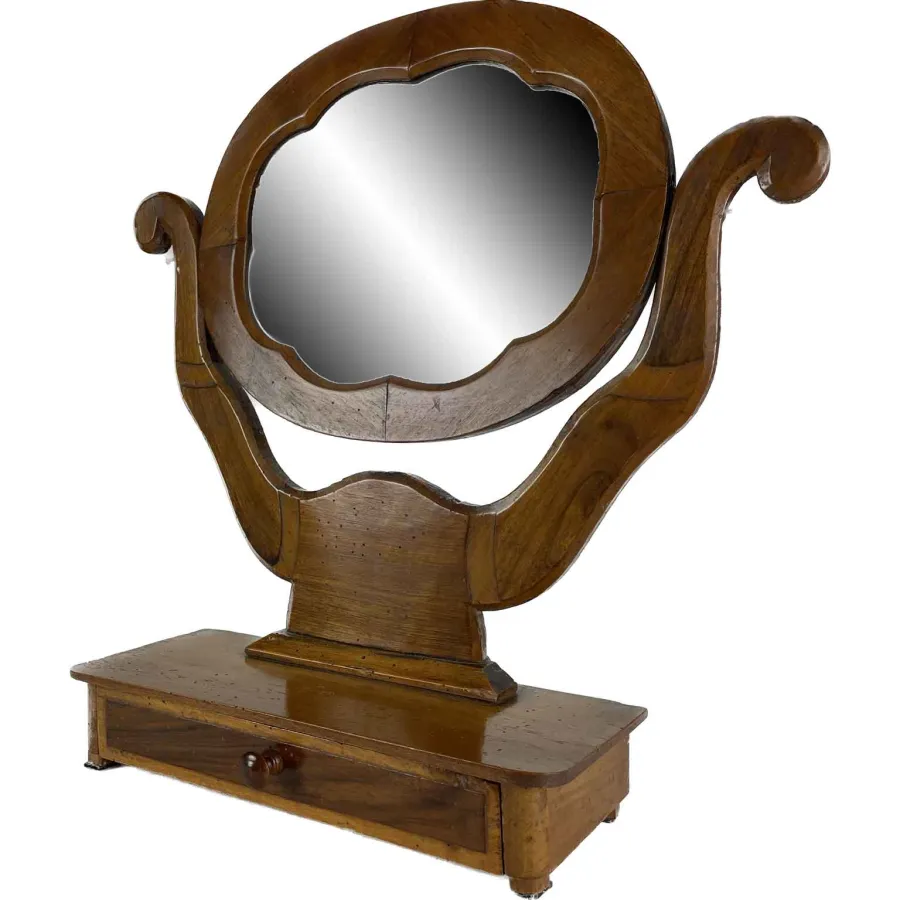
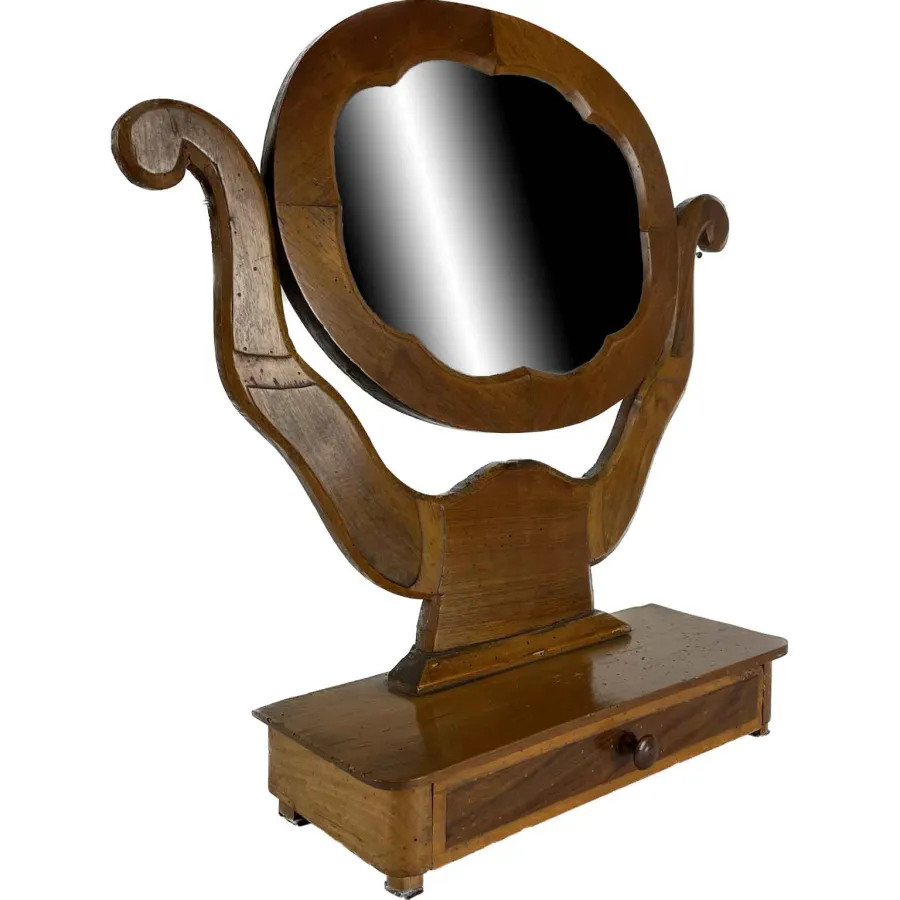
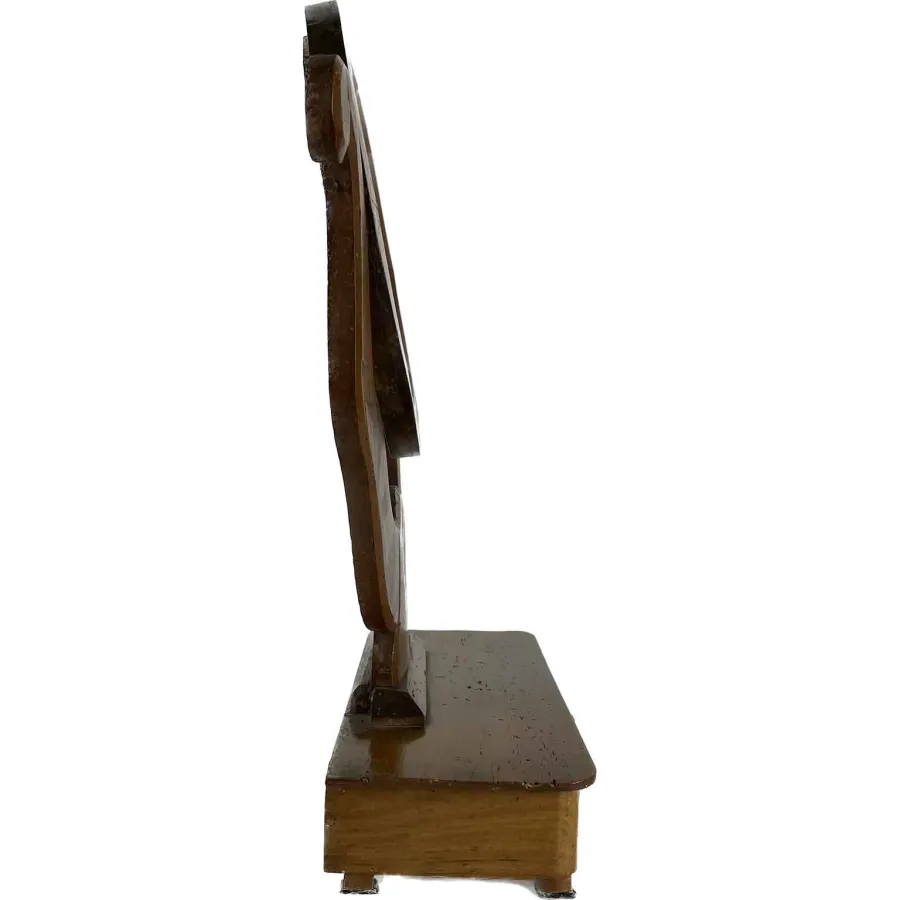
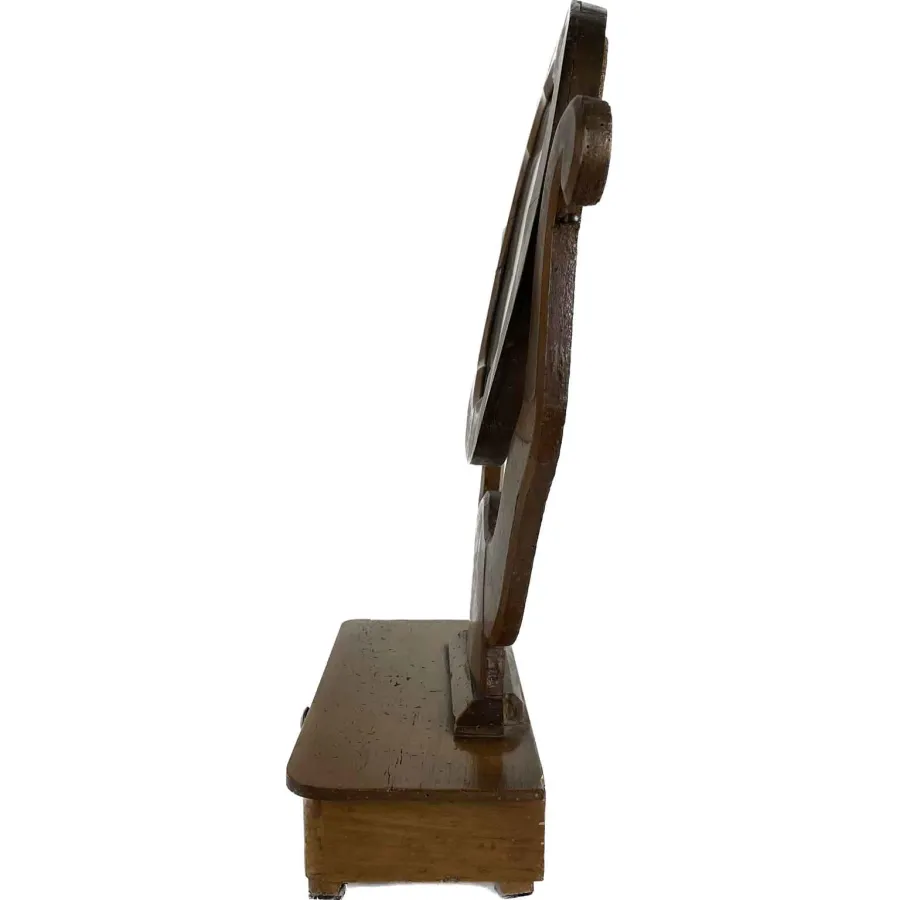
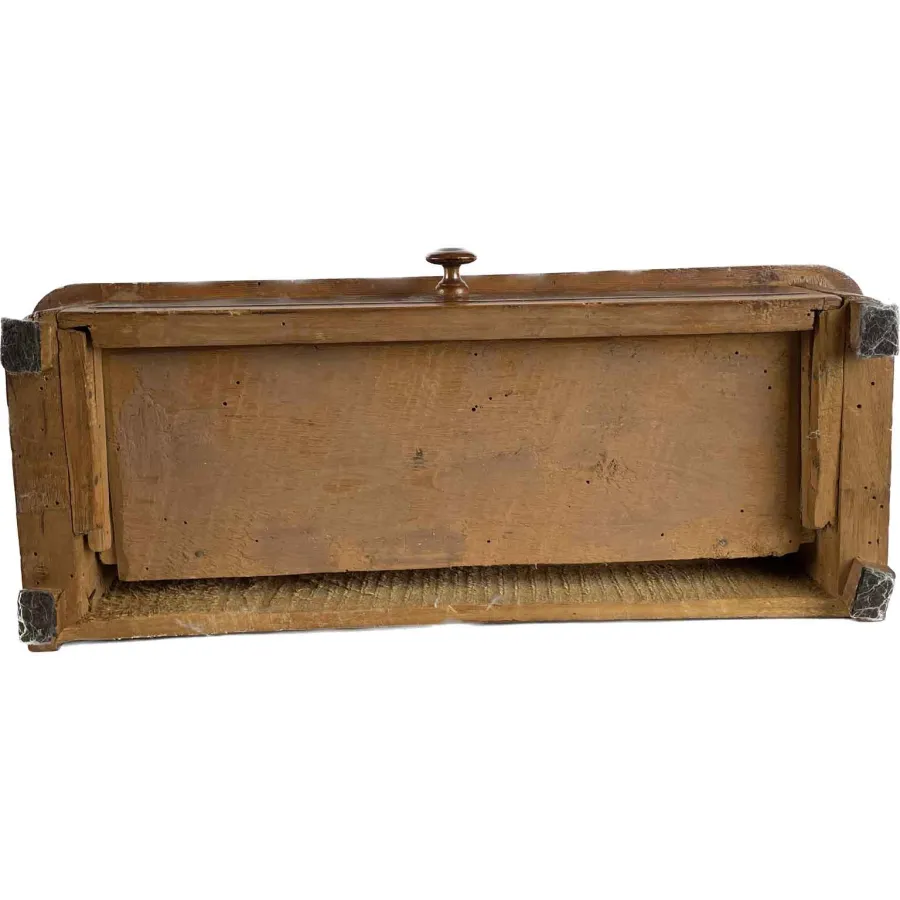
Wooden countertop dressing table with a tilting mirror, 1800
Unique antique furniture and accessories
SKU: ANT-A1069
See other products from category Antique dressing table or from manufacturer Antyki with shipping within 24 hours
Related products by category
Stylish antique furniture and accessories can be an excellent idea for decorating our interiors. Today, there is a growing number of enthusiasts of high-quality vintage products that possess a distinc
Original antique furniture and accessories can be an excellent idea for decorating our interiors. Today, there is an increasing number of enthusiasts of high-quality vintage products that possess a di
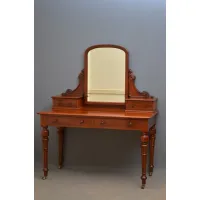
High-quality Victorian mahogany vanity table, featuring an original mirror in a profiled frame with carved supports and small drawers, figural mahogany, shaped top, and 2 oak dressing drawers, all equ
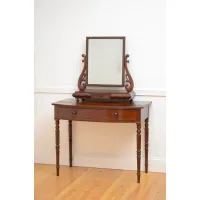
Elegant Regency writing table or vanity made of mahogany, with a figural top and rattan edge. This antique table has been restored and is ready to be placed in your home. Mirror not includedElegant an
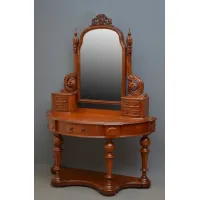
An exquisite Victorian dressing table featuring an original mirrored panel and a profiled frame with raised carving, finely carved supports ending with small curved and molded drawers, fitted with ori
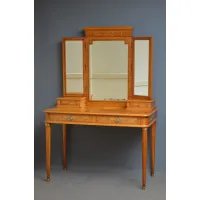
An attractive vanity table made of French satin, featuring an original mirror panel and a mirror mounted on 2 small drawers, satin cross pattern and a profiled top, as well as 2 finely inlaid dra
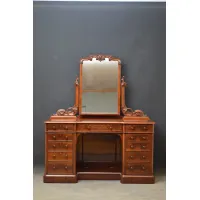
Victorian mahogany vanity table, with an original mirror panel, in a profiled frame and finely carved supports ending in a figural mahogany top above a long drawer with a frieze and 5 divided drawers,
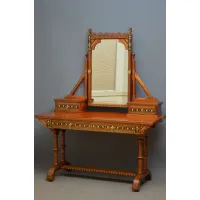
A exceptional Victorian dressing table with multiple wooden inlays, featuring an original mirror panel supported by finely carved and inlaid supports ending with 2 small jewelry drawers equipped with
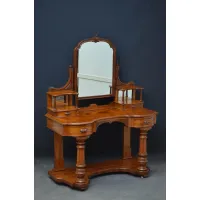
Victorian mahogany dressing table, with a shaped mirror frame featuring a top comb, carved supports equipped with 2 jewelry drawers with mirrored backs and turned columns, a serpentine-shaped mahogany
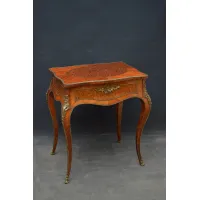
Stunning vanity with a serpentine pattern, inlaid with a tulipwood and rosewood panel, and decorative brass edging for the hinged top, which opens to reveal an original mirror and finely engraved hing
Description
Stylish antique furniture and accessories can be an excellent idea for decorating our interiors. Today, there is a growing number of enthusiasts of high-quality vintage products that possess a distinct character and soul. This is a nod to history, craftsmanship, and the design of classic and timeless furniture. There are many different styles in antique furniture, each with its own distinctive features.
Many styles characterize antique furniture, but we can highlight a few of the most important. Eclectic furniture styles originate from the 19th century, which saw the dominance of the Biedermeier style. Its early 20th-century variants include neo-Gothic, Gothic, Rococo, Louis Philippe style, and finally the English Victorian style. By the end of the century, these styles evolved into pseudo-classicism, Renaissance, and Baroque styles.
Empire-style furniture dates from the late 18th to early 19th century. It was influenced by Napoleon’s reign, which imposed a strong resemblance to Roman and Greek decorative motifs.
Neoclassical furniture reflects the Louis XVI style, which also draws heavily from ancient architecture. Noteworthy and interesting are antique products in Rococo and Louis XV styles. Next is Baroque, a term derived from the Portuguese word 'barocco'—meaning an irregularly developed pearl. These were highly ornate, luxurious pieces designed to shine with splendor and serve a significant role in opulence. Materials were selectively chosen to emphasize the grandeur of these items.
Today, we can observe how strongly the Baroque style has influenced modern classic furniture, which is often designed with a strong resemblance to the historical period. An important style is also Renaissance, which flourished in the 15th and 16th centuries and left a significant mark on furniture craftsmanship. Renaissance furniture was quite heavy and robust, often using brown stains, moldings, sturdy bases, and bas-reliefs. These products were quite distinctive but also introduced new possibilities, such as the construction of credenzas and broadly defined chest furniture. During this period, there was also an interest in mythology and antiquity, leading to supports and legs shaped like animals.
Lion paws, eagle heads—these are common motifs in Renaissance style. Currently, many global companies reproduce furniture inspired by Italian and French artisans, paying homage to and preserving the history of the most beautiful Renaissance antiques. It’s important to remember that each country perceived furniture manufacturing differently, so each style had its unique character depending on the nation. This is especially important when searching for an exclusive antique that suits your interior.
The most important aspect of stylish antique furniture is originality. Ultimately, this is crucial for buyers, as the market is flooded with many forgeries. Luxury Products provides documentation confirming the authenticity of each piece, matching the description and photos. We also have appraisers, art experts, historians, and specialists from around the world at your disposal.
Attributes / Details
| SKU | ANT-A1069 |
| Manufacturer | Antyki |
| Model | A1069 |
| Material | wood, other |
| Size | Height: 48 cm. Width: 49.5 cm. Depth: 14.5 cm |
| Year | 1800 |
| Guarantee | 24 months |
| Additional information | Walnut countertop dressing table with a tilting mirror 1800 in good condition, Italian origin |
See catalog
Reviews
No reviews for this product.