

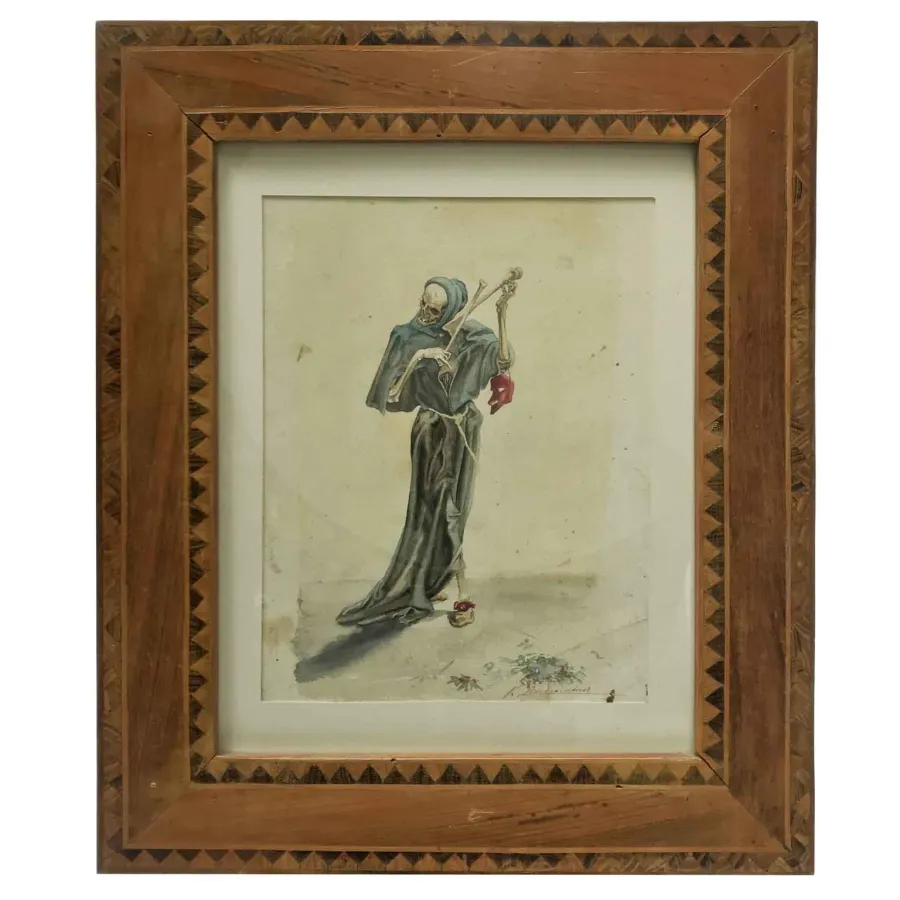
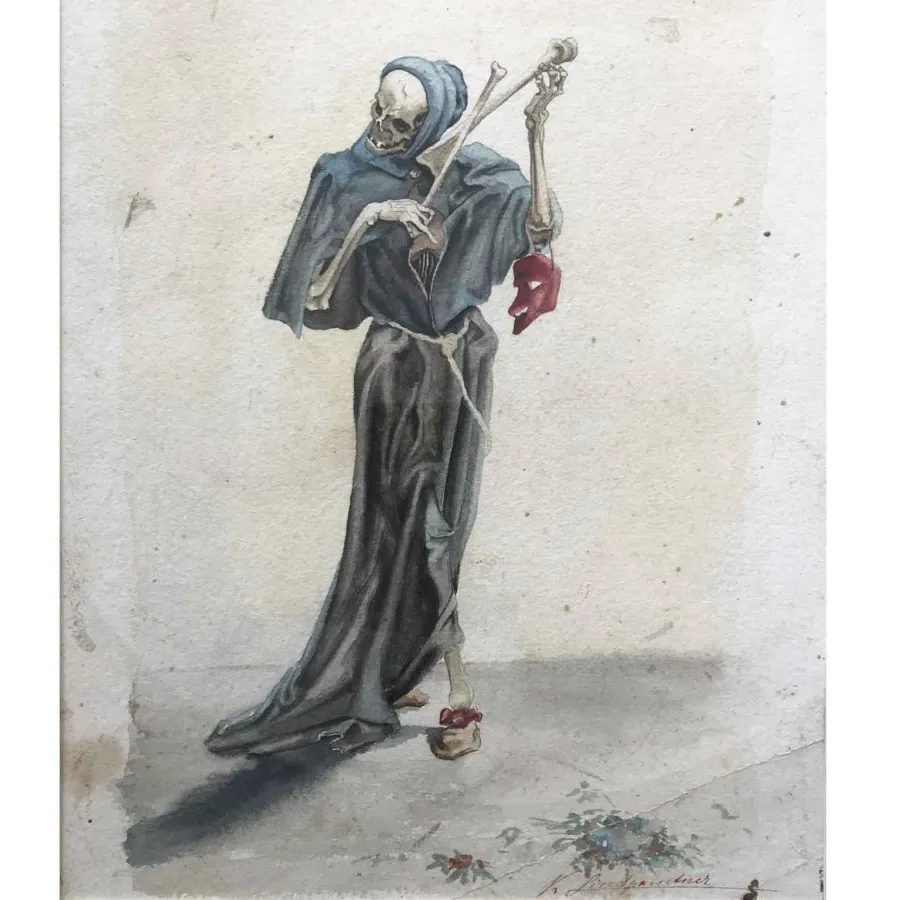

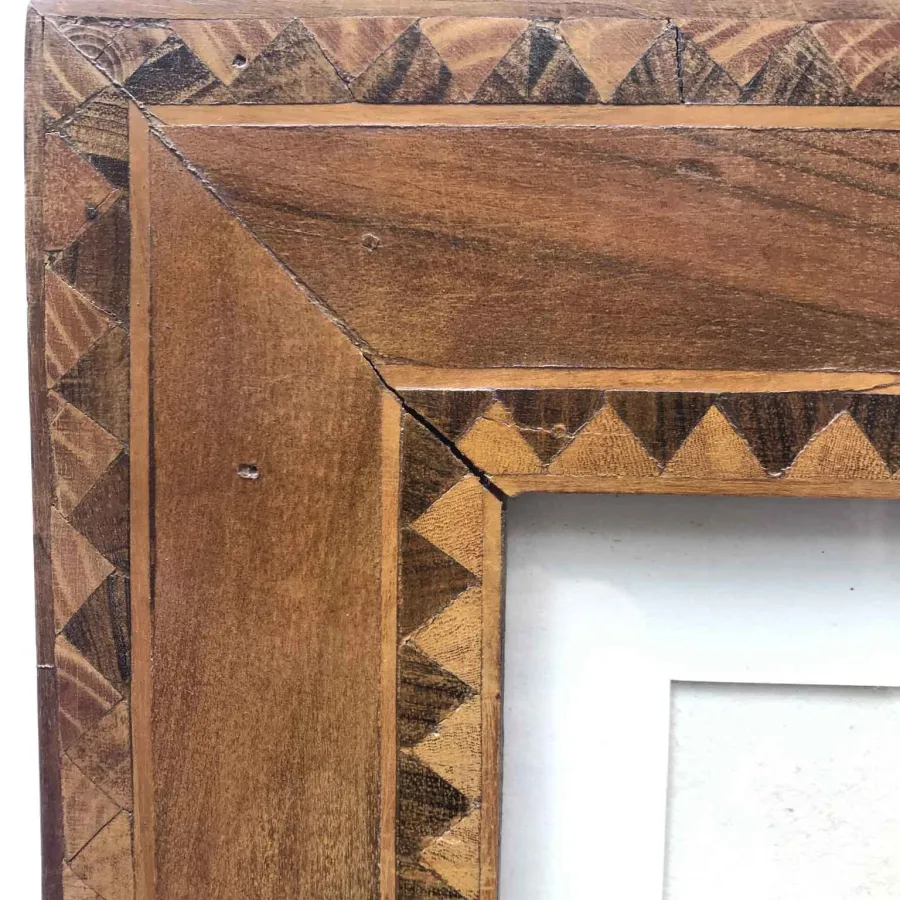
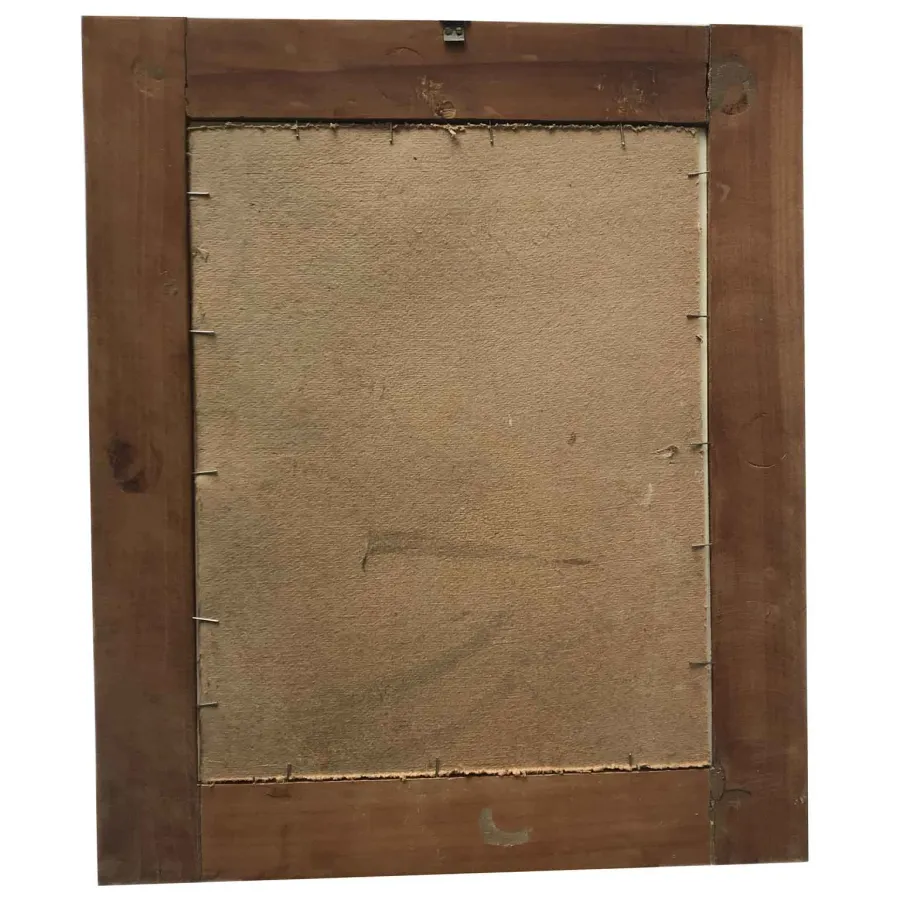
Von Lindpaintner Macabre violinist drawn in watercolor
Prestigious antique furniture and accessories
SKU: ANT-A761
See other products from category Watercolor paintings or from manufacturer Antyki
Related products by category
Unique antique furniture and accessories can be an excellent idea for decorating our interiors. Today, there is an increasing number of enthusiasts of high-quality vintage products that possess a dist
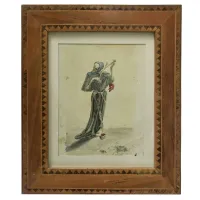
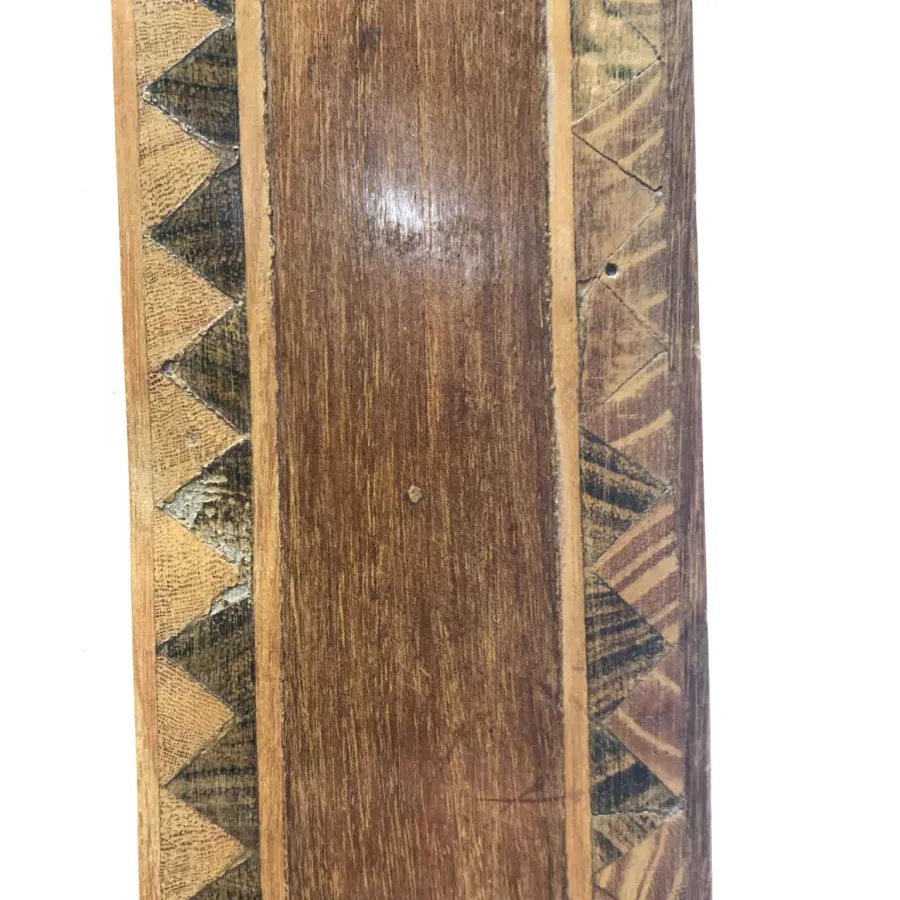
Von Lindpaintner Macabre violinist painted with watercolor by the skilled hand of V. Lindpaintner from the first half of the 19th century, set in a beautiful walnut frame with inlays. Peter Josef Lind
Description
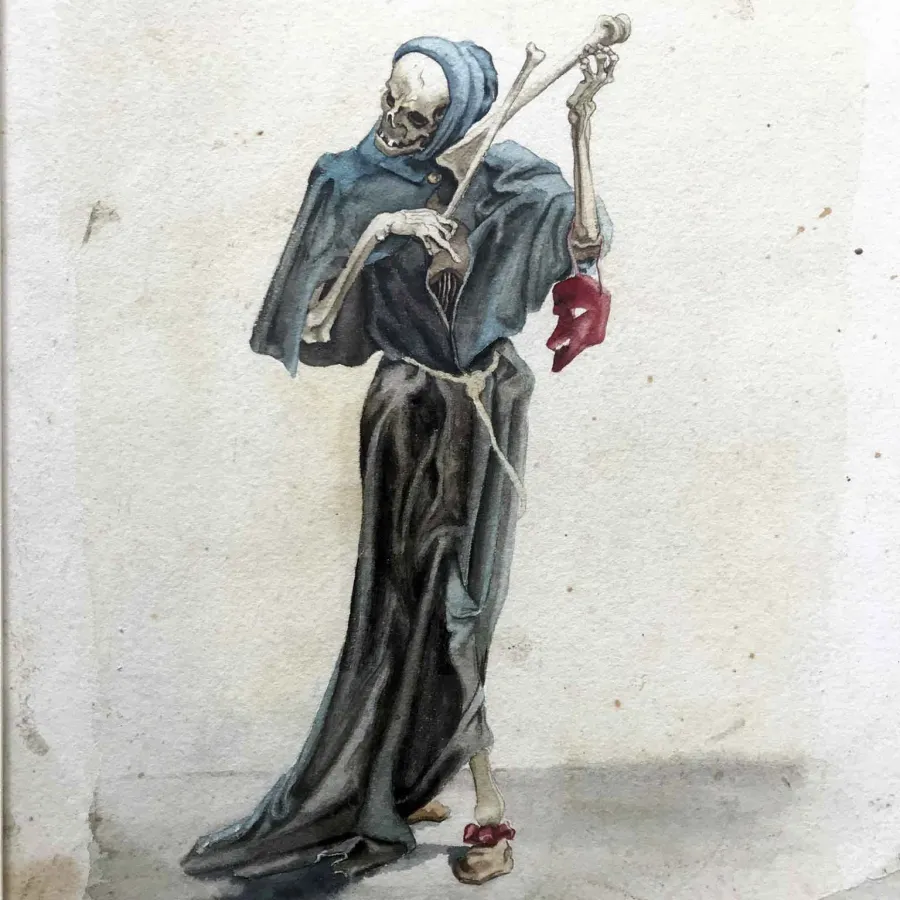
Von Lindpaintner Macabre violinist painted with watercolor by the skilled hand of V. Lindpaintner from the first half of the 19th century, set in a beautiful walnut frame with inlays. Peter Josef Lindpaintner (1791-1850), a renowned German composer, seems to mock the profession of a musician, demonstrating good technical confidence in his watercolor. The skeleton dressed as a monk plays on imaginary violins, using two dice with a carnival mask hanging from his arm, thus giving an ironic interpretation to the theme of Memento Mori, so dear to Wunderkammer collections. The drawing is in good condition and only has a crease in the lower right corner.
Exceptional antique furniture and accessories can be an excellent idea for interior decoration. Currently, there is a growing number of enthusiasts of high-quality vintage items that possess a specific character and soul. It is a nod to history, craftsmanship, and the design of classic and timeless furniture. There are many different styles in antique furniture, each with its distinctive features.
Many styles characterize antique furniture, but a few are particularly prominent. Eclectic furniture refers to the 19th century, during which the Biedermeier style was dominant. Its early variations include neo-Gothic, Gothic, Rococo, Louis-Philippe style, and finally the English Victorian style. By the end of the century, these styles evolved into pseudo styles of classicism, Renaissance, and Baroque.
Empire-style furniture and accessories date from the period between the late 18th and early 19th centuries. Everything was influenced by Napoleon’s reign, which imposed significant similarities and references to Roman and Greek ornamentation.
Neoclassical furniture, associated with Louis XVI, also strongly references ancient architecture. Noteworthy are antique products in Rococo and Louis XV styles. The next is Baroque, a term derived from the Portuguese 'barocco'—meaning an irregularly developed pearl. These were highly decorative pieces meant to radiate splendor and play a significant role in luxury. Unique, selectively used materials were employed to emphasize the grandeur of these items.
Today, we can observe how much the Baroque style influenced modern classical furniture, which is designed with a strong resemblance to the historical period. An important style is also Renaissance, which flourished in the 15th and 16th centuries and left a significant mark on furniture craftsmanship. Renaissance furniture was quite heavy and solid, using brown stains, moldings, sturdy bases, and reliefs. These products were quite distinctive but also opened new possibilities, such as the construction of buffets or broadly defined chest furniture. Mythology and ancient times also inspired these designs, with supports and legs often taking animal forms.
Lion’s paws, eagle heads—these are common features in Renaissance-style furniture. Currently, many global brands reproduce such furniture, drawing inspiration from Italian and French artisans. This reflects admiration and respect for the history of the most beautiful Renaissance antiques. It’s important to remember that furniture production was perceived differently in each country, so each style had its unique character. This is especially crucial when seeking exclusive antique pieces suitable for your interior.
The most important aspect of stylish antique furniture is originality. Ultimately, this is vital for buyers, as many forgeries circulate on the market. Luxury Products provides documentation confirming the product’s authenticity and compliance with the description and photos. We also have experts in art appraisal, history, and specialists from around the world at your disposal.
Attributes / Details
| SKU | ANT-A761 |
| Manufacturer | Antyki |
| Model | A761 |
| Size | Height: 30.5 (50) cm Width: 24 (42) cm Depth: 2 cm |
| Age | 19th century |
| Year | 1801 |
| Destiny | To living room |
See catalog
Reviews
No reviews for this product.