


Related products by category
Tapis Atelier is a brand specializing in the design and sale of woolen, handcrafted rugs. All production takes place in the Uttar Pradesh region, renowned for its artisan workshops sewing rugs.The bra
to2,499.00
Tapis Atelier is a manufacturer specializing in the design and sale of woolen, handcrafted rugs. All production takes place in the Uttar Pradesh region, renowned for its artisan workshops sewing rugs.
to1,185.00
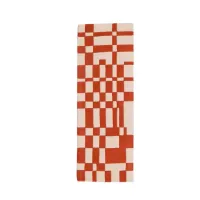
Tapis Atelier is a company specializing in the design and sale of woolen, handcrafted rugs. All production takes place in the Uttar Pradesh region, renowned for its artisan workshops sewing rugs.The b
to683.00
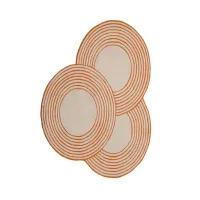
Tapis Atelier is a brand specializing in designing and selling woolen, handcrafted rugs. All production takes place in the Uttar Pradesh region, renowned for its artisan workshops that craft rugs.The
to2,510.00
Wonderful carpets by Jordan, representing the highest quality and integrity in trade from three generations worldwide. It is extremely important to them that customers receive the best quality at good
Luxury carpets by Jordan, passed down through three generations, represent the highest quality and integrity in trade worldwide. It is extremely important to them that customers receive the best quali
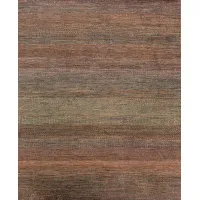
Luxury carpets by Jordan, a family business spanning three generations, represent the highest quality and integrity in trade worldwide. It is extremely important to them that customers receive the bes

Wonderful carpets by Jordan, representing the highest quality and integrity in trade from three generations worldwide. It is extremely important to them that customers receive the best quality at good
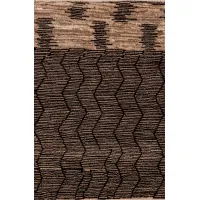
Prestigious Jordan rugs have been representing the highest quality and integrity in trade worldwide for three generations. It is extremely important to them that customers receive the best quality at
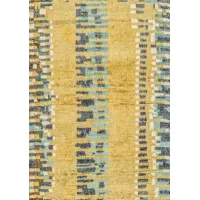
Prestigious Jordan rugs have been representing the highest quality and integrity in trade worldwide for three generations. It is extremely important to them that customers receive the best quality at
Description
Philosophy of Nodus
Our philosophy of creating this exclusive handcrafted collection can be summarized by quoting Francois-Henri Pinault: “Luxury is the encounter between a vision of the future that surprises and an understanding of the past that provides reassurance.”
In this way, we have created and designed this collection of exceptional pieces.
The project will surprise you, and you will be delighted by the highest quality.
What we offer our clients:
High-quality fabrics, handcrafted by the best producers in the world.
Excellent design, as each piece is designed by renowned architects and designers who distinguish the collection and make it recognizable and prestigious.
Innovation: we have combined the traditions of the finest craftsmanship with projects that are not only aesthetic but also artistic and avant-garde, encouraging us to experiment and give new meaning to the work itself.
Exceptional service: virtually every rug is produced based on the client's personalization. No stock of standard-sized rugs, but unique fabrics that are produced to fully meet the client's requirements. Each product is made to order, indeed custom-made.
Finally, and just as importantly, we place great emphasis on fair trade. We do not use or employ child labor. However, we ensure that talented artisans receive fair and proper compensation.
On the contrary, we want to support them and help their development through collaboration and mutual respect.
Luxury Handwoven Rugs
Luxury handwoven rugs are not just home decor elements; they have truly become a symbol of luxury. Add a cozy touch to your home with attractive, luxurious handwoven rugs that give your space a traditional look. Enrich your home with a unique character. At Nodusrug, you will find rugs in various styles, patterns, and designs that reflect your distinctive personality.
Give your feet a warm touch with luxurious, handcrafted rugs that complement your home’s appearance. Cover any imperfections while enhancing the aesthetic appeal of your space.
Luxury handwoven rugs not only make your floor look clean or protected but also make walking and sitting more comfortable for you and your guests. Decorate your floor with luxurious accessories and add more color and shine to your home in style. This season, give your space a luxurious makeover!
Nodus Project
Nodus is a craft workshop with a cultural mission: the oldest traditions and knowledge in rug design are reinterpreted using the vision of the most innovative designers and architects, producing exclusively unique works, promoted through events and publications to spread knowledge about new shapes and forms of art that have accompanied humanity since ancient times.
Craftsmanship: Nodus has selected the best producers from six countries (Nepal, Pakistan, India, Turkmenistan, China, and Turkey), visiting each one to verify materials, techniques, artisans, and ethical production.
Every Nodus rug will be a one-of-a-kind piece, entirely handmade, including the packaging.
The result is a collection of 60 rugs that sets a new horizon of shapes and colors, a collection that breaks boundaries and goes beyond rational limits.
The spirit of the rugs is captured in dynamic and organic forms, such as puzzle assembly, irregular profiles, or inspiration from contemporary and everyday objects like textiles, tablecloths, books, and maps.
All rules are broken, except one: Hand-knotting, knot by knot.
Whether you are purchasing or simply appreciating the quality of Nodus products, you can be sure that the rug was produced with the utmost respect, primarily respecting human rights and the right to good working conditions and fair wages.
The guarantee comes from Rugmark, an international foundation that has been working for 14 years to end child labor and rigorously monitors the production process every three months.
Raw Material
Wool
Wool is certainly the most commonly used material for handcrafted woven products. The ability to choose and work with it is very important because the quality of the yarn strongly influences the softness and durability of the rug, as well as determines the brightness of colors and patterns. It is always better to use wool that is not too twisted; otherwise, it is often necessary to treat the pile with artificial substances, which can alter its resistance.
Additionally, it is important that shearing is carried out at a specific time of year, preferably in spring or late summer.
After shearing, wool undergoes a washing process, which is essential to remove any impurities and degrease it.
The most experienced artisans know that this treatment does not have to be too harsh, as the proper fat content makes the yarn particularly soft. After washing, the wool is carefully dried, probably in the sun, then teased and spun. In modern processes, this operation is often performed mechanically.
However, hand spinning is always the best, as it allows for the elimination of fiber irregularities, making it very dense and suitable for all types of weaving.
Silk
Silk, an animal fiber produced from silkworm cocoons, is an extremely costly and luxurious material for textiles and rugs. The cultivation of silk began in ancient China, where it was jealously guarded as a secret.
Eventually, its use spread to Persia, then to Byzantium and Europe.
Regardless of the cost, rugs with silk pile, even those with silk backing, are not uncommon, although they are high-quality items in the tradition of court art.
Highly luxurious nomadic fabrics will also feature some silk fibers. The appeal of silk lies in the delicacy of its fibers, which are incredibly soft, as well as in its luminous, reflective quality.
For this reason, the color effect on silk is much more intense and shiny than the effect of the same dye even on the best wool.
However, silk is much more delicate and less durable than wool.
As a result, many less well-preserved silk rugs exist. This rarity, along with the basic cost, places antique silk pieces among the most expensive rugs.
Hemp
Hemp fibers are obtained through a series of operations on the stalks—including retting, drying, and crushing—and a shaking process that ends with separating the woody part, releasing long, fairly straight fibers or filaments.
Strips of fibers, usually over 1.8 meters long, consist of single cylindrical cells with an irregular surface. The fiber, longer and less elastic than flax, is typically yellowish, greenish, dark brown, or gray, and because it is not easily lightened to sufficiently bright shades, it is rarely dyed. It is strong and durable, used for making ropes—such as twine, yarn, cordage, and ropes—as well as for artificial sponges and thick materials like sacks (canvas) and fabric. In Italy, some hemp is specially processed to achieve a whitish color and attractive sheen, and is used for making fabrics similar to linen. Other plant fibers used for rope production have been incorrectly called hemp, but only the hemp plant produces true hemp fibers.
Linen (flax)
Linens are among the oldest textile fibers and are valued for their strength, shine, durability, and moisture absorption.
They are resistant to microbial attack, and their smooth surface repels dirt. Linen is stronger than cotton, dries faster, and is less affected by sunlight.
It can be bleached to pure white, but dyeing is somewhat difficult because the fibers are not easily penetrated. Fine varieties of linen are used for fabrics and lace in clothing and home furnishings.
Lower-grade linen is used for products requiring strength and resistance to moisture—such as canvas, twine, fire hoses, sacks, and, of course, rugs and carpets.
Banana silk (abaca)
The outer layer containing fibers is usually removed from the stalk as a result of a process in which strips or smoking are released from one end and pulled off.Following this cleaning operation, the pulp is scraped off manually or mechanically, releasing fiber strands that are dried in the sun. The strands typically range from 1 to 3 meters in length, depending on the size of the leaf stalks and the processing method used.
The shiny fiber varies in color from white to brown, red, purple, or black, depending on the plant variety and the location of the stem; the strongest fibers come from the outer layers.
Abaca fiber is valued for its exceptional strength, elasticity, and durability, which is why it is used in carpets, table mats, and paper.
Internal plant fibers can be used without spinning to produce lightweight, strong fabrics, mainly for local clothing, hats, and shoes.
Production dyes
Despite the widespread use of synthetic dyes, the most prestigious manufacturers still rely on natural dyes, extracted and prepared according to very ancient methods.
However, by the late 19th century, the use of synthetic dyes allowed for an expanded chromatic range. Today, the best producers use both techniques.
Tools
The loom is the most commonly used tool for creating details of various sizes. It has a sturdy and stable construction, made up of two side posts and two closing beams.
The upper heddle separates the warp threads on appropriate slots attached to the posts, while the lower passes through the warp.
There are also other auxiliary tools, mainly necessary during the tying phase, such as characteristic blades with hook-shaped edges. They are useful for cutting knots.
The comb is used for securing and closing the knots; this phase of work is performed with absolute precision.
After finishing the work, thorough shaving is necessary, which is still carried out by skilled shearers proficient in scissors and sharp blades.
Carpet Structure
Warp
In the structure of a carpet, the warp forms the supporting part of the framework, a kind of skeleton that must be made with absolute accuracy to avoid defects in the final product, such as bumps and distortions.
The best materials to use are undoubtedly silk and cotton, which are very durable and ensure high fabric strength. To create the warp, yarns are stretched on a beam at equal distances; each forms a chain that, upon completion, appears as individual threads on the fringes. A valuable carpet always has a large number of warp chains.
Weft
The weft thread passes through the warp, and this structure is also useful for tying knots.
When the work is finished, it should be inconspicuous, so it is better to hide it under a higher layer of fiber.
The weft thread can be made of wool or cotton; silk is also an excellent material but is usually used for producing valuable items due to its high cost.
Fringes
Fringes are the visible part of the warp chains and are, of course, subject to wear.
Their yarns can be woven in various ways depending on the country of production; therefore, they sometimes serve as an excellent clue to discovering the place of origin.
Fleece
Fleece consists of cut loops with knots and is obtained during the shearing phase.
It is extremely important to accurately display patterns. Uneven or overly long cutting can actually threaten the clarity of the decorative structure.
Knots
Symmetrical knot (Ghiorde)
The symmetrical knot is used in Turkey, the Caucasus, and Iran by Turkish and Kurdish tribes.
It is also used in some European carpets. To create this knot, the yarn is passed through two adjacent warp strands.
Each end of the yarn is then wrapped around one warp and brought back to the surface between the two warps.
Asymmetrical knot (Persian or Senneh)
The asymmetrical knot is used in Iran, India, Turkey, Egypt, and China.
To create this knot, the yarn is wrapped around one warp thread, then passed under the adjacent warp thread and brought back to the surface. This type of knot produces a finer weave.Tibetan knot
In Tibet, a characteristic rug weaving technique is used.
A temporary rod is placed in front of the warp to set the pile length.
Continuous yarn is wrapped around two warps, then once around the rod.
When the row of loops is complete, the loops are cut to form knots.
Slits
Slits correspond to the hem along the edge where there are no fringes and consist of warp chains in which knots are not tied.
Natural dyes
The craft of creating natural dyes is a fascinating and ancient art that dates back over four thousand years. Before the 20th century, traditional dyeing based on pigments was produced according to recipes passed down through generations.
One of the most important dyes was madder, which grows wild across the Middle East and serves as the base for various shades of red, pink, and purple.
Madder plant
The next bluish-red dye comes from cochineal and kermes insects, which live in the shade of oak trees.
Saffron
Wild saffron dyes a red-yellow color, while cultivated saffron produces a pure yellow. Lighter yellow comes from turmeric roots, while the mulberry fungus provides a greenish-yellow dye.
Indigo
This is the most valued color of all, derived from soaking and fermenting the indigo plant. Indigo color ranges between blue and purple. The name comes from India, where the plant was first used commercially. The bluish hue of the plant is the origin of the English word “dungarees,” named after the Indian city Dungaree, whose indigo was used to dye American miners’ blue jeans from 1848.
Nuts
Dark brown dyes usually come from walnut shells soaked in iron oxide and are the only ones containing mineral fixatives or mordants.
In many villages, there lived a Master dyer who produced a very special color. The Master proudly wore his dyed clothing, and his shoulders were permanently stained. The dyer passed his precious recipe to his son or a male heir. If there was no trusted male successor, the recipe was often lost forever.
Below is a recipe that has long been used by one of the most trusted suppliers in Pakistan:
The wool dyeing process using Natural Herbal Dye, used for handmade wool yarns dyed with plants, hand-spun.
The most common plants found in the jungle, cultivated areas, or hilly regions include:
1. Henna leaves.
2. Dried tobacco leaves.
3. Wicker
4. Saffron
5. Green walnut
6. Butea leaf
7. Margosa leaf
8. Pomegranate husk
9. Indigo powder
10. Tea leaf.
Currently, in Pakistan, hand-spun natural herbal plant dyes (sheep wool yarns like Ghznavi) are used for weaving handmade Zeigler (Chobi) carpets.
This special herbal dyeing technique was introduced in Pakistan by Turkish and Afghan rug weavers who emigrated during the Soviet invasion from cities such as Kabul, Akcha, Mazar-e-Sharif, Hazar, Shaberghan, Andkhoi, and Kunduz.
Over 200,000 refugees (both men and women) were skilled rug weavers and settled mainly in refugee camps in Pakistan (Serhad province near Peshawar, Attock, Sawabi, Cheerat, and Jaluzai).
These residents of Ayrii and Turks learned and introduced unique herbal plant dyes into Pakistan for wool yarns, to dye Gerdezi rugs with Turkish knots in Chobi (Zeigler) using hand-held flat-bed looms, which have become popular worldwide.
In fact, over 3,300 years ago, ancient Egyptians also used these herbal plant dyes in their wall paintings, ceramics, tombs, and pyramids of the pharaohs.
The most commonly used shades were green, indigo-blue, yellow, and red with an unknown waterproof natural lacquer based on glue (annamil / leminated coatings). These colors are eternal and still preserved.This herbal dyeing process was and remains natural, non-chemical, hypoallergenic, and non-acidic. This system was used before the adoption of Aniline (synthetic), which was introduced in the mid-19th century (1850s–1870s).
Analytical dyes are artificial, warmer, brighter, and remain unchanged even after washing at 65°C. The colors do not run or fade. However, herbal plant dyes appear slightly lighter, softer, and somewhat faded, giving a natural look.
They are completely environmentally friendly.
The richness of colors allows for stunning decorative effects through contrast and harmony of shades. The dye recipes, both plant-based and animal-based, have been passed down from century to century.
Today, these same processes are used in Turkey, Turkmenistan, Iran, Afghanistan, and recently in Pakistan, still following traditional nomadic formulas from the past.
There is a special technique of dyeing using minerals and vegetables.
Each strand of hand-spun sheep wool yarn is dipped into a mixture of raw ground powder, creating herbal dyes, then collected, naturally dried, and finally exposed to hot sunlight.
Sometimes, two to four colors are mixed to produce a new shade, e.g., mixing yellow, blue, orange, and olive yields a leaf green tone. After washing, all these combined colors are slightly visible, giving an elegant cool tone.
In summary, natural dyes, when used properly, undoubtedly produce the best effects, for example, when a hand-woven rug becomes a beautiful home decoration.
Below are listed the leaves, roots, and bark from various trees and plants used to produce "PLANT DYES".
Sources of organic dyes and achievable colors:
Natural dyes from plant parts.
- Vegetables and fruit shells.
- Roots and leaves.
- Flowers.
- Bark and berries.
RED GROUP:
(1) Madder Plant .......... for bright shade ........... RED (for Zeigler / Chobi / Linen / Silk Dyes)
(2) Cochineal .................................................. ......
YELLOW GROUP:
(3) Saffron ........................................... .................... YELLOW (for cotton, wool, denim fabrics)
(4) Willow / Birch leaves ........... .............................. YELLOW
(5) Zarik ............... .................................................. .. Dark yellow
(6) Turmeric .......................................... .................. Light yellow
(7) Tobacco .......................... .................................. Light yellow, creamy, golden yellow
BROWN GROUP:
(8) Black wood .................................................. .... Dark brown
(9) Wooden logs for fur, silk, wool ………………… .. Dark brown and black
(10) Walnut shell ............................................. ....... Light brown
(11) Cassia (purifying) .................................... ............. Chocolate,
Black charcoal (12) Tea leaves (Black / Green) ....................... ..... Gray, light brown
GREEN GROUP:
(13) Henna leaves (for hair, skin) …………… .. Yellowish / Olive green
(14) Lusern grass ........... ........................................... Pastel green
(15) Royan .................................................. .............. Dark orange
BEIGE GROUP:
(16) Mustard seeds .......................... ........................ Light cream, beige
(17) Onion skins ............................................. ............ Gray, light creamy
RUST GROUP:
(18) Pomegranate / Oak bark, grapevine leaves ........ Rusty red
(19) Mint + ...... .................................................. ........... Light greenish, bright COPPER-VIOLET GROUP:
(20) Blackberries (roots) ....................... ................... PURPLE
Water Lilly & Daffodil flowers
Synthetic dyes
The transition to chemical dyes began in 1834 when a German chemist observed that distilled coal tar or aniline produced a blue-violet coloration after applying bleaching powder. His discovery helped pave the way for the development of other aniline dyes.
Unfortunately, original aniline dyes made fabrics stiff and dry, and the color faded.
By around 1870, synthetic dyes had reached the coastal region of Turkey. They became a popular commodity along the Silk Road and reached the nomadic populations of the Caucasus and Iran.
Particularly for the shade of red, new aniline dyes proved more economical than natural dyes, allowing carpet producers to speed up production and increase demand. These dyes also offered greater control over colors from batch to batch, which was a desirable feature, considering that Western buyers preferred more evenly dyed carpets.
However, aniline dyes achieved limited success. Rural dyers received bags of powdered dye and instructions. Following the instructions was essential for a successful outcome. Unfortunately, most villagers could not read or understand scientific instructions—often written in a foreign language—and were accustomed to measuring by handfuls. Given these obstacles, proper mixing of colors was nearly impossible.
In 1940, chrome dyes were developed using potassium bicarbonate, allowing for a wide range of rich, durable colors that were safe for wool. Over the years, synthetic dye recipes were created to ensure an interesting palette that natural plant dyes could not offer.
Synthetic dyes do not cause fiber degradation in carpets, and this issue should be considered in the context of the carpet’s history and the quality of the material used.
Carpet Care Tips
Generally, maintenance is straightforward.
Moderate vacuuming is sufficient. Avoid using a beater brush.
What to do:
• It is recommended to rotate the carpet at least once a year, depending on foot traffic.
• Vacuum regularly to remove dirt and refresh fibers, but be careful not to vacuum the fringes.
• For stains or spills: most liquids can be cleaned with a cloth and warm water without excessive rubbing. If excess water is used, ensure it dries naturally and as quickly as possible.
Using a hairdryer on a low setting can help speed up drying.
• Solid debris should be removed with a blunt-edged knife or even a spoon.
• Greasy or oily stains can be treated with a neutral shampoo, such as baby shampoo, with cold water. Avoid harsh detergents. Wool carpets are naturally oil-resistant, and detergents can damage the natural oils of the wool.
A good rule of thumb is: if you can use it on hair, you can probably use it on the carpet.
Note: For stubborn stains, consult a professional cleaning product.
• Packing: always roll the carpet and protect it with appropriate covering.
• Do not fold the carpet.
General information: Remember that moisture can damage the carpet, so avoid placing plants on it.
Animal urine is also harmful, as it can leave stains if not treated promptly and effectively. It is advisable to immediately rinse with cold water and then use a specialized cleaning service.
Always try to dry the carpet naturally, if possible, avoiding direct sunlight.
It is important never to use stain removal products. If oil or grease stains appear on the carpet, you should use talcum powder or a similar agent.Attributes / Details
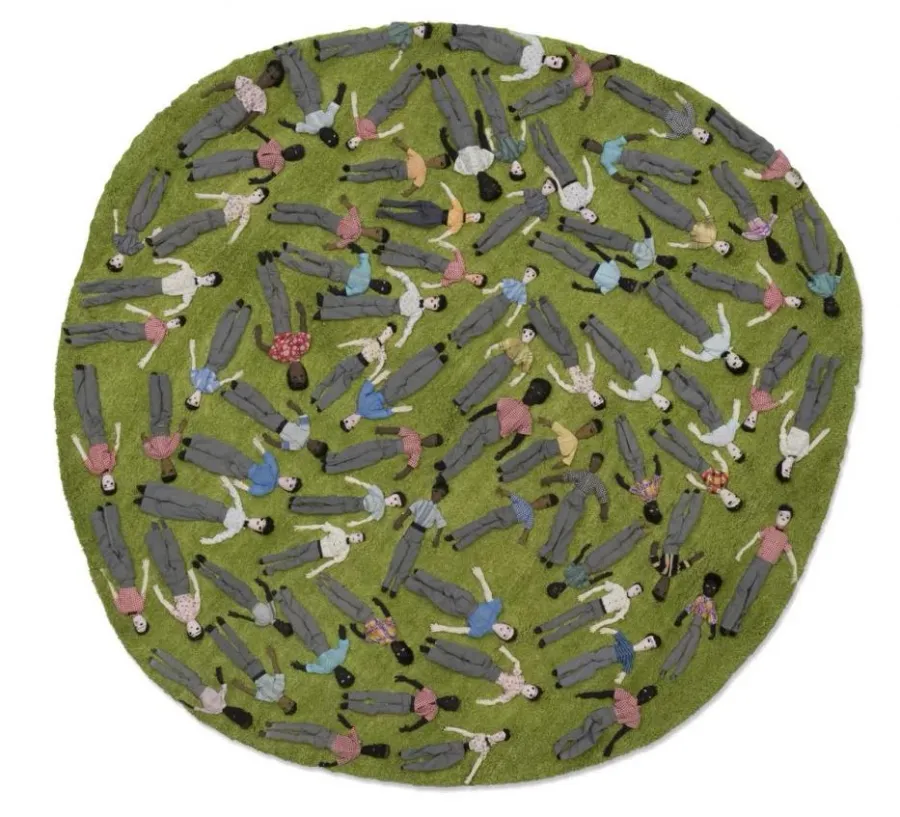
| SKU | #192-21 |
| Manufacturer | Nodus |
| Model | CIRCUS |
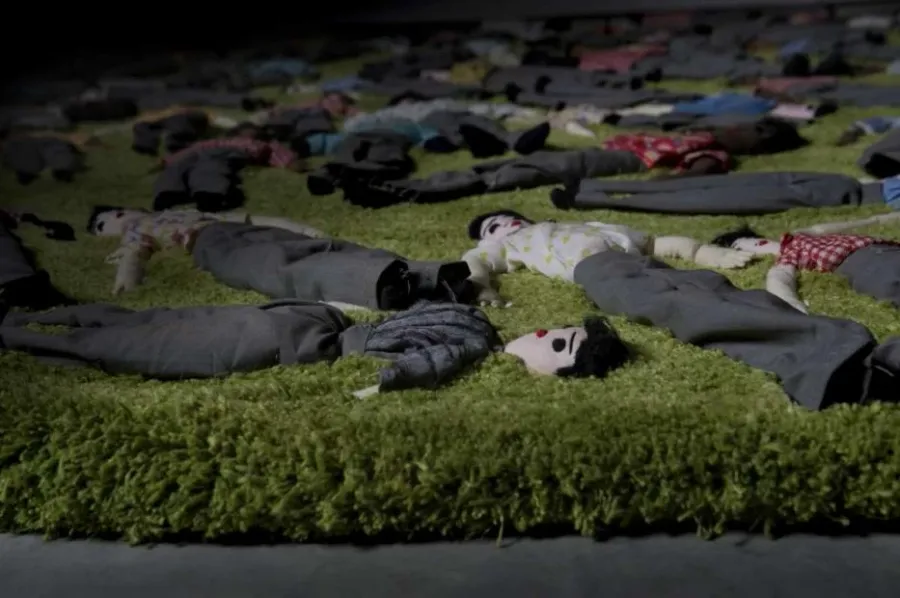
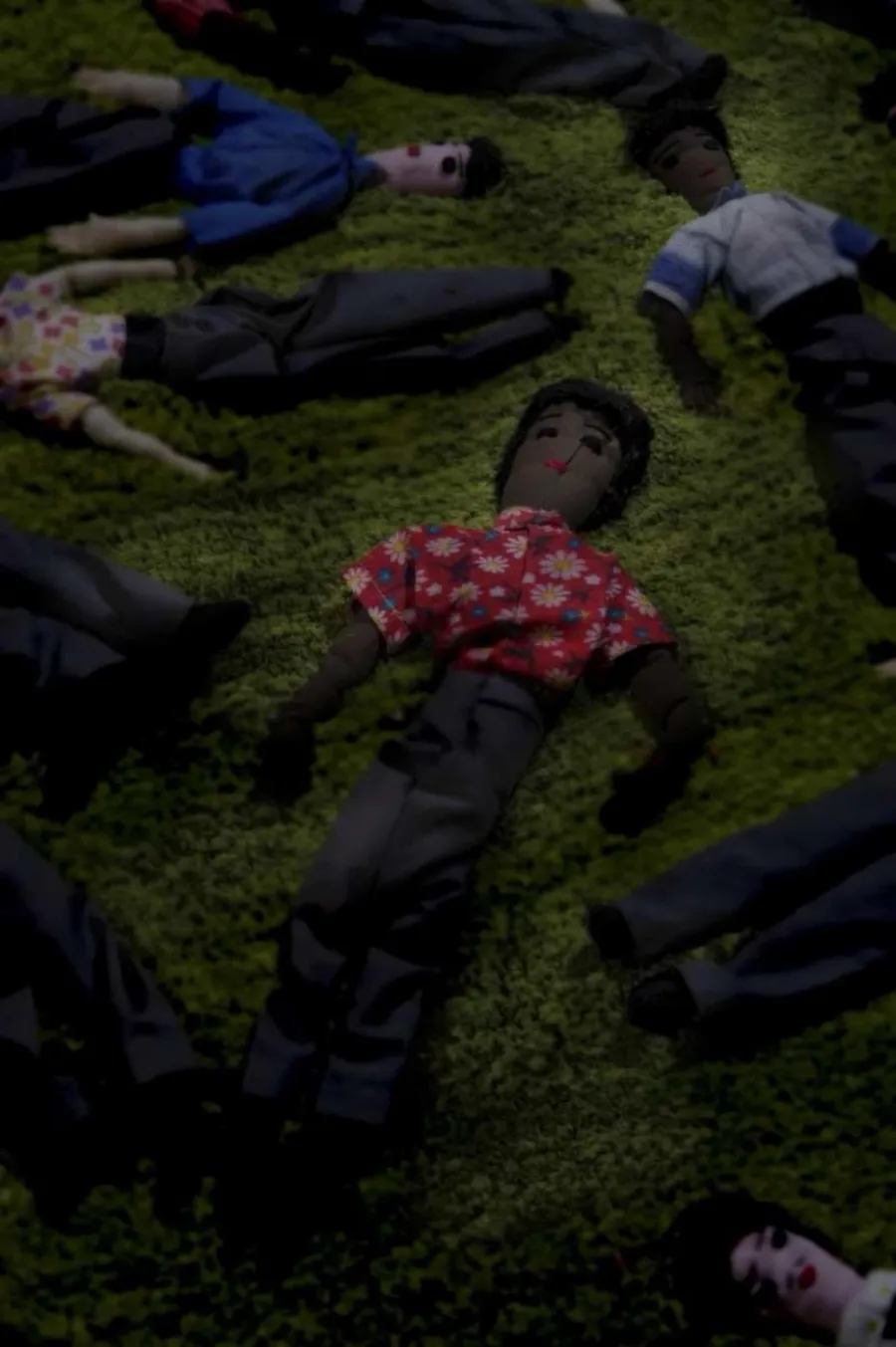
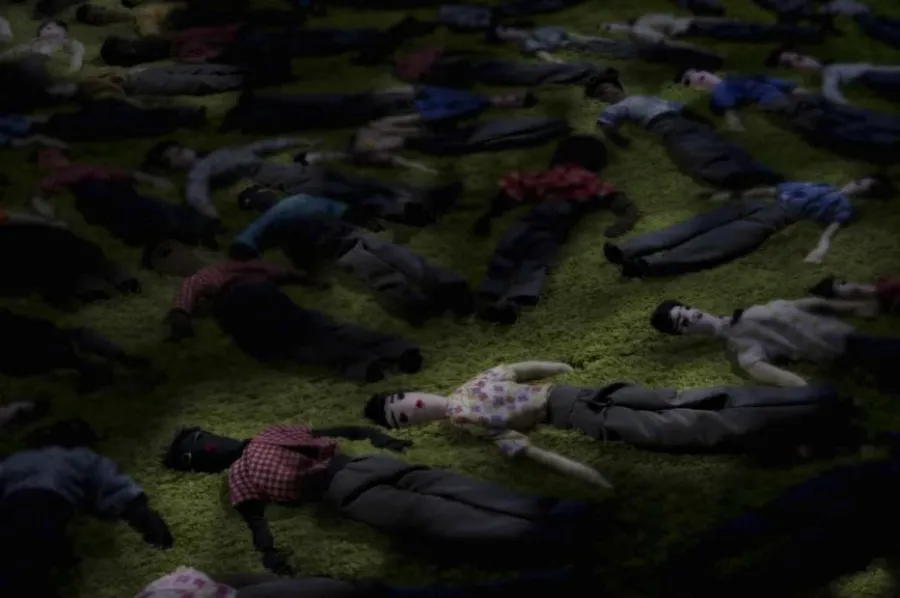
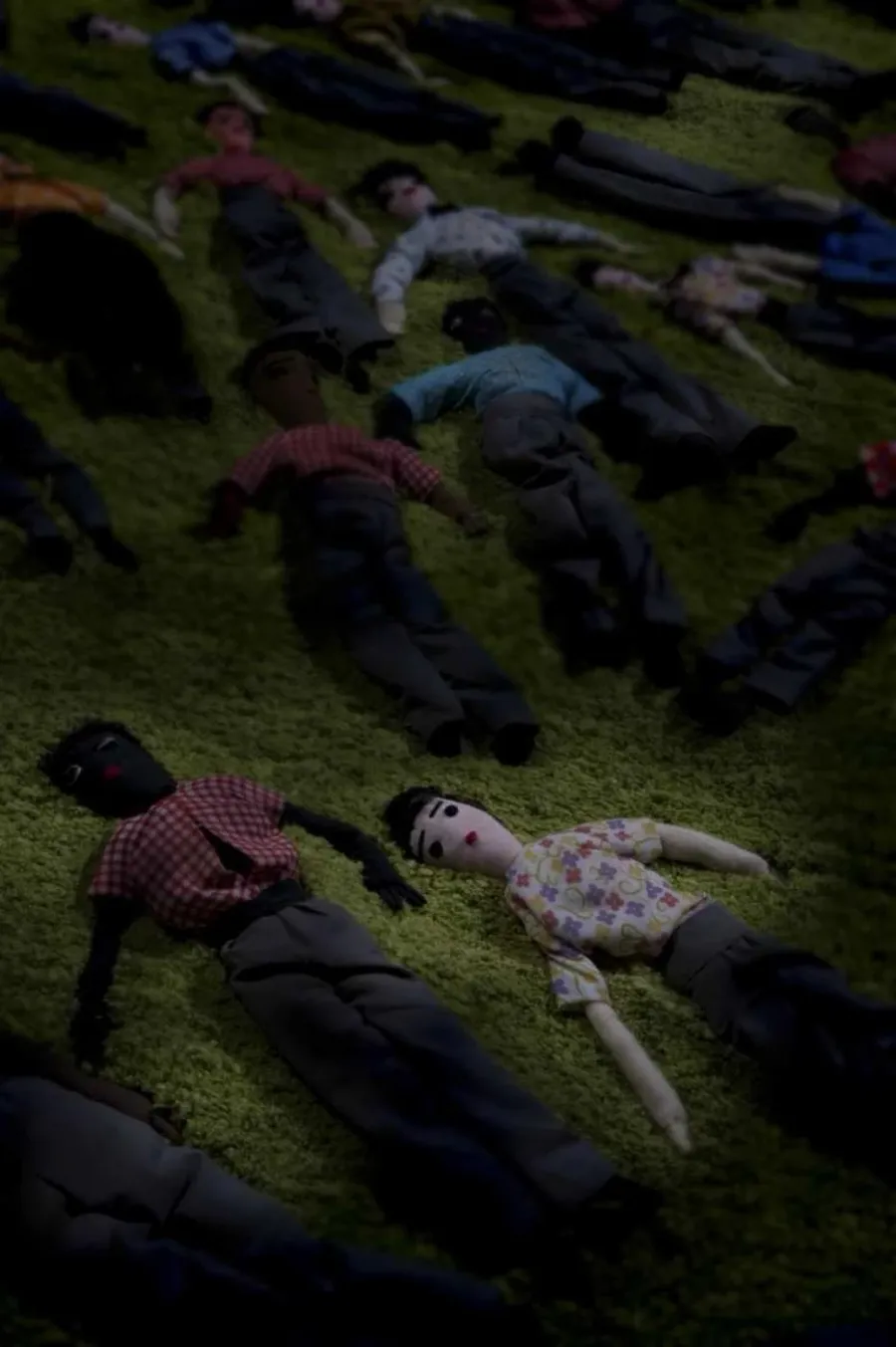
| Material | wool, hemp and rag dolls |
| Design | Modern |
| Country of origin | Nepal |
| Destiny | Universal |
| The production time of this carpet was | 3 months |
| Additional information | Fleece height: 30 mm |
| Weight | 100 knots |
| Guarantee | 2 years |
| Collection | Limited Edition |
| Size | 200 cm (irregular shape) |
| Colors | dominant green with gray dolls. |
| Form | Asymmetric |
See catalog
Video
Reviews
No reviews for this product.