

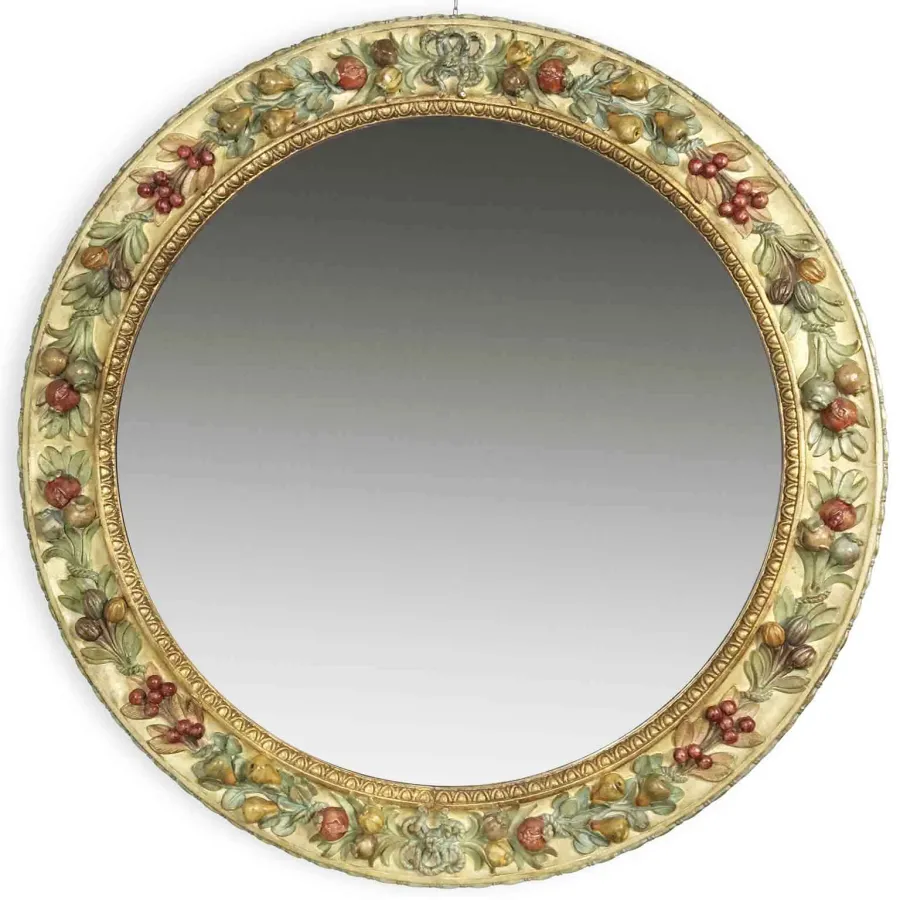
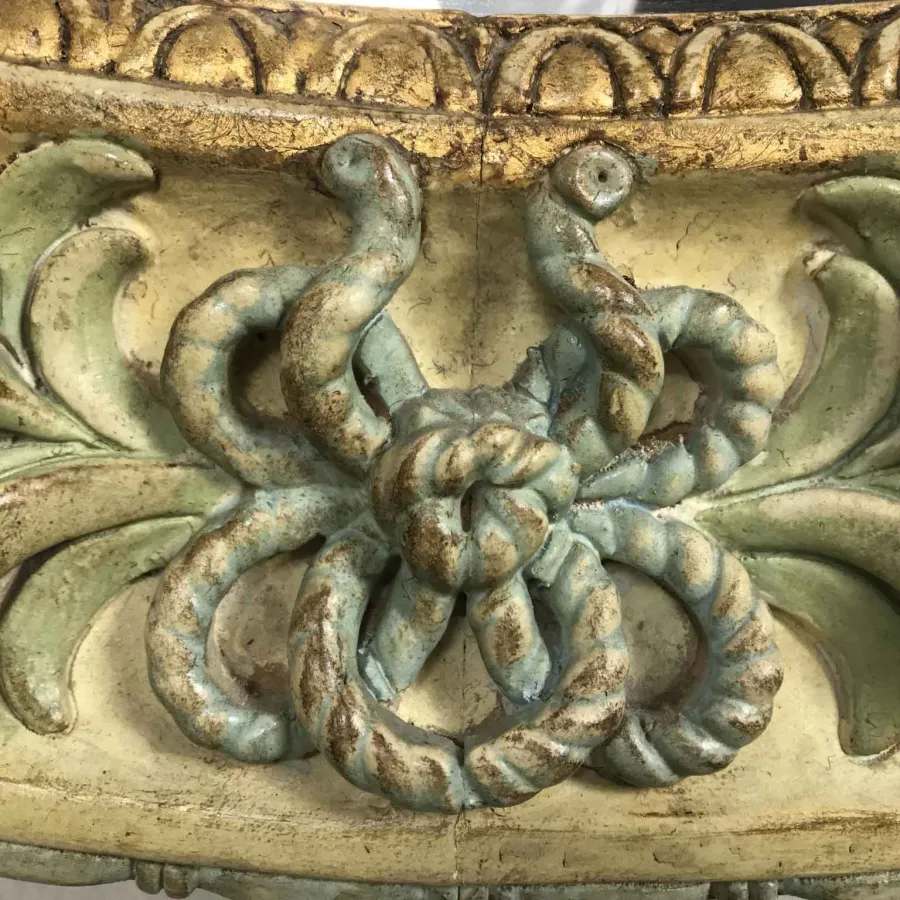
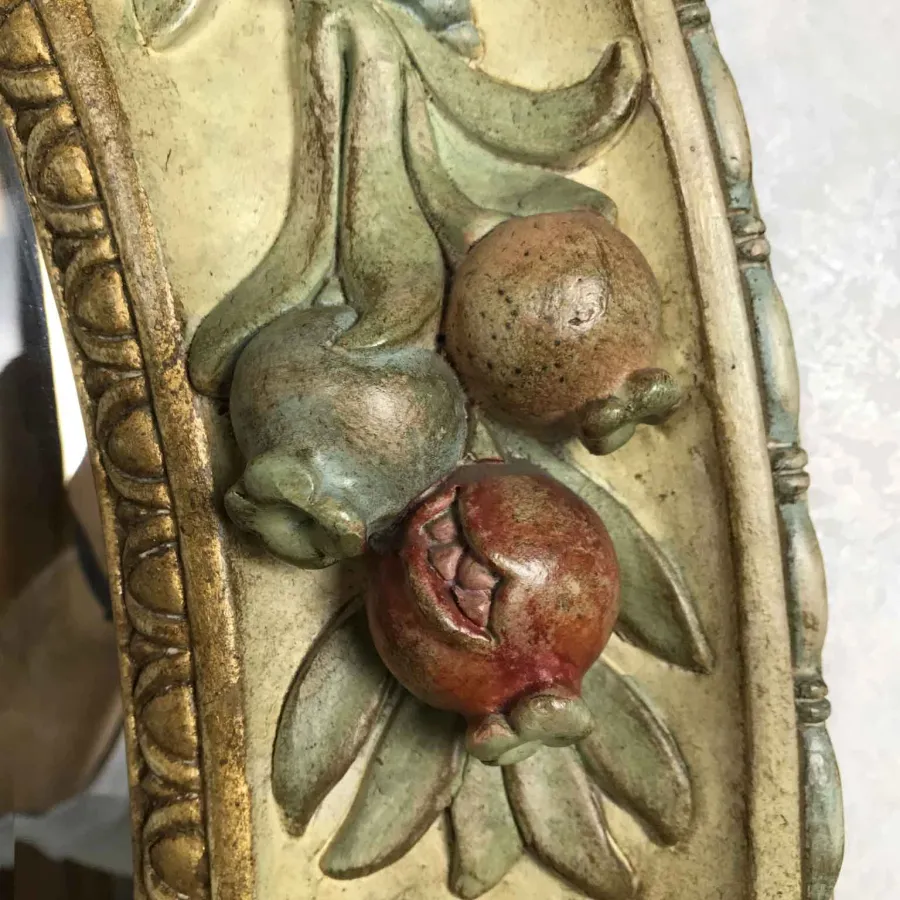
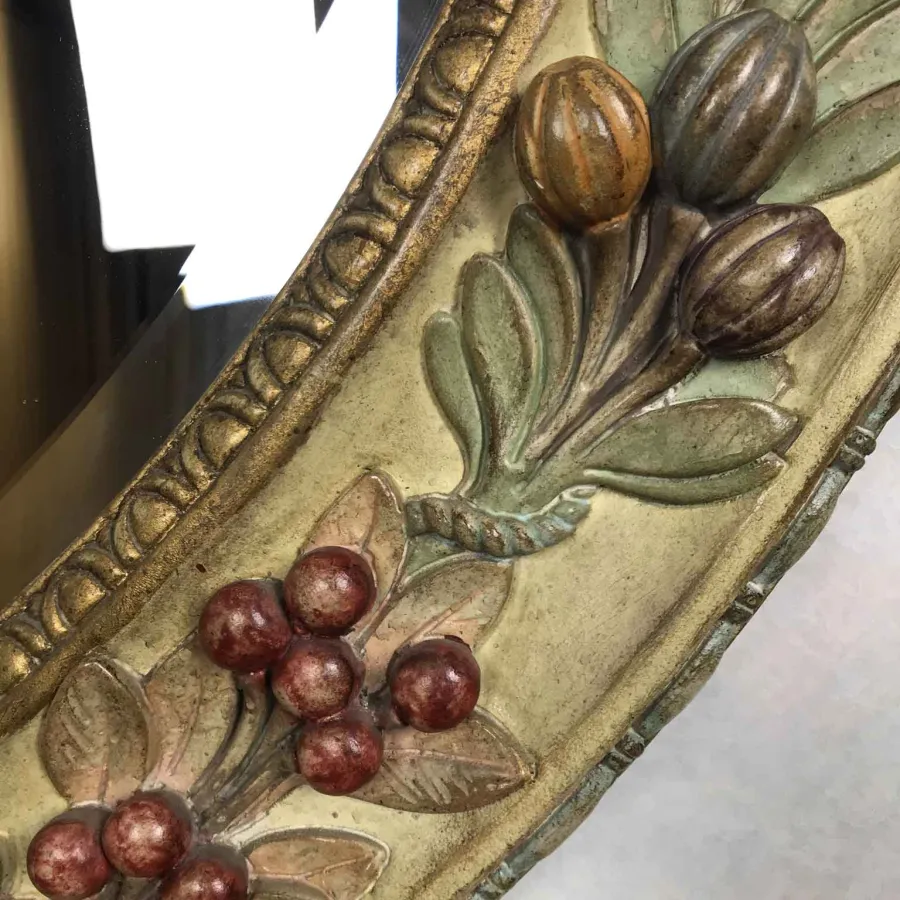
Round mirror made of carved polychrome wood with fruit and vegetable motifs
Luxury antique furniture and accessories
SKU: ANT- 876
See other products from category Antique mirrors or from manufacturer Antyki
Related products by category
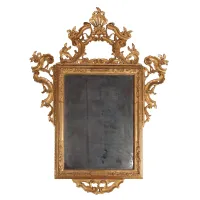
Unique antique furniture and accessories can be an excellent idea for decorating our interiors. Today, there is an increasing number of enthusiasts of high-quality vintage products that possess a dist
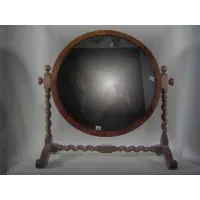
Antique countertop mirror made of turned oak with an adjustable mirror. England, first half of 1900.Prestigious antique furniture and accessories can be an excellent idea for decorating our interiors.
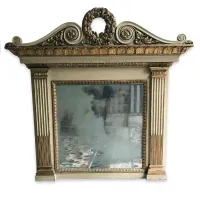
Gilded and gold fireplace mirror with a damaged and partially matte mirror (dimensions 71.5 x 69.5): two fluted Doric pilasters support an important beam topped with a pediment consisting of two volut
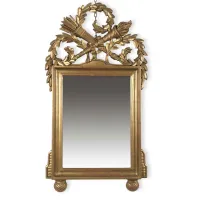
Empire Style Mirror Gilt carved. Gilded mirror made of carved wood with gilded leaves, exquisite craftsmanship, featuring a carved frame with Empire-style elements, quiver, and torch. Italy, circa 198
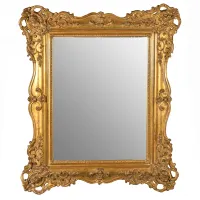
Gilded mirror from the 19th century in a rectangular shape, of French origin, in good condition, dating from around 1870. Original mercury plate glass and floral, ornate, gilded decorations all around
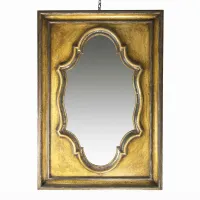
Vintage-style mirror made of lacquered wood. Rectangular shape, featuring a molded silver frame around the wing both on the outer perimeter of the casing and on the inner perimeter with built-in ligh
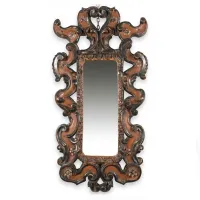
Florentine silver-carved decorated red mirror, from the second half of the 20th century, made with a vertically extended perforated frame, adorned with a deep, repeating volutary sculpture, leafy and
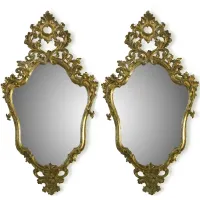
Italian pair of 18th-century carved mirror mantles, Louis XV style, pair of silver leaves with carved frames finished with gilt, beautiful scrollwork, floral and botanical carvings of Louis XV, with m
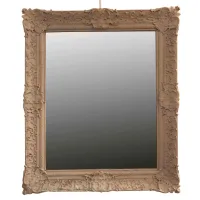
French mirror with a backing plate from the second half of the 19th century, decorated with floral, botanical, and scroll motifs, lacquered with tempera. The original gilding is visible beneath the te
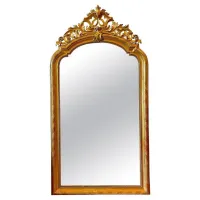
Stunning 19th-century large French mirror with a handcrafted carved and gilded wooden frame adorned with gold leaves, featuring an arched, upholstered crest with deep scrollwork and botanical carvings
Description
Round mirror made of carved polychrome wood featuring Robbian motifs, fruit and vegetable themes, lacquered in pastel colors with natural earth tones. Modern beveled mirror. Originates from around 1980 and was crafted in Tuscany by Chelini Firenze, in perfect condition.
Wonderful antique furniture and accessories can be an excellent idea for decorating our interiors. Today, there is a growing number of enthusiasts of high-quality vintage items that possess a distinct character and soul. This is a nod to history, craftsmanship, and the design of classic and timeless furniture. There are many different styles in antique furniture, each with its own characteristic features.
Many styles distinguish antique furniture, but we can highlight a few of the most important. Eclectic furniture dates back to the 19th century, during the reign of the Biedermeier style. Its early 20th-century variants include neo-Gothic, Gothic, Rococo, Louis Philippe style, and finally the Victorian English style. By the end of the century, these styles evolved into pseudo-classicism, Renaissance, and Baroque styles.
Empire-style furniture corresponds to the period between the late 18th and early 19th centuries. It was influenced by Napoleon’s reign, which imposed a resemblance to Roman and Greek decorative motifs.
Neoclassical furniture reflects the Louis XVI style, which also draws heavily from ancient architecture. Notable and worth mentioning are antique products in Rococo and Louis XV styles. Next is Baroque, a term derived from the Portuguese 'barocco'—meaning an irregularly developed pearl. These were highly ornate, luxurious pieces designed to exude splendor and play a significant role in opulence. Exclusive, selectively used materials were employed to further emphasize the grandeur of these items.
Today, we can observe how strongly the Baroque style influenced modern classical furniture, which is designed with a great resemblance to the historical era. An important style is also Renaissance, which flourished in the 15th and 16th centuries and left a significant mark on furniture craftsmanship. Renaissance furniture was quite heavy and massive, often using brown stains, moldings, sturdy bases, and relief decorations. These were quite distinctive products, but they also introduced many new possibilities, such as the construction of credenzas and broadly speaking, chest-type furniture. Here, too, there was an interest in mythology and ancient times, so supports and legs often took animal forms.
Lion’s paws, eagle heads—these are common features in Renaissance-style furniture. Currently, many global brands reproduce such furniture inspired by Italian and French craftsmen. This reflects admiration and respect for the history of the most beautiful Renaissance antiques. It’s important to remember that furniture production was perceived differently in each country, so each style had its own distinct character. This is especially important when searching for a luxurious antique that suits your interior.
The most important aspect of stylish antique furniture is originality. And this ultimately matters to the buyer, as many forgeries circulate on the market. Luxury Products provides documentation confirming the product’s authenticity and compliance with the actual description and photos. We have at your disposal art appraisers, historians, and experts from around the world.
Attributes / Details
| SKU | ANT- 876 |
| Manufacturer | Antyki |
| Model | 876 |
| Size | Diameter: 106 cm |
| Age | XX |
| Year | 1901 |
| Destiny | To living room |
See catalog
Reviews
No reviews for this product.