

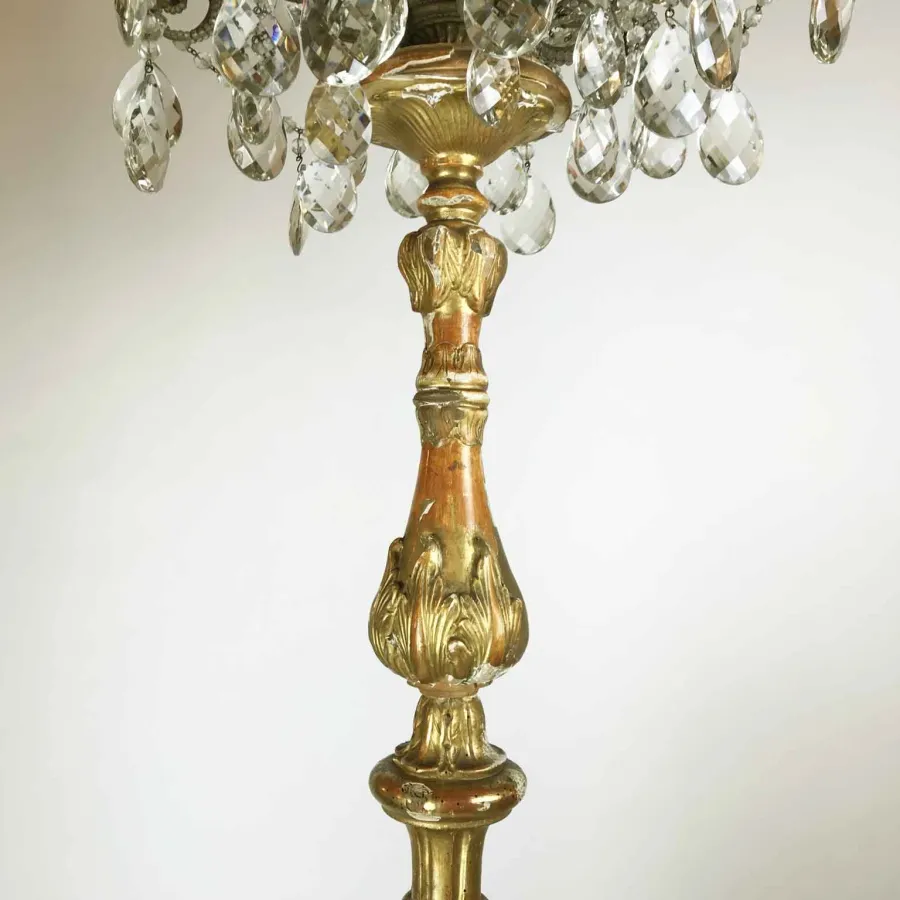
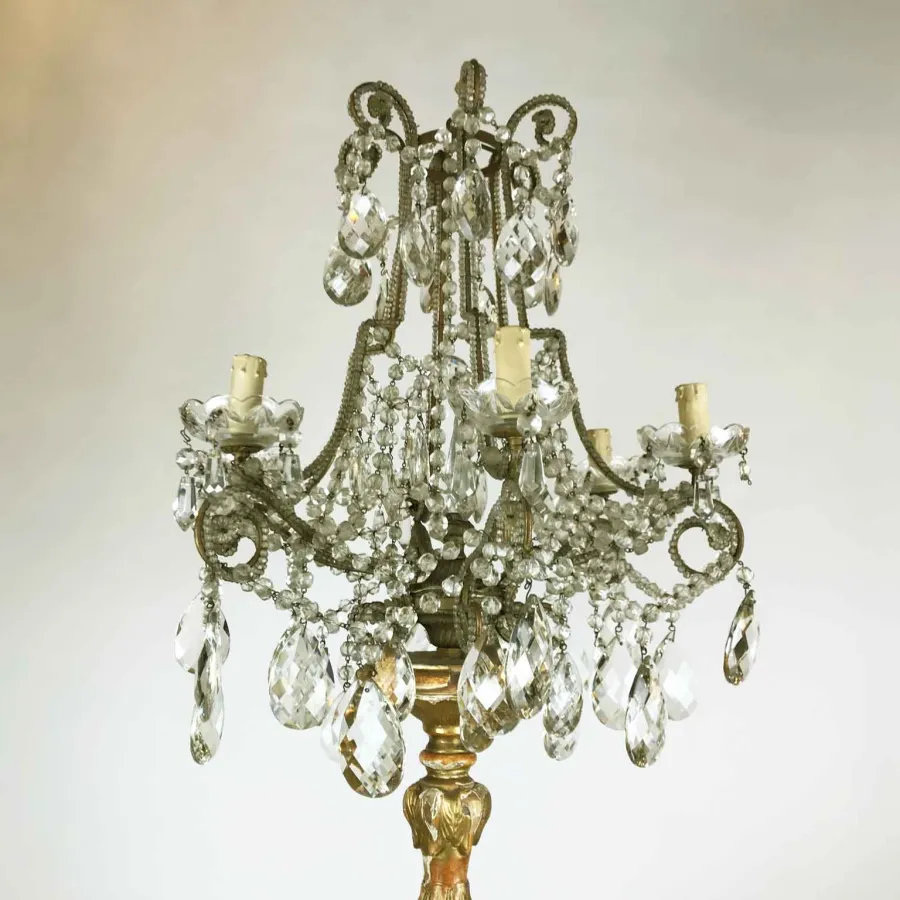
Pair of Gold Lamps with Crystal Candelabra
Exclusive antique furniture and accessories
SKU: ANT-A695
See other products from category Vintage floor lamps or from manufacturer Antyki
Related products by category
Ancient lamp from the 18th century with a Shaped Fan Shade created by a hand-held embossed copper foil handle and silvered mercury, mounted on a turned wooden base; it is fitted with a shaped fan-sha
A carved wooden torchère from the inside, in Louis XV style, of Tuscan origin, made around 1970. With traces of oxidized silver gilding, this candlestick is crafted from pine wood, carved on three si
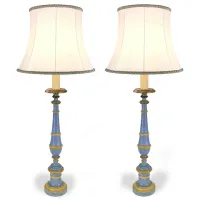
Pair of old lamps from the early 19th century. A pair of table lamps, wooden candlesticks turned on spools, lacquered in muted blue and Siena yellow. An original handmade lampshade in the shape of a r
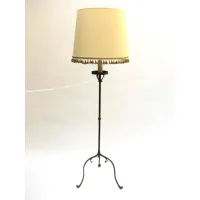
Floor lamp made of wrought iron 1800, a floor candelabrum transformed from a candlestick into a lamp on a tripod base, without modifications. It is in perfect condition. Electrical installation with t
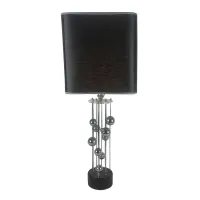
Italian vintage-style table lamp, an original Italian designer lamp created by Giovanni Banci (Florence, 1942-1999) in the 1980s. Designed by Banci for his workshop Banci Firenze. This piece was creat
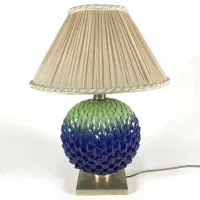
Mangani salon lamp, with a distinctive base designed to resemble a pinecone, featuring textured layers decorated in shades from blue to green with numerous small details. The ceramic rests on a brass
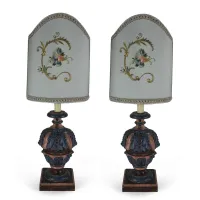
Para lamps for the salon with antique embroidery, made from two carved wooden vases with botanical motifs, lacquered in shades of muted blue and antique pink. They are set on two shield-shaped, fan-sh
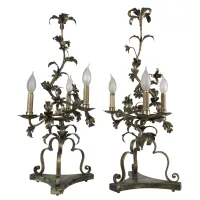
Set of silver-plated iron table candlesticks resting on a triangular lacquered wood base with a stone imitation. The candlesticks are made of wrought iron and silver-plated leaves, shaped with rounded
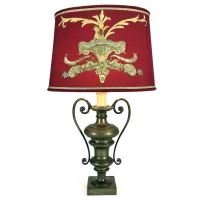
Bronze salon lamp with ancient embroidery. An important table lamp made from a central bronze vase with a trunnion shaft based on a square base and featuring two large side handles. The oval shade of
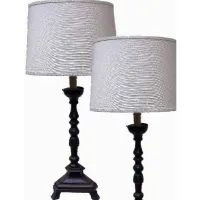
Pair of antique lamps Wooden candelabras. A pair of vintage Italian central candelabras made of turned wood on a polygonal base. Beige shantung lampshade.Exceptional antique furniture and accessories
Description
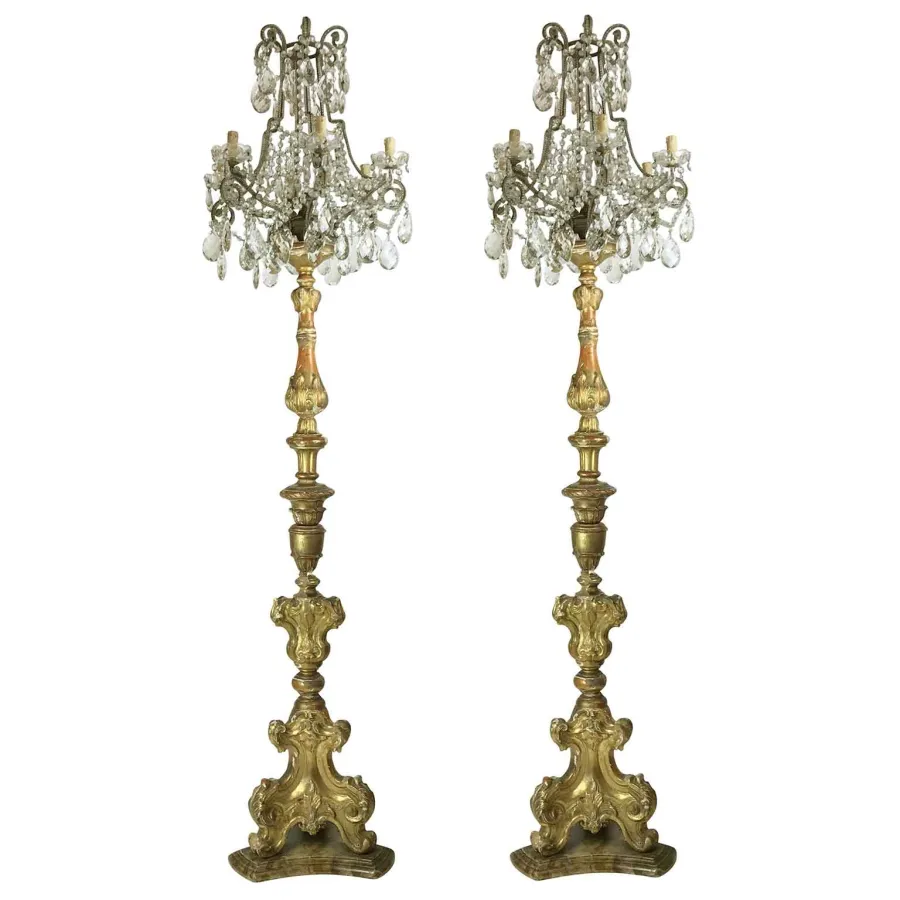
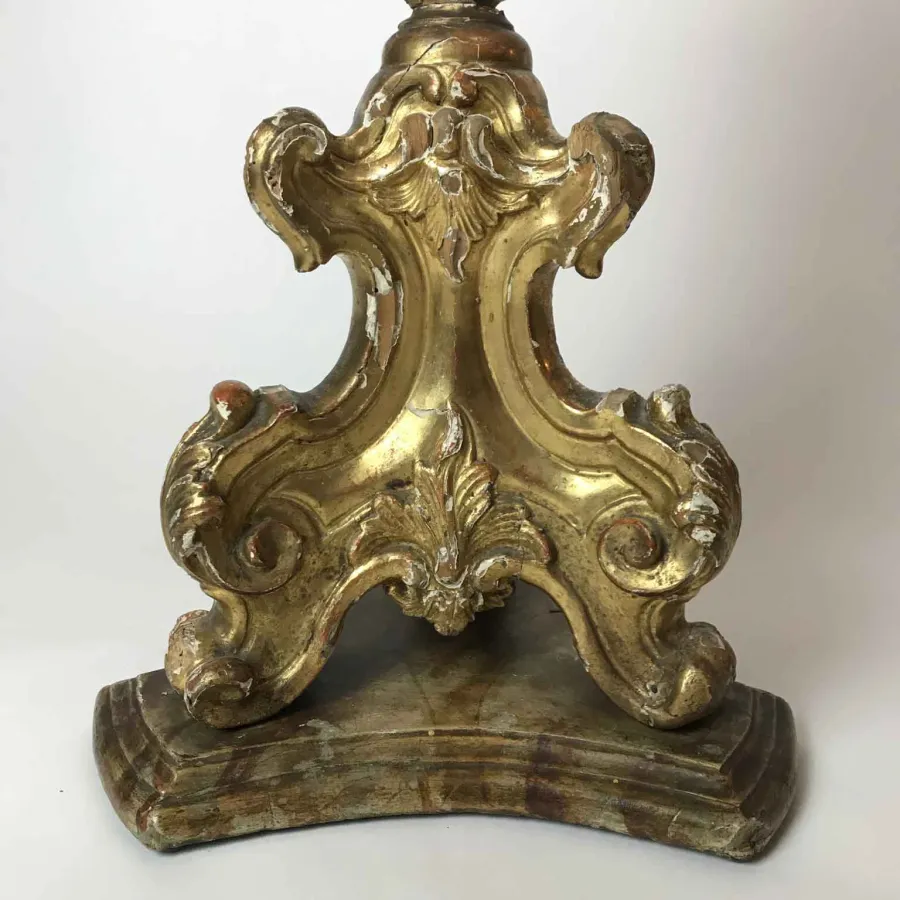
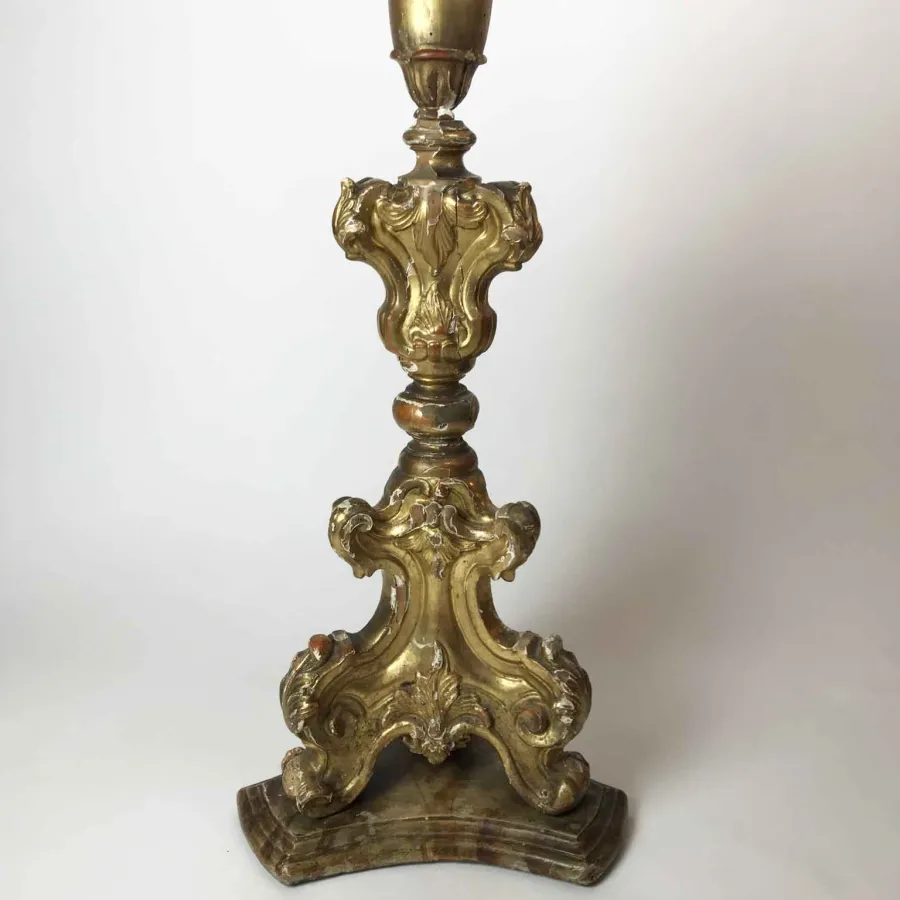
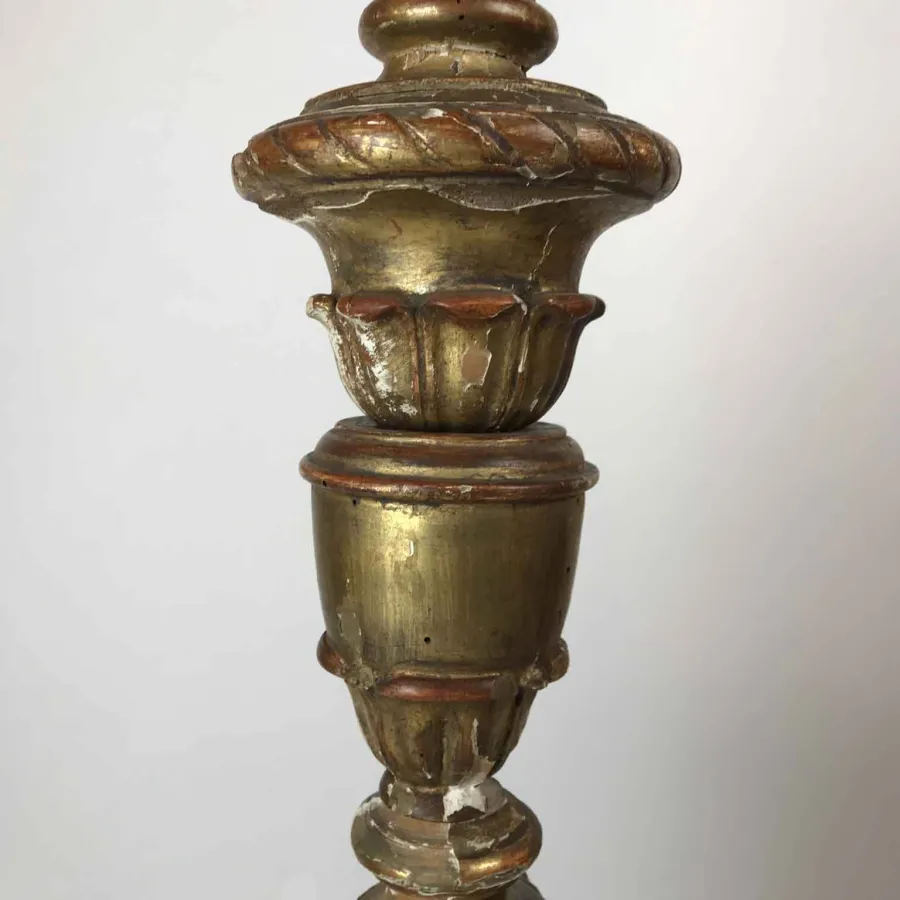
Pair of Gold Torches with Crystal Candelabra, made from a combination of carved wooden torches and gilded with pure gold, finished only on one side, from the Louis XV period extended in height with two transplanted and carved elements, topped with two Flambeaux made of gilded iron covered with crystal beads and pendants, each with six E14 lamps. They were probably originally chandeliers from around 1950. The candelabra have some flaws in the gilding and require conservative restoration, as does the entire electrical part.
Exceptional antique furniture and accessories can be an excellent idea for interior decoration. Today, there is an increasing number of enthusiasts for high-quality vintage items that possess a distinct character and soul. It’s a nod to history, craftsmanship, and the design of classic and timeless furniture. There are many different styles in antique furniture, each with its own distinctive features.
Many styles characterize antique furniture, but we can highlight a few of the most important. Eclectic furniture refers to the 19th century, during which the beloved Biedermeier style flourished. Its early variations include neo-Gothic, Gothic, Rococo, Louis Philippe style, and finally the English Victorian style. By the end of the century, these styles evolved into pseudo-classicism, Renaissance, and Baroque styles.
Empire-style furniture and accessories date from the late 18th to early 19th century. Everything was influenced by Napoleon’s reign, which imposed a strong resemblance and references to Roman and Greek ornamentation.
Neoclassical furniture is associated with Louis XVI style, which also draws heavily from ancient architecture. Interesting and noteworthy are antique products in Rococo and Louis XV styles. Next is Baroque, a term derived from the Portuguese 'barocco'—meaning an irregularly developed pearl. These were highly decorative pieces meant to radiate brilliance and play a significant role in luxury. Unique, selectively used materials were employed to emphasize the grandeur of these items.
Today, we can observe how much the Baroque style influenced modern classical furniture, which is designed with a strong resemblance to the past era. An important style is also Renaissance, which flourished in the 15th and 16th centuries and left a significant mark on furniture craftsmanship. Renaissance furniture was quite heavy and massive, using brown stains, moldings, sturdy bases, and reliefs. These products were quite distinctive but also introduced new possibilities, such as the construction of cupboards and broadly defined chest furniture. They also drew inspiration from mythology and ancient times, with supports and legs often taking animal forms.
Lion’s paws, eagle heads—these are common features in Renaissance style. Currently, many global brands reproduce such furniture, inspired by Italian and French artisans. This reflects admiration and respect for the history of the most beautiful Renaissance antiques. It’s important to remember that furniture production was perceived differently in each country, so each style had its unique character. This is especially important when searching for elegant antique pieces suitable for your interior.
The most important aspect of prestigious antique furniture is originality. This is ultimately crucial for buyers, as many counterfeits circulate on the market. Luxury Products provides documentation confirming the product’s authenticity and compliance with the description and photos. We have at your disposal art appraisers, historians, and experts from around the world.
Attributes / Details
| SKU | ANT-A695 |
| Manufacturer | Antyki |
| Model | A695 |
| Material | wood, iron, crystal |
| Size | Height: 197.5 cm Diameter: 50.5 cm |
| Age | XX |
| Year | 1950 |
| Destiny | To living room |
See catalog
Reviews
No reviews for this product.