



Jewish glass inkwell from the early 19th century
Stylish antique furniture and decor accessories
SKU: ANT-A815
See other products from category Various antiques or from manufacturer Antyki with shipping within 24 hours
Related products by category
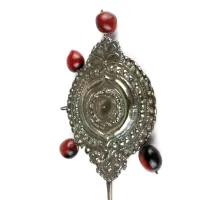
Ancient, embossed silver scarf clip from 1700 by Kuzco in Peru. These rare pins, now collectible, were used to secure the scarf closure, overlap the edges of the scarf, and “glue” the clip to the
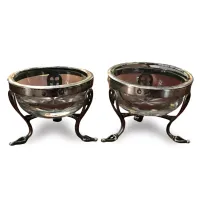
Set of silver salt shakers, Milan 1800, in a round shape with a tripod base formed from two strips of foil that create a lily, supporting the edge of the salt shaker and ending on a bracket resembling
Luxury antique furniture and accessories can be an excellent idea for decorating our interiors. Today, there is an increasing number of enthusiasts of high-quality vintage products that possess a dist
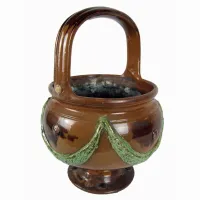
Warmer in early 20th-century Tuscan terracotta with a beige background featuring characteristic brown spots caused by wear, round ceramic with a handle, decorated with green laurel garlands with relie
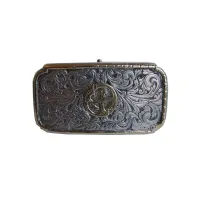
Ancient silver 800/000 belt buckle, rectangular with rounded corners, decorated with scroll engravings and centered with a stylized, gilded motif. The edge strip of the buckle is gilded and adorned wi
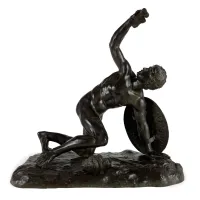
A brown statue of a gladiator by a 19th-century master. A wounded bronze gladiator, an Italian sculpture from the second half of the 19th century, in good condition. The figurine is inspired by Hellen
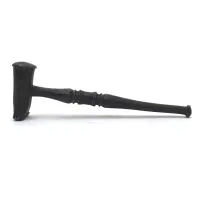
Historic hammer from 1600 with a balustrade handle, probably used for stamping. Good condition, with natural signs of wear.Wonderful antique furniture and accessories can be an excellent idea for deco
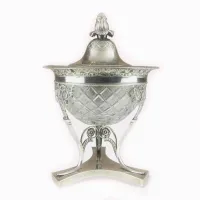
Ancient silver and crystal compote from the first half of the 19th century, with a lid made of melted, embossed, carved, and cut crystal silver, Milan 19th century, Goldsmith Cristoforo Corbella activ
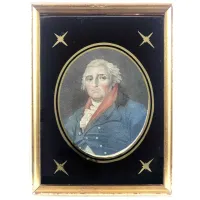
Portrait of Philip James de Loutherbourg. An elegant English miniature depicting a portrait of the early Romantic English painter and engraver Philip James de Loutherbourg 1740-1812. This work is a do
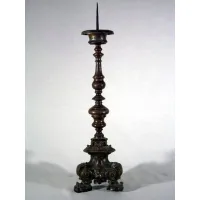
Central bronze candlestick holders in the shape of a spool, Lombardy, early 17th centuryPrestigious antique furniture and accessories can be an excellent idea for decorating our interiors. Today, ther
Description
Jewish glass inkwell from the early 19th century, dated to the Biedermeier period, of Austro-Hungarian European origin. Round shape, this transparent glass inkwell with a glass coat features blue and white layers and is fully decorated with beautiful green floral patterns, ochre scrolls, and exquisite gold images.
The surface displays oval engravings, and at the bottom, there is a carved Star of David. Brass lid with ink, entirely handcrafted, in good condition.
Prestigious antique furniture and accessories can be an excellent idea for decorating our interiors. Today, there is an increasing number of enthusiasts of high-quality vintage products that possess a distinct character and soul. It’s a nod to history, craftsmanship, and the design of classic and timeless furniture. There are many different styles in antique furniture, each with its own distinctive features.
Many styles characterize antique furniture, but a few are particularly prominent. Eclectic furniture refers to the 19th century, during which the prevailing Biedermeier style was popular. Its early variations include neo-Gothic, Gothic, Rococo, Louis Philippe style, and finally, the English Victorian style. Toward the end of the century, these styles evolved into pseudo-classicism, Renaissance, and Baroque styles.
Empire-style furniture dates from the late 18th to early 19th century. It originated during Napoleon’s reign, characterized by significant similarities and references to Roman and Greek ornamentation.
Neoclassical furniture, associated with Louis XVI, also strongly references ancient architecture. Noteworthy are antique products in Rococo and Louis XV styles. The next is Baroque, derived from the Portuguese word 'barocco'—meaning an irregularly developed pearl. These were highly decorative pieces designed to radiate splendor and play a significant role in luxury. Materials were selectively chosen to emphasize the grandeur of these items.
Today, we can observe how much influence the Baroque style has had on modern classical furniture, which is designed with a strong resemblance to the historical period. The Renaissance style, flourishing in the 15th and 16th centuries, also left a significant mark on furniture design. Renaissance furniture was quite heavy and massive, using brown stains, moldings, sturdy bases, and reliefs. These products were quite distinctive but also opened new possibilities, such as the construction of credenzas and broadly defined chest furniture. Mythology and ancient times also inspired these designs, with supports and legs often taking animal forms.
Lion paws, eagle heads—these are common features in Renaissance-style furniture. Currently, many global brands reproduce such furniture, inspired by Italian and French creators. This reflects admiration and respect for the history of the most beautiful Renaissance antiques. It’s important to remember that furniture production was perceived differently in each country, giving each style a unique character. This is especially crucial when seeking exclusive antiques suitable for your interior.
The key to stylish antique furniture is originality. Ultimately, this is vital for buyers, as many forgeries circulate on the market. Luxury Products provides documentation confirming the product’s authenticity and compliance with the description and photos. We also have appraisers, art experts, historians, and specialists from around the world at your disposal.
Attributes / Details
| SKU | ANT-A815 |
| Manufacturer | Antyki |
| Model | A815 |
| Material | glass |
| Size | height: 3 cm, diameter: 9.5 cm |
| Age | 19th century |
See catalog
Reviews
No reviews for this product.