


Book Japanese Erotic Art The Hidden World of Shunga - Thames & Hudson
Beautiful editions of books
SKU: THANDSON- 9780500291177
See other products from category Books and albums about sex or from manufacturer Thames and Hudson
Related products by category

Among a quarter of a million men's nude photographs, editor Dian Hanson selects the best body shot of Bob Mizera, founder of Physique Pictorial, the first undeniably gay magazine in America. Printed f

The seventies were a time of deep division and new freedoms. A new generation, energized by The Second Sex and The Feminine Mystique, the civil rights movement, and the March on Washington, put their

Richard Kern keeps everything warm with a parade of sexy, relaxed women captured in his unique style. In casual, informal settings, these girls express both attitude and a strong reluctance to wear cl

During the Kinbaku-bi celebrations, the Japanese art of erotic bondage and one of Nobuyoshi Araki's most important themes, explore the boundary between art and pornography. This collector's edition, f

Immerse yourself beneath the tight jeans of Tom's working-class heroes from Finland thanks to this perfect, pocket-sized fan package of blue-collar enthusiasts. With a sturdy collection of multi-panel
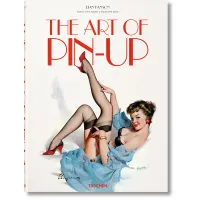
A single large piece of cheesecake, delivered by Diana Hanson. This very large, exceptionally lush compendium gathers nearly 100 pin-up artists, with chapter showcases for the top 10, including Gil El

“Don’t come to me naked. Come with attitude and kneel or stand before me.” In this classic fetish, Eric Kroll celebrates the diversity of fetishism. Whether it’s extreme heels, classic harness
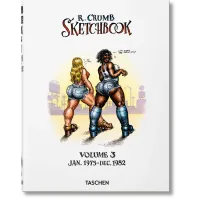
Combining volumes 5 and 6 from the second box set of R. Crumb's sketchbook directly from the original work. It covers Crumb’s move to rural California, his marriage to Aline Kominsky, the birth of d

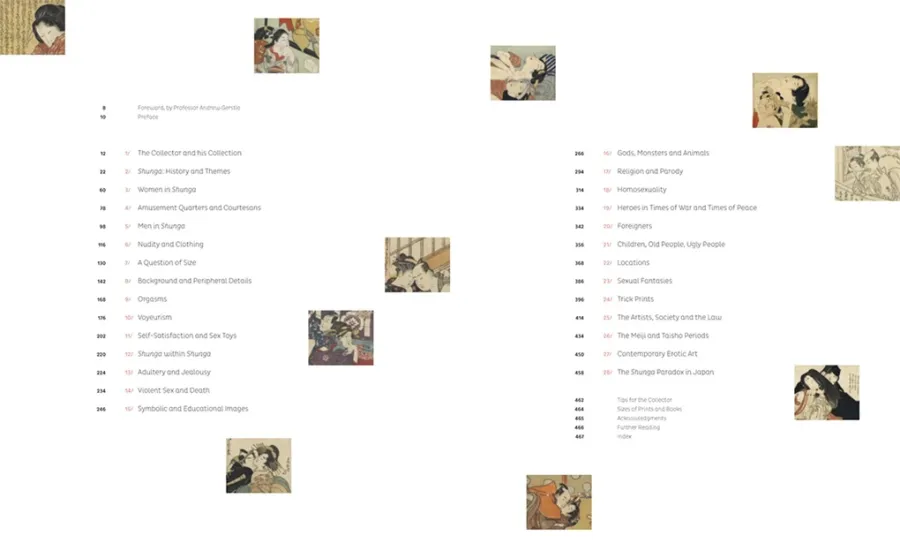
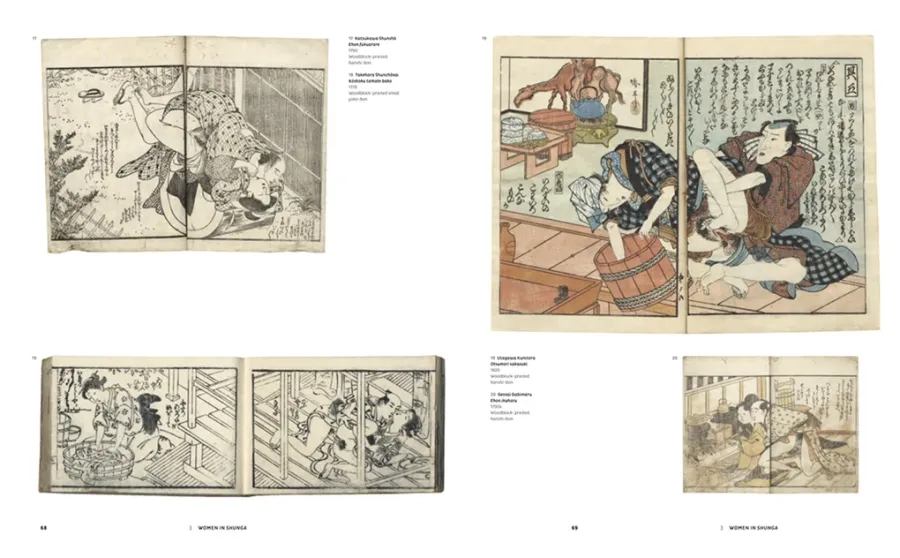
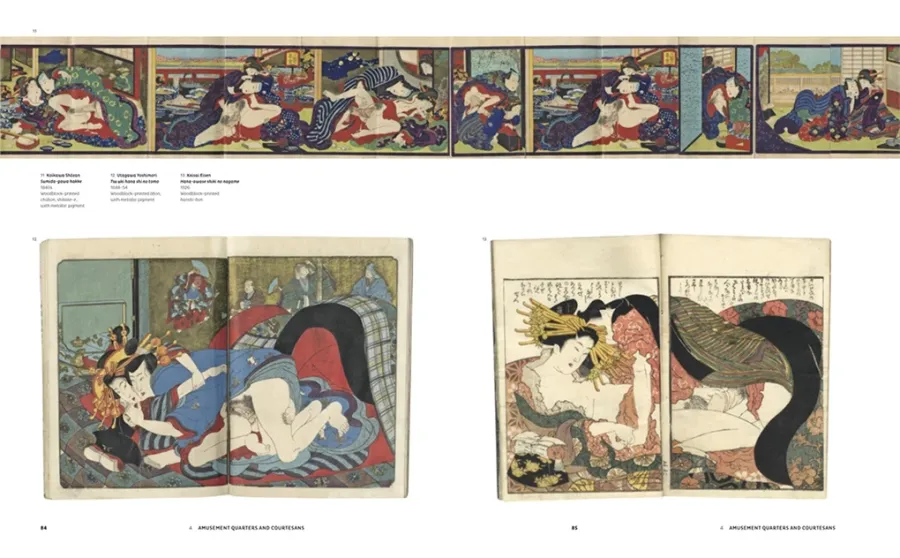
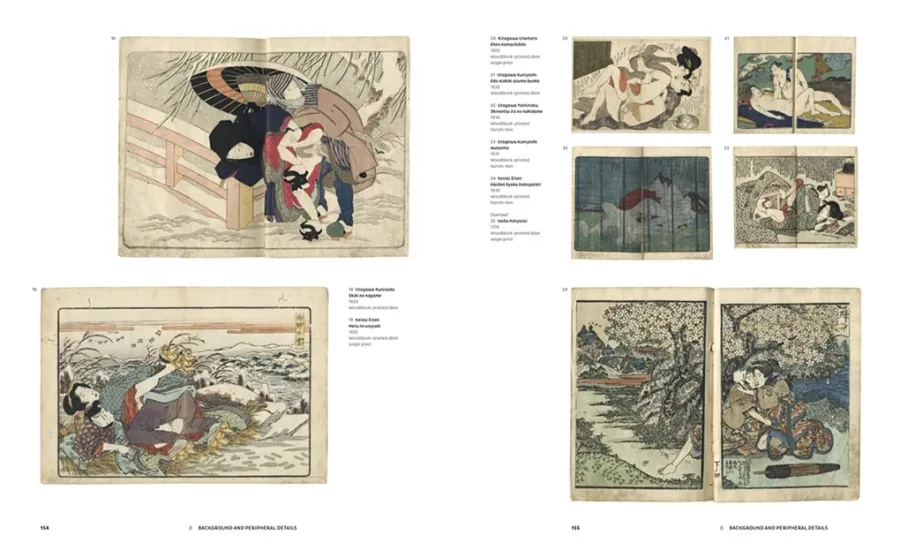
Japanese erotic art or shunga has a long history, with thousands of high-quality images, prints, and illustrated books produced by both famous and anonymous artists, mainly from the late 17th to the 1
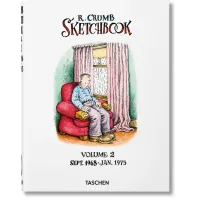
Robert Crumb, known as the Bruegel of underground art, is an American icon of comic introspection, cultural satire, and sexual obsession. His pen and drawings were first documented and then shaped wit
Description
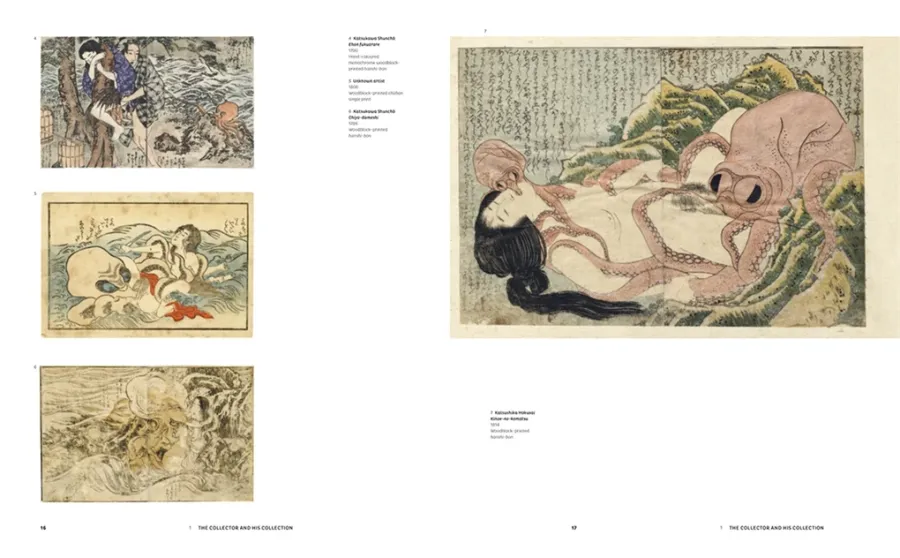
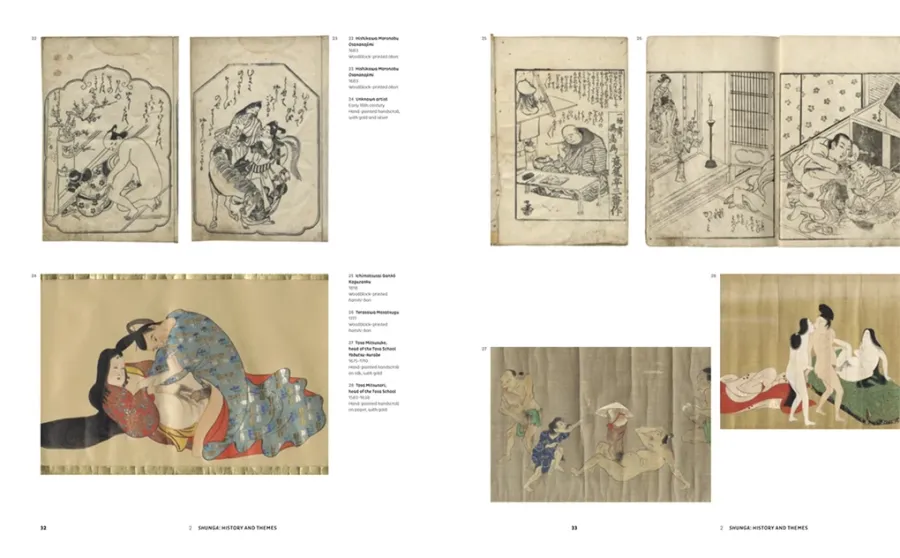
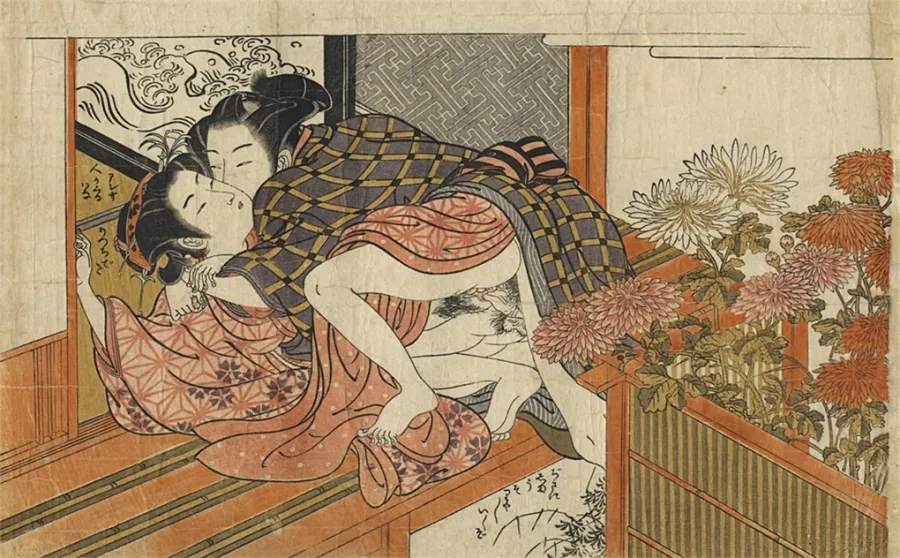
Japanese erotic art or shunga has a long history, with thousands of high-quality images, prints, and illustrated books produced by both famous and anonymous artists, mainly from the late 17th to the 19th century. Shunga, often explicit but also delicate, sensual, humorous, and even educational — a euphemism meaning “spring picture” — celebrates all aspects of human sexuality. Extremely popular in Japanese society, such depictions were regarded as completely natural and are an expression of the refined, pleasure-seeking culture of the “floating world,” renowned in Edo-period Japan, when many of these works were created. Shunga artworks were enjoyed by all social groups, from samurai to ordinary newlyweds, especially after the advent of woodblock prints, which made them affordable and accessible — books about shunga could even be borrowed from libraries. Nearly every artist from the famous ukiyo-e school, including Hokusai, Utamaro, and Kuniyoshi, created shunga demonstrating fantastic imagination, technical mastery, and originality.
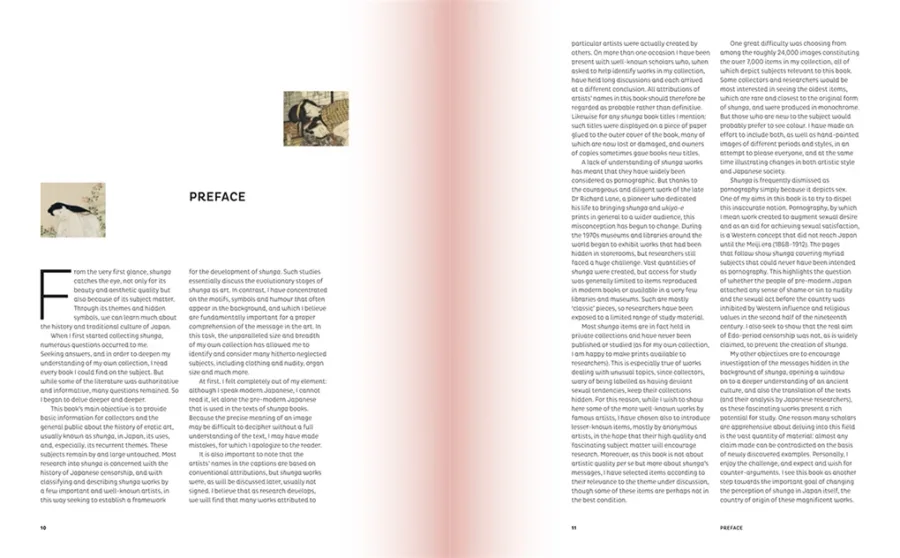
Offering a dazzling variety of images drawn from its unparalleled collection, Ofer Shagan shows us the full spectrum of sexual practices and expressions, including nudity and clothing, voyeurism, gods, monsters, animals, orgasm, adultery, jealousy, and much more. The thematically organized book highlights symbols and motifs often hidden in the background of the art, which are key to properly understanding and appreciating this genre. For a long time, shunga remained taboo and was excluded from scholarship, but this ambitious book, with an introduction by Professor Andrew Gerstle from the School of Oriental and African Studies, University of London, restores these magnificent works of art to their rightful place in the history of Japanese art, culture, and society. With over 1200 illustrations, all specially photographed and many rarely or never before published, this beautifully produced book explores the intimate riches of shunga in a way no other publication has before.
The Thames & Hudson publishing house was founded in 1949 by Walter and Eva Neurath. Their greatest passion and mission was to create a “museum without walls” and to make the world of art and leading scholarly research accessible to a broad audience. To reflect international perspectives, the company’s name combined the rivers flowing through London and New York, represented in its logo by two dolphins symbolizing friendship and intelligence, one facing east, the other west, suggesting a connection between the Old World and the New.
Today, still an independent, family-run publisher, Thames & Hudson is one of the world’s leading publishers of illustrated books, with over 2000 titles in print. It publishes high-quality collectible books across all areas of visual creativity: fine arts (fine, applied, decorative, performing arts), architecture, design, photography, fashion, film, and music, as well as archaeology, history, and popular culture. The list also includes an expanding selection of children’s books. Headquartered in London with a sister company in New York and branches in Melbourne, Singapore, and Hong Kong. In Paris, another subsidiary, Interart, distributes English-language books in France.
History of the Thames & Hudson brand
Walter Neurath was born in Vienna in 1903. In 1938, he left his hometown — where he ran an art gallery and published illustrated books — for London. Initially, he worked as a production director at Adprint, a company founded by Viennese émigré Wolfgang Foges. Neurath and Foges developed an innovative concept now known as book packaging (or co-publishing), where book ideas are developed, commissioned, produced, and sold by publishers operating across different markets and languages to create large editions and reduce unit production costs. Neurath’s concept was the first of many innovations that Thames & Hudson introduced to the publishing world.
In order to continue packaging collectible books in the second edition and recognizing the need to amortize the high costs of producing illustrated books, Neurath established his own publishing house, including offices in London and New York in the autumn of 1949. Eva Neurath, who arrived in London from Berlin in 1939, was a co-founder.Of the ten titles published on Thames & Hudson’s first list in 1950, *English Cathedrals*, with photographs by Martin Hürlimann, was the first and achieved the greatest success. The strong conviction of the brand in the longevity of books remained evident, and it remained in print until 1971. In the first year of publication, Albert Einstein’s *Out of My Later Years* also appeared, an early indicator of the program’s breadth. As the list gradually expanded—growing from ten titles in 1950 to 144 in 1955—the company moved its offices to High Holborn and in 1956 relocated to a Georgian townhouse at 30 Bloomsbury Street, near Bedford Square, becoming the epicenter of book publishing in London. The manufacturing facility remained at this address, eventually expanding to five buildings by 1999, when it returned to High Holborn.
In 1958, Thames and Hudson launched one of the most renowned series, *World of Art*, which became the foundation of a highly diverse list. Characterized by pocket-sized format and black spines, the series expanded in just seven years to include 49 titles. Nearly 60 years later, the series boasts over 300 titles, which, according to Christopher Frayling, are “splattered with paint copies” in every art school across the country.
Other important series that added depth and prestige to the list include *Ancient People and Places*, edited by Glyn Daniel, who from the 1950s contributed to pioneering interest in archaeology, both in book form and on television. Over 34 titles were published in this series over 34 years. The large-format *Great Civilizations* series, published in 1961, featured contributions from esteemed scholars such as Alan Bullock, Asa Briggs, Hugh Trevor-Roper, A. J. P. Taylor, and John Julius Norwich.
After building one of the most significant publishing houses in Europe in less than two decades, Walter Neurath died in 1967 at the age of 63. Sculptor Henry Moore wrote that “his death was a loss to our cultural life.” Sir Herbert Read noted that Neurath “more than anyone else was responsible for the revolution in art publishing” and was “one of those rare entrepreneurs who successfully combine business acumen with idealism.” Eva Neurath became chairwoman. Walter’s son, Thomas, who joined the company in 1961 along with his sister Constance, became managing director; Constance later served as artistic director for several decades. Both Thomas and Constance remain on the Thames & Hudson board, as do Thomas’s daughters, Johanna and Susanna.
From producing the first commercial edition of *The Book of Kells* to the triumphant publication of the six-volume *Vincent van Gogh - Letters*, from technical innovations like “French folds” to the controversial documentation of graffiti art in *Subway Art*, Thames & Hudson has always been at the forefront, both culturally and in production techniques.
2016 marked an extraordinary new chapter for the company, announcing publishing partnerships with two of the world’s most important museums: the British Museum and the Victoria and Albert Museum.
The art world and scholarship thus remain at the heart of Thames & Hudson’s publishing program, which remains true to its core principle: providing a “museum without walls.”
Today, Thames & Hudson is a recognizable international brand, a symbol of British publishing. Its catalog includes thousands of original titles, many of which are exclusive collector’s editions.
Attributes / Details
| SKU | THANDSON- 9780500291177 |
| Manufacturer | Thames and Hudson |
| Model | 9780500291177 |
| Author | Ofer Shagan, Mark Halpern |
| Number of pages | 472 |
| Tongue | English |
| Binding | Soft |
| Year of release | November 18, 2013 |
| Size | 27.5 x 22.2 cm |
See catalog
Video
Reviews
No reviews for this product.