

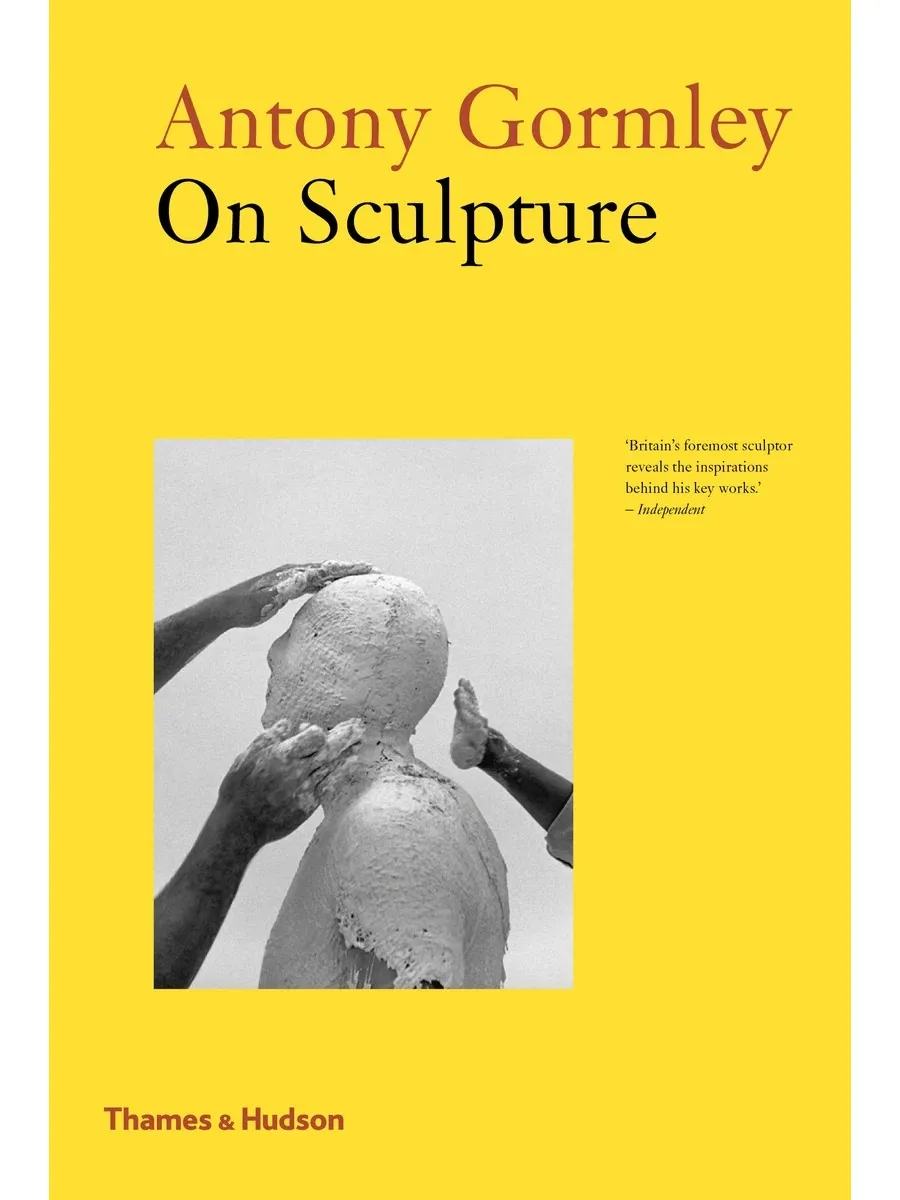
Antony Gormley's book on sculpture - Thames & Hudson
Beautiful editions of books
SKU: THANDSON- 9780500295229
See other products from category Collectible books and albums about art or from manufacturer Thames and Hudson with shipping within 24 hours
Related products by category

Hand-drawn Andy Warhol books from the 1950s, created before his rise to fame, are highly sought-after gems in the pop art master’s crown. This portfolio includes meticulous reproductions of all seve

David Hockney contemplates life and art, experiencing lockdown in rural NormandyHistory of Thames & HudsonWalter Neurath was born in Vienna in 1903. In 1938, he left his hometown — where he ran

Antony Gormley holds a remarkable position as a highly popular sculptor — best known for his Angel of the North (1998), a national symbol in the United Kingdom — which is also widely regarded as o

Luxury Products LibraryAll books in our store come from official European distribution.Language of publication: English.ISBN: 9781387496143
Luxury Products LibraryAll books in our store come from official European distribution.Language of publication: English.TITLE: A World of ArtAuthor: Helena HuntISBN: 978-1-4063-9389-7
Leonardo da Vinci may be best known to us as the artist behind masterpieces such as the Mona Lisa and The Virgin on the Rocks.However, Leonardo was infinitely curious about the physical world. His inc
The uniqueness of Japanese culture lies in the fact that throughout its history, Japan has continuously adopted, adapted, and transformed various influences—whether from Korea, China, Southeast Asia
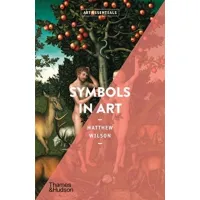
Iconography, the study of symbols – whether animals, artifacts, plants, shapes, or gestures – is an essential element of art history.This guide reveals over fifty of the most popular and intriguin

What is the Venus flytrap?How strong is the giant water lily?The latest addition to the bestselling Yuval Zommer series answers these questions and more, as it introduces young children to all kinds o

This compact edition, full of fresh ideas and sunny views, showcases the best examples of contemporary green buildings. Renowned architects such as Frank Gehry and Norman Foster are featured alongside
Description
Antony Gormley holds a remarkable position as a highly popular sculptor — best known for his Angel of the North (1998), a national symbol in the United Kingdom — which is also widely regarded as one of the most intellectually demanding artists working on the international stage. Rooted in archaeology and anthropology, he examines both Asian and Buddhist traditions as well as Western sculptural history, which he believes has reached a punctuation point with Rodin. This is the first book to focus on Gormley's thoughts on sculpture, positioning his career and artistic philosophy in relation to its history.
The book is divided into four thematic chapters: the first explores Gormley's ideas about the body, time, and space in relation to significant works, including European Field (1993) and “Still Standing” (2011), a reinterpretation by Gormley of classical rooms in the Hermitage Museum in Saint Petersburg. The second chapter, “Sculptors,” was first published as a series of five lectures for BBC; in each, Gormley discusses a sculpture he considers highly creative: Epstein's The Rock Drill (1913–15), Brancusi's The Endless Column (1935–38), Giacometti's La Place (1948–49), Joseph Beuys's Plight (1985), and Richard Serra's The Matter of Time (2005). In the third chapter, Gormley presents the influence of Buddhist and Jain sculpture on his work and ideas, and the fourth showcases his latest sculptures.
This book, presented in Gormley's own voice, reflects the artist's universal resonance and unwavering ability to reach the public consciousness.
Thames & Hudson was founded in 1949 by Walter and Eva Neurath. Their greatest passion and mission was to create a “museum without walls” and to make the world of art and leading scientific research accessible to a broad audience. To reflect international perspectives, the company's name combined the rivers flowing through London and New York, represented in its logo by two dolphins symbolizing friendship and intelligence, one facing east and the other west, suggesting a connection between the Old World and the New.
Today, still an independent family-owned company, Thames & Hudson is one of the world's leading publishers of illustrated books with over 2,000 titles in print. They publish high-quality books across all areas of visual creativity: arts (fine arts, applied arts, decorative arts, performing arts), architecture, design, photography, fashion, film, and music, as well as archaeology, history, and popular culture. The list of children's books is also expanding. Headquartered in London with a sister company in New York and branches in Melbourne, Singapore, and Hong Kong. In Paris, another subsidiary, Interart, distributes English-language books in France.
History of Thames & Hudson
Walter Neurath was born in Vienna in 1903. In 1938, he left his hometown — where he ran an art gallery and published illustrated books — for London. Initially, he worked as a production director at Adprint, a company founded by Viennese émigré Wolfgang Foges. Neurath and Foges developed a pioneering concept now known as book packaging (or co-publishing), where book ideas are developed, commissioned, produced, and sold to publishers operating across different markets and languages, to create large editions and reduce unit production costs. Neurath's concept was the first of many innovations introduced to the publishing world through Thames & Hudson.
Seeking to continue book packaging in a second edition and recognizing the need to amortize the high costs of producing illustrated books, Neurath established his own publishing house, with offices in London and New York, in autumn 1949. Eva Neurath, who arrived in London from Berlin in 1939, was a co-founder.
In 1958, Thames & Hudson launched one of its most renowned series, *World of Art*, which became the foundation of a highly diverse list. Characterized by pocket-sized editions and black spines, the series expanded in just seven years to include 49 titles. Nearly 60 years later, the series boasts over 300 titles, which, according to Christopher Frayling, are “stained with paint copies” in every art school across the country.
Other significant series that added depth and prestige to the list include *Ancient People and Places*, edited by Glyn Daniel, which contributed to pioneering interest in archaeology from the 1950s onwards, both in book form and television. Over 34 titles have been published in this series over 34 years. The large-format *Great Civilizations* series, published in 1961, featured contributions from esteemed scholars such as Alan Bullock, Asa Briggs, Hugh Trevor-Roper, A. J. P. Taylor, and John Julius Norwich.
After building one of the most important publishing houses in Europe, Walter Neurath died in 1967 at the age of 63, less than two decades after founding the company. Sculptor Henry Moore wrote that “his death was a loss to our cultural life.” Sir Herbert Read noted that Neurath “more than anyone else was responsible for the revolution in art publishing” and was “one of those rare entrepreneurs who successfully combine business acumen with idealism.” Eva Neurath became chairwoman. Walter’s son, Thomas, who joined the company in 1961 with his sister Constance, became managing director; Constance later served as artistic director for several decades. Both Thomas and Constance remain on the Thames & Hudson board, as do Thomas’s daughters, Johanna and Susanna.
From producing the first commercial edition of *The Book of Kells* to the triumphant publication of the six-volume *Vincent van Gogh - Letters*, from technical innovations like “French folds” to the controversial documentation of graffiti art in *Subway Art*, Thames & Hudson has always been at the forefront, both culturally and in production techniques.
The year 2016 marked an extraordinary new chapter for the company, announcing publishing partnerships with two of the world’s most important museums: the British Museum and the Victoria and Albert Museum.
Thus, the world of art and scholarship remains at the heart of Thames & Hudson’s publishing program, which remains true to its core principle: providing a “museum without walls.”
Today, Thames & Hudson is a recognizable international brand, a symbol of British publishing. Its extensive catalog includes thousands of engaging titles, many of which are luxurious collector’s editions.
Attributes / Details
| SKU | THANDSON- 9780500295229 |
| Manufacturer | Thames and Hudson |
| Model | 9780500295229 |
| Author | Antony Gormley |
| Number of pages | 248 |
| Tongue | English |
| Binding | Soft |
| Year of release | September 19, 2019 |
| Size | 22.9 x 15.2 cm |
See catalog
Reviews
No reviews for this product.