

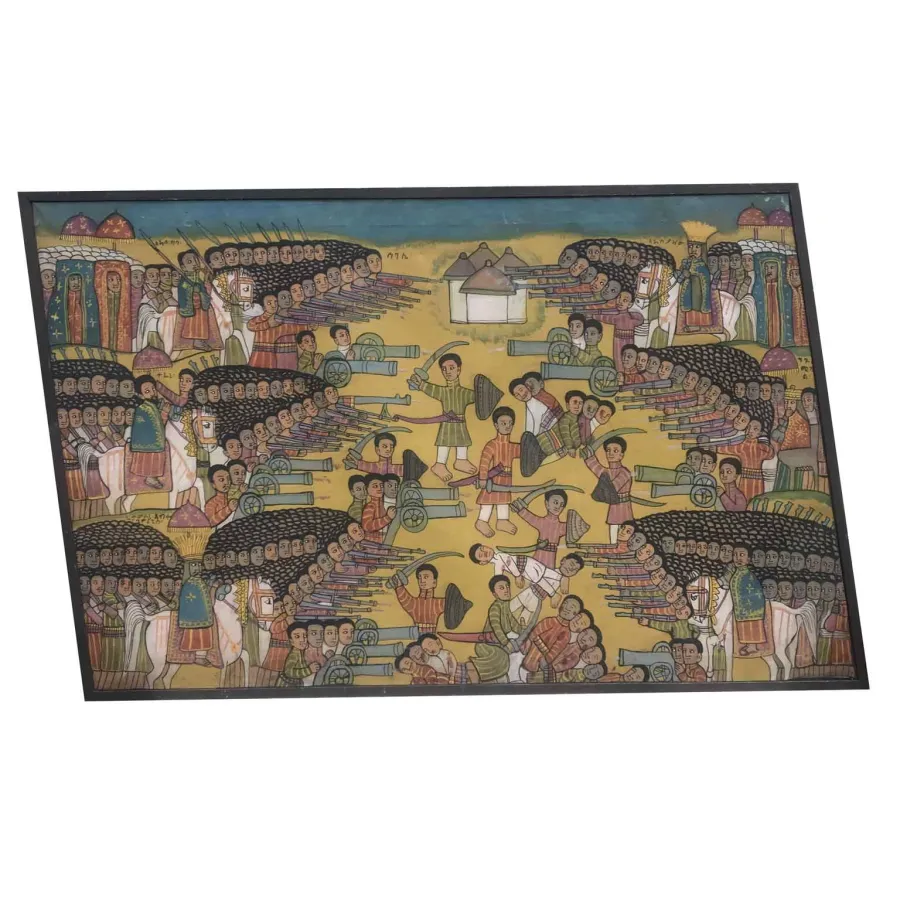













African Ethiopian painting - 20th century battle scene
Original antique furniture and accessories
SKU: ANT-A833
See other products from category Antique paintings or from manufacturer Antyki with shipping within 24 hours
Related products by category
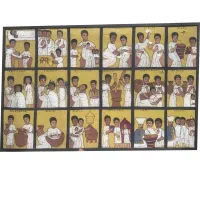
Ancient Ethiopian painting brought to Italy by a diplomat during the Italian occupation of Ethiopia in the late 1930s. This genre scene is divided into eighteen squares surrounded by a black frame and

The Madonna with Child and Little Saint John, 1600s. The composition is well balanced and harmonious, with the Child wrapped in a white garment at the center, painted with adult facial features and ga

Portrait of a lady from the Flemish school painted with oil paints on a rectangular cardboard with an oval, gilded layer of cardboard. It depicts a mature woman dressed in a black dress, a lace cap, a
Unique antique furniture and accessories can be an excellent idea for decorating our interiors. Today, there is an increasing number of enthusiasts of high-quality vintage products that possess a dist
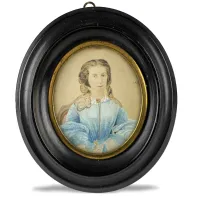
Oval lady portrait, watercolor on high-quality paper, 1800s, in good condition. Depicted in a semi-portrait pose, sitting in an armchair, the woman is wearing a beautiful, flowing gown with a lace col
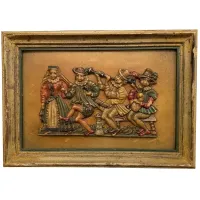
19th-century wax model from Northern Europe, a polychrome wax composition depicting four figures in 17th-century costumes in a festive setting, dancing, with two of them playing wind instruments. In t
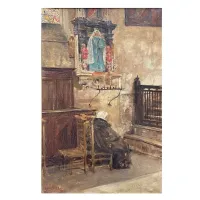
Emile Vloors Woman praying, oil painting on canvas from 1894 depicting the interior of a church with an elderly woman sitting in prayer next to a hanging icon of the Virgin Mary. The painting is in go
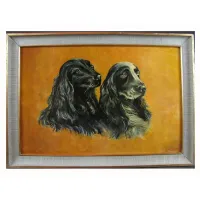
A portrait of a pair of Cocker Spaniels painted in oil on masonite. Only the heads of the two specimens are depicted, featuring characteristic sweet eyes, a sleepy gaze, and hanging ears. The orange b
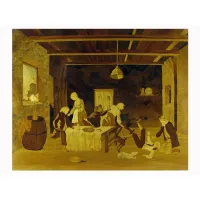
Picture-inlaid panel with an interior scene. An inlaid wooden panel that, thanks to tonal contrasts of various used essences, from walnut to fruitwood, recreates a comic-style domestic scene within in
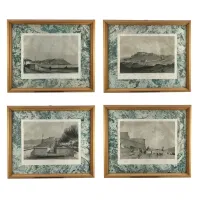
A set of four original lithographs, depicting Portoferraio, Elba Island, Italy, by André Durand from 1862, framed.Author: André Durand del. Eug. Cyceri lit. published in Paris by Lemercier and inclu
Description
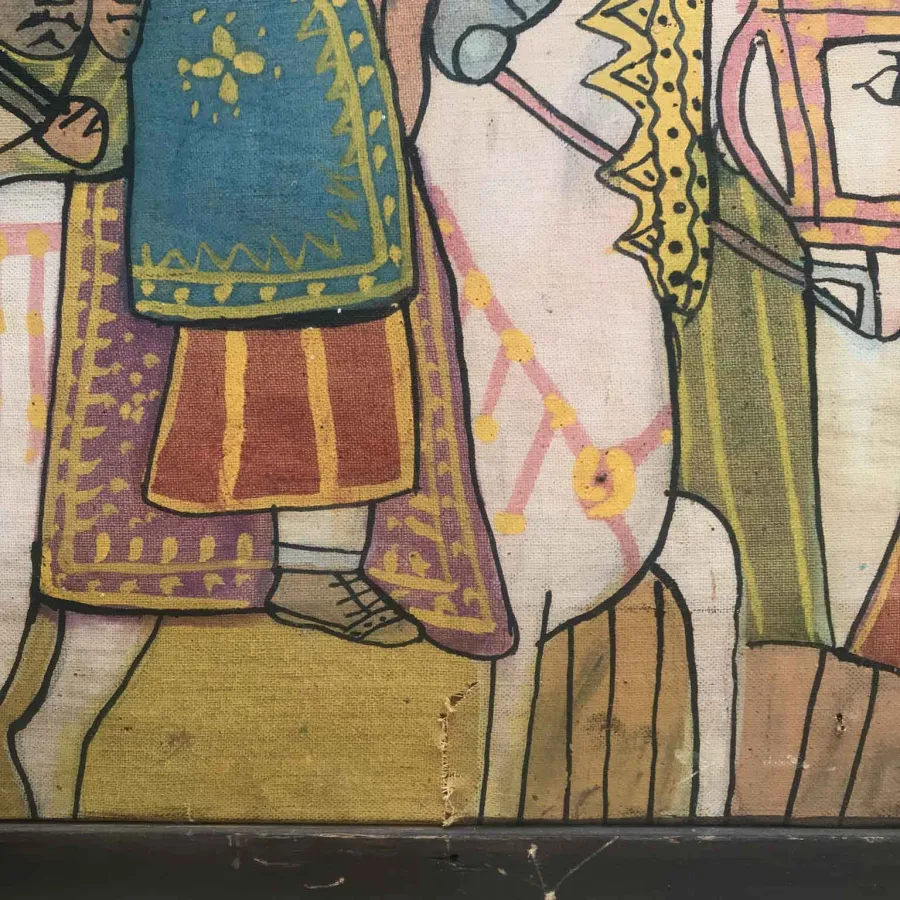
African Ethiopian painting brought to Italy by a diplomat during the Italian occupation of Ethiopia in the late 1930s. This tribal folk art depicts a battle scene, and the canvas is mounted on a parallelogram-shaped frame.
It is a large battle scene, with rural huts as the central focus. Opposite each other are two large ranks of soldiers armed with swords and bayonets, as well as heavy artillery commanded by officials on horseback.
The canvas features inscriptions in Amharic, among which we can decipher "fitewrari habteghiorghis," probably referring to Habte Giyorgis, Prime Minister of Ethiopia from 1909 to 1927 (the year of his death).
The dimensions listed below refer to height and maximum width from the top left edge to the bottom right edge.
Dating back to the late 1930s. The canvas shows minimal tears and signs of wear, but restoration can be arranged.
The human figures are characterized by unrealistic proportions of the head and body and are depicted in static poses. This sense of stability makes the battle scene understandable and evocative.
One particularly fascinating aspect of Ethiopian art was its commitment to expressing objective truth, independent of time and space. Numbers are represented in what is considered their true, unchanging form. At the height of its stylistic perfection, Ethiopian art abandoned illusions of volume, depth, and perspective.
Luxurious antique furniture and accessories can be an excellent idea for decorating our interiors. Today, there is a growing number of enthusiasts for high-quality vintage items that possess a specific character and soul. This is a nod to history, the creation, and design of classic and timeless furniture. There are many different styles in antique furniture, each with its distinctive features.
Many styles characterize antique furniture, but a few are particularly notable. Eclectic furniture from the 19th century, especially the beloved Biedermeier style. Its early 20th-century variants include neo-Gothic, Gothic, Rococo, Louis Philippe style, and finally the English Victorian style. Toward the end of the century, these styles evolved into pseudo-classicism, Renaissance, and Baroque styles.
Empire-style furniture dates from the late 18th to early 19th centuries. It originated during Napoleon’s reign, emphasizing similarities and references to Roman and Greek ornamentation.
Neoclassical furniture reflects the Louis XVI style, which also draws heavily from ancient architecture. Antique products in Rococo and Louis XV styles are also interesting and noteworthy. Baroque, derived from the Portuguese "barocco"—meaning an irregularly developed pearl—was characterized by highly ornate furniture meant to radiate splendor and play a significant role in luxury. Materials were selectively used to emphasize the grandeur of these pieces.
Today, we can observe how much influence the Baroque style has had on modern classic furniture, which is designed with a strong resemblance to the historical period. The Renaissance style, flourishing in the 15th and 16th centuries, also left a significant mark on furniture design. Renaissance furniture was quite heavy and massive, often using brown stains, moldings, sturdy bases, and reliefs. These products were quite distinctive but also opened new possibilities, such as the construction of credenzas and broadly defined chest furniture. Mythology and ancient times inspired these designs, with supports and legs often taking animal forms.
Lion paws and eagle heads are common motifs in Renaissance style. Currently, many global brands reproduce furniture inspired by Italian and French artisans, reflecting admiration and respect for the history of the most beautiful Renaissance antiques. It’s important to remember that furniture production was perceived differently in each country, and each style had its unique character. This is especially important when searching for the perfect luxurious antique for your interior.
Attributes / Details
| SKU | ANT-A833 |
| Manufacturer | Antyki |
| Model | A833 |
| Size | height: 87.5 cm, width: 145 cm, depth: 2 cm |
| Age | XX |
See catalog
Reviews
No reviews for this product.