

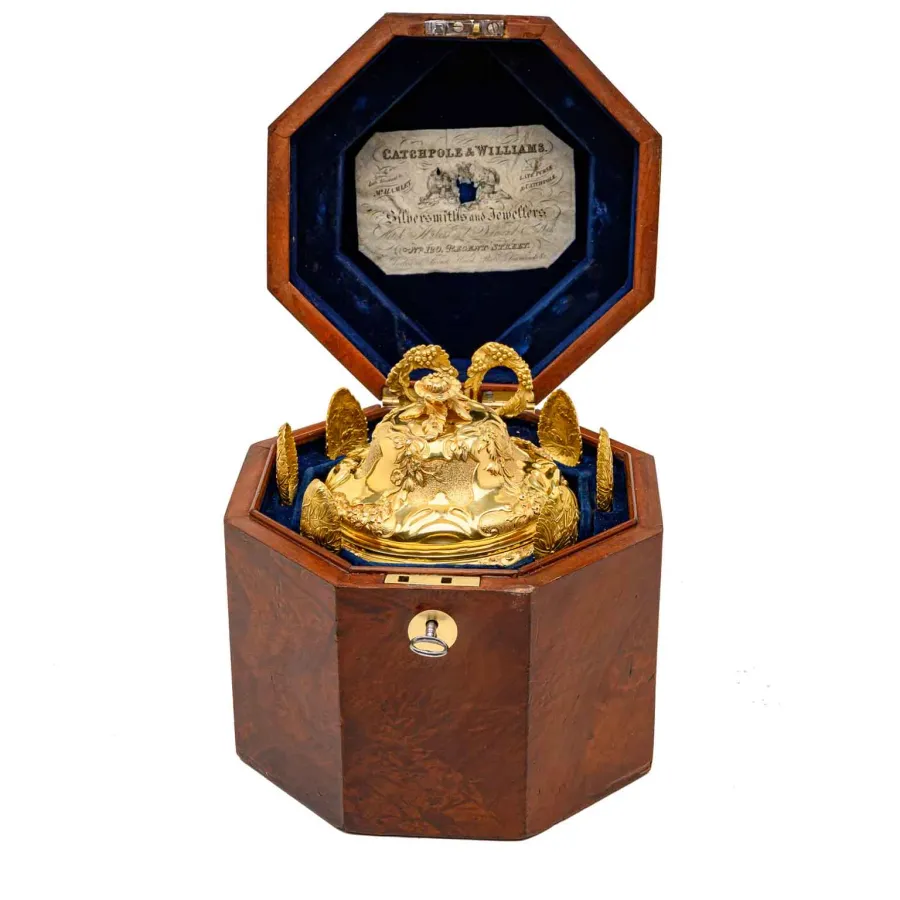
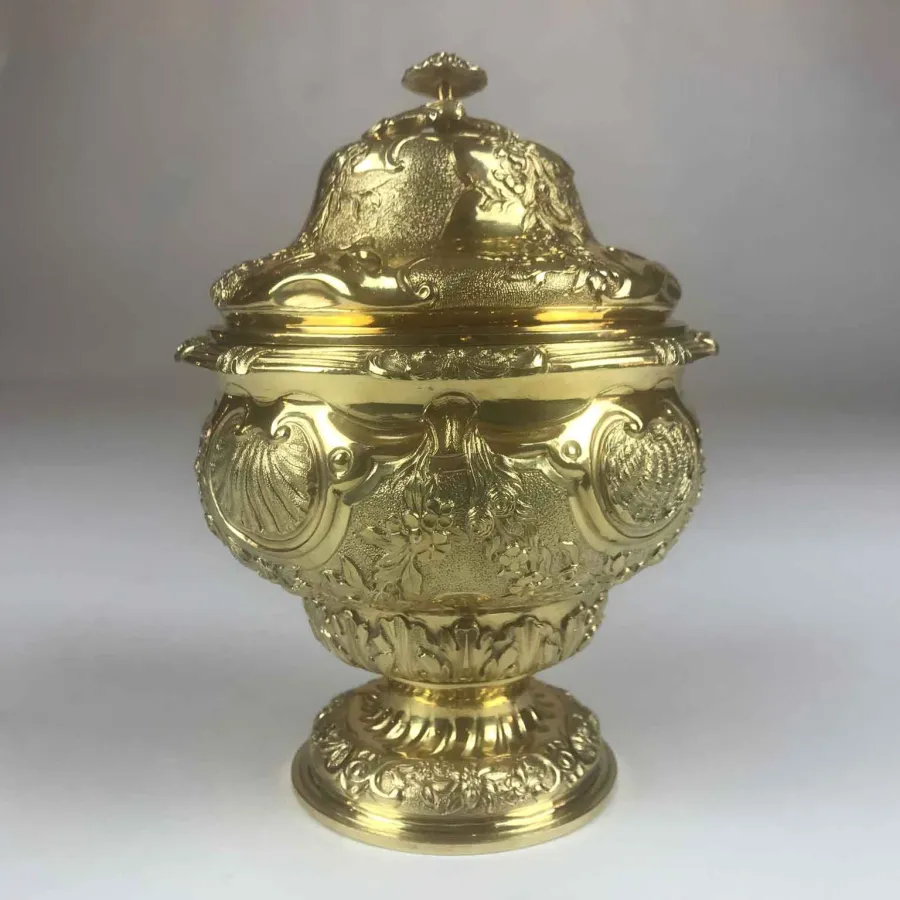
A refined English George IV sugar bowl with a rounded body, 19th century
Beautiful antique furniture and accessories
SKU: ANT-A627
See other products from category Elegant sugar bowls or from manufacturer Antyki
Related products by category
Set includes:In the coffee set, you will find 6 coffee cups, 6 saucers, sugar bowl, coffee pot,milk jug.Porcel brand offers more than just an ordinary product, as it provides an exceptionally luxuriou
Manufactory Vista Alegre was the first industrial unit engaged in porcelain production in Portugal. The determination of its founder, José Ferreira Pinto Basto, contributed to the brand's enormous su
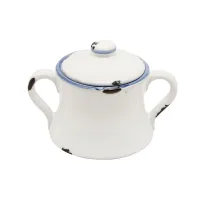
Fascinating pigments, fire in the factory, earth, passion, and incredibly talented hands of ancient craftsmanship – this is how the Virginia Casa brand was born. The Italian factory produces beautif
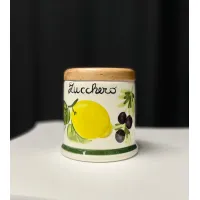
Original handcrafted craftsmanship combined with a fascinating history and charming items for the kitchen and dining room, illustrating the essence of the Le Ceramiche brand. It is a true cultural her
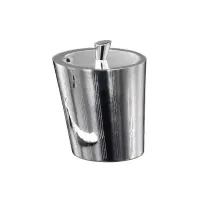
The Zanetto assortment is made from the highest quality materials, including solid silver, copper, and brass. After their solid processing, artisan masterpieces are created, including accessories for
A unique white sugar bowl from the Cesta collection with an unusual relief decoration - Vista Alegre
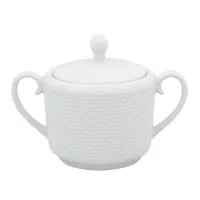
The Vista Alegre company was the first industrial unit engaged in porcelain manufacturing in Portugal. The determination of its founder, José Ferreira Pinto Basto, contributed to the enormous success
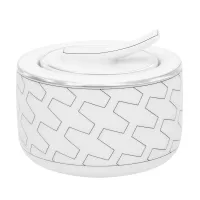
The Vista Alegre factory was the first industrial unit engaged in porcelain production in Portugal. The determination of its founder, José Ferreira Pinto Basto, contributed to the tremendous success
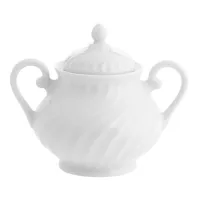
The Vista Alegre factory was the first industrial unit engaged in porcelain production in Portugal. The determination of its founder, José Ferreira Pinto Basto, contributed to the tremendous success
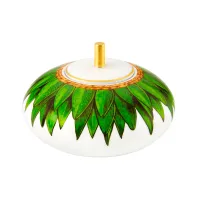
Vista Alegre Factory was the first industrial unit dedicated to porcelain manufacturing in Portugal. The determination of its founder José Ferreira Pinto Basto contributed to the brand's enormous suc
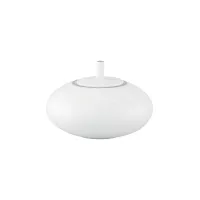
Vista Alegre was the first industrial unit engaged in porcelain production in Portugal. The determination of its founder, José Ferreira Pinto Basto, contributed to the brand's enormous success worldw
Description
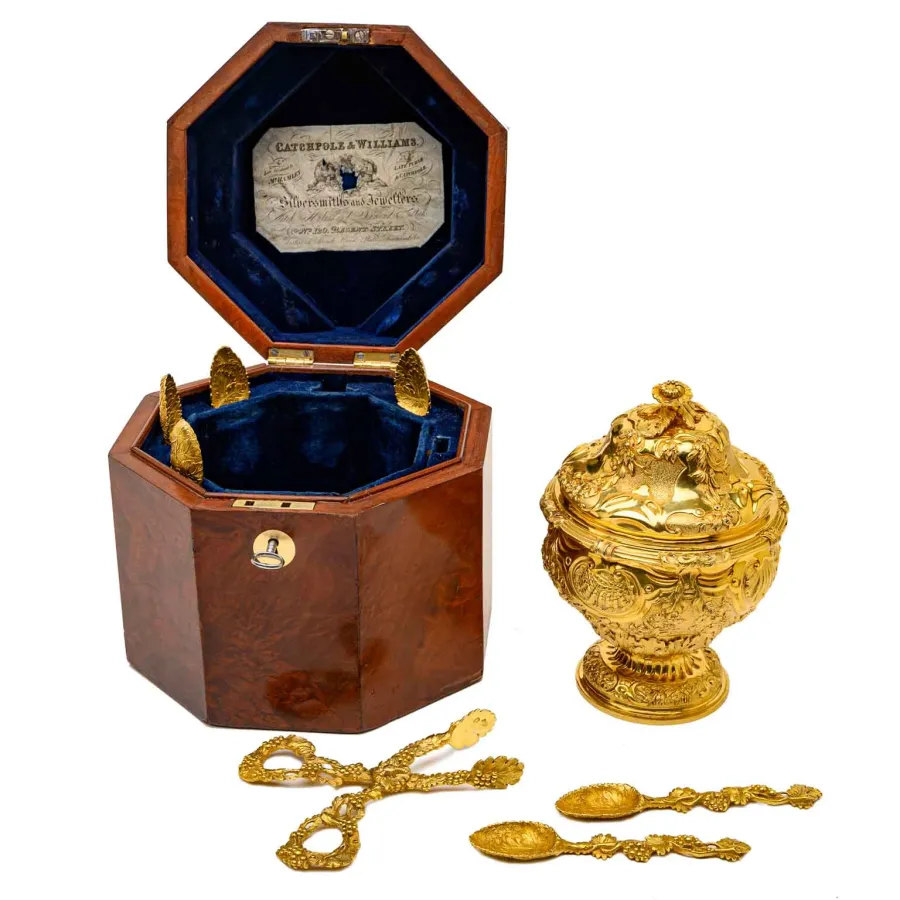
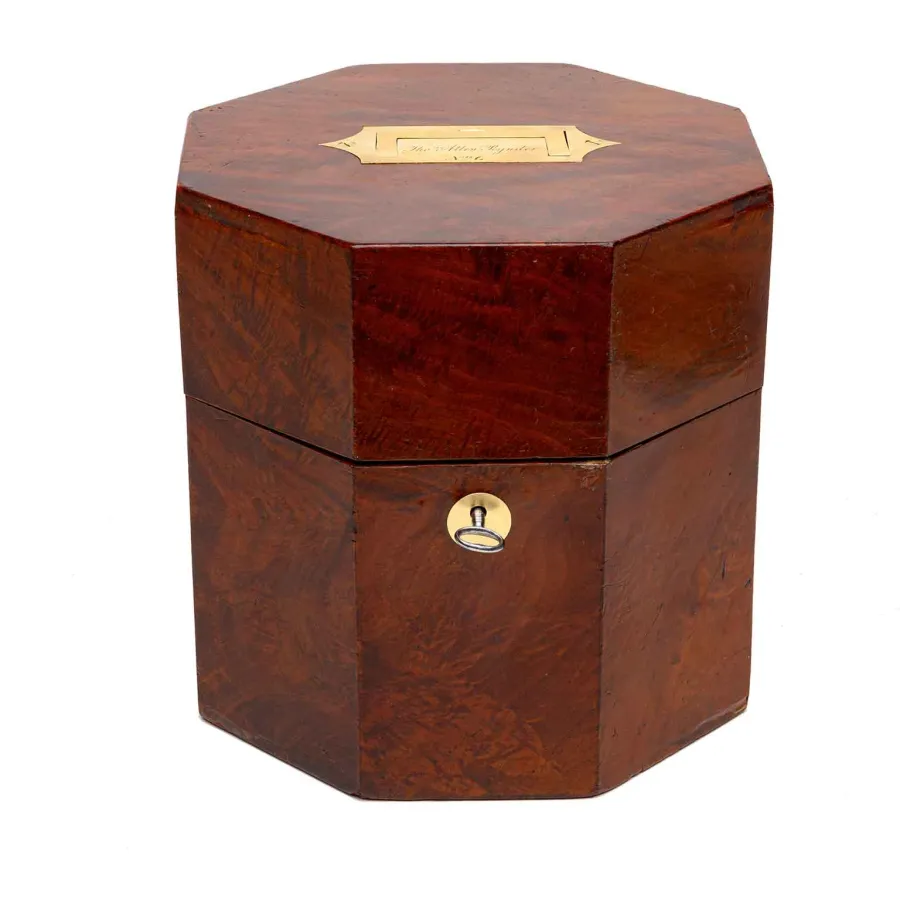
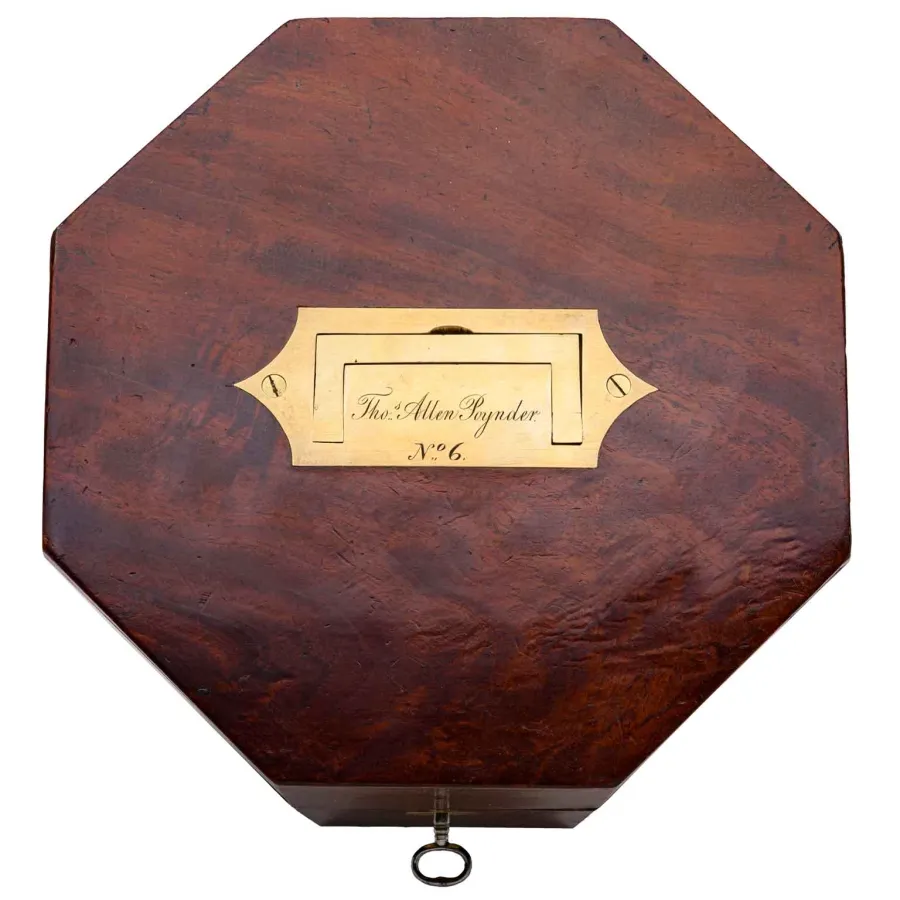
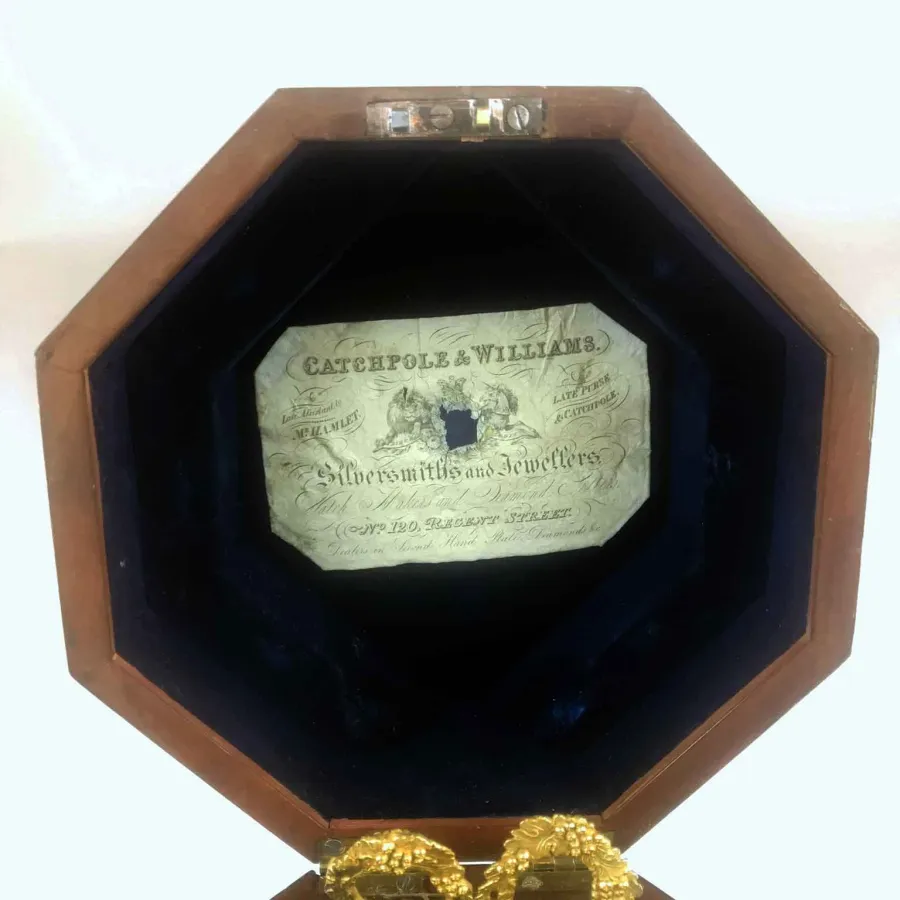
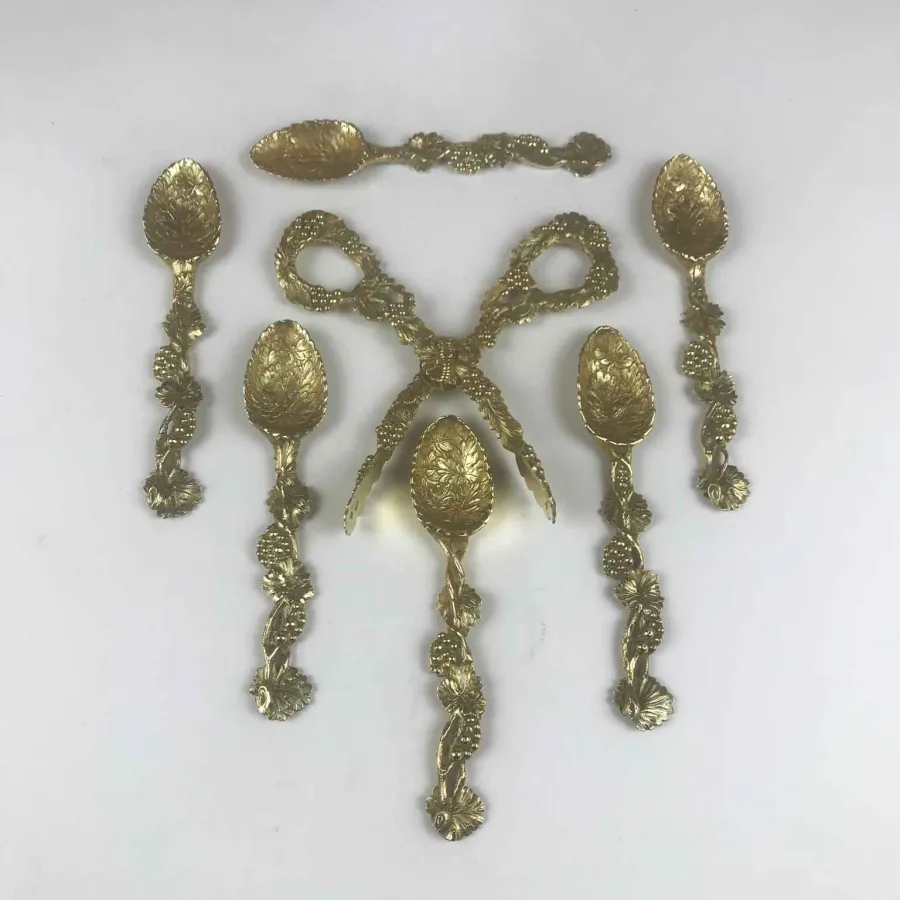
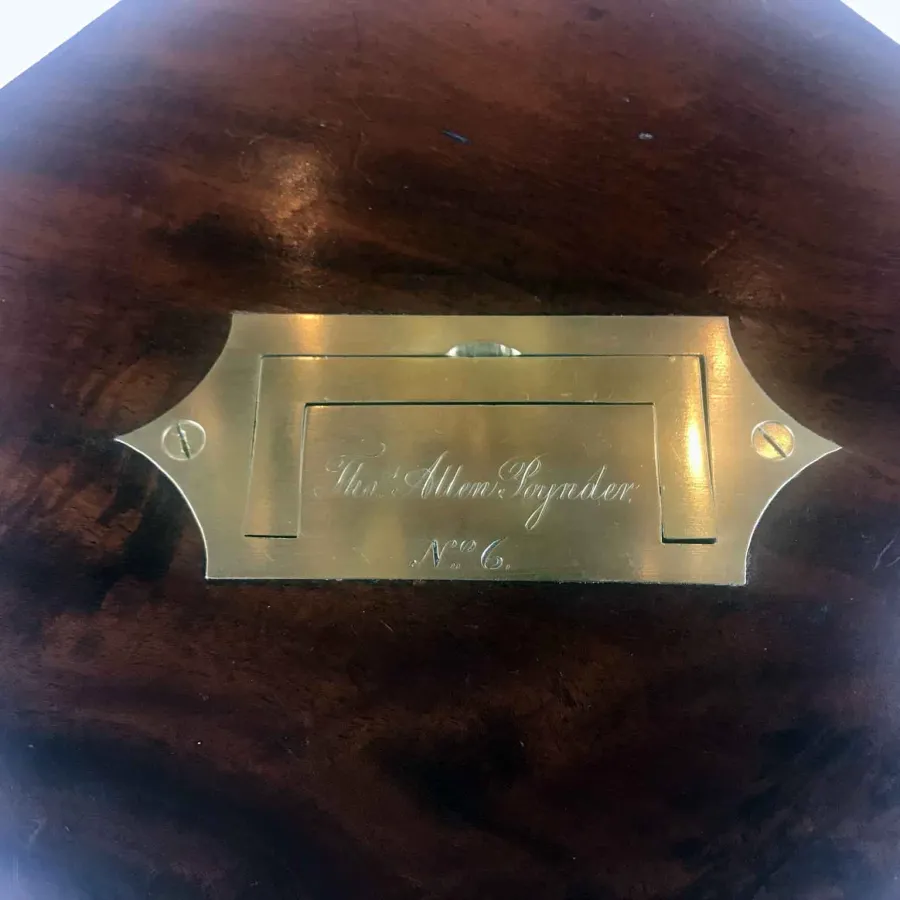
Antique Golden Silver Sugar Bowl London 1836 equipped with 6 teaspoons and sugar tongs, placed in an octagonal mahogany box with a lid, complete with a working lock and a brass handle inscribed Tho.s Allen Poynder no. 6 in italics.
Thomas Henry Allen Poynder, owner of the famous Hartham Park estate, a Georgian residence in Wiltshire, England, near Corsham, from which the artifact likely originates.
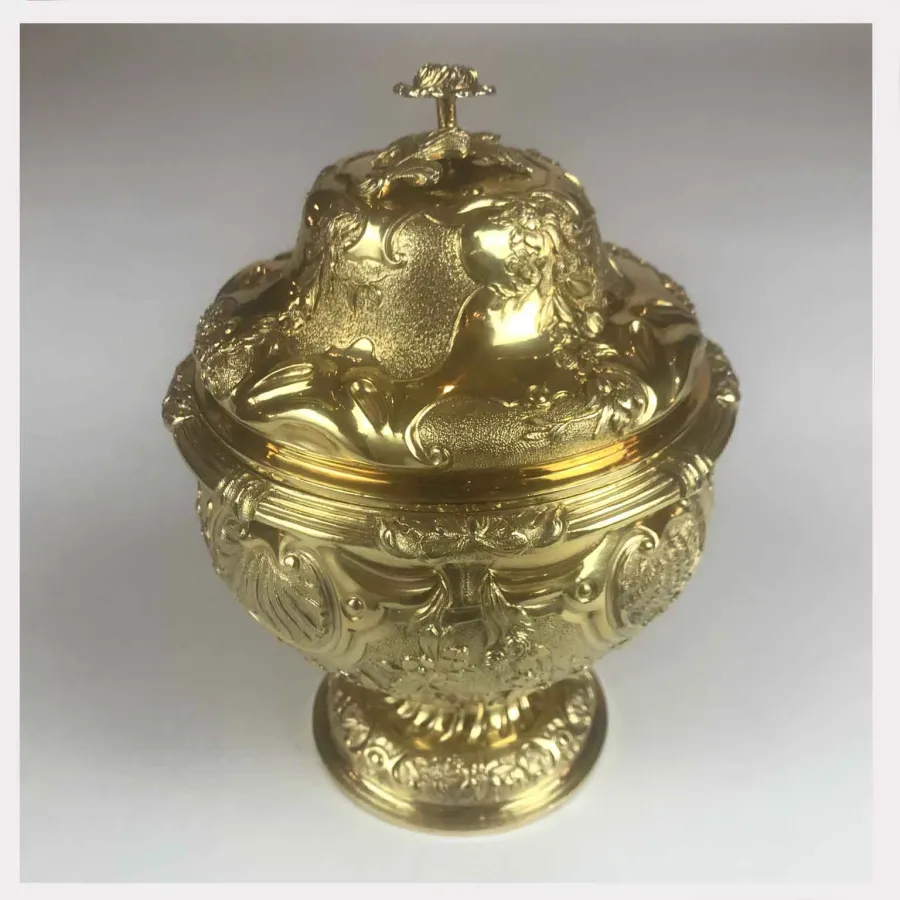
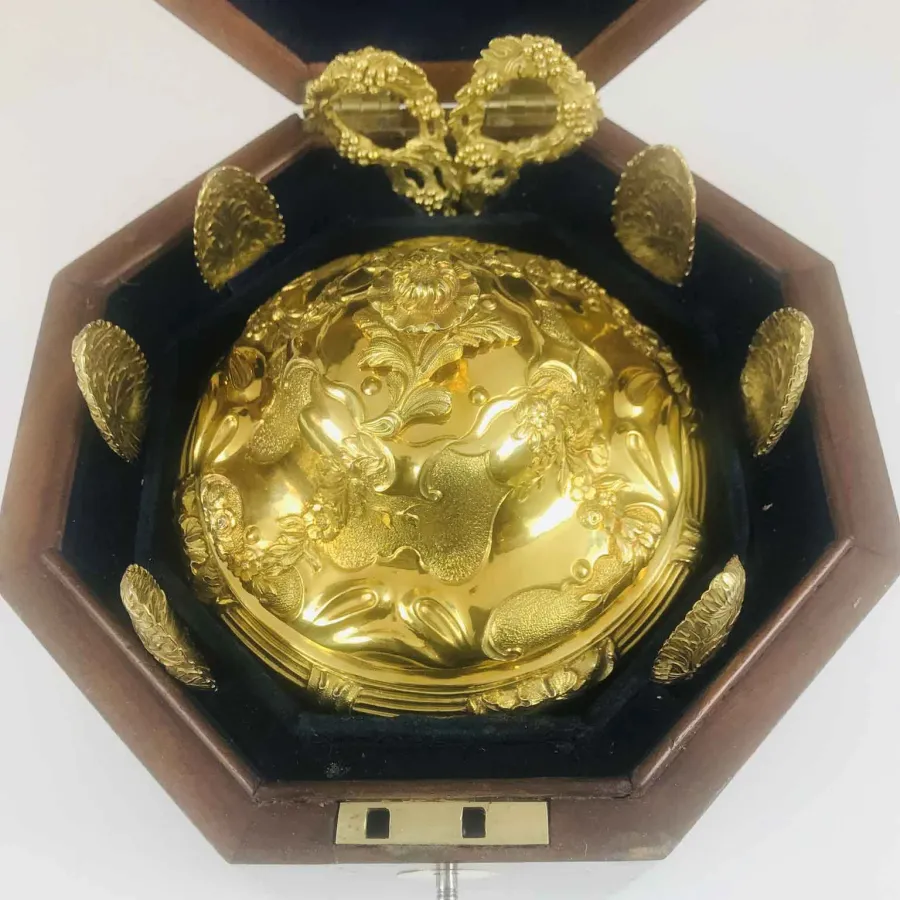
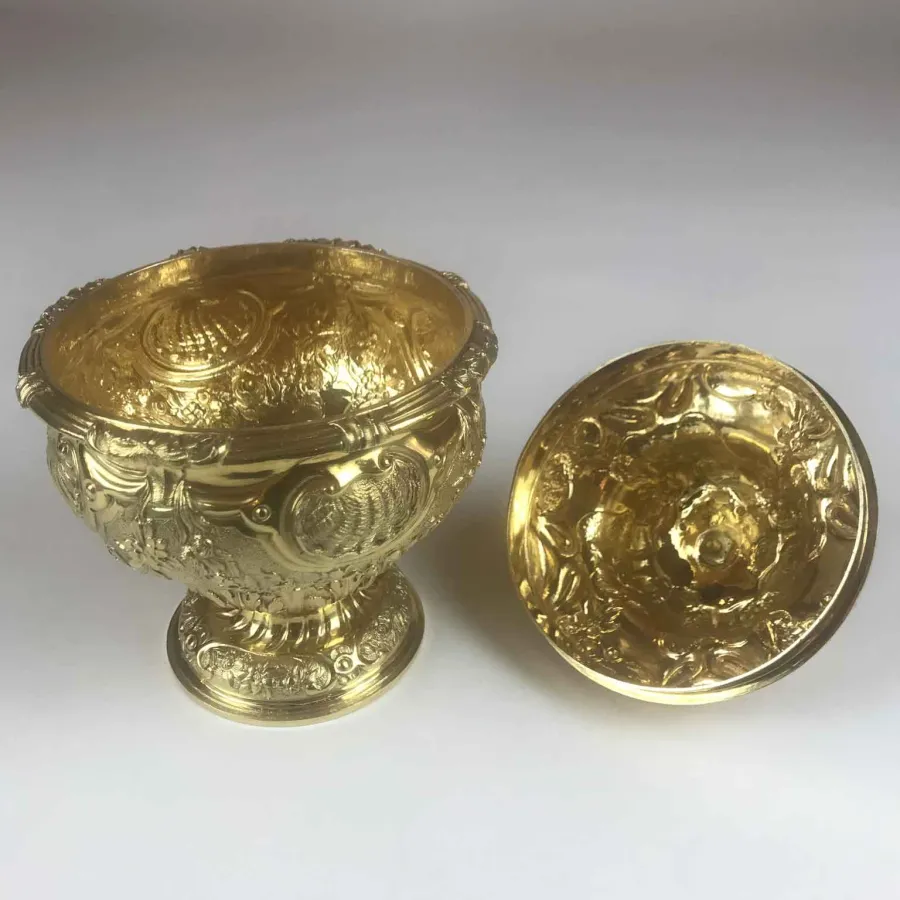
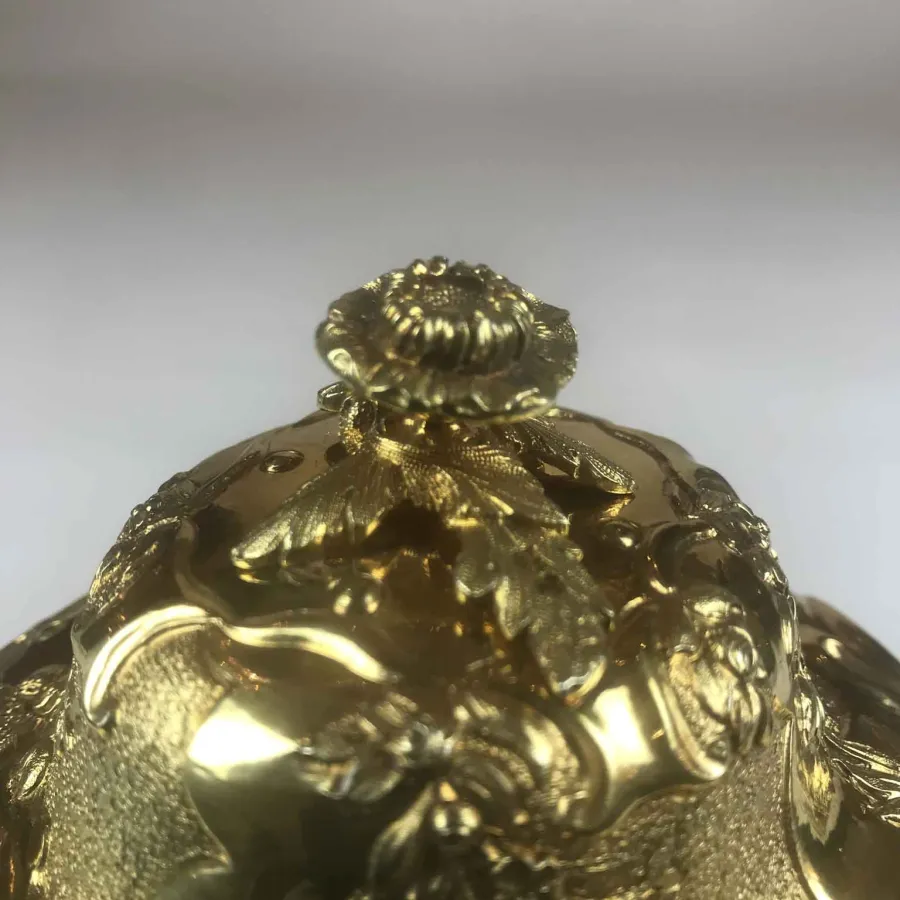
This refined English George IV sugar bowl with a rounded body, vase-shaped with a rounded, lockable lid, is made of thick silver plate 925 sterling, richly embossed with motifs inspired by naturalists. Flowers and leaves are depicted around four shells in scrolls, motifs that follow each other up to the knob, with a flower combined on top of the lid.
The exquisite craftsmanship is enhanced by engraved and carved ornaments, creating a play of shadows and light through alternating smooth, shiny surfaces and opaque areas marked by countless traces of iron chisel work. The artifact is also gilded internally.
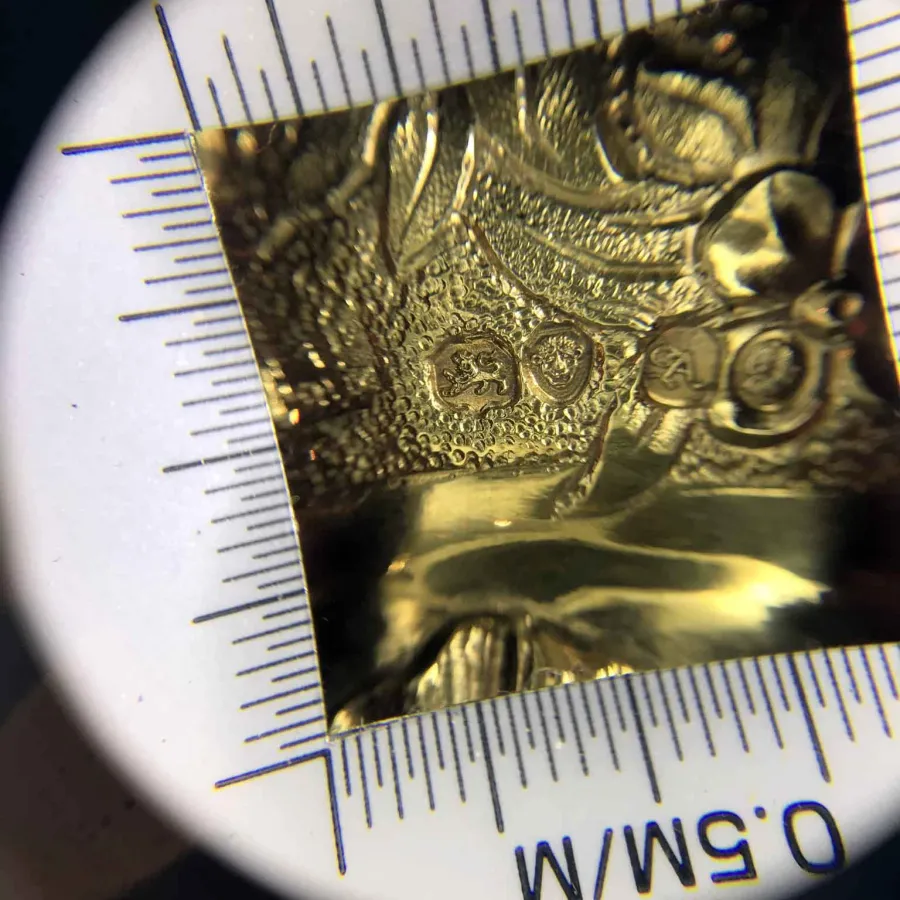
On the body of the vase and on the edge of the lid are marks of the London silversmith RAWS 1836/37 referring to Richard William Atkins and William Nathaniel Somersall, active in the city between 1827-1836 (registered in March 1825), on a rectangular field with rounded corners. It weighs 556 grams, stands 16.5 cm high, and has a diameter of 12.5 cm.
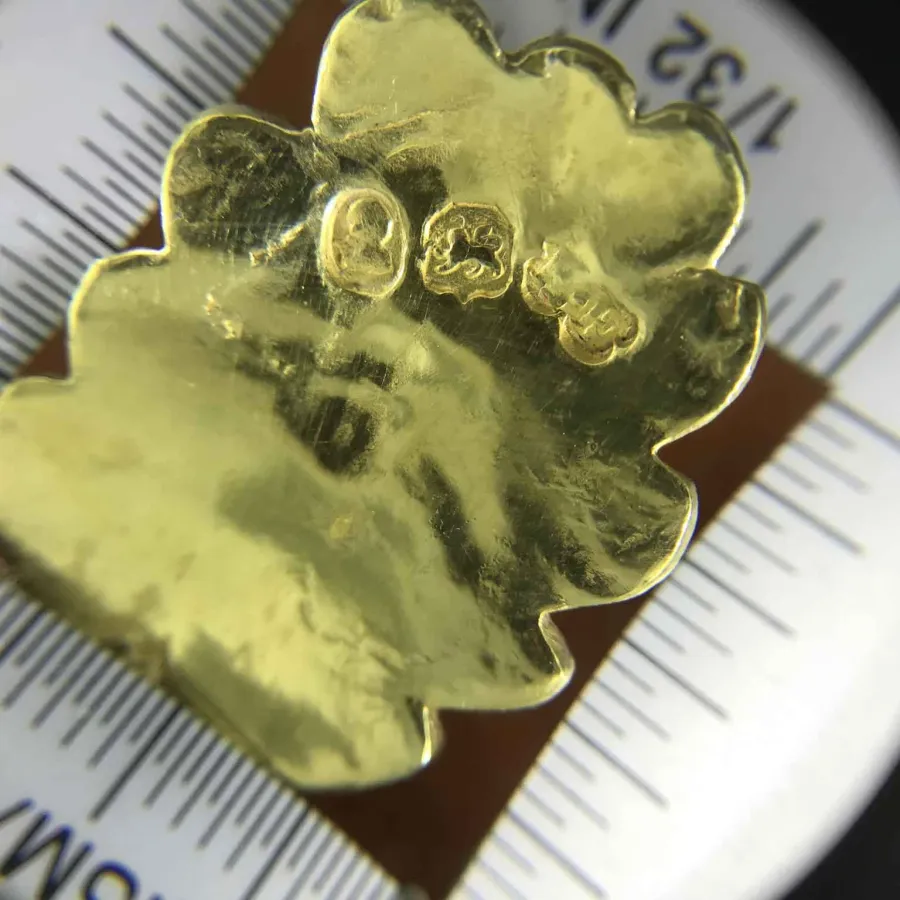
Six teaspoons and sugar tongs are cast and finely carved; they weigh 288 grams and were produced in London in 1820/21, marked at the bottom of the handle and on the inside of the tongs by silversmith Edward Farrell (1779-1850), known for exquisite and refined dagger-style designs and for being a silversmith to the Prince of York.
A single teaspoon was probably always modified in London in 1827/28.
Inside the lid is a Catchpole & Williams Silversmiths and Jewelers label no. 120, Regent Street.
The set comes from a private collection in Milan and arrived in good condition; we limited ourselves to repairing the mahogany case lock, making a key, gluing the smallest chip, and polishing the box with wax.
The numbering engraved on the case suggests that this set was matched with teapots, coffee pots, or tea caddies, with which these refined accessories were usually created together.
Exquisite antique furniture and accessories can be an excellent idea for decorating our interiors. Currently, there is a growing number of enthusiasts for high-quality vintage items that have a specific character and soul. It’s a nod to history, craftsmanship, and the design of classic and timeless furniture. There are many different styles in antique furniture, each with its distinctive features.
Many styles characterize antique furniture, but a few are particularly notable. Eclectic furniture refers to the 19th century, especially the Biedermeier style. Its early variations include neo-Gothic, Gothic, Rococo, Louis Philippe style, and finally the English Victorian style. Toward the end of the century, these styles transition into pseudo-classicism, Renaissance, and Baroque styles.
Empire-style furniture and accessories date from the late 18th to early 19th century, inspired by Napoleon’s reign, with strong references to Roman and Greek ornamentation.
Neoclassical furniture, such as Louis XVI style, also draws heavily from ancient architecture. Antique products in Rococo and Louis XV styles are interesting and worth noting. Baroque, derived from the Portuguese word 'barocco'—meaning an irregularly developed pearl—was characterized by very ornate furniture meant to radiate splendor and play a significant role in luxury. Unique, selectively used materials were employed to emphasize the grandeur of these pieces.
Today, we can observe how much the Baroque style has influenced today’s classic furniture, which is designed with a strong resemblance to the former era. An equally significant style is Renaissance, which flourished in the 15th and 16th centuries and also left a substantial mark on the art of furniture making. The Renaissance style was quite heavy and bulky. Brown stains were used, along with cornices, sturdy bases, and reliefs. It can certainly be said that these were quite distinctive products, but they also offered many new possibilities, such as the construction of cupboards or broadly understood chest furniture. Here, too, there was an interest in mythology and ancient times, so supports or legs often took animal forms.Lion paws, eagle heads – these are common features in Renaissance-style furniture. Currently, many global brands reproduce furniture made in this style, drawing inspiration from Italian or French creators. This reflects admiration and respect for the history of the most beautiful Renaissance antiques. It is important to remember that furniture production was perceived differently in each country, so each style had its own distinct character. This is especially important when searching for a luxurious antique that suits your interior.
The most important aspect of elite antique furniture is originality. And this is ultimately crucial from the buyer’s perspective, as the market is flooded with many forgeries. Luxury Products provides a certificate confirming the product’s authenticity and compliance with the actual description and photos. We have appraisers, art experts, historians, and specialists from around the world at your disposal.
Attributes / Details
| SKU | ANT-A627 |
| Manufacturer | Antyki |
| Model | A627 |
| Material | mahogany, brass |
| Size | Height: 20 cm Diameter: 19 cm |
| Age | 19th century |
| Year | 1836 |
| Style | George IV |
| Destiny | To living room |
See catalog
Reviews
No reviews for this product.