

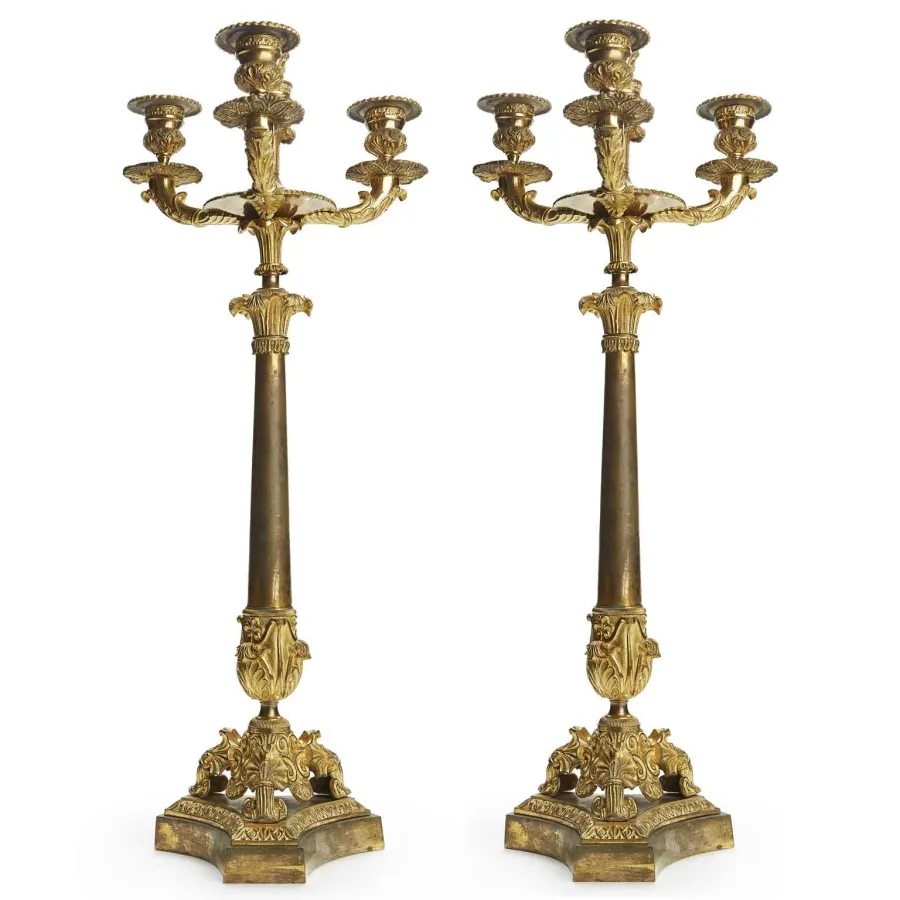
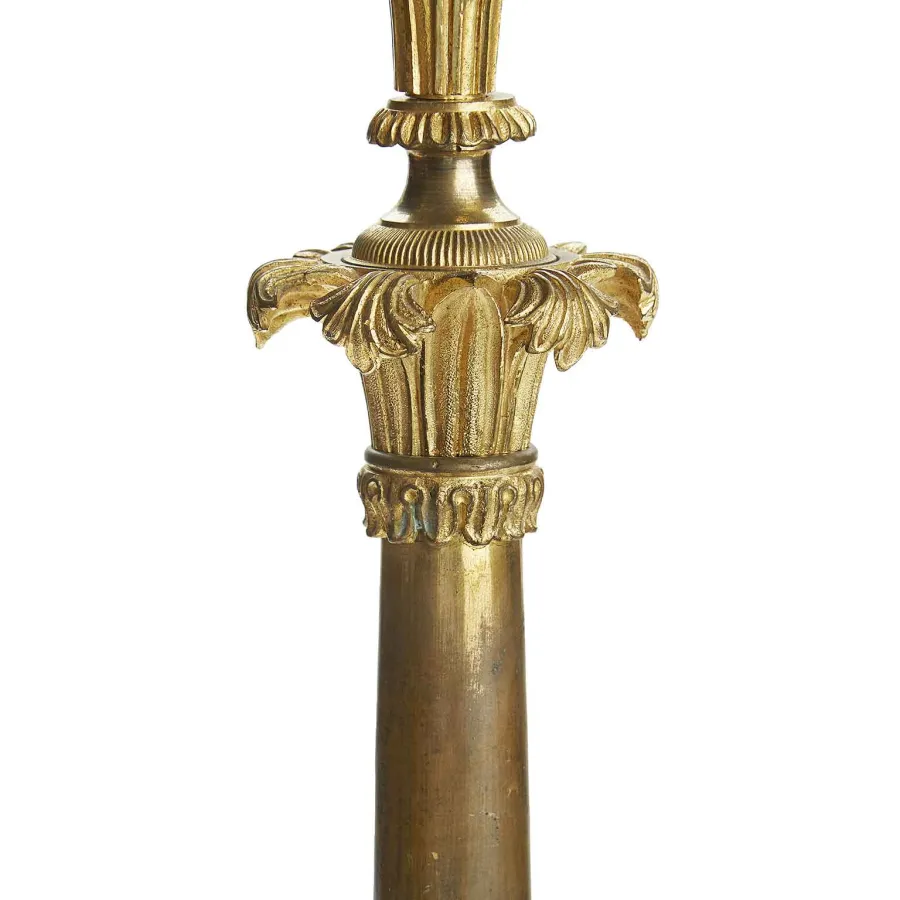
A pair of Empire candlesticks with three lamps in gilt bronze from the 19th century
Luxury antiques
SKU: ANT-A1125
See other products from category Antique candlesticks or from manufacturer Antyki with shipping within 24 hours
Related products by category
Para of antique wrought iron applications painted black, beneath which the original gilding can be seen. They feature one flame and a candle holder. Handcrafted without the need for welding, the iron
Set of four 1700s table candelabra, two 18th-century gilded wood and iron candlesticks with original design, spiral-shaped with hand-forged iron, finished with round wax drip trays, and turned and gil
Three gold wall sconces from the 18th century, with wrought iron candle holder arms featuring leaf and flower motifs, a set of three antique wall lamps, with bent arms in a double scroll design, large
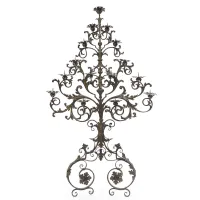
A large wrought iron candle holder, model 1700 15 flames arranged on an elegant iron pyramid-shaped structure. This exceptionally large Italian artifact has been handcrafted entirely, making it a refi
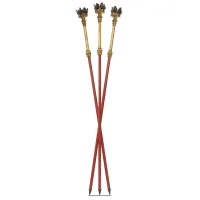
Three 18th-century gilded candelabras on red processional rods with octagonal cross-sections, connected by a central pin, forming a very tall wall lamp consisting of three torches that lean against th
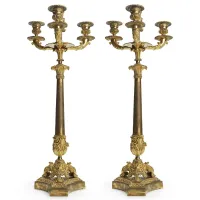
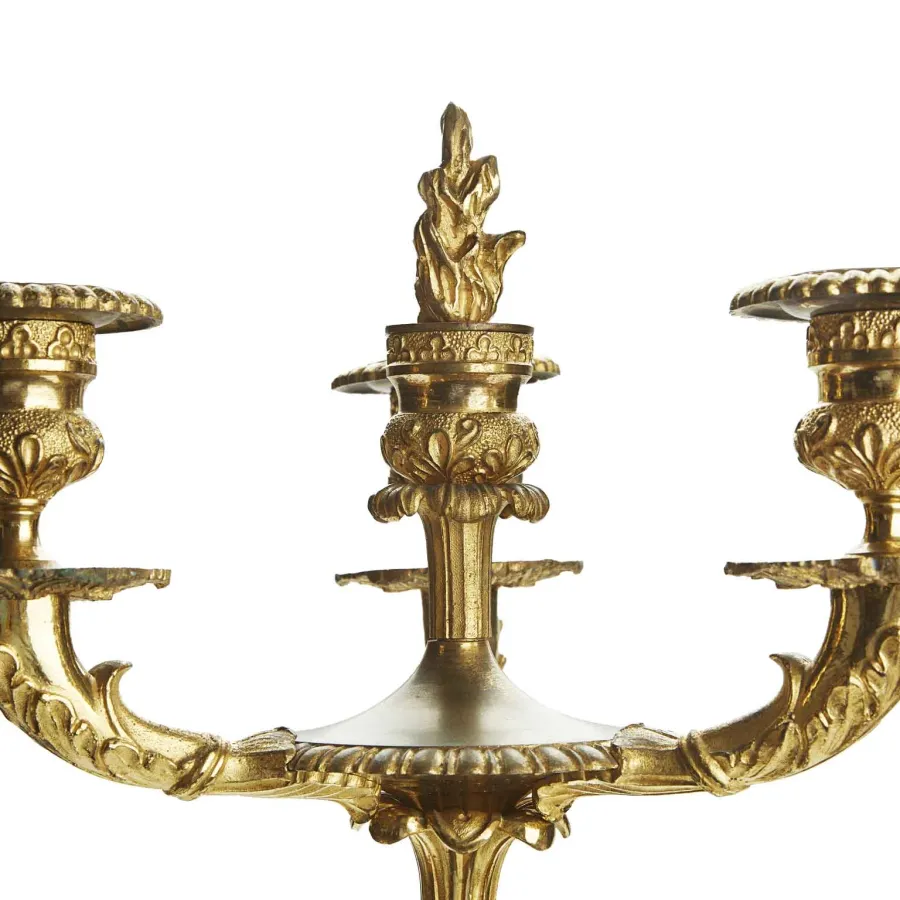
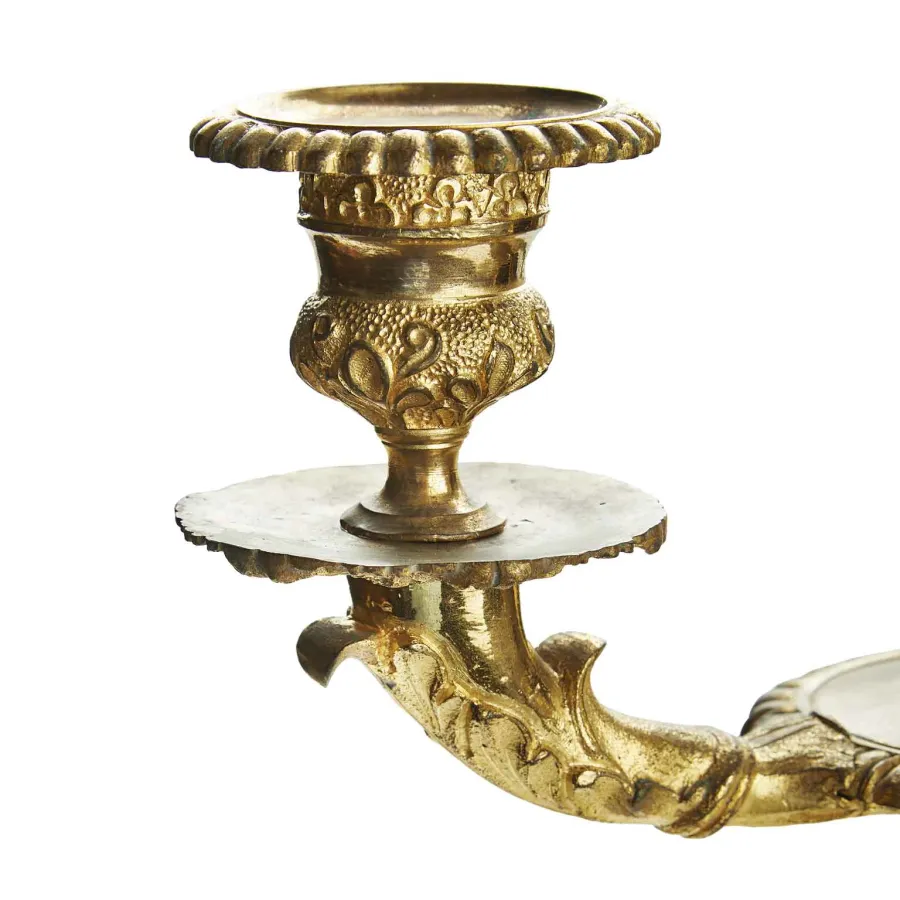
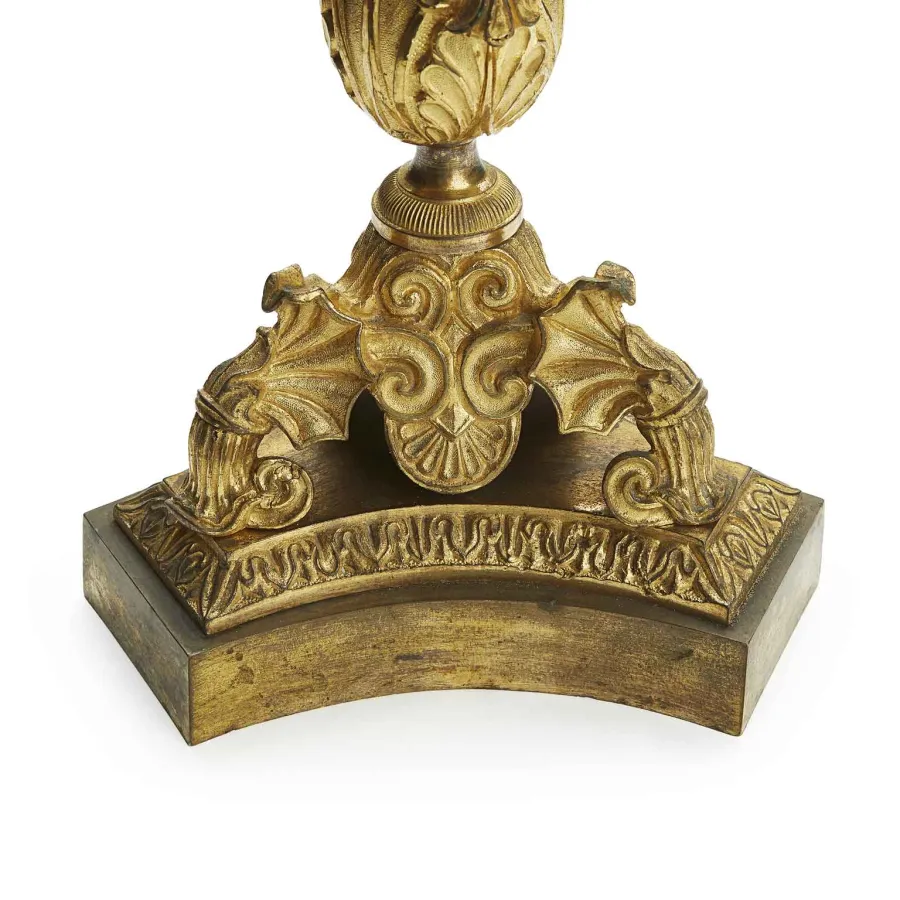
Three-arm empire-style candle holders made of gilded bronze, circa 1800, in good condition, despite minimal gilding on the shaft made of sheet metal (this area is more prone to wear due to the handle)
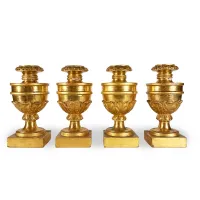
Empire-style gilded lamp bases 1700. A set of four palm-shaped vases with a square base and turned, carved pinewood body, gilded with water in the form of tiny gold flakes on a red trunk. They are fin
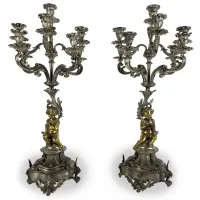
Set of eight-arm, silvered and gilded table candelabra made of bronze from the second half of the 19th century, crafted with rich rocaille decoration, featuring intricate arches and botanical motifs,
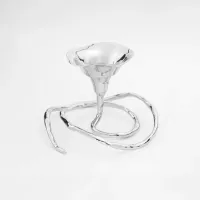
Attractive figurines of people combined with everyday objects.Are you looking for something unconventional, something that will inspire admiration and awe?Such conditions are fulfilled by original pro
Description
Three-arm empire-style candle holders made of gilded bronze, circa 1800, in good condition, despite minimal gilding on the shaft made of sheet metal (this area is more prone to wear due to the handle) and on the base. The gilding is accentuated by the contrast between the opaque background parts and the polished agate sections on the decorative reliefs, which adds greater depth. These candles have not been electrified so far, hence they have no openings. They are of Italian manufacture and date to the first half of the 19th century.
Beautiful antique furniture and accessories can be an excellent idea for decorating our interiors. Today, there is an increasing number of enthusiasts of high-quality vintage products that possess a specific character and soul. This is a nod to history, craftsmanship, and the creation of traditional and timeless furniture. There are many different styles in antique furniture, each with its distinctive features.
Many styles characterize antique furniture, but we can distinguish a few key ones. Eclectic furniture refers to the 19th century, during which the Biedermeier style was predominant. Its early variations include neo-Gothic, Gothic, Rococo, Louis-Philippe style, and finally the English Victorian style. Toward the end of the century, these styles evolved into pseudo-classicism, Renaissance, and Baroque styles.
Beautiful Empire-style furniture dates from the period between the late 18th and early 19th centuries. It originated during Napoleon’s reign, which imposed significant similarities and references to Roman and Greek ornamentation.
Neoclassical furniture is associated with Louis XVI style, which also strongly references ancient architecture. Interesting and noteworthy are antique products in Rococo and Louis XV styles. The next is Baroque, a term derived from Portuguese 'barocco'—meaning an irregularly developed pearl. These were highly decorative pieces meant to radiate splendor and play a significant role in luxury. Materials were selectively chosen to further emphasize the grandeur of these items.
Today, we can observe how much the Baroque style influenced modern classic furniture, which is designed with a strong resemblance to the historical period. An important style is also Renaissance, which flourished in the 15th and 16th centuries and left a significant mark on furniture design. Renaissance furniture was quite heavy and massive, often using brown stains, cornices, sturdy bases, and reliefs. These products were quite distinctive but also opened new possibilities, such as the construction of credenzas and broadly defined chest furniture. They also reflected interest in mythology and classical antiquity, with supports and legs often taking animal forms.
Lion’s paws, eagle heads—these are common motifs in Renaissance style. Currently, many global brands reproduce such furniture, inspired by Italian and French creators. This reflects admiration and respect for the history of the most beautiful Renaissance antiques. It’s important to remember that each country perceived furniture production differently, so each style had its unique character in each nation. This is especially important when searching for a luxurious antique suitable for your interior.
The most important aspect of stylish antique furniture is originality. Ultimately, this is crucial from the buyer’s perspective, as many forgeries circulate on the market. Luxury Products provides documentation confirming the product’s compliance with the actual description and photos. We also have appraisers, art experts, historians, and specialists from around the world at your disposal.
Attributes / Details
| SKU | ANT-A1125 |
| Manufacturer | Antyki |
| Model | A1125 |
| Material | ormolu |
| Size | Height: 65.5 cm Diameter: 26 cm |
| Age | 19th century |
| Year | 1800 |
| Destiny | To living room |
See catalog
Reviews
No reviews for this product.