

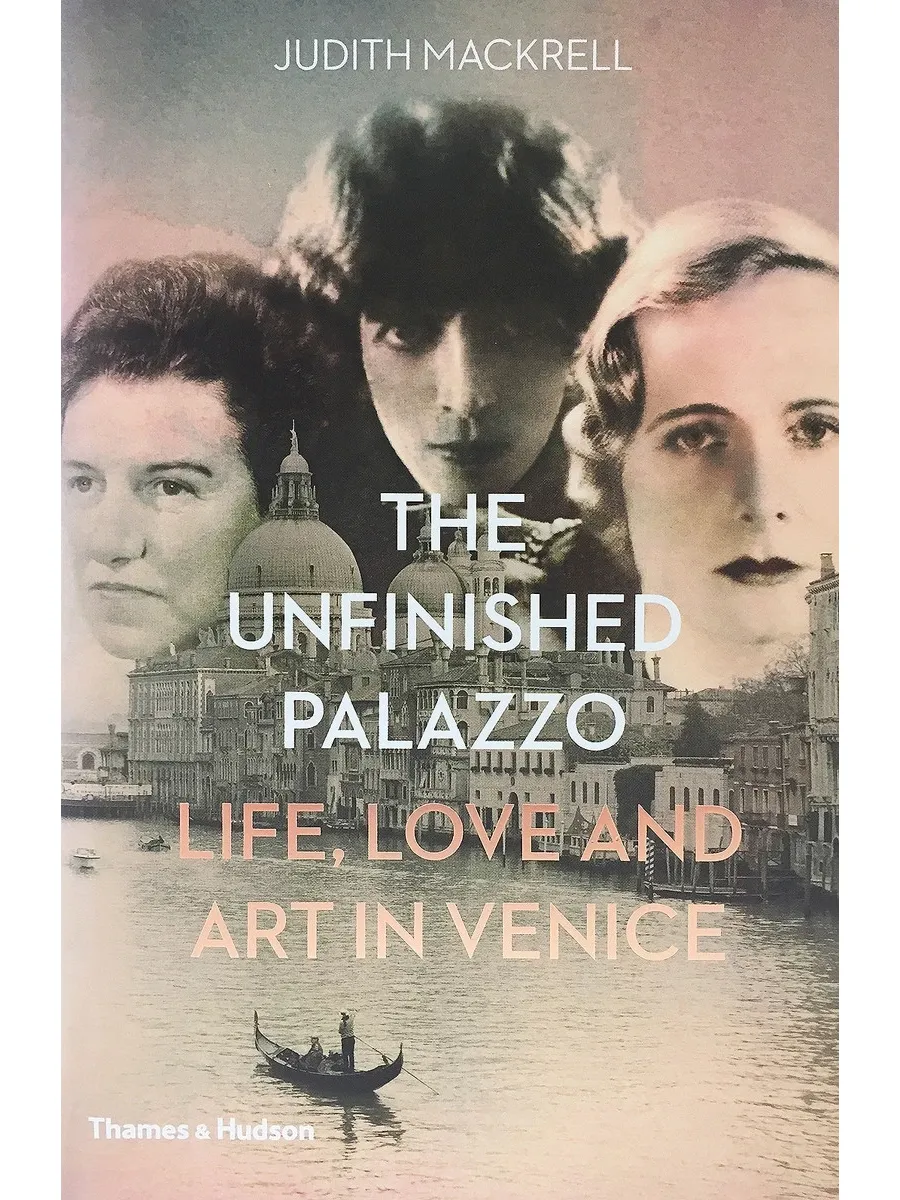
The book Unfinished Palazzo Life, love and art in Venice - Thames & Hudson
Beautiful editions of books
SKU: THANDSON- 9780500518663
See other products from category Books about architecture and design or from manufacturer Thames and Hudson
Related products by category

This inventive social, economic, and ecological experiment. Bjarke Ingels Group is a radical architectural manifesto within a comic strip. The pioneering company uses a cartoon format to declare its c

Revisit the 90s again in an extensive compendium of advertising gems that sold Generation X and the baby boom everything from Game Boys to Boyz II Men. Six chapters dedicated to food, fashion, enterta

Luxury Products LibraryAll books in our store come from official European distribution.Language of publication: English.TITLE: That Wild Country: An Epic Journey through the Past, Present, and Future

An essential book for enthusiasts of treehouse projects worldwide. This quirky collection showcases 50 of the best treehouses around the globe. Whether it's an inspiring look back at childhood adventu
Luxury Products LibraryAll books in our store come from official European distribution.Language of publication: English.TITLE: A World of ArtAuthor: Helena HuntISBN: 978-1-4063-9389-7

Monograph from the collector's edition, which finally measures the extraordinary talents of Jean Nouvel. The two volumes of 400 pages each cover his most important buildings, as well as ongoing projec
Ideas, honesty, and spatial experience come together in the works of David Chipperfield, one of the most inspiring architectural maestros of our time. From Berlin to Beirut, explore the most striking

Discover the world's best collections of new homes. This reliable global overview features talents such as Shigeru Ban, MVRDV, and Marcio Kogan, as well as enthusiasts like Xu Fu-Min, Vo Trong Nghia,
Antoni Gaudí combined orientalism, natural forms, and new materials into a unique Modernist aesthetic that put Barcelona on the map of global architecture. With entirely new photographs, plans, and d
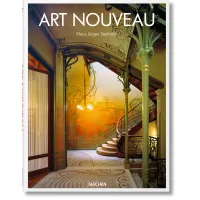
What was the innovation in Art Nouveau? This richly illustrated overview explores the contexts and provocations of this lively turn-of-the-century style, in which a symphony of flowing lines and organ
Description
Launched in 1750, Palazzo Venier was designed as a testament to the power and wealth of a great Venetian family, but the project was abandoned after only one floor was completed. The empty and neglected “il palazzo non finito” had been a source of pain for over a century, until it was finally inhabited by a variety of women whose stories are told in this captivating book.
Meanwhile, Luisa Casati, Doris Castlerosse, and Peggy Guggenheim used the Unfinished Palazzo as a stage to reshape their lives, making the building famous or notorious. Their worlds of art and imagination boasted an incredible cast of supporting characters, from D'Annunzio and Nijinsky, to Noël Coward, Winston Churchill, and Cecil Beaton, up to Yoko Ono.
The surprisingly wealthy Marchesa Luisa Casati transformed her home into an aesthetic fantasy and a venue for decadently Renaissance court operas—spending small fortunes on her costumes in her quest to become a “living work of art” and a muse for late Belle Époque and early modernist artists. British socialite Doris Castlerosse (née Delevingne) left her mark in the hedonistic interwar years, hosting film stars and members of the royal family at glamorous parties. Jewish-American heiress Peggy Guggenheim turned the Palazzo into a model of modernist simplicity to house her exceptional collection of modern and surrealist art, which now attracts tourists and art lovers from around the world.
Thames & Hudson was founded in 1949 by Walter and Eva Neurath. Their greatest passion and mission was to create a “museum without walls” and to make the world of art accessible to the general public, as well as to leading scholars. To reflect their international perspective, the company’s name combined the rivers flowing through London and New York, represented in their logo by two dolphins symbolizing friendship and intelligence, one facing east and the other west, suggesting a connection between the Old World and the New.
Today, still an independent family-owned company, Thames & Hudson is one of the world’s leading publishers of illustrated books, with over 2,000 titles in print. They publish high-quality books across all areas of visual creativity: fine arts, applied arts, decorative arts, performing arts, architecture, design, photography, fashion, film, and music, as well as archaeology, history, and popular culture. They are also expanding their list of children’s books. Headquartered in London with a sister company in New York and branches in Melbourne, Singapore, and Hong Kong. In Paris, another subsidiary, Interart, distributes English-language books across France.
History of Thames & Hudson
Walter Neurath was born in Vienna in 1903. In 1938, he left his hometown—where he ran an art gallery and published illustrated books—for London. Initially, he worked as a production director at Adprint, a company founded by Viennese émigré Wolfgang Foges. Neurath and Foges developed a pioneering concept now known as book packaging (or co-publishing), where book ideas are developed, ordered, produced, and sold to publishers operating in different markets and languages, enabling large print runs and reducing unit production costs. Neurath’s concept was the first of many innovations that Thames & Hudson introduced to the publishing world.
Seeking to continue book packaging in a second edition and recognizing the need to amortize the high costs of producing illustrated books, Neurath founded his own publishing company, with offices in London and New York, in autumn 1949. Eva Neurath, who arrived in London from Berlin in 1939, was a co-founder.
In 1958, Thames & Hudson launched one of its most renowned series, *World of Art*, which became the foundation for a highly diverse list. Characterized by pocket-sized editions with black spines, the series expanded in just seven years to include 49 titles. Nearly 60 years later, the series boasts over 300 titles, which, according to Christopher Frayling, are “splattered with paint copies” in every art school across the country.
Other important series that added depth and prestige to the list include *Ancient People and Places*, edited by Glyn Daniel, who from the 1950s contributed to pioneering interest in archaeology, both in book form and television. Over 34 titles were published in this series over 34 years. The large-format *Great Civilizations* series, published in 1961, featured contributions from esteemed scholars such as Alan Bullock, Asa Briggs, Hugh Trevor-Roper, A. J. P. Taylor, and John Julius Norwich.
After establishing one of the most significant publishing houses in Europe in less than two decades, Walter Neurath died in 1967 at the age of 63. Sculptor Henry Moore wrote that “his death was a loss to our cultural life.” Sir Herbert Read noted that Neurath “more than anyone else was responsible for the revolution in art publishing” and was “one of those rare entrepreneurs who successfully combine business acumen with idealism.” Eva Neurath became chairwoman. Walter’s son, Thomas, who joined the company in 1961 along with his sister Constance, became managing director; Constance later served as artistic director for several decades. Both Thomas and Constance remain on the Thames & Hudson board, as do Thomas’s daughters, Johanna and Susanna.
From producing the first commercial edition of *The Book of Kells* to the triumphant publication of the six-volume *Vincent van Gogh - Letters*, from innovations like “French folds” to the controversial documentation of graffiti art in *Subway Art*, Thames & Hudson has always been at the forefront, both culturally and technologically.
The year 2016 marked an extraordinary new chapter for the company, announcing publishing partnerships with two of the world’s most important museums: the British Museum and the Victoria and Albert Museum.
The world of art and scholarship remains at the heart of Thames & Hudson’s publishing program, which remains true to its core principle: providing a “museum without walls.”
Today, Thames & Hudson is a recognizable international brand, a symbol of British publishing. Its extensive catalog includes thousands of incredible titles. Many of these are prestigious collectible books.
Attributes / Details
| SKU | THANDSON- 9780500518663 |
| Manufacturer | Thames and Hudson |
| Model | 9780500518663 |
| Author | Judith Mackrell |
| Number of pages | 408 |
| Tongue | English |
| Binding | Tough |
| Year of release | June 1, 2017 |
| Size | 23.4 x 15.3 cm |
See catalog
Video
Reviews
No reviews for this product.