

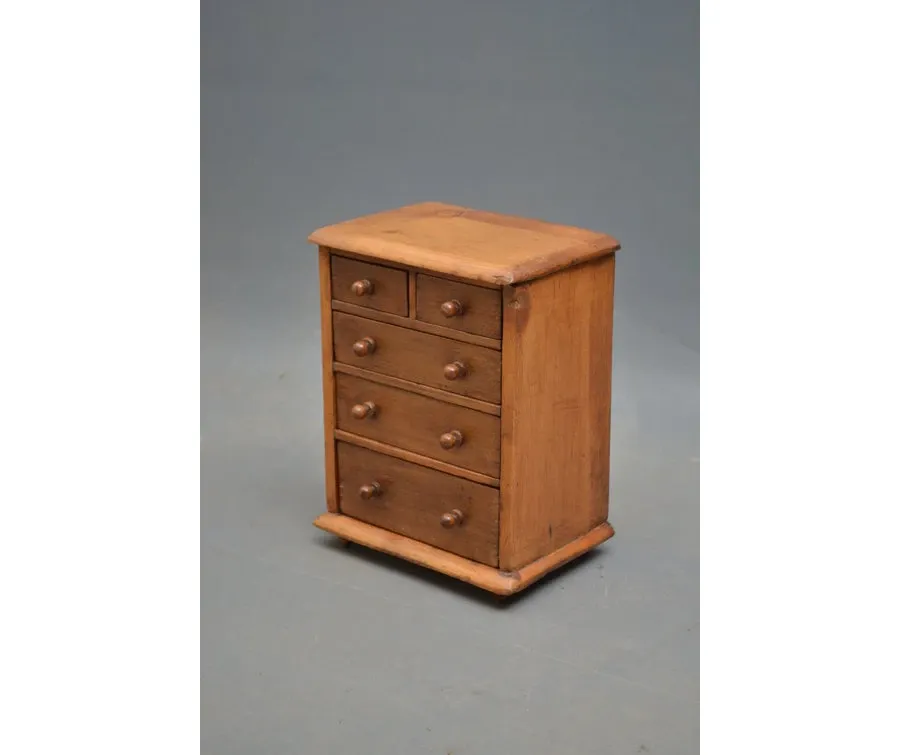
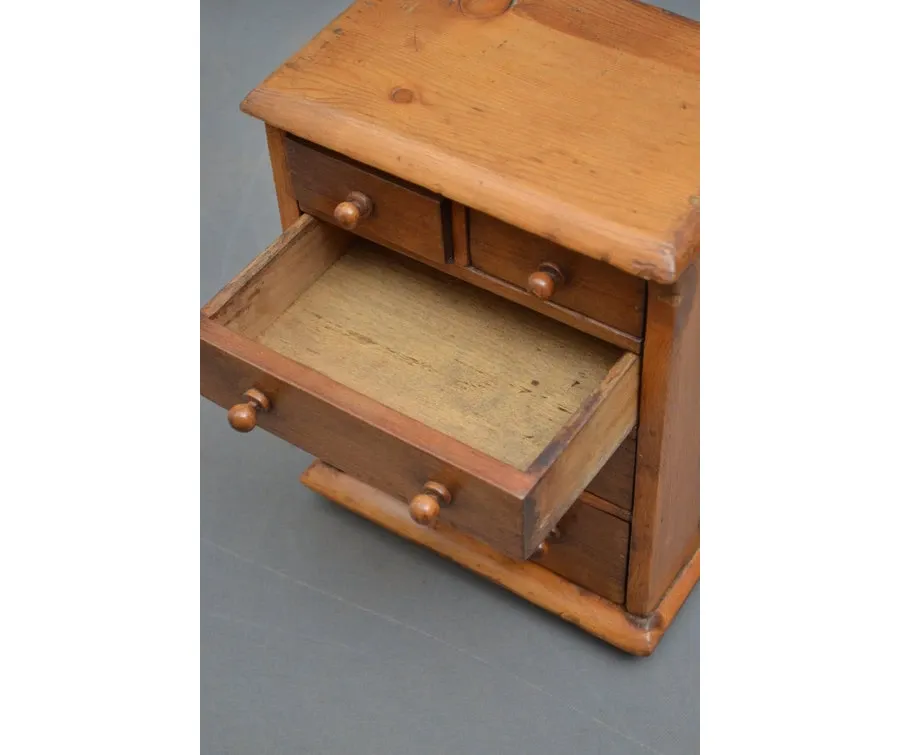
Miniature pine chest of drawers - antique from 1880
Exclusive antique furniture and accessories.
SKU: NIMQUES-Sn063
See other products from category Antique caskets and boxes or from manufacturer Nimbus Antiques
Related products by category
Lacquered box from 1700, made of beech wood with an original lock. The rectangular box is covered with a sleek tempera lacquer, decorated with spirals on a green background.It is in good condition, w
French candy box from the late 19th century, decorated on the lid with an elegant gentleman holding a sword, depicted standing in the middle of a rural landscape with architecture. The round-shaped bo
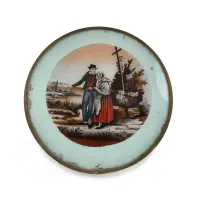
French box of the early 19th century, decorated on the lid with a scene depicting a young couple shown in a rural setting, in a flat landscape, beside a cross and small shrubs. The scene is surrounded
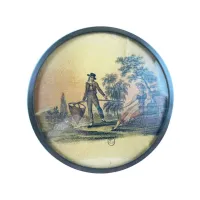
A box for chocolates from a French restaurant era, decorated on the lid with a rural scene depicting a seated girl and a boy with a fishing rod. The box is entirely made of cardboard, with two brass r
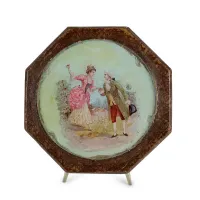
French sugar box from the early 19th century, decorated on the lid with a gallant scene depicting a lady and a gentleman in 18th-century attire against a rural landscape background. The round decorati
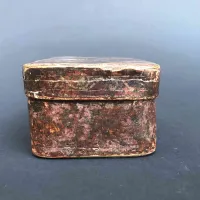
Ancient silver box from 1700 with square ribbed oak edges, rounded corners, and a lid. Shows traces of the original silver leaf with spiral decorations. Common wear near the edges. Late 1700s Italy.L
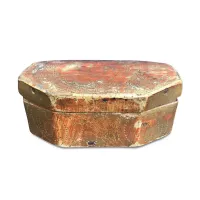
Ancient Golden and Bulinata box made from white walnut with an octagonal shape, gilded along the edges and lid, decorated with engraving that creates a pleasing decorative frame. The box is in good c
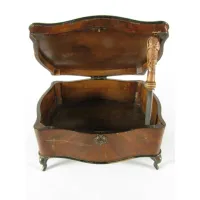
Lombard Louis XV box made of walnut veneer, with ebony profiles: features a simple lid and four leaf-shaped sides. It rests on four cast legs with an appropriate shape; the construction is made of fir
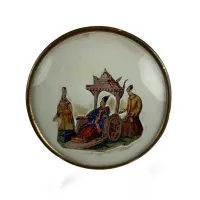
France 1800s candy box with decoration on the lid depicting oriental figures on ivory. The box is made entirely of cardboard, with two brass rings at the ends and printed and gilded paper ribbons alon
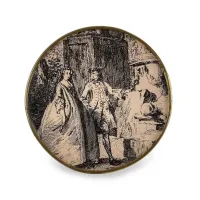
Confetti box from France, period of restoration, with a decoration on the lid originating from an English lithograph depicting a pair of figures in 18th-century costumes (probably non-original). The b
Description
A miniature pine dresser with original, turned knobs and turned feet would make a great jewelry box.
Beautiful antique furniture and accessories can be an excellent idea for decorating our interiors. Today, there is an increasing number of enthusiasts of high-quality vintage items that possess a specific character and soul. This is a nod to history, craftsmanship, and the design of classic and timeless furniture. There are many different styles in antique furniture, each with its distinctive features.
Many styles characterize antique furniture, but we can highlight a few of the most important. Eclectic furniture refers to the 19th century, during which the prevailing Biedermeier style was popular. Its early 20th-century variants include neo-Gothic, Gothic, Rococo, Louis Philippe style, and finally the English Victorian style. Toward the end of the century, these styles transitioned into pseudo styles of Classicism, Renaissance, and Baroque.
Empire-style furniture dates from the late 18th to early 19th century. It originated during Napoleon’s reign, characterized by significant similarities and references to Roman and Greek ornamentation.
Neoclassical furniture is associated with Louis XVI style, which also strongly references ancient architecture. Interesting and noteworthy are antique products in Rococo style and Louis XV style. Next is Baroque, a term derived from the Portuguese 'barocco'—meaning an irregularly developed pearl. These were highly decorative pieces designed to exude splendor and play a significant role in luxury. Unique materials were selectively used to emphasize the grandeur of these items.
Today, we can observe how much influence the Baroque style has had on modern classic furniture, which is designed with a strong resemblance to the historical period. An important style is also Renaissance, which flourished in the 15th and 16th centuries and left a significant mark on furniture-making art. Renaissance furniture was quite heavy and bulky, often using brown stains, cornices, sturdy plinths, and reliefs. These were quite distinctive products, but they also opened up new possibilities, such as the construction of sideboards and broadly speaking, chest furniture. Mythology and ancient times also inspired these designs, with supports and legs taking animal forms.
Lion’s paws, eagle heads—these are common motifs in Renaissance style. Currently, many global brands reproduce furniture inspired by Italian and French artisans. This reflects admiration and respect for the history of the most beautiful Renaissance antiques. It’s important to remember that furniture production was perceived differently in each country, so each style had its unique character. This is especially important when searching for a luxurious antique that suits your interior.
The most important aspect of elite antique furniture is originality. Ultimately, this is crucial from the buyer’s perspective, as many counterfeits circulate on the market. Luxury Products provides a certificate confirming the product’s compliance with the actual description and photos. We also have appraisers, art experts, historians, and specialists from around the world at your disposal.
Attributes / Details
| SKU | NIMQUES-Sn063 |
| Manufacturer | Nimbus Antiques |
| Model | Sn063 |
| Material | pine |
| Size | H11″W8.5″D6″ |
| Age | 19th century |
| Year | 1880 |
| Condition | After renovation |
| Destiny | On the desk |
See catalog
Reviews
No reviews for this product.