

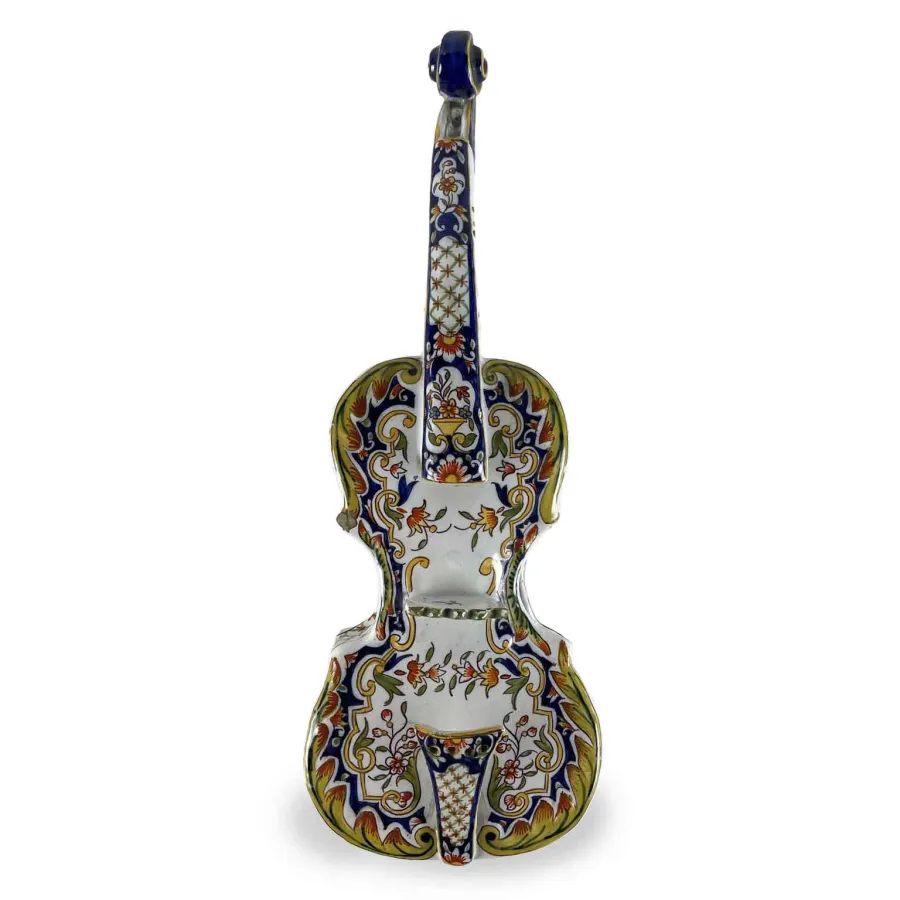
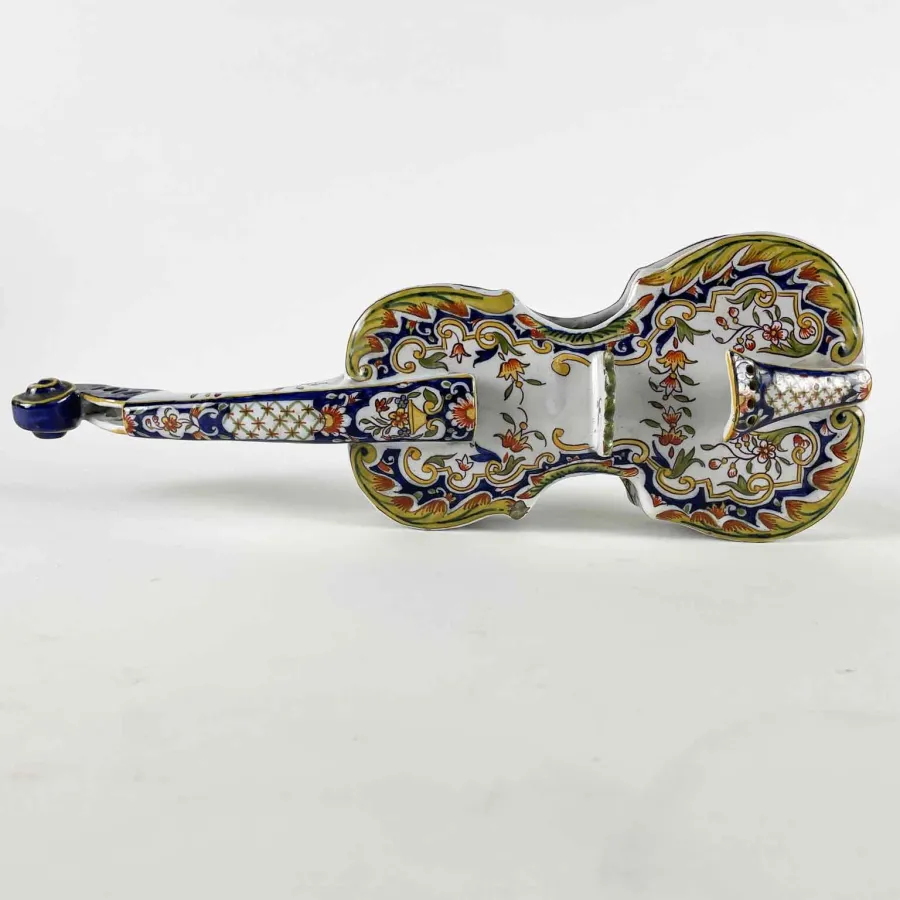
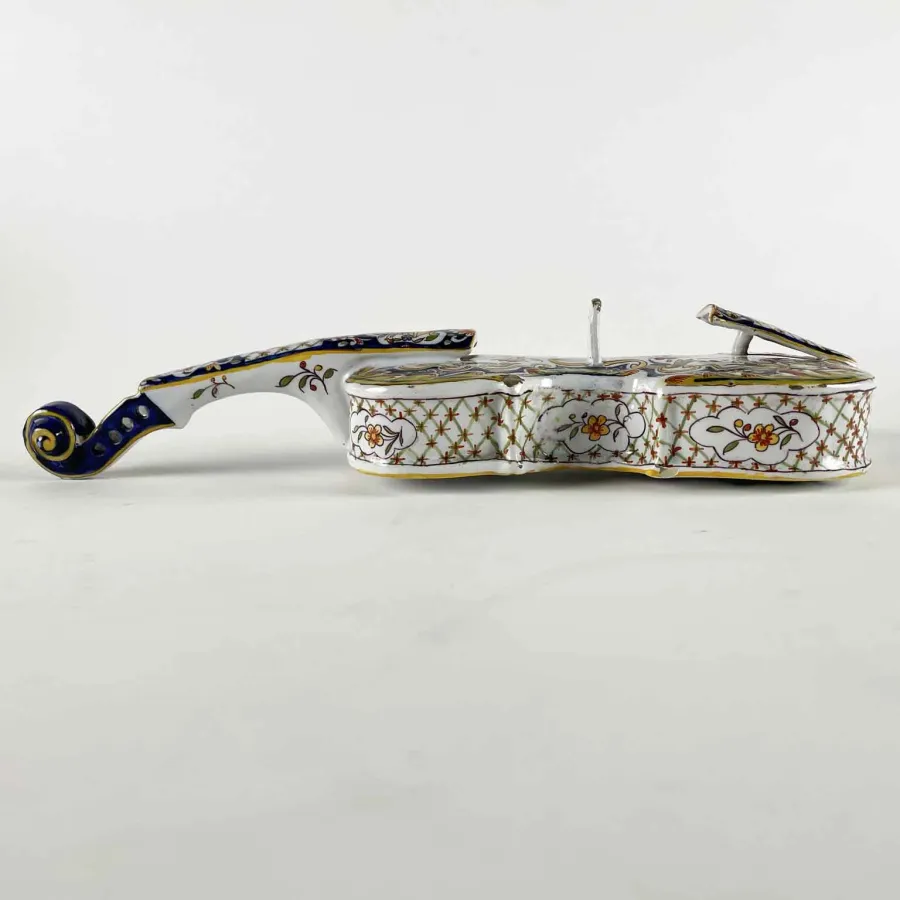
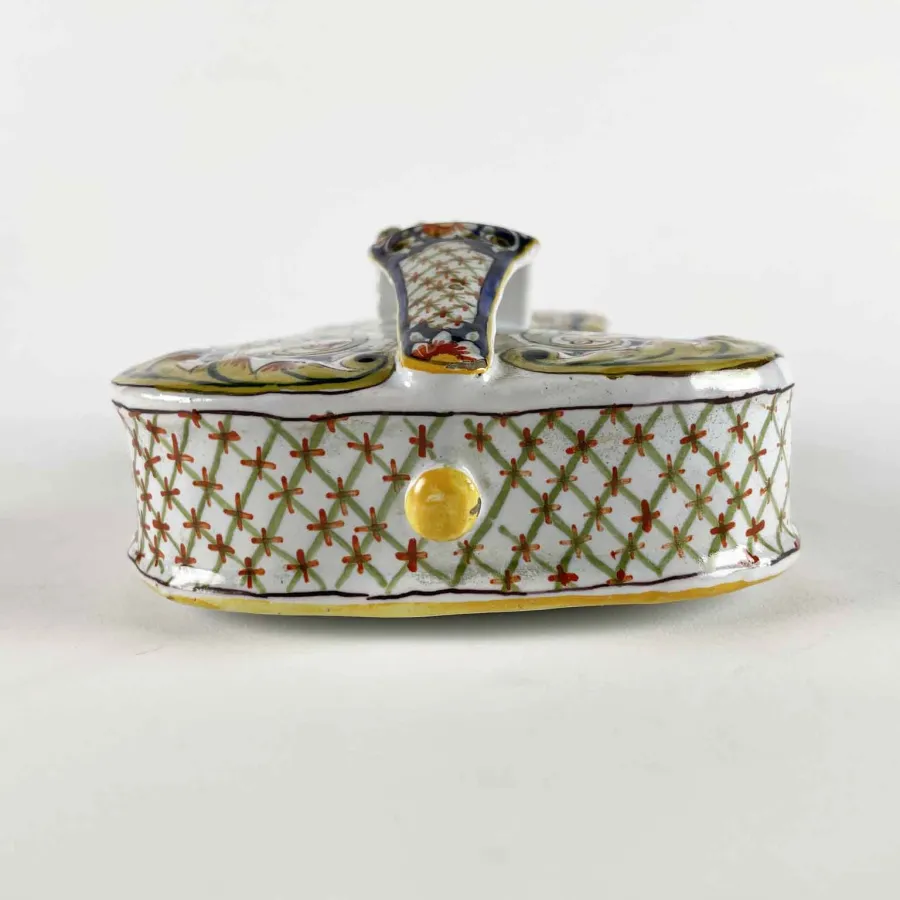
Ceramic antique Rouen violin decoration from the 19th century
Luxury antiques
SKU: ANT-A1323
See other products from category Antique ceramics or from manufacturer Antyki with shipping within 24 hours
Description
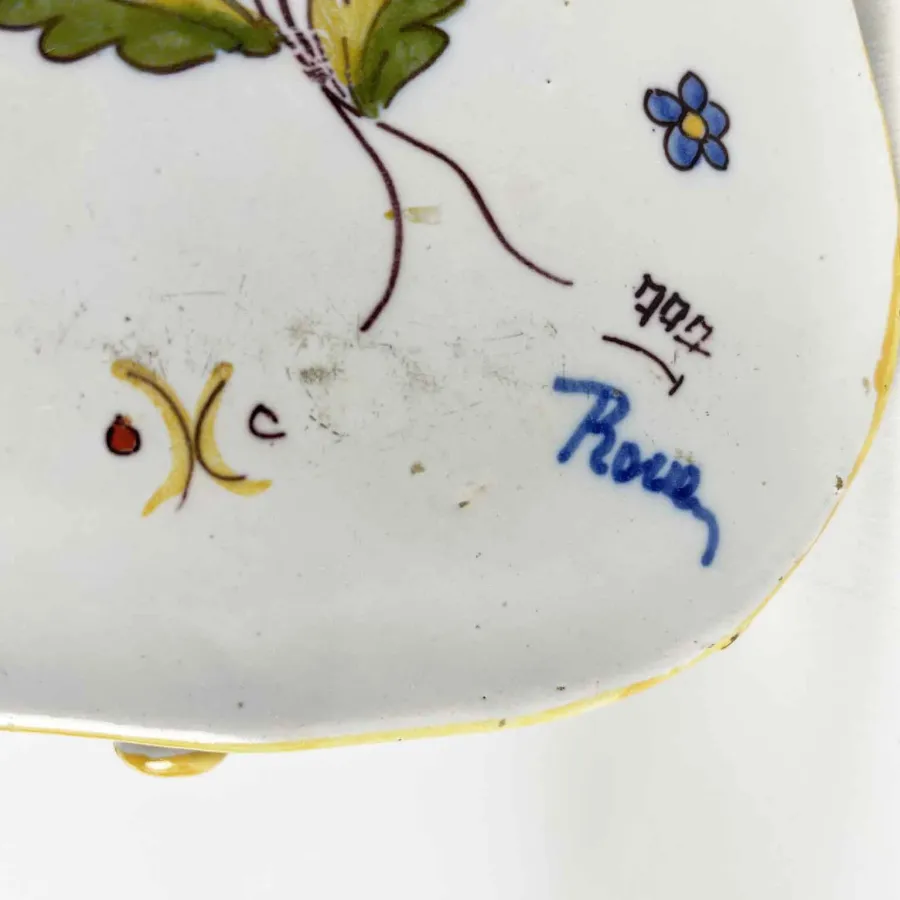
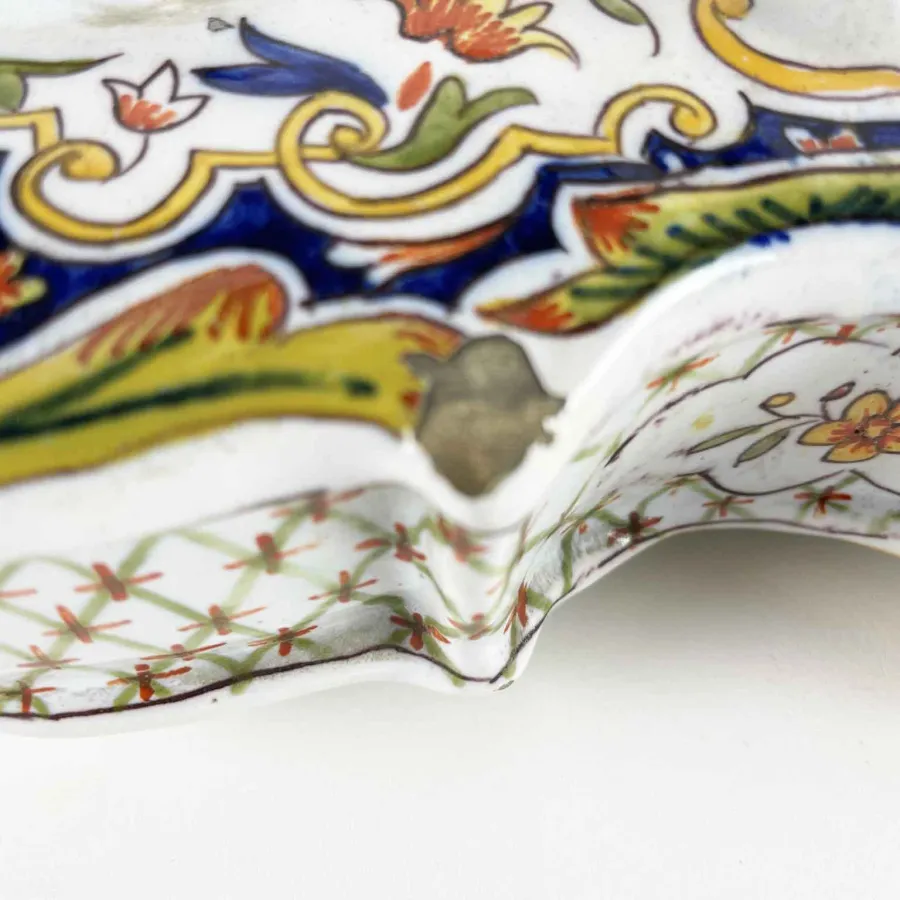
Ceramic violin decoration from Rouen 1800 with a side pocket and two holes for wall hanging via a cord, missing. These majolica violins glazed with tin glaze are entirely decorated in ochre and blue shades with floral motifs, flower vases, cornucopias, and latticework, with arabesques in green tones that are also repeated on the edges featuring shaped images with polychromed flowers. The back of this musical ceramic piece is decorated with other motifs depicting flowers and grapes, as well as a French manufacturer’s inscription at the bottom left: 777 Rouen. This 19th-century instrument is not intended to produce sound; it is rather a rare and valuable piece of decorative art.
In good condition, apart from a small glaze chip visible in the gallery photos. It comes from a private collection.
The most valuable Delft violins, glazed with tin, are housed in the Rouen Ceramic Museum; other pieces include violins from the Loudon collection in The Hague, violins from the Evenepoel collection in Brussels, and violins in the National Museum of the Paris Conservatory.
Exceptional antique furniture and accessories can be an excellent idea for interior decoration. Today, there is a growing number of enthusiasts for high-quality vintage items that possess a distinct character and soul. It’s a nod to history, craftsmanship, and the design of classic and timeless furniture. There are many different styles in antique furniture, each with its own distinctive features.
Many styles characterize antique furniture, but a few are particularly prominent. Eclectic furniture refers to the 19th century, especially the Biedermeier style. Early in this century, styles such as neo-Gothic, Gothic, Rococo, Louis Philippe, and the English Victorian style appeared. Toward the end of the century, these evolved into pseudo-styles of Classicism, Renaissance, and Baroque.
Beautiful Empire-style furniture dates from the late 18th to early 19th century, originating from Napoleon’s reign. It features significant influence from Roman and Greek decorative motifs.
Neoclassical furniture, associated with Louis XVI, also draws heavily from ancient architecture. Noteworthy are antique pieces in Rococo and Louis XV styles. Baroque, derived from the Portuguese word 'barocco'—meaning an irregularly developed pearl—was characterized by highly ornate, luxurious furniture designed to dazzle with splendor and serve as a symbol of opulence. Rarely used materials were selectively chosen to emphasize the grandeur of these pieces.
Today, we can see how the Baroque style has profoundly influenced modern classical furniture, which often echoes the grandeur of the past. The Renaissance style, flourishing in the 15th and 16th centuries, also left a significant mark on furniture design. Renaissance furniture tends to be heavy and robust, utilizing brown stains, moldings, strong bases, and reliefs. These pieces often feature mythological and classical themes, with supports and legs shaped like animals.
Lion paws, eagle heads—these are common motifs in Renaissance style. Many global brands now reproduce furniture inspired by Italian and French craftsmen, reflecting admiration and respect for the finest Renaissance antiques. It’s important to remember that furniture styles varied by country, each with its own character. This is especially relevant when seeking a luxurious antique that fits perfectly into your interior.
The key to stylish antique furniture is originality. This is ultimately crucial for buyers, as the market is flooded with fakes. Luxury Products provides documentation confirming the authenticity of each item, matching the description and photos. We also have appraisers, art experts, and historians from around the world at your disposal.
Attributes / Details
| SKU | ANT-A1323 |
| Manufacturer | Antyki |
| Model | A1323 |
| Material | ceramics, lemon glaze |
| Size | Height: 39 cm Width: 13 cm Depth: 7.5 cm |
| Age | 19th century |
| Year | 1800 |
| Destiny | To home |
See catalog
Reviews
No reviews for this product.