

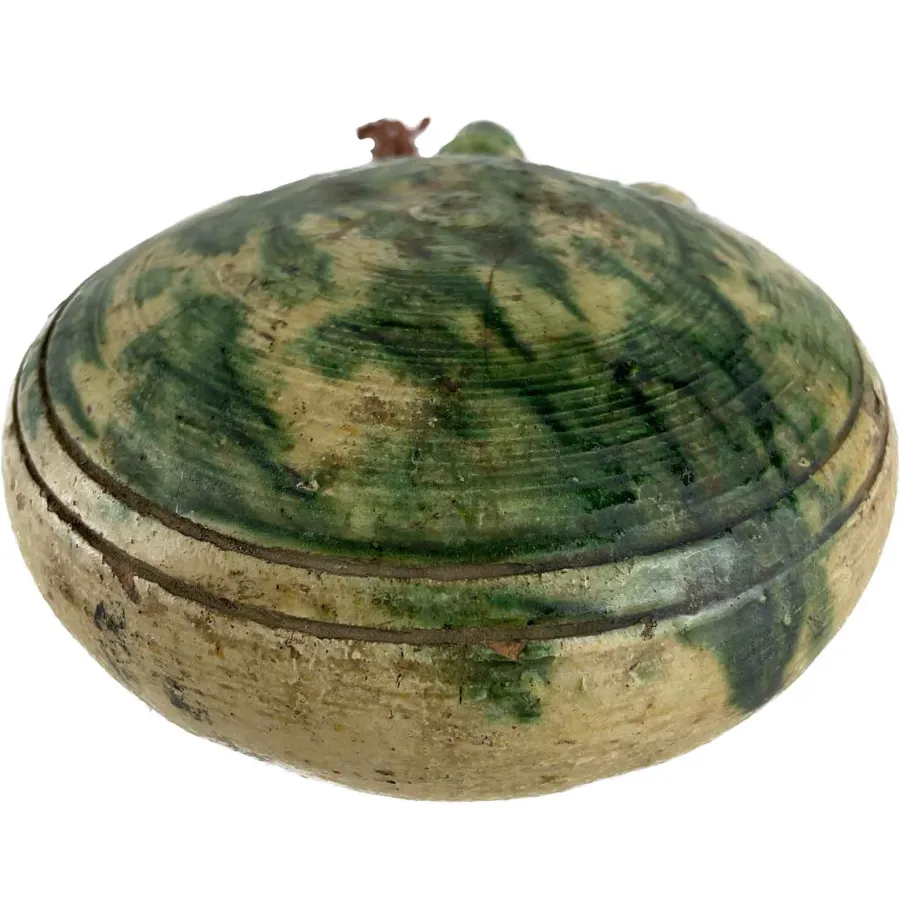
A terracotta traveler's canteen from the 20th century
Luxury antiques
SKU: ANT-A1061h
See other products from category Antique ceramics or from manufacturer Antyki with shipping within 24 hours
Description
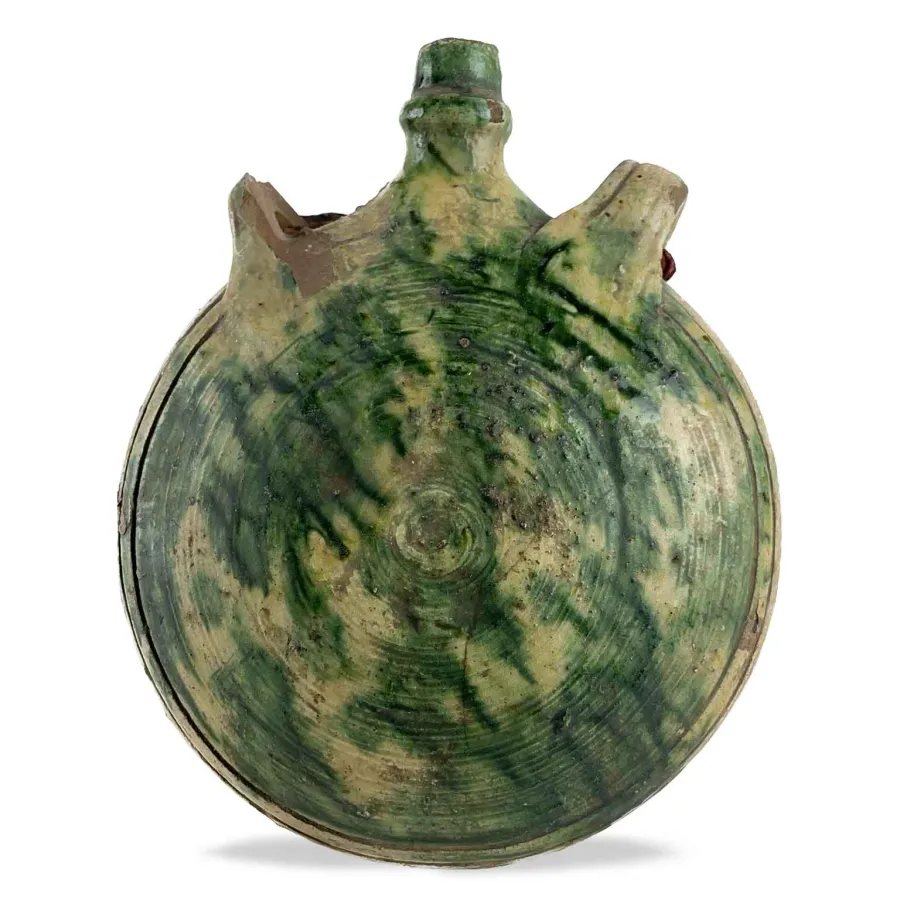
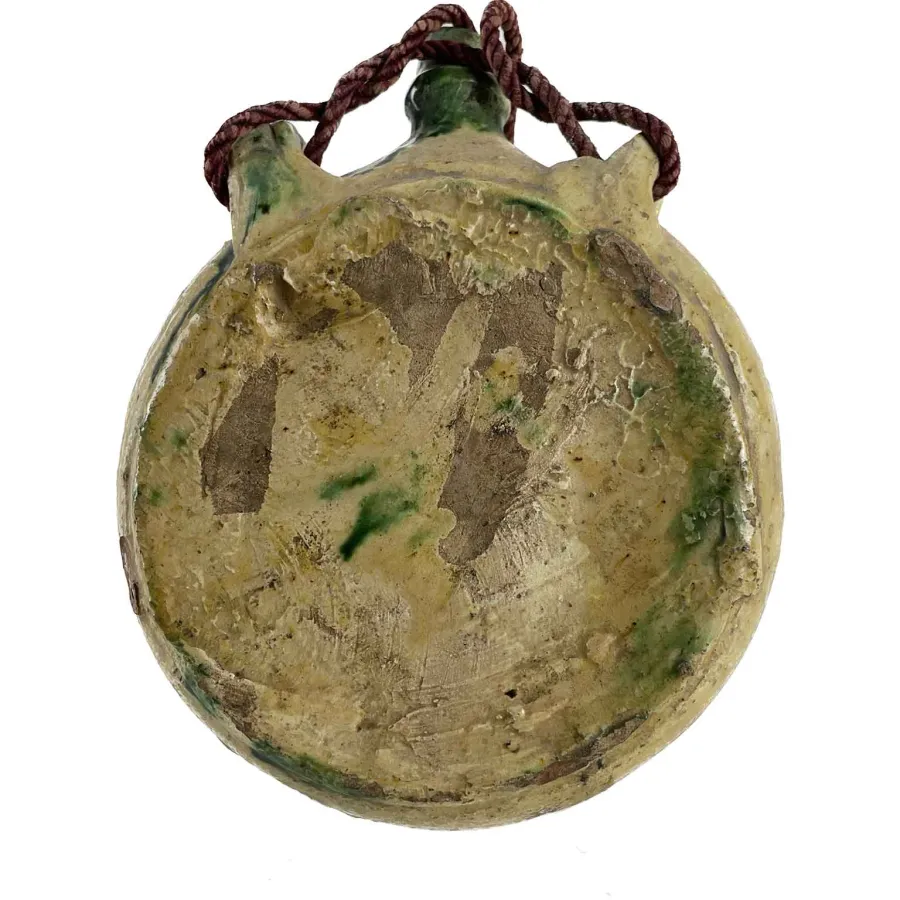
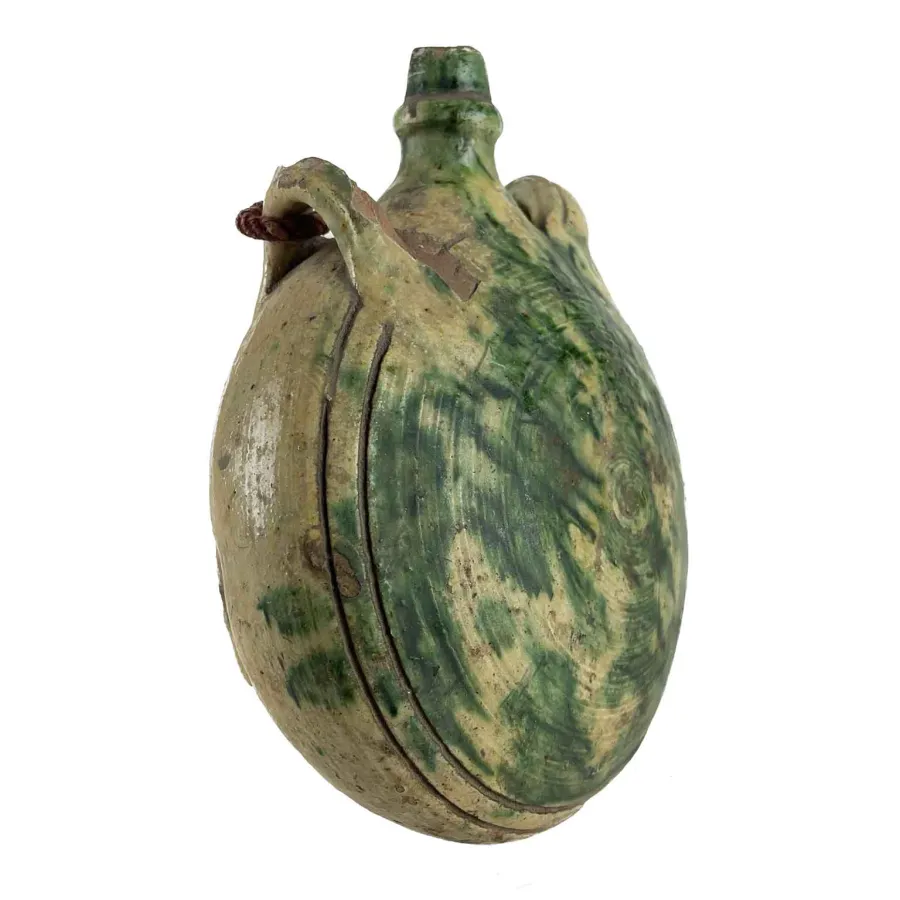
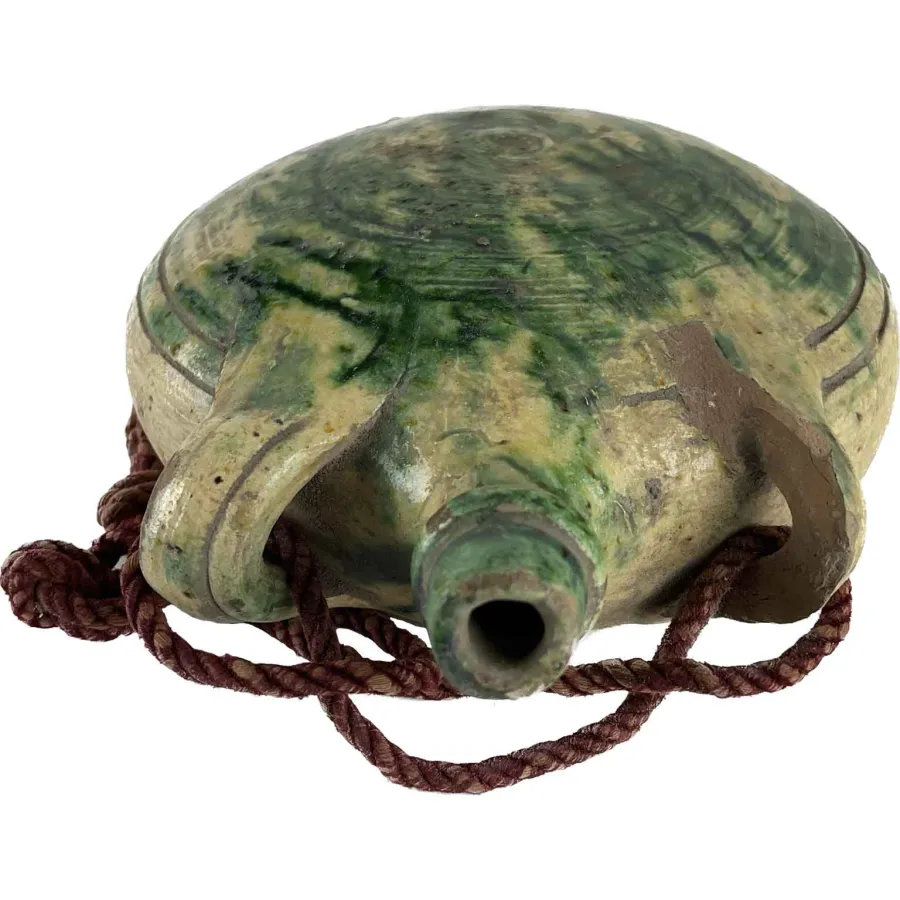
Terracotta travel flask from 1800, lens-shaped, convex on the outside and flat on the inside, without a base, with two side handles for a string (one of which has a partial crack). The terracotta is glazed in an ivory greenish-brown color, marbled with a more intense green. Central Italy, 1800.
These small terracotta bottles were specially designed to store water or other liquids necessary for quenching the thirst of pilgrims during their journey. Relatively small in size, lens-shaped, with the possibility of attaching to a belt or carrying on the shoulder using a string wrapped around the flask and threaded through four loops or perforated sockets on the sides.
In this way, the basic travel tool was soon decorated and enriched with new shapes, both in terms of the plasticity of the flask's material and its typology, leading to the discovery of particular forms, such as a hollow flask, which, equipped with a base, suggests more of a decorative than functional purpose.
The decorations also include primitive graffiti with geometric or floral motifs, enamel coloring, or decoration that may be pictorial, following the common patterns of the period, or, as in the most popular examples, abstract, like in bottles with abstract, almost freeform decoration, where we might think that the decorator simply had colors available for use or finishing.
Beautiful antique furniture and accessories can be an excellent idea for decorating our interiors. Today, there is an increasing number of enthusiasts of high-quality vintage products that have a distinct character and soul. It’s a nod to history, craftsmanship, and the design of traditional and timeless furniture. There are many different styles in antique furniture, each with its own distinctive features.
Many styles characterize antique furniture, but a few key ones stand out. Eclectic furniture from the 19th century is associated with the beloved Biedermeier style. Its early 19th-century variants include neo-Gothic, Gothic, Rococo, Louis Philippe style, and finally the English Victorian style. By the end of the century, these styles evolved into pseudo-classicism, Renaissance, and Baroque styles.
Beautiful Empire-style furniture dates from the late 18th to early 19th century. It originated during Napoleon’s reign, which imposed a style heavily inspired by Roman and Greek ornamentation.
Neoclassical furniture is associated with Louis XVI style, which also draws heavily from ancient architecture. Noteworthy are also antique products in Rococo and Louis XV styles. The Baroque style, derived from the Portuguese word 'barocco'—meaning an irregularly developed pearl—features very ornate furniture designed to shine with splendor and play a significant role in luxury. Materials were chosen selectively to emphasize the grandeur of these pieces.
Today, we can observe how much the Baroque style influenced modern classic furniture, which is often designed with a strong resemblance to the historical period. An important style is also Renaissance, which flourished in the 15th and 16th centuries and left a significant mark on furniture design. Renaissance furniture was quite heavy and massive, using brown stains, moldings, sturdy bases, and reliefs. These products were quite distinctive but also opened new possibilities, such as the construction of credenzas and broadly speaking, chest furniture. The Renaissance also drew inspiration from mythology and ancient times, with supports and legs often taking animal forms.
Lion paws, eagle heads—these are common features in Renaissance style. Currently, many global brands reproduce furniture inspired by Italian and French creators, demonstrating admiration and respect for the history of the most beautiful Renaissance antiques. It’s important to remember that furniture production was perceived differently in each country, so each style had its own character. This is especially important when searching for a luxurious antique piece suited to your interior.
Attributes / Details
| SKU | ANT-A1061h |
| Manufacturer | Antyki |
| Model | A1061h |
| Material | terracotta |
| Size | Height: 19 cm Width: 15.5 cm Depth: 6.2 cm |
| Age | 19th century |
| Year | 1800 |
| Destiny | Universal |
See catalog
Reviews
No reviews for this product.