

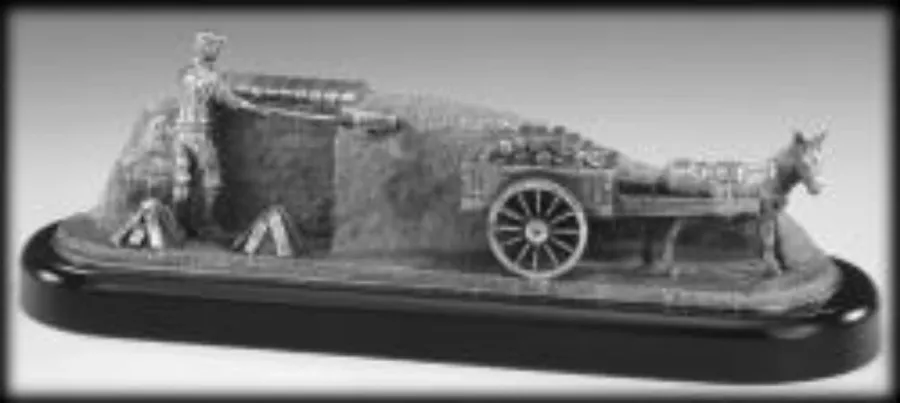
A sculpture depicting a rural genre scene made of pewter
Luxury pewter gifts
SKU: MUL-S11
from manufacturer Mullingar Pewter
Description
Manufactory Mullingar Pewter is a synonym for craftsmanship combined with the highest quality Irish pewter.
Ancient pewter-making craftsmanship was revived in Ireland by Paddy Collins in Mullingar in 1974. Paddy's son, Peter, now runs the company and employs 30 local people. Most of the pewter pieces are still handcrafted in their own workshop by local men and women, specially trained in traditional casting methods, meticulous assembly, and delicate hand finishing.
Acquiring these skills takes years. When producing these exquisite items, the brand consistently applies the highest standards of design and quality control. Most designs are inspired by Celtic crosses and many monuments scattered across the Irish countryside. These original products are practical for everyday use and beautifully decorated with Irish, Celtic, Kells, Woodland, Legend, Religious, and Generic patterns.
Over time, Mullingar pewter has become very popular and highly valued by collectors worldwide.
All soldering is now done using lead-free solder, especially for food or drink items. Their range of creative Irish gifts features many Irish motifs suitable for any occasion.
What is pewter made of
Originally, pewter was made from a mixture of lead and tin. Today, the raw materials consist of 95% tin, with the rest made up of copper and antimony. The brand guarantees that their pewter products are lead-free and completely safe for use with all types of food and beverages.
Attributes / Details
| SKU | MUL-S11 |
| Manufacturer | Mullingar Pewter |
| Material | The metal content of all the above products is 92-95% tin with a balanced content of copper and antimony. The metal is lead-free and complies with EU, FDA, BS and Proposition 65 standards. |
| engraver | YES |
| Guarantee | 24 months |
| Additional information | This intricately carved piece tells the story of how the turf was cut from the swamp by hand, using a two-sided shovel called a sleán. Saving the turf required turning each turf to allow sun and wind to dry it. The turf was then placed vertically or "propped" for further drying. Putting sod was a physically demanding job and required five or six sods to be placed vertically and leaned against each other. Finally, the turf was brought home and stored in sheds or stacks, and then used during the winter months for heating and cooking. I am pleased to report that it is still used in Ireland. |
See catalog
Reviews
No reviews for this product.