

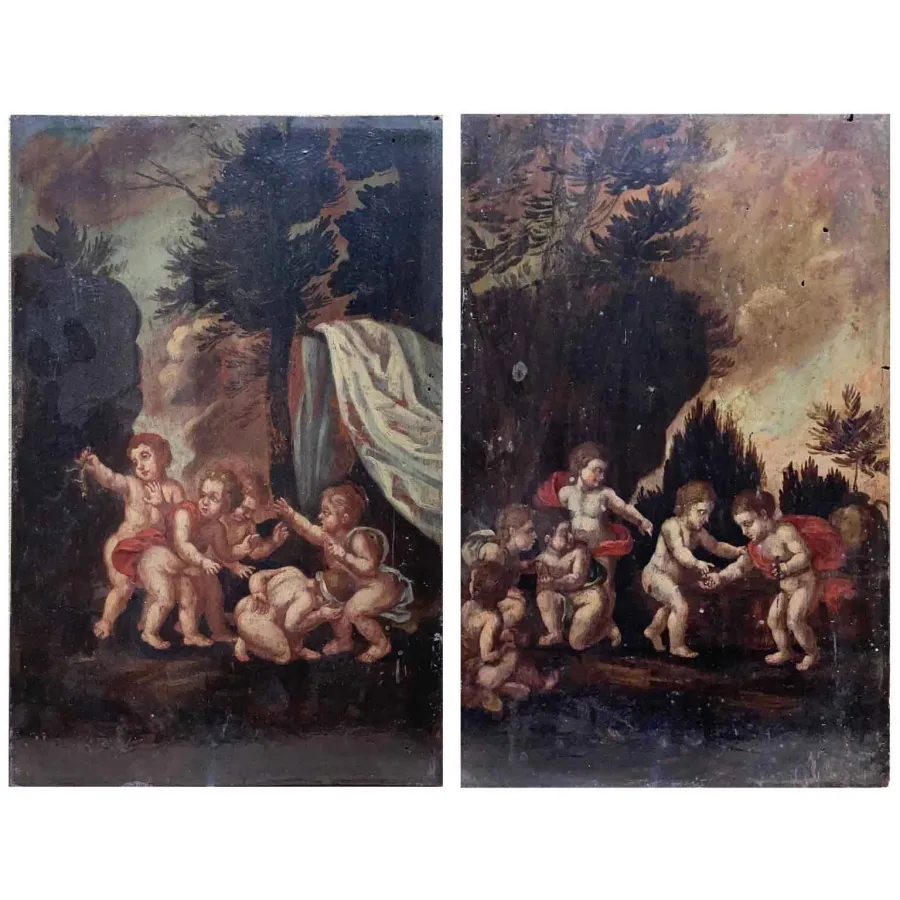
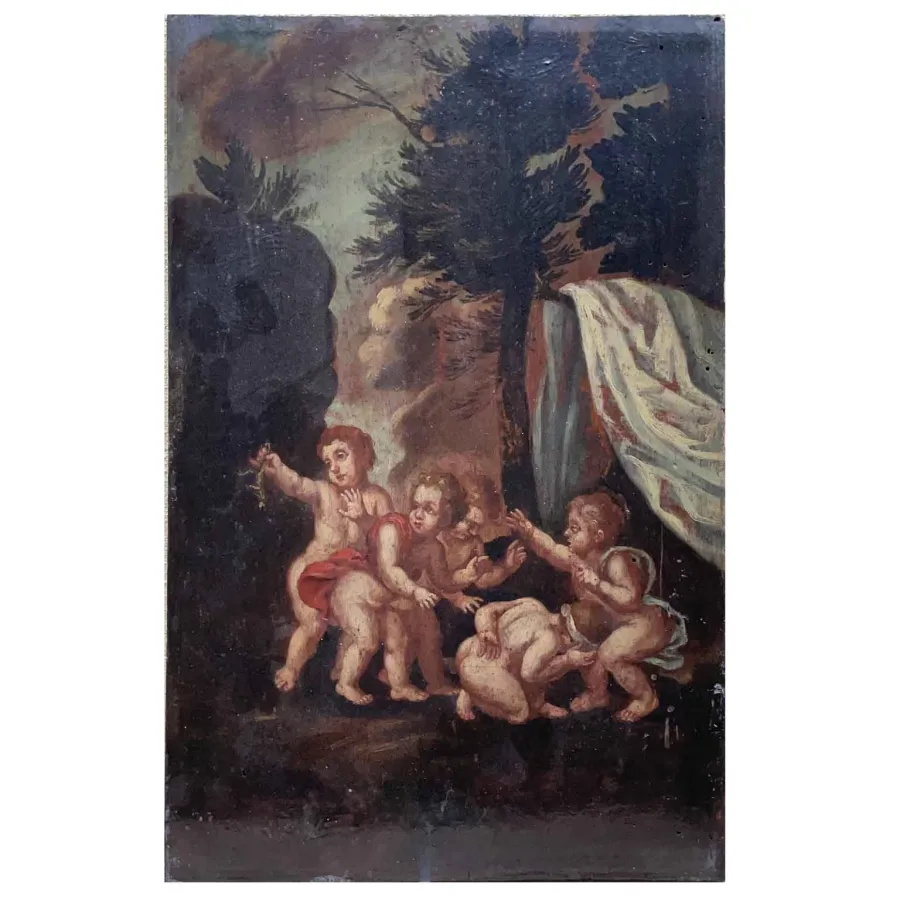
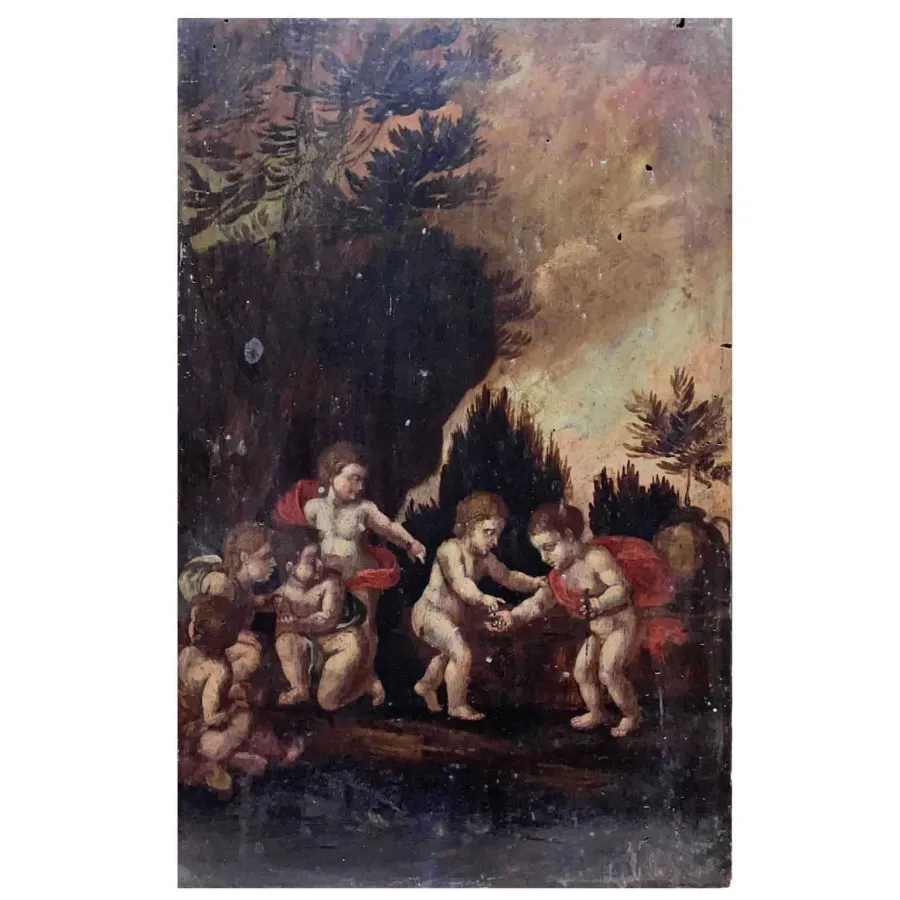
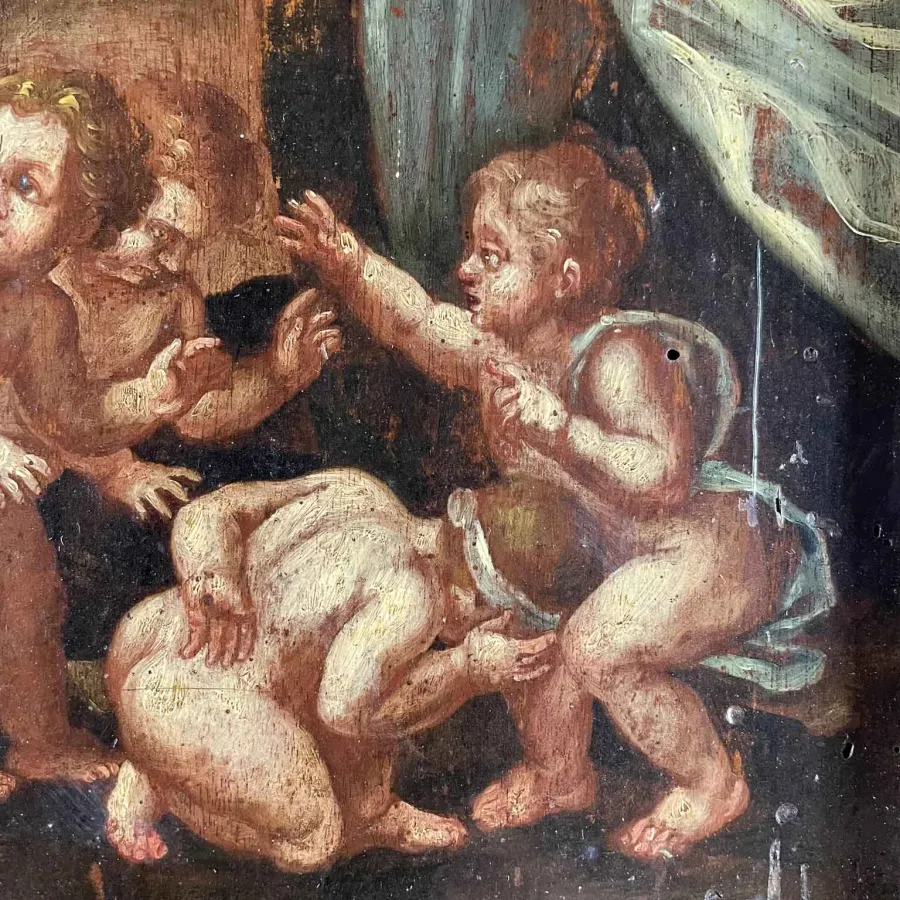
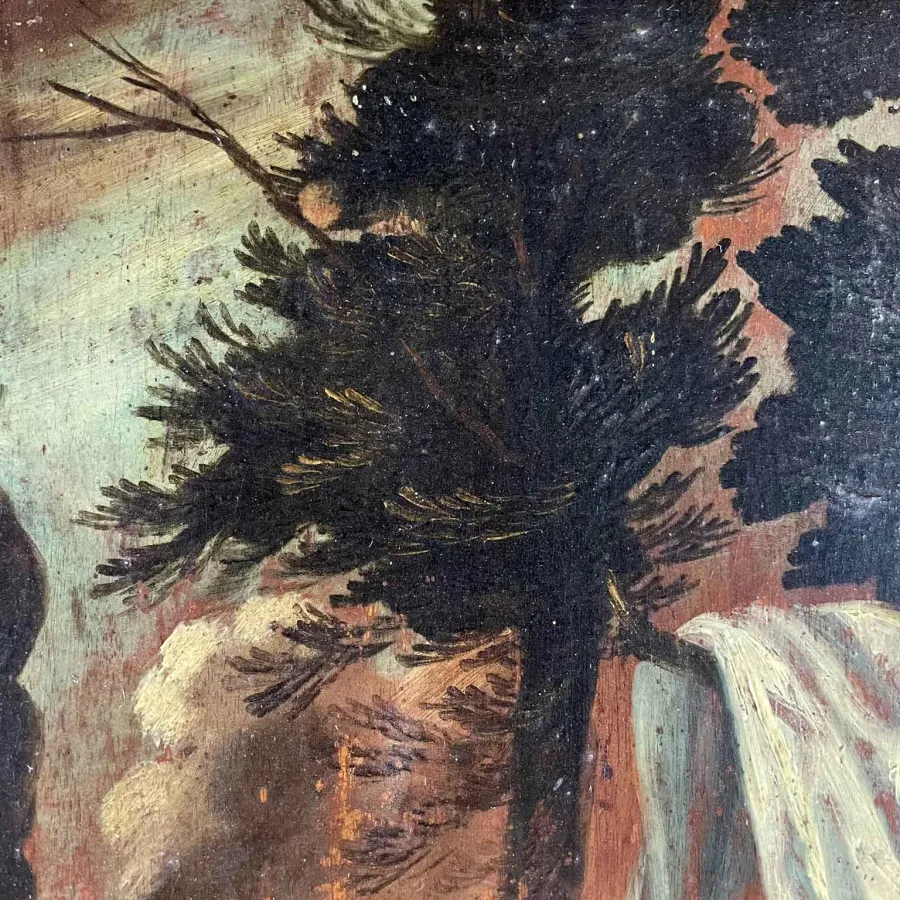
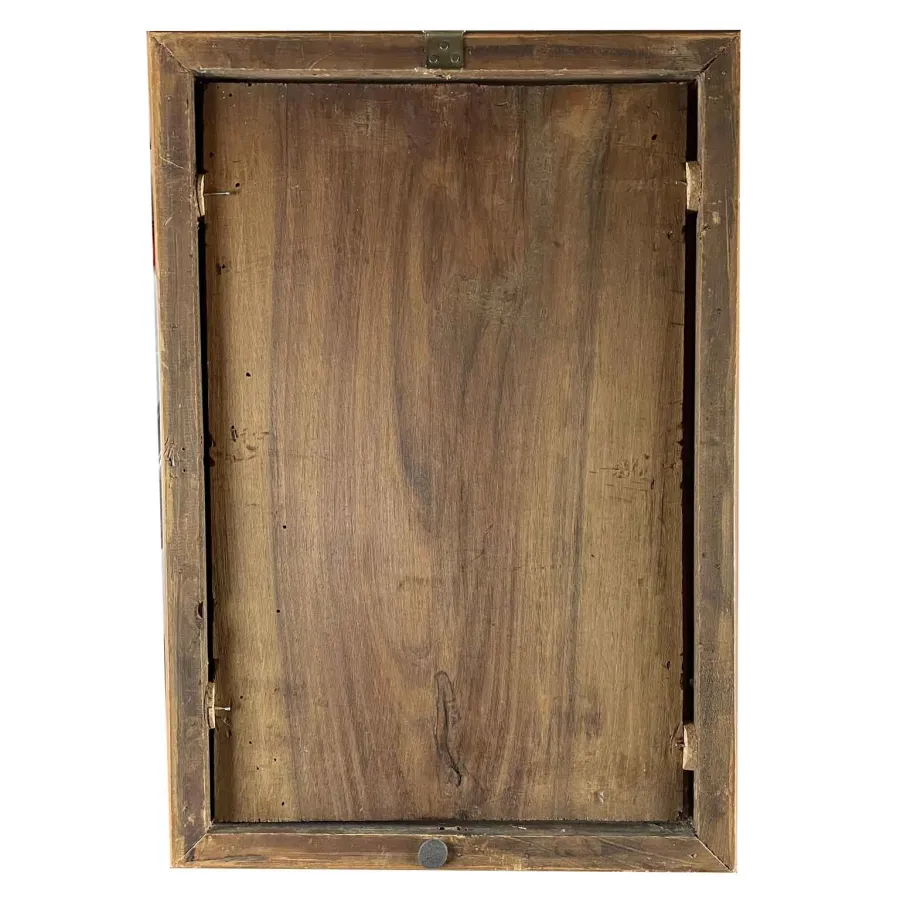
A pair of putti landscapes painted in oil on walnut board in the mid-19th century
Unique antique furniture and accessories
SKU: ANT-A1041
See other products from category Oil paintings or from manufacturer Antyki
Related products by category

Dance in the DarkOil on board 50x60From the series dedicated to ballet



The Pergola works reveal this touch of antiquity, evoking the past. A well-harmonized image inspired by the paintings of French master Léon Augustin Lhermitte. Lhermitte preferred to depict rural sce
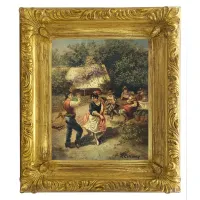
Painter Pietro Colonna depicts a cheerful and colorful peasant folk dance in this painting. The artwork is inspired by the Italian school of the 19th century.
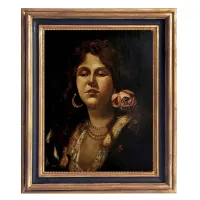
The painting by artist Ciro De Lucia depicts a portrait of a young woman from the local community, inspired by Neapolitan art from the 16th century.
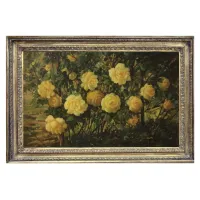
The undisputed master of still life, Giovanni Bonetti reveals his originality and skillful mastery in this precious floral composition. Clear chromatics, studied graphics, balanced forms, a distinctly
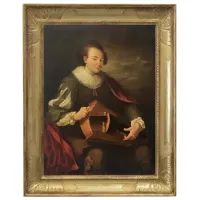
Giovanni Faliero's portrait depicts an elegant musician, with his figure well-lit and accentuated by strong contrasts against shadowed areas. The Baroque-style painting is inspired by the Neapolitan s
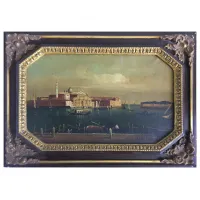
Giancarlo Gorini's canvas is an extraordinary work of Italian landscape painting. Gorini's paintings are a tribute to Venice and the great Venetian painter Canaletto, who in this way become a spectacl
Description
Stylish antique furniture and accessories can be an excellent idea for decorating our interiors. Today, there is an increasing number of enthusiasts of high-quality vintage products that possess a distinct character and soul. This is a nod to history, craftsmanship, and the design of classic and timeless furniture. There are many different styles in antique furniture, each with its own distinctive features.
Many styles characterize antique furniture, but we can highlight a few of the most important. Eclectic furniture styles originate from the 19th century, during which the prevailing Biedermeier style was popular. Its early 20th-century variants include neo-Gothic, Gothic, Rococo, Louis Philippe style, and finally the English Victorian style. By the end of the century, these styles evolved into pseudo-classicism, Renaissance, and Baroque.
Empire-style furniture dates from the late 18th to early 19th century. It was influenced by Napoleon’s reign, which imposed a strong resemblance to Roman and Greek decorative motifs.
Neoclassical furniture reflects the Louis XVI style, which also draws heavily from ancient architecture. Interesting and noteworthy are antique products in Rococo and Louis XV styles. Next is Baroque, a term derived from the Portuguese 'barocco'—meaning an irregularly developed pearl. These were highly ornate, luxurious pieces designed to radiate splendor and play a significant role in opulence. Materials were selectively chosen to emphasize the grandeur of these items.
Today, we can observe how much the Baroque style has influenced modern classic furniture, which is often designed with a strong resemblance to the historical period. An important style is Renaissance, which flourished in the 15th and 16th centuries and left a significant mark on furniture craftsmanship. Renaissance furniture was quite heavy and robust, often using brown stains, cornices, sturdy bases, and relief decorations. These were quite distinctive pieces, but they also opened up new possibilities, such as the construction of credenzas and broadly speaking, chest-type furniture. During this period, there was also an interest in mythology and antiquity, so supports and legs often took animal forms.
Lion paws, eagle heads—these are common motifs in Renaissance style. Currently, many global companies reproduce furniture inspired by Italian and French artisans, paying homage to and preserving the history of the most beautiful Renaissance antiques. It’s important to remember that each country perceived furniture production differently, so each style had its own unique character depending on the nation. This is especially important when searching for an exclusive antique that suits your interior.
The most important aspect of stylish antique furniture is originality. Ultimately, this is crucial from the buyer’s perspective, as the market is flooded with many forgeries. Luxury Products provides a certificate confirming the product’s authenticity and compliance with the description and photos. We also have experts in art appraisal, historians, and specialists from around the world at your disposal.
Attributes / Details
| SKU | ANT-A1041 |
| Manufacturer | Antyki |
| Model | A1041 |
| Material | wood |
| Size | 41x27 cm |
| Age | 19th century |
| Year | 1800 |
| Guarantee | 24 months |
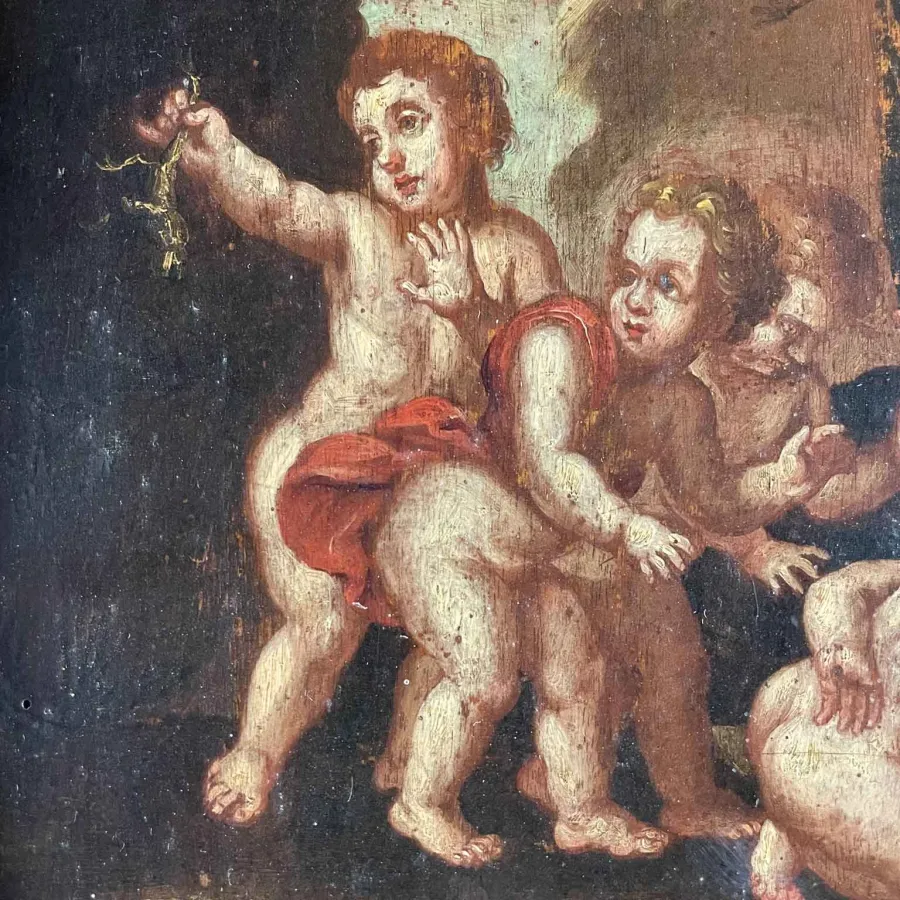
| Additional information | A pair of putti landscapes painted in oil on walnut board. In the first painting, in front of the curtain, in the foreground are portraits of five putti frightened by the capture of a lizard held in his hand by one of them; in the second, a group of six putti, partially covered by red cloths, gather around an exchange of coins between two of them. In both, we see a forested landscape in the background. Two antique tables with angels are presented in a modern gilded frame in good condition, with small holes left by woodworms (they have been disinfected) and have a significant finishing varnish. They were made in Italy in the mid-19th century. |
See catalog
Reviews
No reviews for this product.