

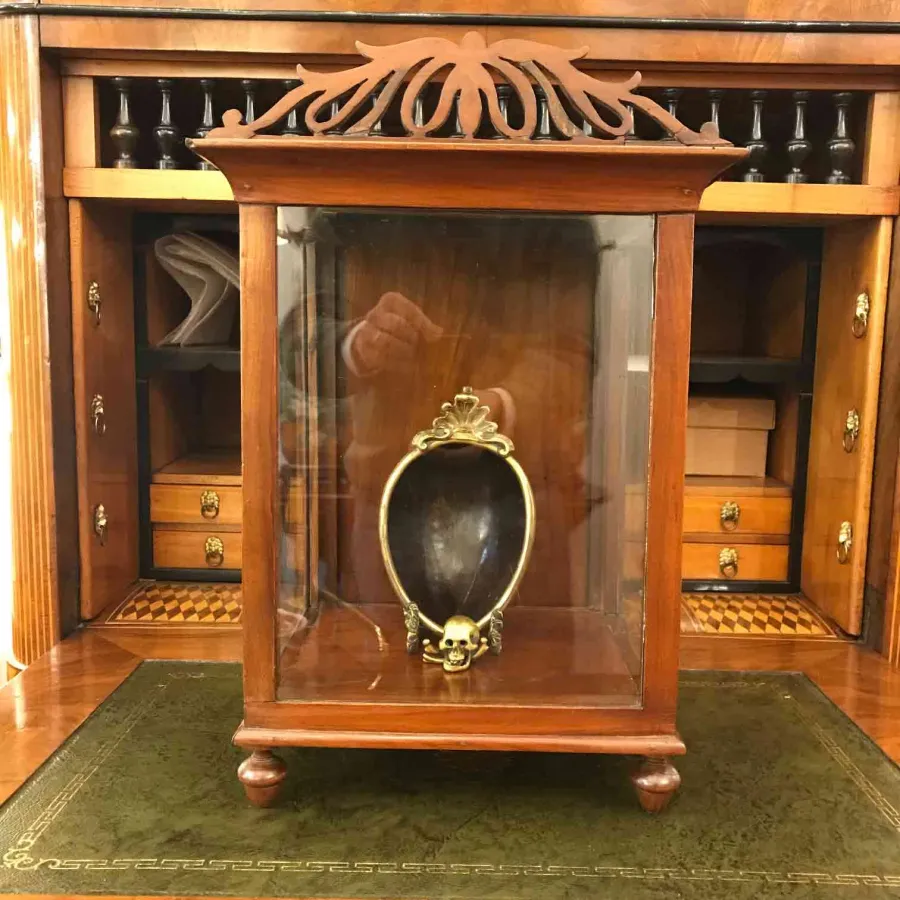
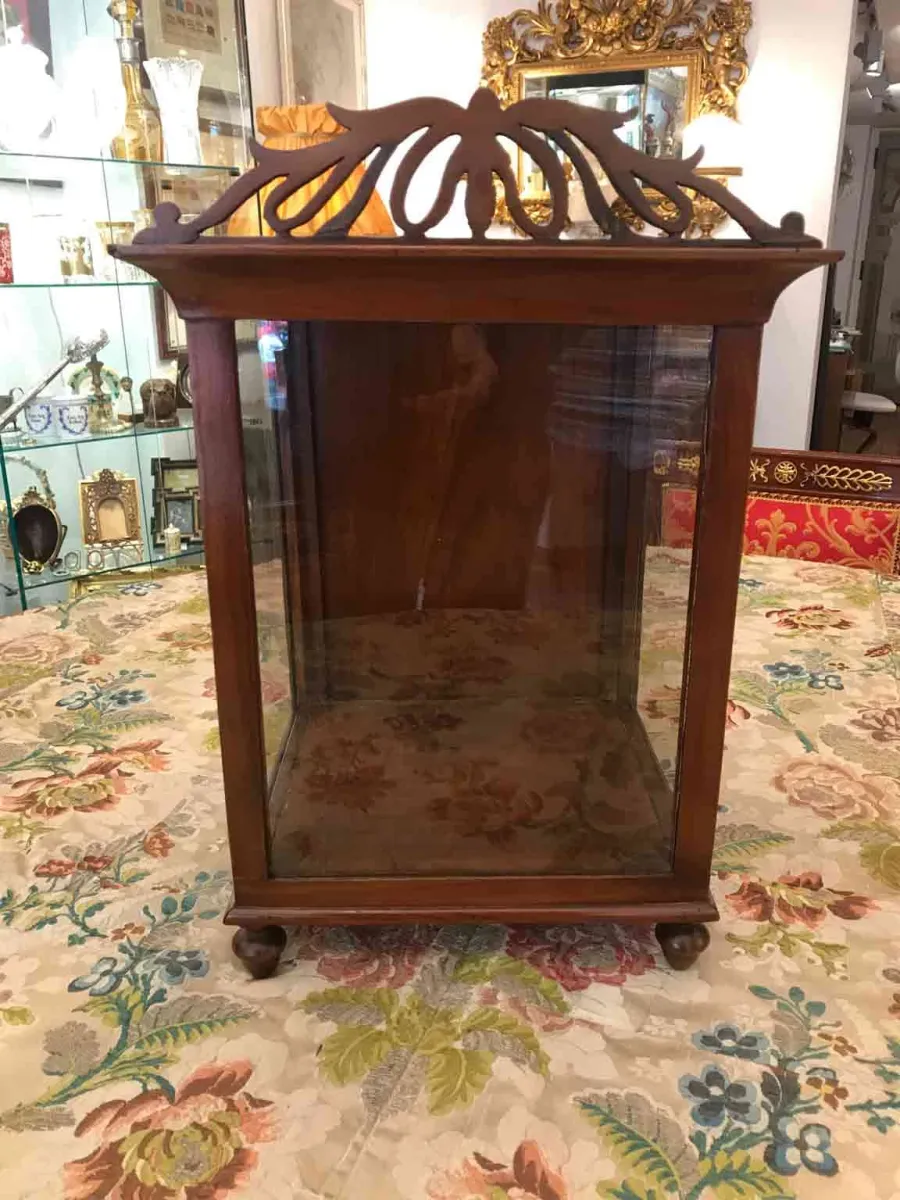
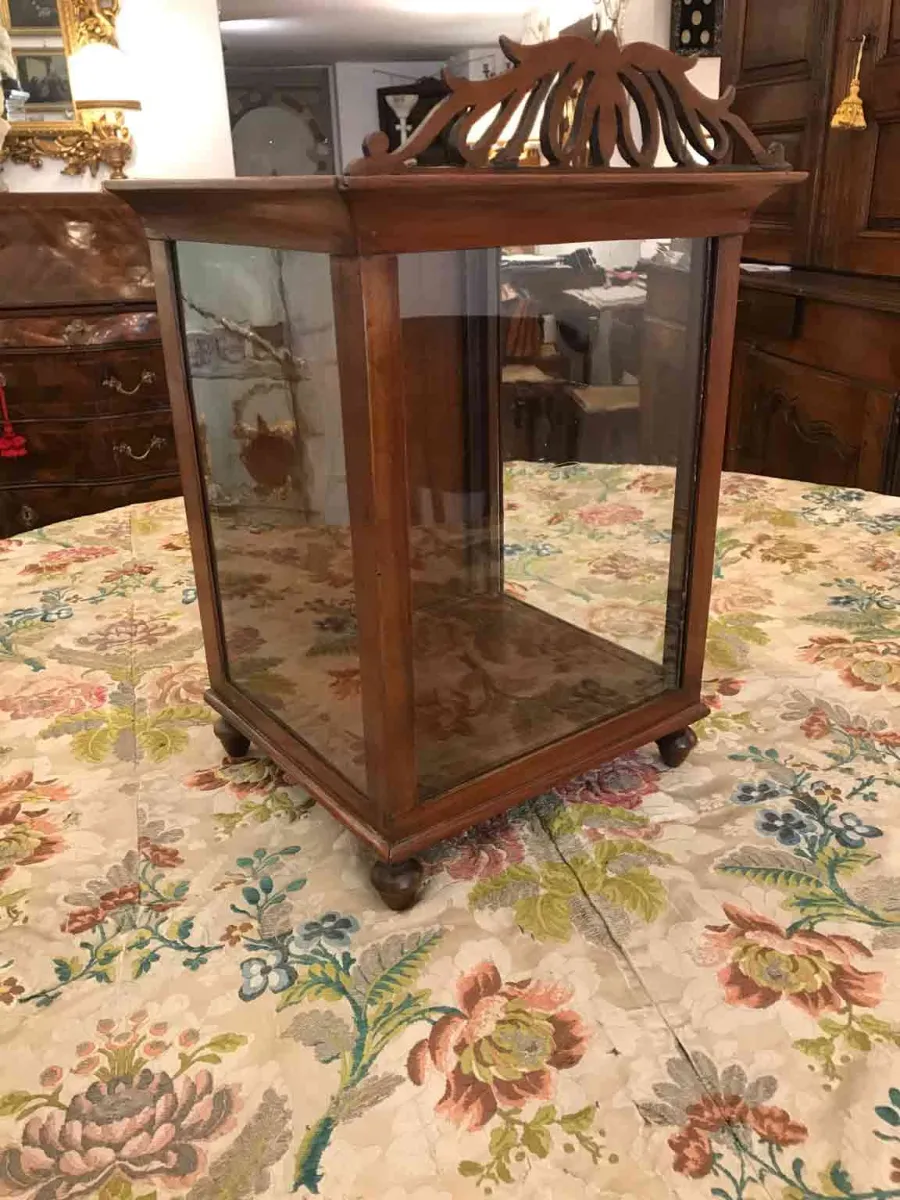
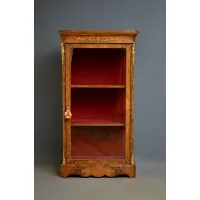
A historic, 19th-century display case, perfect for displaying a small sculpture
Exclusive antique furniture and accessories
SKU: ANT-A472
See other products from category Antique display cabinet or from manufacturer Antyki
Related products by category
Ebonized Poplar Wood Case from the early 19th century with modern glass accessible from the back panel, hinged and lockable with a latch. The sides are decorated with a diamond-shaped frame. The inte
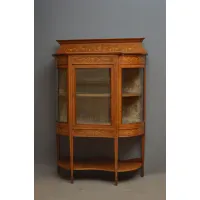
Stunning Edwardian cabinet, mahogany and inlaid with porcelain, featuring a shaped and inlaid stand, a molded cornice above neoclassical intarsia for the frieze, a single glass shelf behind doors, all
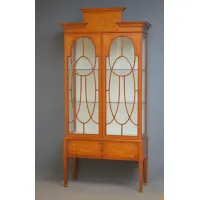
Exceptional Edwardian display cabinet made of satin with a cavetto cornice above a finely inlaid stand and a pair of glazed doors enclosing 2 glass shelves and a ceiling interior, all equipped with an
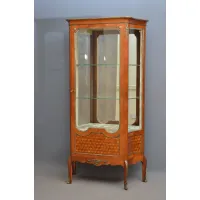
19th-century tulip tree and stained glass window with a rosewood tree, featuring glazed doors with inlaid parquet panels spanning 3 shelves and flanked by concave glass sides, all decorated with ormol
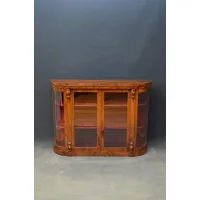
Elegant Victorian-style display cabinet made of walnut, topped with a decorative crest above a pair of glazed doors surrounding a crushed velvet interior, all adorned with carved small sculptures and
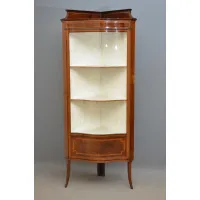
High-quality Edwardian mahogany and an inlaid display cabinet with serpentine outline, featuring a contoured stand and glazed doors with a cross-panel, equipped with an original working lock and
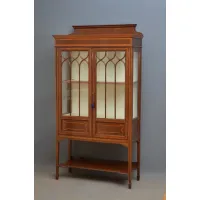
Elegant Victorian-style display cabinet in inlaid mahogany, with a shaped stand (optional) and a satin finish with horizontal stripes above a pair of glazed doors with inlaid panels, surrounding a rel
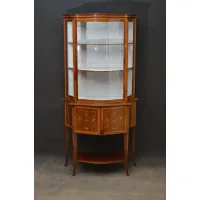
Mahogany Sheraton Revival, Edwards and Roberts, and inlay with serpents, with a cavetto cornice above glazed doors surrounding the interior covered in velvet, protruding base with richly inlaid pair o
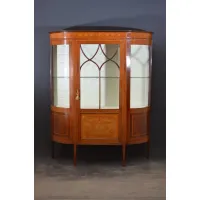
Stunning Edwardian, mahogany, and inlaid display cabinet with a molded cornice above the veneers and ribbon inlay with frieze, astragal glazed doors with an inlaid panel below featuring 2 shelves, all
Excellent and very attractive Victoria walnut wood display cabinet, with a figural top above an inlaid recessed frieze with satin wood, 2 glazed sides, and glazed doors equipped with an original worki
Description
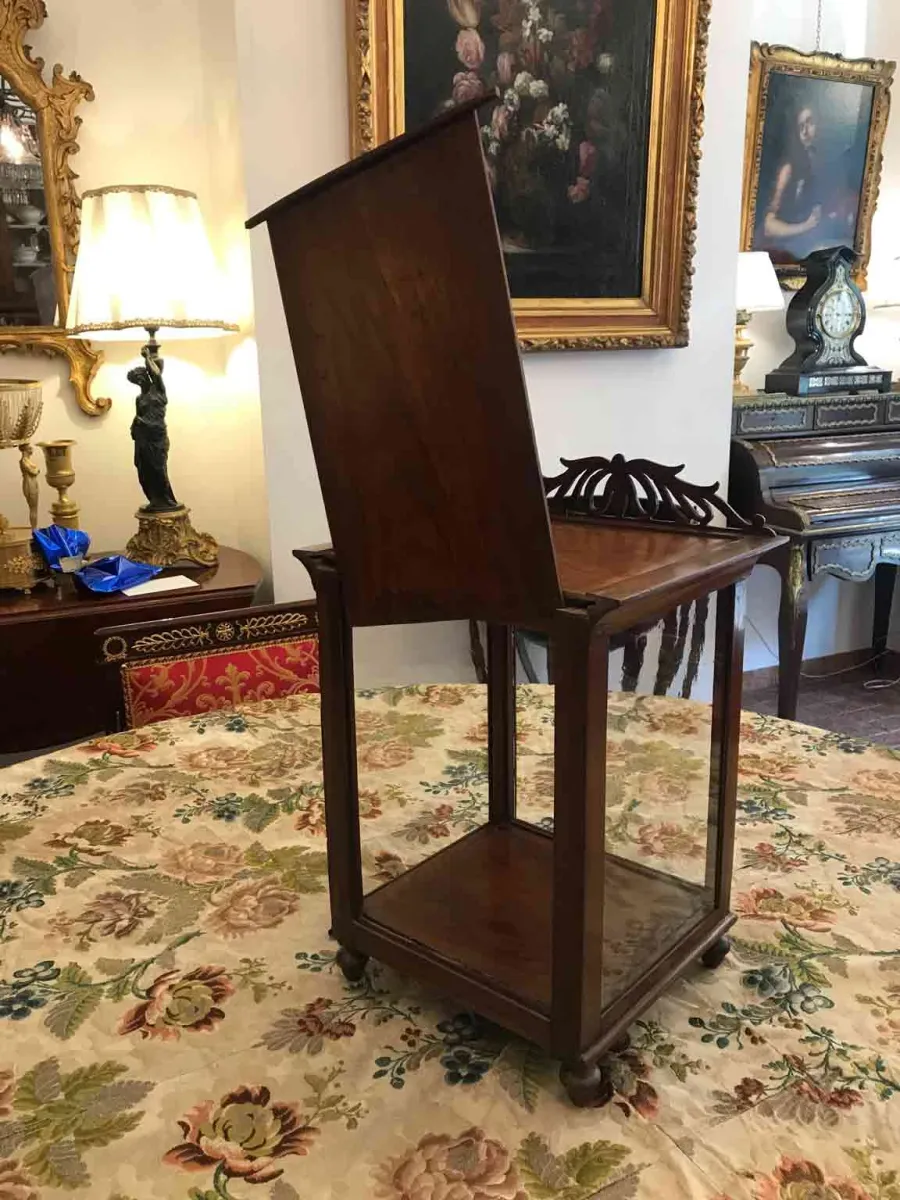
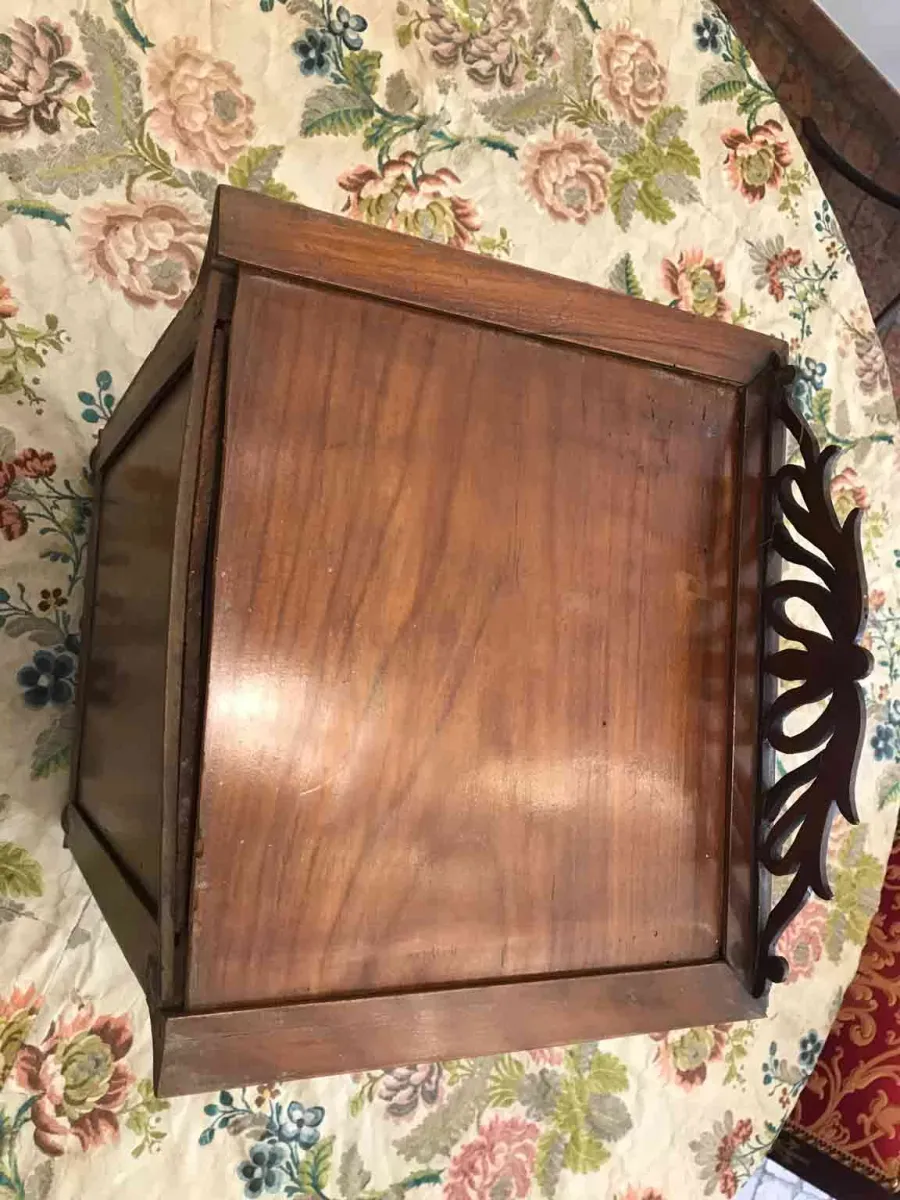
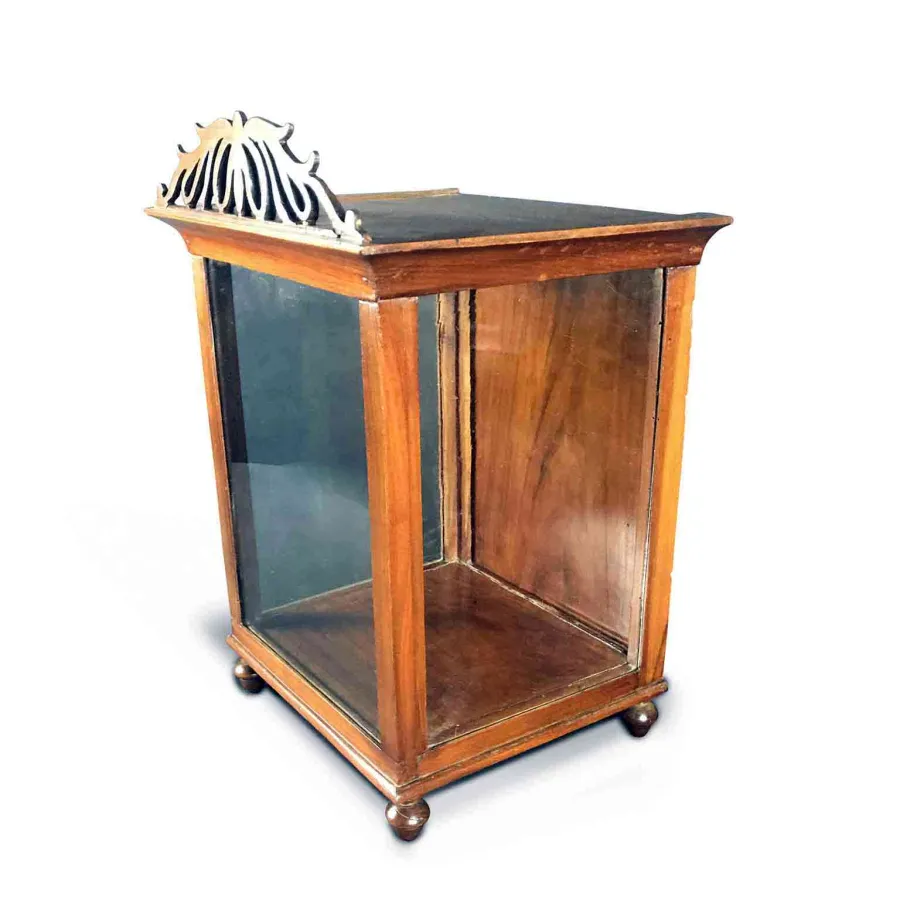
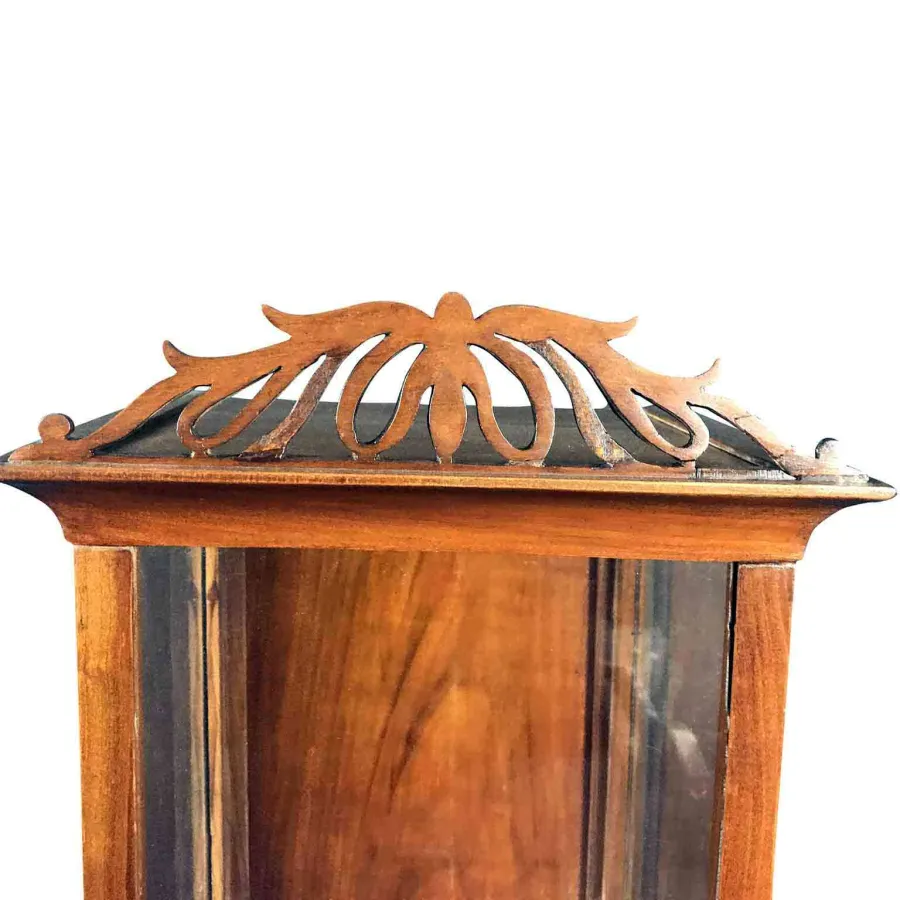
Tabletop cabinet made of catalog walnut with a sliding opening in the lower panel. The cap is pierced with elongated leaves (two of which are integrated). The front and side panels are original glass.
This antique, 19th-century display cabinet is a small showcase, perfect for exhibiting a small sculpture, precious items, or collectibles. It is a tabletop piece, as evidenced by the four legs, but it can be transformed into a wall-mounted cabinet with a back panel featuring special hooks.
Central Italy, early 19th century.
Beautiful antique furniture and accessories can be an excellent idea for decorating our interiors. Currently, there is a growing number of enthusiasts of high-quality vintage products that have a distinct character and soul. This is a nod to history, craftsmanship, and the design of classic and timeless furniture. There are many different styles in antique furniture, each with its own distinctive features.
Many styles characterize antique furniture, but a few are particularly notable. Eclectic furniture refers to the 19th century, dominated by the Biedermeier style. Its early variations include neo-Gothic, Gothic, Rococo, Louis Philippe style, and finally the Victorian style. Toward the end of the century, these styles blend into pseudo-classicism, Renaissance, and Baroque influences.
Empire-style furniture and accessories date from the late 18th to early 19th century. This style originated during Napoleon’s reign, heavily inspired by Roman and Greek decorative motifs.
Neoclassical furniture reflects the Louis XVI style, which also draws heavily from ancient architecture. Noteworthy are antique products in Rococo and Louis XV styles. Baroque, derived from the Portuguese word 'barocco'—meaning an irregularly developed pearl—was characterized by highly ornate furniture meant to dazzle with glamour and serve a luxurious role. Materials were chosen selectively to emphasize the grandeur of these pieces.
Today, we can see how much the Baroque style influenced modern classic furniture, which often resembles the historical period. The Renaissance style also had a significant impact, flourishing in the 15th and 16th centuries and leaving a lasting mark on furniture design. Renaissance furniture was quite heavy and robust, often finished with brown stains, moldings, strong bases, and relief decorations. These products were quite distinctive but also introduced new possibilities, such as the construction of credenzas and broadly defined chest furniture. Mythology and ancient times inspired the design, with supports and legs often taking animal forms.
Lion paws, eagle heads—these are common motifs in Renaissance-style furniture. Today, many global brands reproduce such pieces, inspired by Italian and French artisans, as a tribute to the beauty and history of Renaissance antiques. It’s important to remember that furniture production varied by country, giving each style a unique character. This is especially important when seeking exclusive antique pieces suited to your interior.
The key aspect of prestigious antique furniture is originality. This is ultimately crucial for buyers, as the market is flooded with counterfeits. Luxury Products provides documentation confirming the product’s authenticity and compliance with the description and photos. We also have appraisers, art experts, historians, and specialists from around the world at your disposal.
Attributes / Details
| SKU | ANT-A472 |
| Manufacturer | Antyki |
| Model | A472 |
| Material | walnut wood |
| Size | Height: 40 cm Width: 30 cm Depth: 26 cm |
| Age | 19th century |
| Year | 1801 |
| Destiny | To living room |
See catalog
Reviews
No reviews for this product.