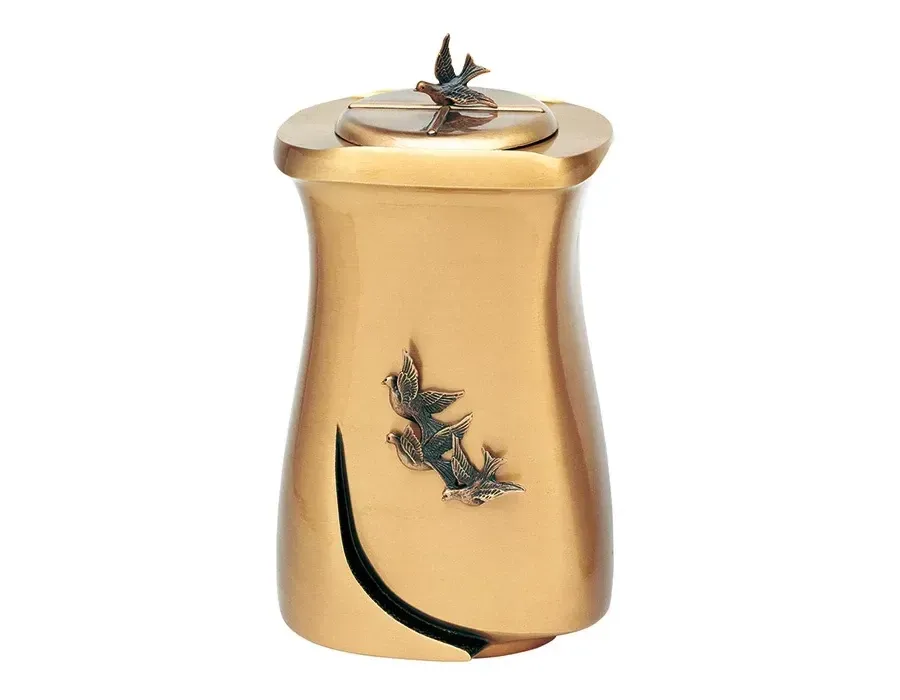
Storing urns with the remains of the deceased at home is a topic that evokes strong emotions and numerous controversies, both legally and religiously. Many people, wishing to honor the memory of their loved ones, consider keeping the urn with the deceased's ashes in the privacy of their home, in a place close to the family's heart. Why can't you keep an urn at home? Not everyone is aware that this practice is prohibited in Poland.
Why can't you keep an urn at home? - Legal and ethical aspects
Along with contemporary cultural and social changes, the topic of storing urns with the remains of loved ones at home is gaining increasing interest. However, in Poland, the law explicitly prohibits storing urns with ashes in private apartments, and this decision results from various legal, religious, sanitary, and moral factors.
Polish law regarding burial and urn storage
In Poland, issues related to the burial and storage of the deceased’s ashes are strictly regulated by the Act of January 31, 1959, on cemeteries and the burial of the dead. The provisions of this act aim to protect the dignity of the deceased and ensure appropriate sanitary standards. The law clearly states that ashes of the deceased can only be stored at cemeteries or in specially designated places, such as columbaria.
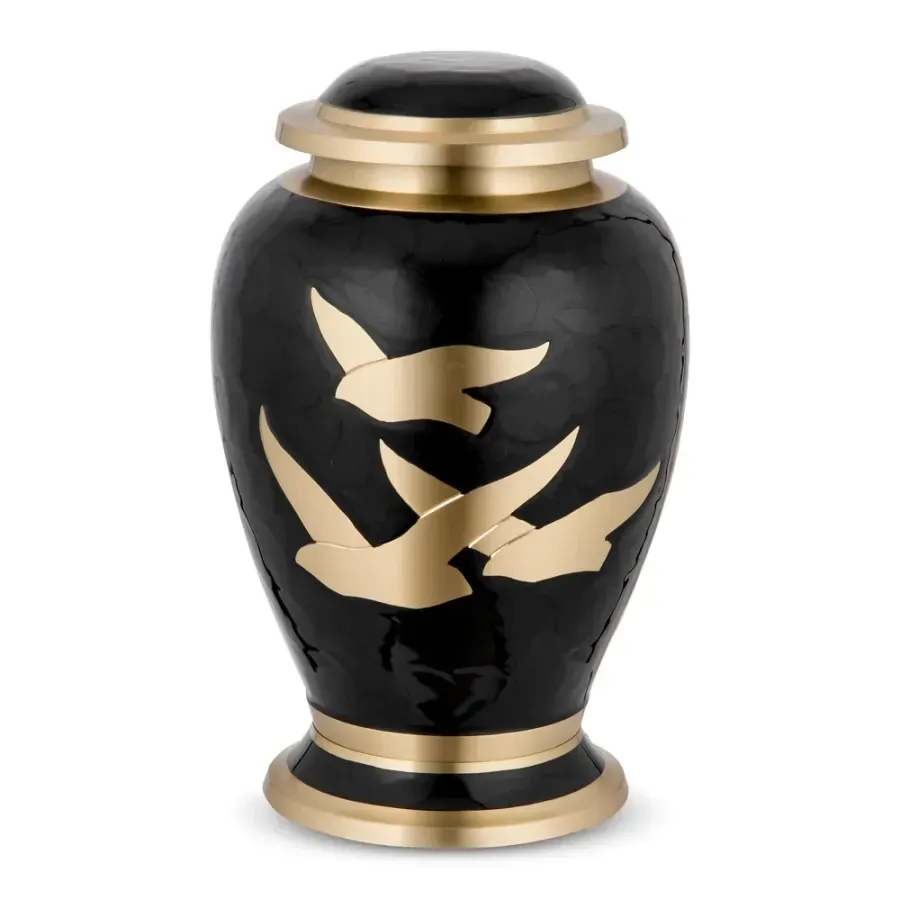
According to regulations, an urn with cremated remains must be buried in a cemetery, placed in an earthen grave or a mausoleum. Alternatively, it can be placed in a columbarium, a special structure designed for storing urns. These regulations are intended to ensure respect for the dignity of the deceased and prevent undesirable practices related to storing urns in private places.
Religious and traditional issues
In Poland, a country with strong Catholic traditions, the manner of burial and handling of the deceased’s body has deeply rooted religious foundations. The Catholic Church permits cremation, but stipulates that the ashes should be stored in consecrated places, i.e., cemeteries. Storing urns with ashes at home is contrary to Church teachings, as it may be perceived as a lack of respect for the deceased’s body, which according to Catholic tradition should be laid in a grave and await the resurrection.
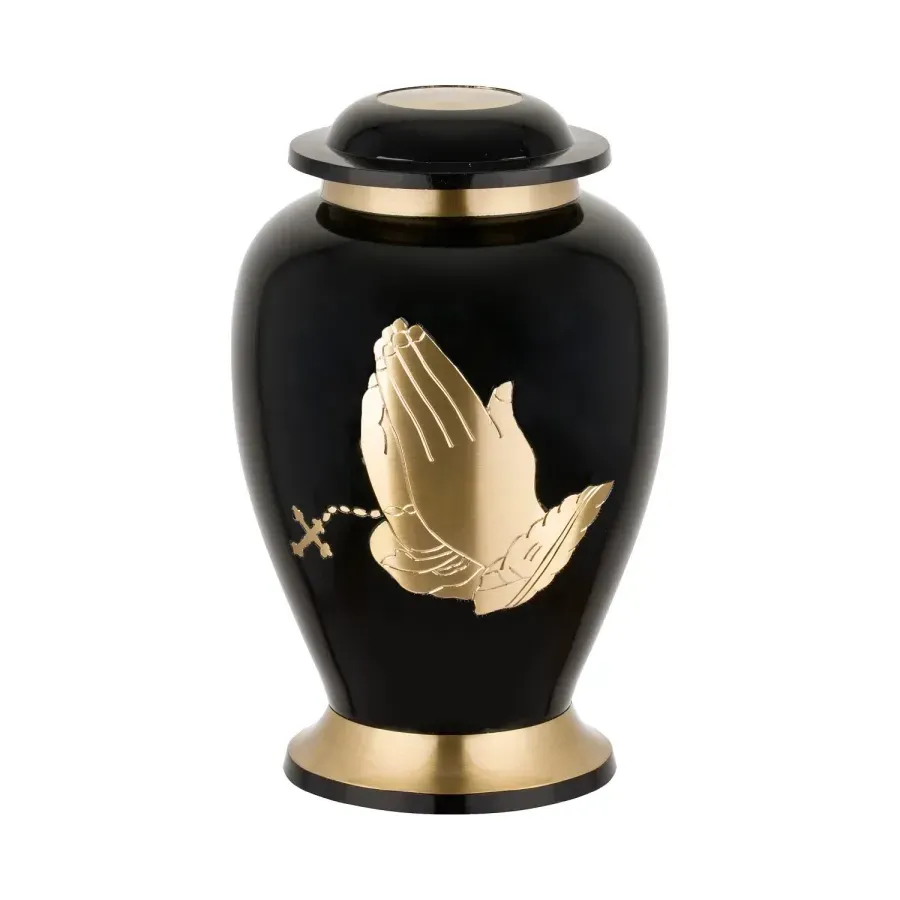
For many believers, the cemetery serves as a sacred place where the deceased find eternal rest. Storing an urn at home may be seen as inappropriate and inconsistent with Catholic burial principles, which emphasize prayer for the dead and visiting their graves. It is also worth noting that many urns are decorated with religious symbolism, further highlighting their sacred nature and connection to the tradition of burial on consecrated ground.
Sanitary and health aspects
One of the main reasons why the law prohibits storing urns with ashes at home is sanitary concerns. Although ashes are the result of cremation, a process that destroys potentially harmful microorganisms through high-temperature incineration, the law still imposes strict regulations on the storage of human remains. This is to ensure hygiene and protect public health.
It is also important to note that private homes are not prepared for proper sanitary storage of urns. Cemeteries and columbaria are equipped for this purpose, with appropriate conditions and procedures that prevent degradation of the urn material and uphold respect for the remains.
What are the laws in other countries – cultural differences
The issue of storing urns at home varies significantly depending on the country. In some countries, such as the United States, the United Kingdom, or Germany, regulations are more flexible and allow for the storage of ashes urns at home. For example, in the USA, families can legally keep an urn in their home and even consider other forms of memorialization, such as scattering ashes in designated locations.
However, in many European countries, such as France or Spain, regulations are similarly strict as in Poland, requiring ashes to be stored in designated places such as cemeteries or columbaria. This is often due to similar religious, sanitary, and cultural reasons.
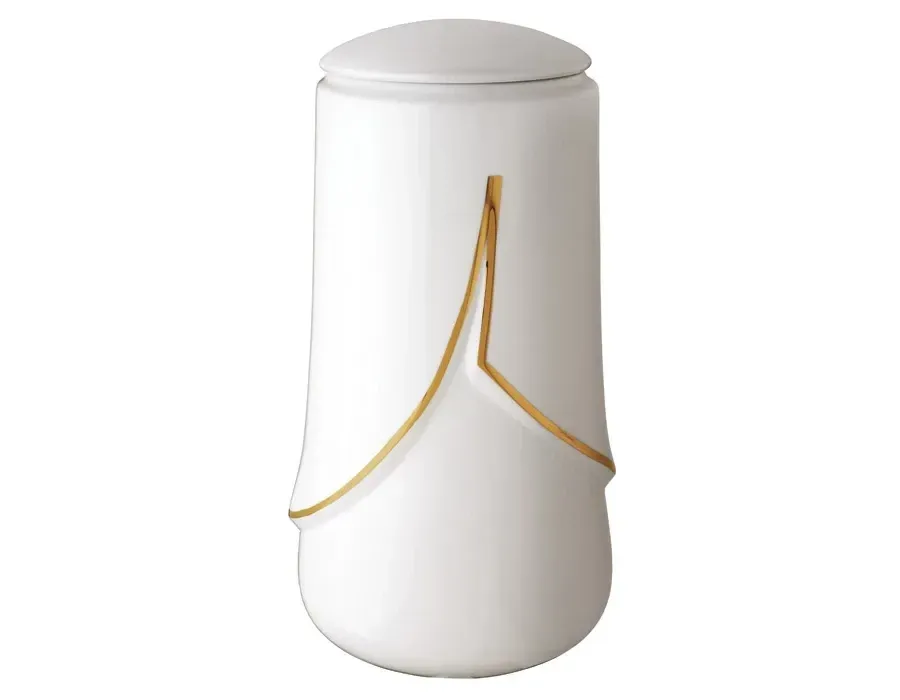
Alternatives to storing urns at home in Poland
For those who wish to commemorate the deceased in a more intimate way, there are other options besides keeping the urn at home. One such alternative is creating a memorial space at home, for example in the form of photos, mementos, or symbolic objects that will remind you of the deceased.
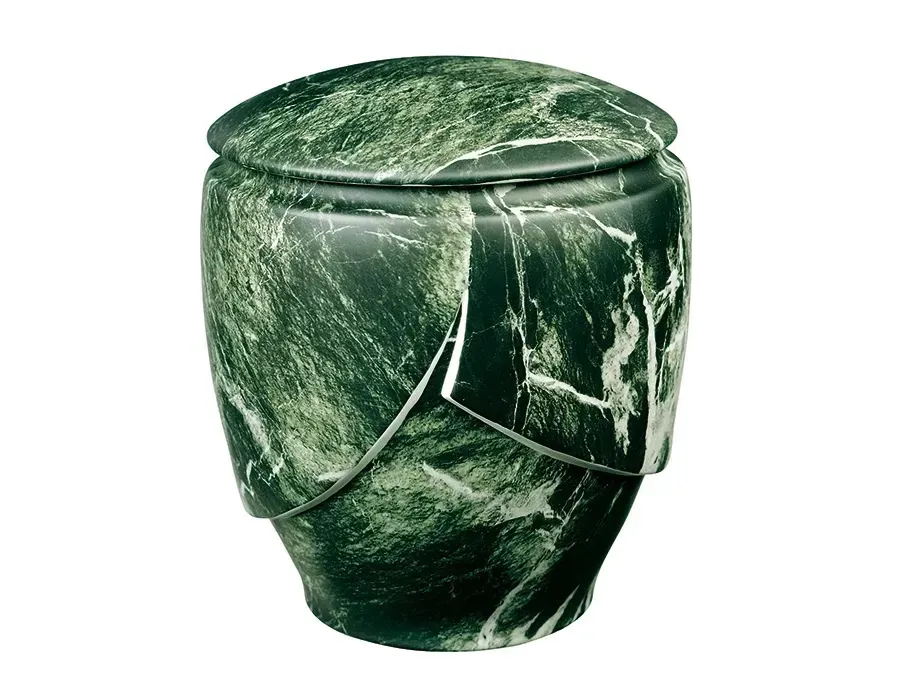
Another option is choosing a columbarium, which offers the possibility of visiting the ashes in a more private atmosphere than a traditional grave. Columbariums, often located in separate parts of the cemetery, allow for a more discreet memorialization of the deceased while meeting all legal and religious requirements.
Urns in dedicated places – what are urns made of
Urns used to store the ashes of the deceased must meet not only aesthetic but also functional requirements. The choice of material from which the urn is made often reflects both the personal preferences of the family and the character of the place where the urn will be placed. Discover the most popular materials used for urn production:
Brass
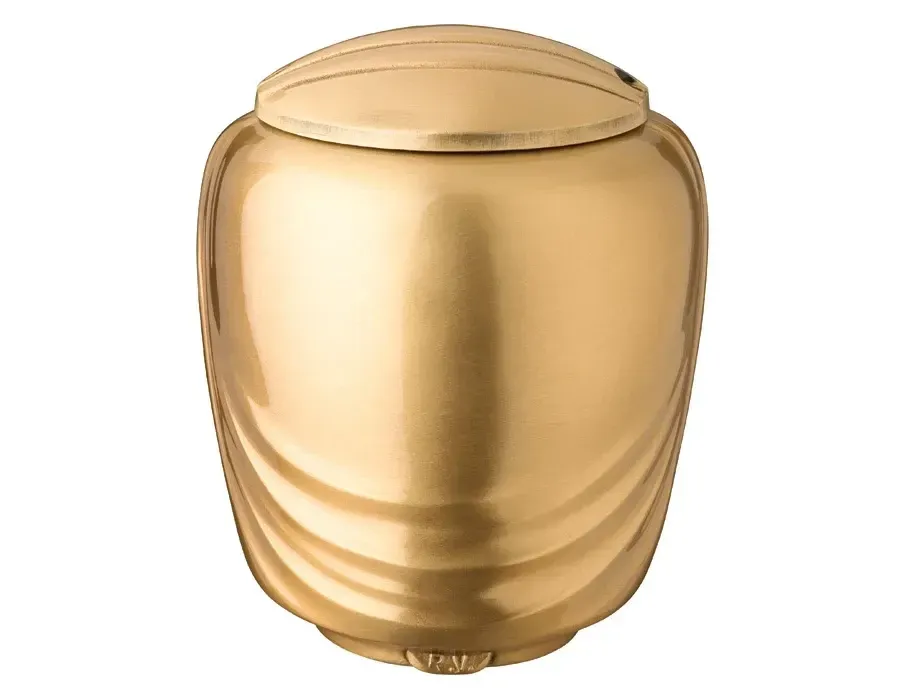
Brass is one of the most commonly chosen materials for urns due to its exceptional durability and aesthetic appearance. It is an alloy of copper and zinc, characterized by high resistance to corrosion.
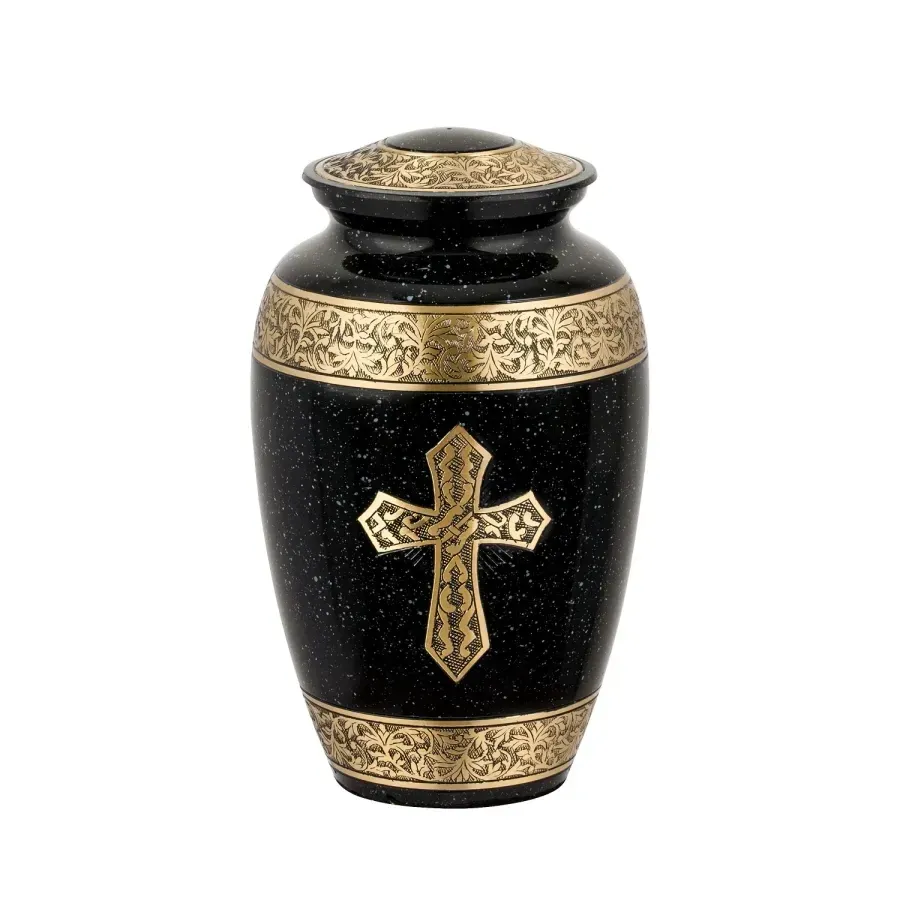
Brass urns are often richly decorated, and this metal is excellent for engraving, allowing for personalization of the deceased’s urn. Thanks to its gloss and golden hue, brass is also associated with elegance, and at the same time, it is relatively affordable compared to other materials.
Porcelain
Porcelain, a form of ceramics, is a material distinguished by its delicacy and beauty. Porcelain urns are often chosen for their finesse and the ability to create intricate patterns and paintings on them. The production process involves firing clay at high temperatures, which gives the urn exceptional hardness and smoothness.
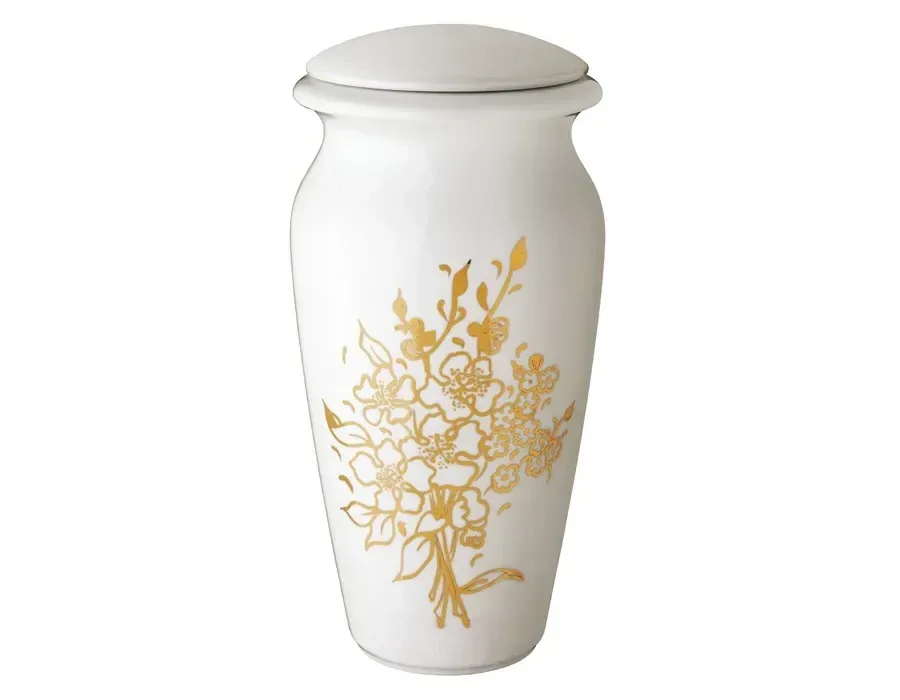
Urns made of porcelain are valued for their elegance and unique patterns. Porcelain urns are often decorated with hand-painted motifs, making them works of art with particular symbolic significance.
Pewter
Pewter, known in Poland as tin, is an alloy of metals primarily composed of tin, copper, and antimony. Urns made from pewter feature a subtle, silvery sheen, and their appearance is often perceived as more subdued and delicate compared to shiny brass or bronze urns. English Pewter Company specializes in producing this type of urns, highlighting a long-standing tradition of using pewter in funeral craftsmanship.
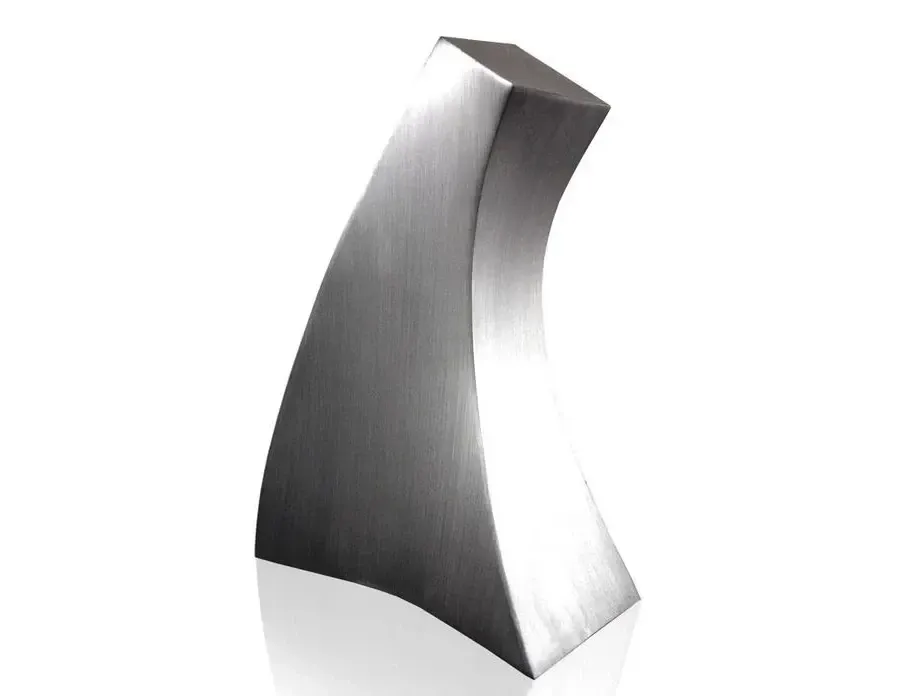
Due to its softness, pewter is an excellent material for creating detailed and intricate decorations, making pewter urns unique. It is often chosen by those seeking a more minimalist yet still elegant solution.
Bronze
Bronze, an alloy of copper and tin, is a material with a long tradition in funeral art. Bronze urns are characterized by high durability. Over time, bronze develops a patina, giving it a distinctive antique appearance, which is often highly desirable.
Bronze urns can be smooth or richly decorated and engraved, allowing for full personalization. Due to its properties, bronze is a popular choice for urn material.
Why can't you keep an urn at home?
Stone
Stone urns are a choice for those who appreciate natural beauty and durability. Marble, granite, and sandstone, as the most commonly selected types of stone, offer a variety of colors and textures, allowing for urns to be tailored to individual aesthetic preferences.
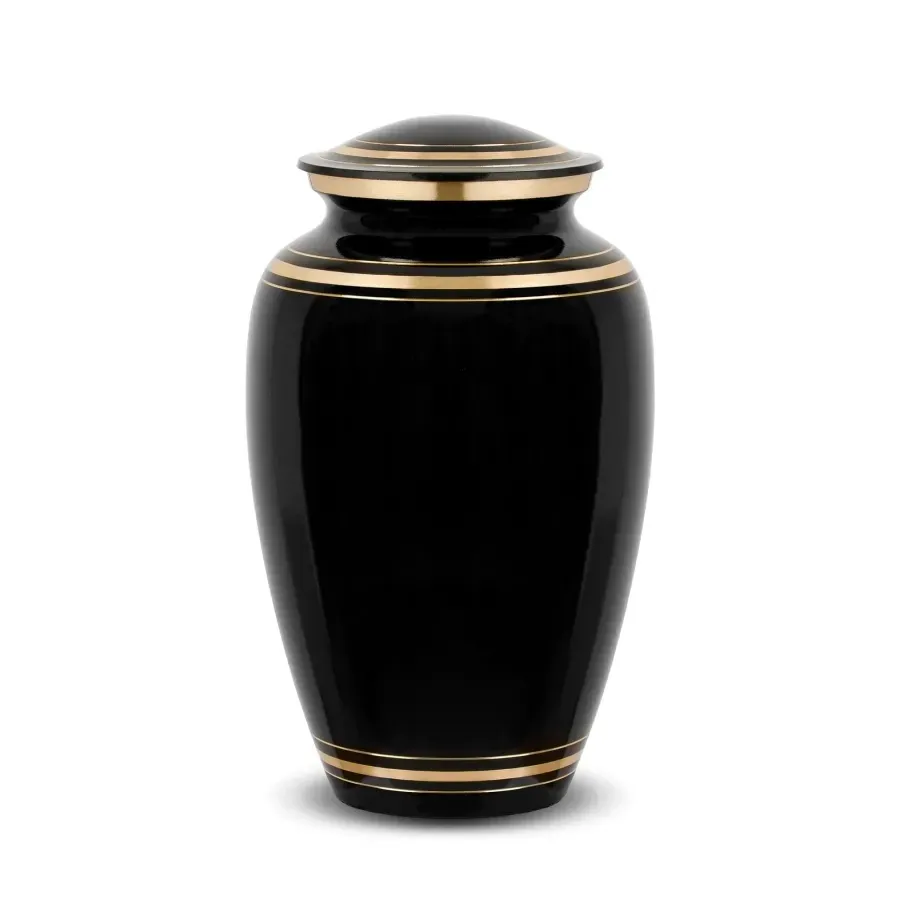
Their massive and solid form further emphasizes the importance of the memory that the family wishes to honor for the deceased.