People who wish to protect their financial assets by investing in precious metals, as well as those who want to own exquisite, eye-catching jewelry that is also resistant to mechanical damage and external factors, most often choose products made of gold.
However, it may be available in different variants, differing in the number of carats… which, as is well known, directly affects both the physical properties and the final product's price. Today, we want to take a closer look at gold in the most popular versions in the country by the Vistula River, namely 18 and 24-karat gold. Let’s check what distinguishes them and which one better suits our preferences and expectations!
What is the difference between 24-karat and 18-karat gold?
Let's start with the metal with a lower karat number. According to jewelers and experts specializing in high-quality jewelry and decorative elements, this metal consists of approximately seventy-five to seventy-seven percent pure gold. The remaining part includes various alloys intended to improve its durability and overall appearance.
Primarily, these include: silver, copper, nickel, and palladium. The alloy produced in this way is noticeably cheaper than its 24-karat counterpart, but it also features greater hardness, lower susceptibility to damage, and increased longevity. This makes it ideal for everyday wear. We can be almost certain that jewelry such as earrings, pendants, brooches, or rings made from this material will serve us for many years without showing the slightest signs of wear or excessive fatigue.
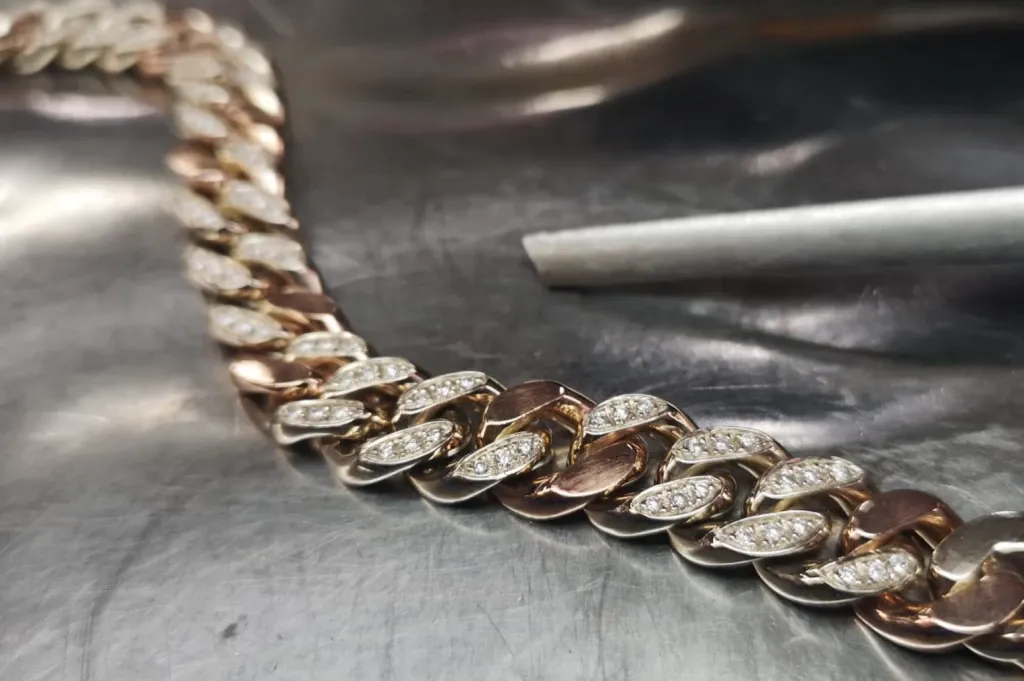
It is worth mentioning here that a keen eye will quickly notice that in the case of a given piece, 18-karat gold was used, as it will have a less intense color and shine, which is highly valued in pure metal that contains no alloys. Its shade largely depends on the metals used in the alloy and can range from pink or red, if significant amounts of copper are used, to a pure, almost pearl-white, which can be achieved by enriching gold with palladium.
Products made from such material have gained considerable recognition among consumers over the years, both domestically and abroad, because they boast an almost perfect balance between the price to pay, aesthetic appearance, and durability. Now, let’s see what the second alternative has to offer, which we would like to discuss in today’s post.
A few words about 24-karat gold
Many of our readers will probably guess immediately that 24-karat gold is a metal that contains no detectable alloys of other metals. If you are dealing with an ingot or original jewelry, a thorough analysis will undoubtedly reveal that the product consists of 99.9% pure gold. Due to its nearly perfect purity, this metal is primarily used for manufacturing investment products, including specially shaped and certified bars, as well as elegant bullion coins minted for special occasions, which combine the value of the metal with historical significance—especially in the long term.

Items made from 24-karat gold require the utmost care, and moreover – should only be used on special occasions, then stored in a suitably designed container or storage space.
After reading our today's post, one can conclude that although the gold variants discussed today differ only by six karats, the differences in their durability, appearance, usability, and price are very significant.
It is worth considering these factors before purchasing a product and asking oneself one very important question – is it meant to be a strictly investment piece (in which case it’s worth investing in 24-karat gold), or do we want to use it regularly without fear of deformation or damage (in which case we recommend opting for products made of 18-karat metal).