
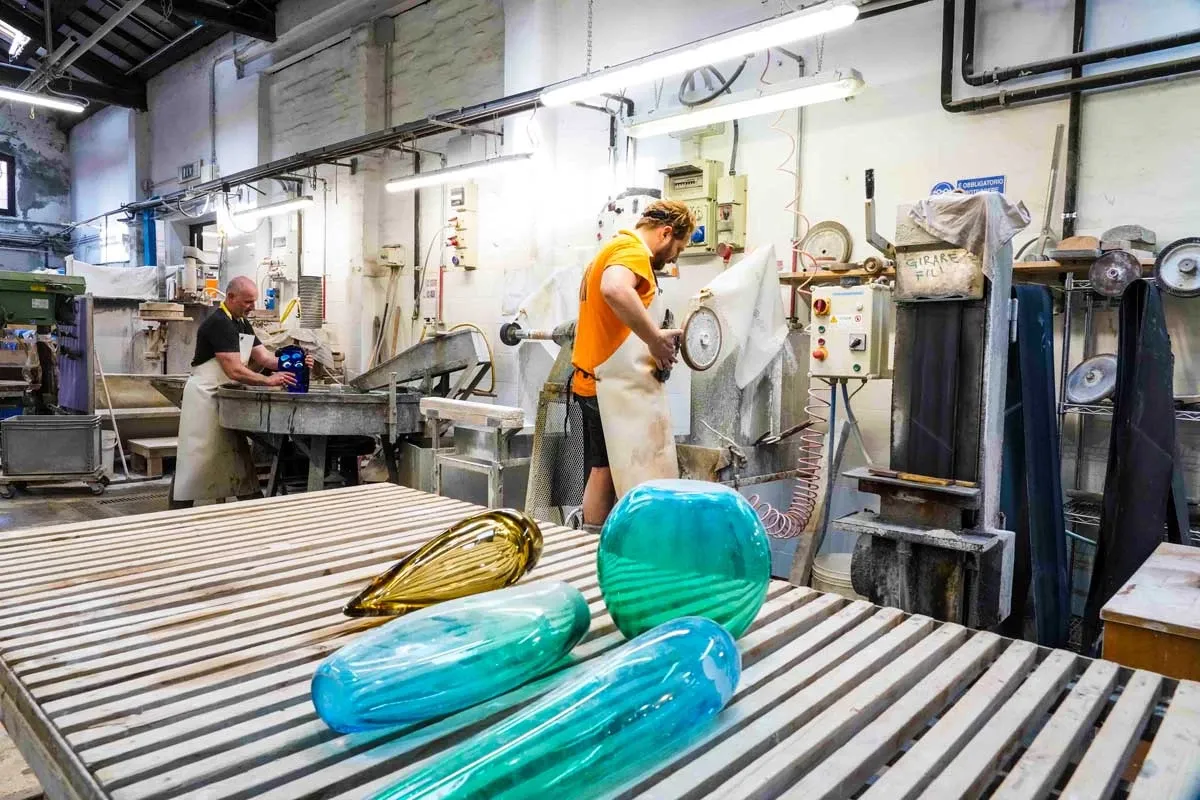
In today's article, we will take a closer look at a material that is not only extraordinary in itself, captivating with its stunning appearance, but also boasts a truly unique name.
Of course, we're talking about Murano glass. Where does its unusual name come from, why does it enjoy such immense popularity among decorative art enthusiasts, and what products are made based on it? Let’s find out!
What does the word Murano mean?
Let's start by solving the most important mystery, which is the unusual term used for this material. It turns out that this glass originates from the island of Murano, located near Venice, from which it takes its name. It was first discovered and successfully used there, and to this day, numerous manufactories operate on this small piece of land surrounded by water, whose owners specialize in creating true works of art from this extraordinary raw material.
Although Murano glass, already developed centuries ago, dazzled with its fairy-tale colors, brilliance, and texture, it is worth knowing that even today, its manufacturing technique is continuously refined by professionals. The goal is to produce a material that not only impresses potential buyers with its spectacular appearance but also boasts high resistance to mechanical damage and deformation, which directly translates into significantly increased durability.
A long history
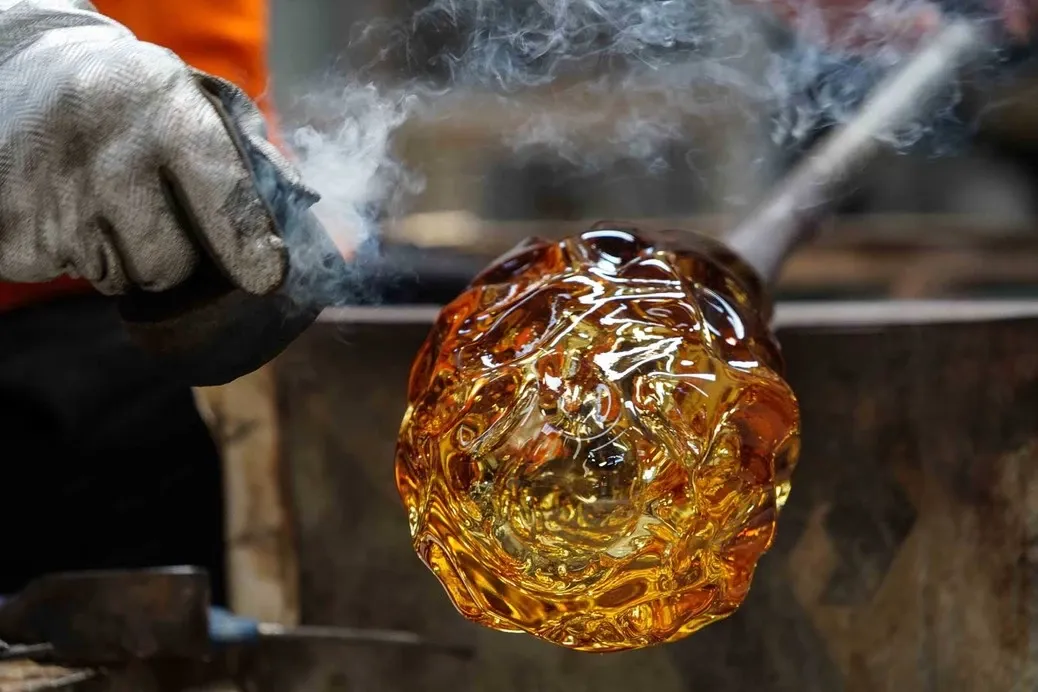
The history of Murano glass dates back many centuries, to the 13th century. It was then that the inhabitants of the small island discovered how to make blown glass, which, thanks to its vivid colors and unique shapes, could successfully imitate gemstones or porcelain, while costing only a small fraction of their price. As can be easily guessed, these features were quickly noticed and then exploited by local artisans, who began to use the material, the hero of our today's post, successfully in the production of both exquisite jewelry and decorative elements.
How is this intriguing material made?
According to information provided by the owners of manufactories operating on the Italian island of Murano, the glass is produced using a mixture of soda, calcium, potassium, and silica, whose proportions are strictly kept secret by each establishment.
After mixing, these substances are heated to a temperature sometimes exceeding 1500°C, and once they reach a liquid state, selected minerals are added. These minerals are responsible for the specific coloration of Murano glass after production. Many centuries ago, it was discovered that enriching the molten mixture with manganese allows for the creation of glass with a noticeably violet or bluish hue (depending on the amount added), while a mixture enriched with zinc colors the glass white or cream-colored, resulting in a material that almost perfectly imitates much more expensive porcelain.
Of course, that's not all – at this stage, artisans only have a colorful mass, which must then be shaped appropriately. This is achieved by blowing the glass using specialized tools, after which the finished product is left to cool. At this point, it takes on its final shape and desired physical properties.
What makes Murano glass unique?
First and foremost, the fact that it itself, as well as the products made from it, are produced in a one-of-a-kind manner by true experts in their craft. These are stylish figurines, tableware, lamps, candles, or Murano vase. Even those unfamiliar with the subject will be able to distinguish high-quality items worth often thousands of złoty from Chinese imitations, which can be purchased at a price comparable to what one would pay for a meal at a fast-food restaurant.How to tell authentic from fake?
First and foremost, we must remember that two glass Murano items placed next to each other will never be identical. This is due to the specifics of their manufacturing process, which gives each piece a unique character. A set of identical glasses or decorative toys, where not only the color transitions but also the shape and size of individual elements are almost identical, should immediately raise suspicion and discourage us from purchasing.
Moreover, many manufacturers sell their products via mail order, placing them in specially designed, protective packaging, and also marking the glass artworks, such as lamps or figurines, with a unique number and providing the buyer who has decided to purchase with a certificate confirming their authenticity. By purchasing from a reputable seller, we can be almost certain that we will not fall victim to a scam, and instead become owners of unique decorative items made from the truly magical and mesmerizing Murano glass!