It's not enough today to simply package a product well – you need to be able to package the values behind it. Customers are increasingly making purchasing decisions not only based on price or quality but also on how a company approaches sustainability. That’s why the question of investing in eco-friendly paper bags is now a question of whether a brand wants to be modern, responsible, and competitive. In this article, you'll find the specifics: why plastic is fading into the past, what paper offers – and what value a brand truly brings when it knows its stuff. Let’s examine this step by step.
Paper Bags, or the Trend Towards Eco-Friendly Solutions
Paper bags in business are no longer just a trend, they are a necessity. It’s not only about their appearance. It’s about meeting market needs, regulations, and – most importantly – customer expectations. More and more companies are switching to eco-friendly paper bags because it’s a natural direction, not just a fleeting trend.
Paper has advantages. It decomposes faster, is easier to recycle, and leaves no harmful residue. Well-designed bags – with prints, refined graphics – are not just packaging but an element that co-creates the customer experience. In stores, cafes, and at events.
Additionally, a bag can serve another function – communication. You can place a logo, slogan, sustainability certification, or QR code on it. And it works – because it’s unobtrusive. The customer doesn’t feel like they’re being “sold to”. They feel involved in something valuable.
Moreover, a bag doesn’t end its life at the checkout. Many people reuse it later – at work, at home, for shopping. And they do so gladly if the bag looks good and is durable. In this way, your customer – quite naturally – becomes an ambassador for your brand. Without an advertising campaign. Increasingly, industries treat paper bags as standard – from gastronomy and e-commerce to the premium segment, where every detail and brand image consistency matter.
Why are plastic bags not eco-friendly?
At first glance – plastic bags are convenient. Light, cheap, durable. But only for a moment. Because plastic doesn’t disappear. It decomposes over hundreds of years, and its particles end up in soil, water, and ultimately – our food. Depending on the type of plastic and environmental conditions, the decomposition of a single plastic bag can take from 100 to even 400 years. Worse still, it doesn’t fully vanish – it breaks down into micro-particles that penetrate soil, water, and food, while also hindering effective waste recycling. Microplastics are not just a theory; they are a real problem.
Recycling is also problematic. Waste sorting systems struggle with identifying plastic bags. The result? Instead of recovery, we get trash – literally and figuratively. Additionally, companies pay increasingly higher fees for placing plastic into circulation – because the law requires it. Not to mention customers who simply no longer want to buy products packaged in plastic.
Another aspect not to ignore is image. Customers may perceive a company using plastic bags as less modern and less environmentally committed. As if they didn’t understand that today, being eco-friendly truly matters, not just for show.
More and more, partners – retail chains, wholesalers, and collaborators – demand suppliers adopt solutions aligned with green standards. Furthermore, many plastic bags end up in the environment bypassing collection systems, which significantly increases their actual impact on nature beyond official statistics.
The advantages of paper bags over plastic bags
Alright – plastic is out. But why is paper truly cost-effective? Because it’s a reliable material. And not just in theory. It’s biodegradable, recyclable, and looks good. Moreover, well-made paper bags are durable, don’t tear with heavier items, and can be reused multiple times.
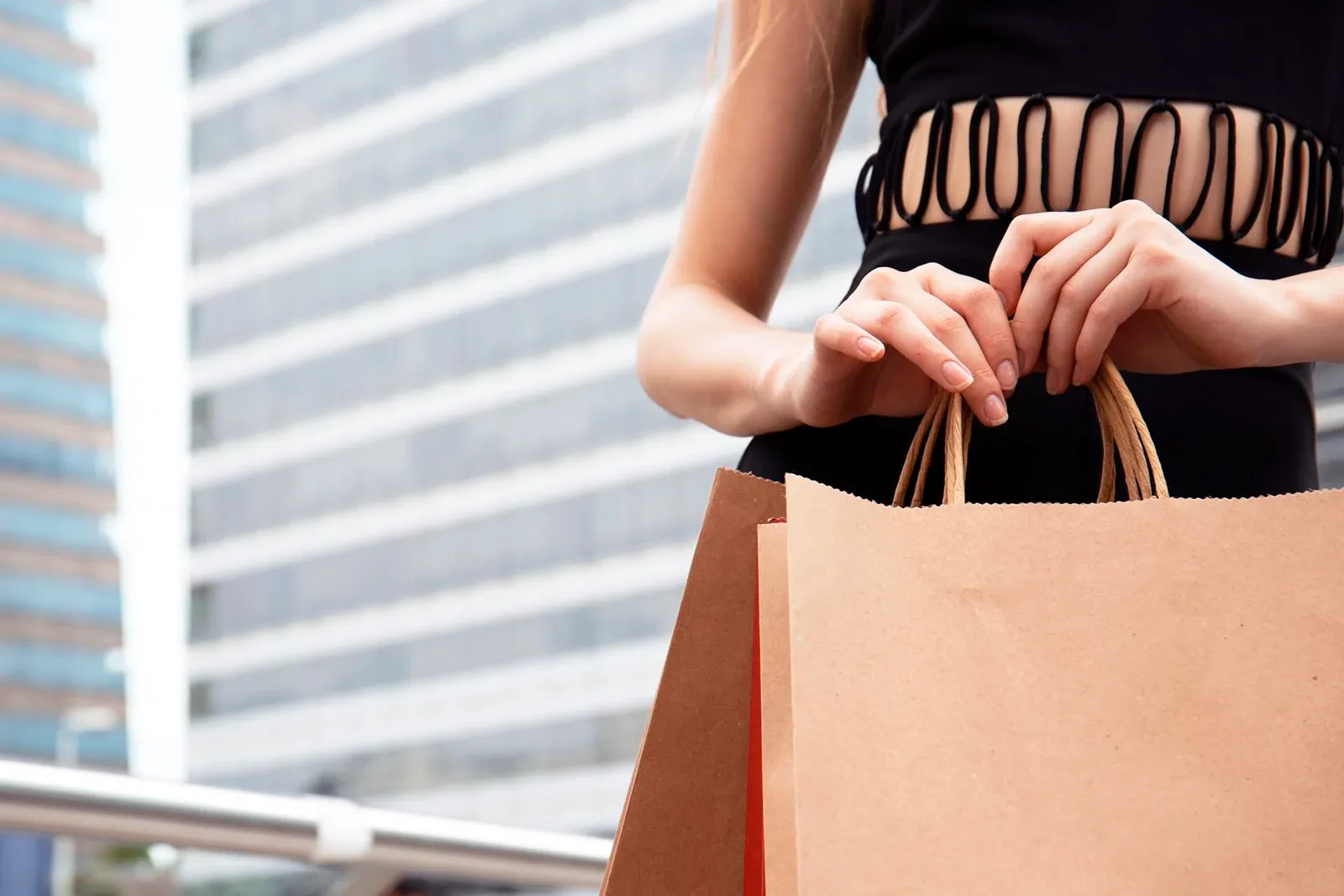
A well-designed paper bag can instantly add quality to a product. They can be customized freely, used to showcase a brand, or add character to the entire purchase. The customer puts the product into the bag, leaves… and continues to carry your message.
They are also functional. Odor-neutral – which is very important in the food industry. Stable at high and low temperatures, they don’t crease, don’t build up static electricity, and don’t change shape. Even storing them is simpler. Moreover, increasingly, bags also serve an educational purpose – they include recycling instructions, information about the company's mission, and interesting facts about ecology. It may sound like a small detail, but it makes a difference. It shows that your company thinks broadly. Paper bags are a practical, durable, and aesthetic solution that supports your brand, protects the environment, and promotes ecological education.Take care of the planet with bags from Ecobag!
Alright – the idea convinces you, but what about implementation? This is where Ecobag Network comes in – a manufacturer specializing in eco-friendly paper bags since 2004. Today, it is the largest player in Poland in this category – and it’s no coincidence. Ecobag Network has its own machinery park, a DTP department, and a printing house – ensuring every project is visually and technically refined. They execute orders quickly, without compromising on quality. And if you need something more unusual – bags with spot UV coating, embossing, premium effects – you can get that from them.
Importantly, they operate flexibly. They serve large chains but also smaller companies that are just building their eco image. They understand that the needs of the food industry differ from those of retail stores or the event industry. And they adapt – not the other way around. Additionally, everything is produced in Poland, which reduces CO₂ emissions related to transportation and shortens lead times. Raw materials? Certified. Processes? Compliant with sustainable development principles. These are not just words – it’s everyday practice. By working with Ecobag Network, you invest in packaging that truly makes a difference – for your business, your image, and the environment.
Sponsored article