The real estate market in Dubai has remained one of the most dynamic in the world for several years. After the pandemic, the city attracted a record influx of capital and new residents, which translated into a sharp increase in prices and historic transaction value records. According to Fitch Ratings analyses, apartment prices in Dubai have risen by approximately 60% since 2022. Meanwhile, high rental yields and favorable tax regulations continue to attract investors from around the world. Or did they? Because February 28, 2026, changed a lot. Is it worth panicking? Is it worth changing your property purchase plans? How can you leverage the geopolitical tension in the UAE in the context of real estate investment?
Is now the right time to buy property in Dubai?
The real estate market in Dubai in 2026 is in a stabilization phase after several years of spectacular growth. As Louis Harding, CEO of Betterhomes, points out, the market currently relies more on genuine demand from residents and long-term investors than on short-term speculation. This means that even in the face of short-term shocks, such as escalation of conflict in Iran, there are no automatic drops in property prices. Fundamental demand strength and high rental yields continue to support investment attractiveness.
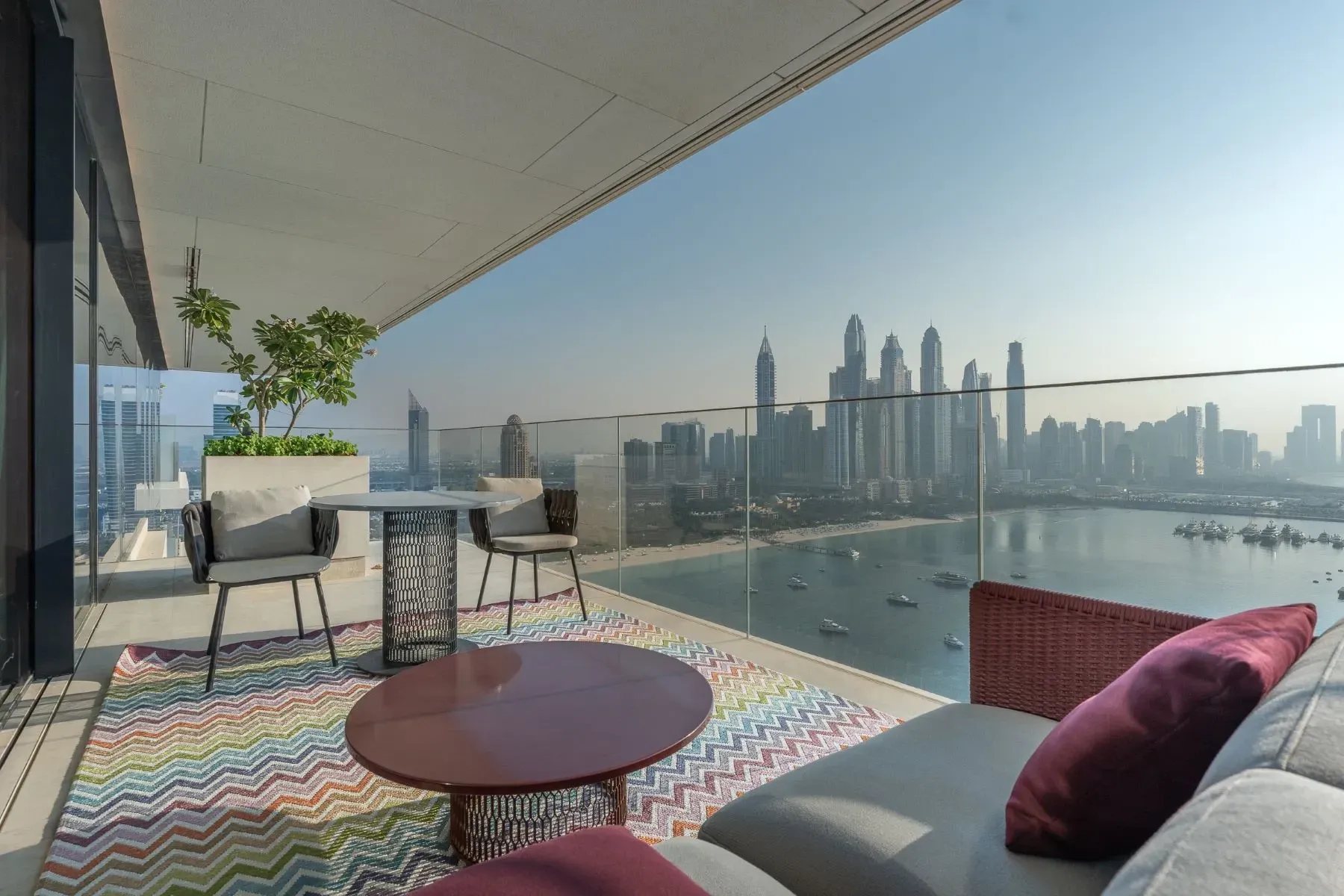
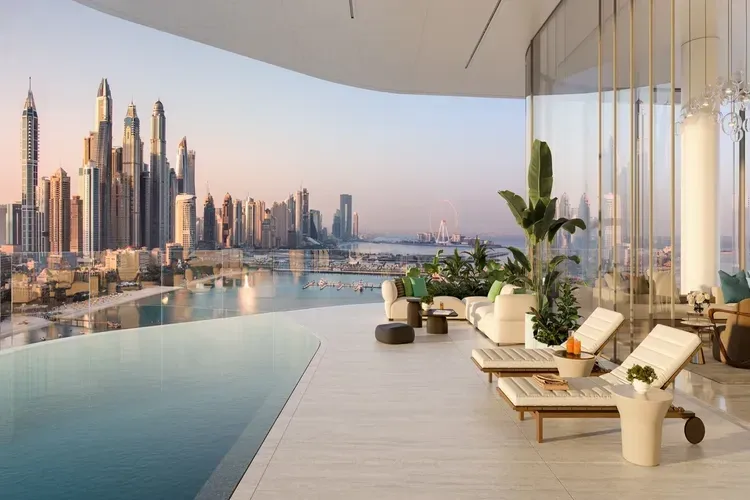
Photo: sothebysrealty.com
However, geopolitical tensions in the region introduce a new element of uncertainty. Rocket attacks in Iran and reactions from countries like the USA and Israel have caused temporary panic in the developer stock markets. Currently, the DFM Real Estate Index is experiencing a decline of about 20% in a short period.
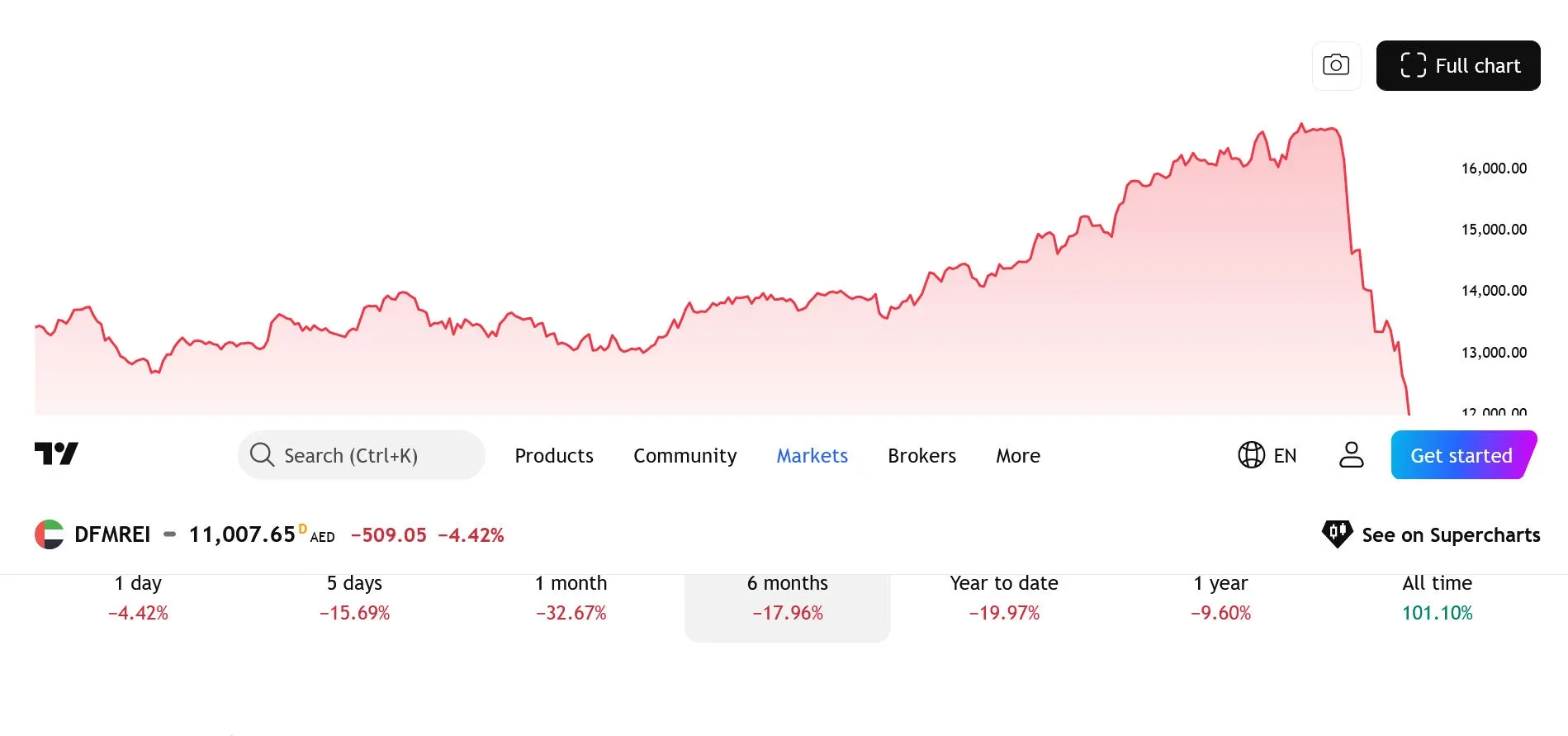
Indices are falling, but it’s important to remember that indices do not directly reflect property values, photo: tradingview.com
According to analysts from JPMorgan and CBRE, the real impact of these events will depend on the behavior of foreign investors. They constitute the backbone of 2025, accounting for as much as 65% of all transactions.
For long-term investors, this means that now is a good time to find negotiation opportunities, especially when purchasing ready apartments in well-established and inhabited locations such as Palm Jumeirah, Downtown Dubai, Dubai Marina, or Dubai Hills Estate. Developers may offer more favorable payment terms, discounts, or extended settlement periods on “off-plan” projects, trying to counteract the current market uncertainty.
Investment risk map
The Dubai real estate market in 2026 is entering a stabilization phase with selective slowdown, and investors must consider the increasing influence of geopolitical factors, especially the conflict in Iran, which has caused a roughly 20% drop in developer stocks in a short time. However, for now, losses are mainly visible in indices on the stock exchange, not in the actual value of apartments and houses. Therefore, experts are not panicking, and investors remain interested in purchasing residential and investment properties.

Photo: sothebysrealty.com
High-risk segments:
“Off-plan” projects in new, less developed locations, e.g., distant towers on the coast, Palm Jebel Ali, or some projects in Jumeirah Village Circle (JVC). In 2025, as much as 65% of transactions involved “paper” apartments, which means that if foreign investors withdraw or there are delays in construction, demand may not keep pace with supply.
The average mass market in areas with many new blocks, such as Business Bay or Azizi Developments. There, excess supply combined with geopolitical risk could slow down price growth or lead to a slight correction.
Low-risk segments, i.e., properties resistant to declines:
Ready apartments and villas in well-established, inhabited communities such as Palm Jumeirah, Downtown Dubai, Dubai Marina, Emirates Living, or Dubai Hills Estate. These locations mainly attract end-users and long-term residents, which limits the risk of sudden price drops.

photo: sothebysrealty.com
Smaller apartments (1–2 bedrooms) in central districts enjoy stable rental demand and offer high returns (6–9% depending on location).
Therefore, geopolitical risk is not evenly distributed – the most vulnerable segments are speculative and new “off-plan” projects, especially in less developed parts of Dubai. At the same time, market fundamentals remain solid: inflow of international investors, growing population, and absence of taxes support property values in top locations and ready projects. For investors, this means that informed choices regarding location and property type can minimize risk, and purchasing new apartments may create opportunities for negotiating favorable terms.
Short-term and long-term forecasts for the Dubai real estate market
The Dubai real estate market is entering a phase of stabilization and selective slowdown in the short term (2026–2027), after several years of spectacular price increases – property prices in the UAE capital have risen on average by 60–75% since 2022. Analysts from ValuStrat and Betterhomes forecast that in 2026, price growth in top locations will be 5–10%, while in mass segments, a slight correction may occur. The supply of new apartments, especially “off-plan” projects, which accounted for 65% of transactions in 2025, is growing rapidly, creating pressure on some districts such as Jumeirah Village Circle, Business Bay, or Azizi Developments. During this time, geopolitical factors, including the conflict involving Iran, increase uncertainty among foreign investors, which could translate into more negotiable prices in developer projects.

photo: sothebysrealty.com
In the longer term (2028+), market fundamentals remain strong. Dubai attracts foreign residents, digital nomads, and investors from Europe, India, Russia, and the GCC region, and the absence of income tax, the possibility of 10-year Golden Visas, and high rental demand support market stability. It is estimated that by 2028, around 300,000 new housing units could enter the market, which may exert downward pressure on prices, especially in the middle segment, if migration and economic growth do not maintain their pace. Analysts estimate a realistic long-term price growth of 5–7% annually in mid-range locations and 8–10% in top locations, assuming no major regional crises.
This differentiation between short-term correction and long-term growth emphasizes the importance of strategic choice of location and property type – ready apartments in inhabited communities remain the safest, while new projects in less developed districts require cautious analysis and greater risk tolerance.
Dubai real estate in an investment portfolio – will war shake its stability?
A well-balanced investment portfolio, which includes real estate in Dubai, can still maintain stability even in the face of geopolitical tensions related to the conflict in Iran. Ready apartments and villas in top locations such as Palm Jumeirah, Downtown Dubai, or Dubai Marina primarily attract end-users and long-term residents, which limits price sensitivity to short-term market shocks. Rental yields of 6–9% and favorable tax regulations further stabilize income streams. A geographically and sectorally diversified Dubai real estate portfolio can serve as a safe pillar, balancing risks associated with fluctuations in other assets such as stocks or bonds, especially during periods of global uncertainty.
Photo: sothebysrealty.com
Currently, including Dubai real estate in your portfolio can be considered a strategic long-term decision, provided the location and property type are chosen consciously. The safest options are ready apartments and villas in established, top locations that offer stable rental demand and moderate appreciation potential over several years. "Off-plan" projects or those in less developed parts of the city carry higher risks, so their inclusion requires caution and thorough analysis. For investors focused on long-term stability and rental income, Dubai remains an attractive investment option, even amid regional tensions.
The Iran War as a Test for the Real Estate Market
The conflict in Iran in 2026 became an unexpected test for Dubai’s real estate market, which has been known for high liquidity, influx of foreign capital, and spectacular price growth. The question is: will geopolitical tensions genuinely threaten the value of apartments and villas, or will the market demonstrate resilience?
Will prices fall?
Critics point out that the rapid 20% drop in the DFM Real Estate index in March 2026 shows how sensitive the market is to global events. "Off-plan" projects in less developed districts such as Jumeirah Village Circle or Palm Jebel Ali may feel pressure from foreign investors, who, amid uncertainty, might hold back on purchases or negotiate better terms.
Will Dubai survive?
On the other hand, experts like Louis Harding from Betterhomes emphasize that the market’s fundamentals remain strong. The influx of international residents, absence of income tax, high rental yields, and top locations – Palm Jumeirah, Downtown, Dubai Marina – create resilient segments that are unlikely to experience sharp declines in the short and medium term. Even during times of geopolitical uncertainty, end-users and long-term investors continue to generate real demand.
Who are the "winners" from an investment perspective?
Winners: investors focusing on ready apartments and villas in well-established, inhabited locations, oriented towards rental income and stability. This allows them to benefit from temporary price drops in "off-plan" properties and negotiate better deals when purchasing new units.
Potential losers: short-term speculators and buyers of projects in less developed districts, who anticipated quick capital gains and are vulnerable to shifts in foreign investor sentiment.
Photo: sothebysrealty.com
The conflict in Iran demonstrates that the Dubai market is not immune to global shocks. However, a well-thought-out investment strategy – including the choice of location, property type, and time horizon – allows not only to survive but also to seize opportunities that arise during periods of uncertainty. The question remains open: will short-term investors dare to return to the market, or will they hold back capital, giving an advantage to those who think in terms of 5–10 years?