
In one of our recent articles, we introduced our readers to the unique characteristics of the truly extraordinary material known as Murano glass and described the types of items created using it. In today's post, we would like to dedicate a bit more space to this topic, focusing primarily on purely practical information.
How to distinguish Murano glass?
We want all individuals interested in purchasing decorative or functional items made from Murano glass to be able to properly identify them, as well as to recognize the original amidst a sea of imitations and copies, which dishonest brick-and-mortar and online traders may try to sell at prices several times higher than the actual value.
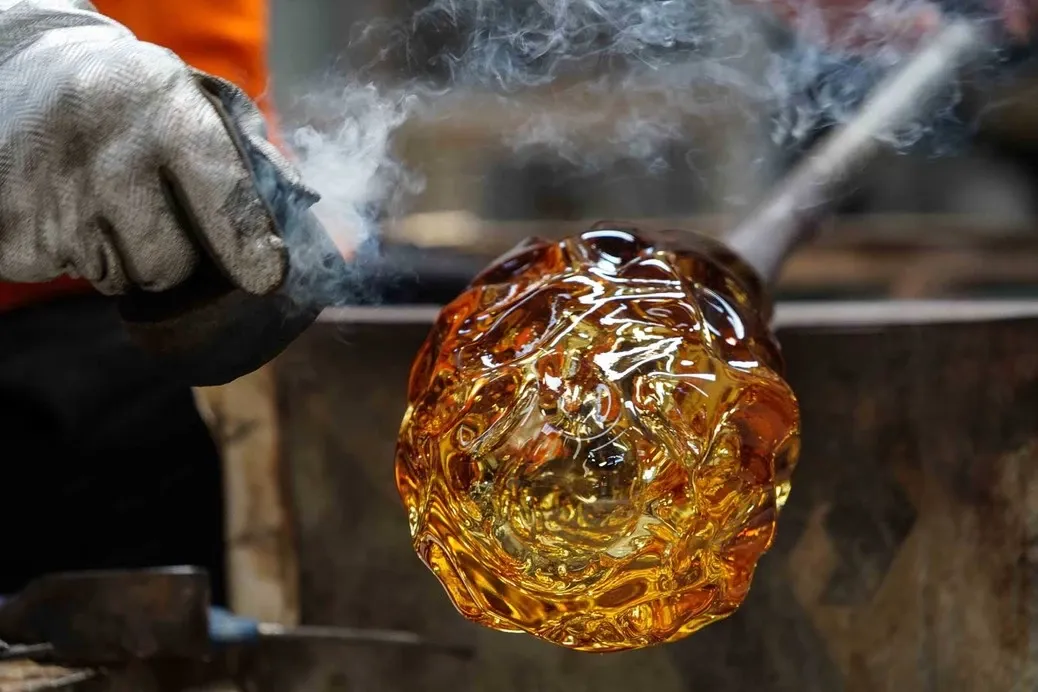
If we want to avoid falling victim to a calculated scam, before finalizing the transaction, we should primarily check how the product performs in terms of overall purity and craftsmanship. It is worth knowing that genuine Murano glass produced in workshops based on techniques passed down through generations is characterized by absolute transparency.
Original vs. copy?
Compared to imitations, they are also distinguished by the absence of any streaks, scratches, or unappealing and unnatural transitions between individual elements. Every part of a decorative or functional item should be carefully examined for bubbles and air pockets. If the product is made according to accepted and centuries-old principles, such imperfections should not occur, and if they can be identified, their number on the entire surface should be countable on one hand.
The opposite is true for vases, figurines, and tableware sold at stalls and markets. They are intended to imitate Murano glass, but with a bit of experience, it’s easy to see that they are nothing more than painted porcelain or standard glass surfaces covered with unsightly bubbles.
Hand-colored
It is also important to consider that genuine Murano glass is not painted, but only colored, which allows for achieving extraordinary, captivating shades in the individual components of a piece. Decorations made from this material behave very differently from their imitations when exposed to sunlight. The original will behave like a kind of stained glass, casting multicolored light streaks onto the floor and walls of the room. A copy made from a different material and additionally painted will either block light completely or do so only marginally. This should be a clear warning sign indicating an attempt by the seller to deceive us.
Are the above-mentioned aspects the only ways to distinguish Murano glass products from items based on other materials? Certainly not! It is important to know that the only truly original decorative or functional pieces are those crafted by experts on the island of Murano in Italy. To guarantee consumers that they are acquiring genuine works of art produced in limited quantities, artisans mark their finished products with special labels confirming their origin.
Marking - certificate!
Moreover, many of them may also offer their exquisite creations along with official certificates, quality marks, and seals, which will make the authenticity of their products indisputable. We encourage you to keep all such documents after purchase, because if you decide to resell a vase or figurine made of Murano glass after several or a dozen years, you can be absolutely sure that all authenticity attestations will positively influence its value, often allowing you to earn much more than initially expected in the transaction.
Sometimes, you may notice that the bottom of a given item bears the artisan's signature or the number of the piece – although it might seem that this fact adds authenticity to the product, there are situations where it might be quite the opposite. Keep in mind that marking decorative or functional items in this way is rare, and industry experts tend to avoid it to preserve the elegant, sleek character of Murano glass objects. You can also be sure that if such an inscription is applied, it will not be placed in a visible spot at first glance, such as the handle, outer wall, or decorative elements of the item.
We sincerely hope that, thanks to the distinguishing features presented by us, our readers will be able to independently differentiate the original piece from its imitations, and thus save themselves from spending several hundred to even several thousand zloty on a product that, upon closer examination, turns out to be worthless.