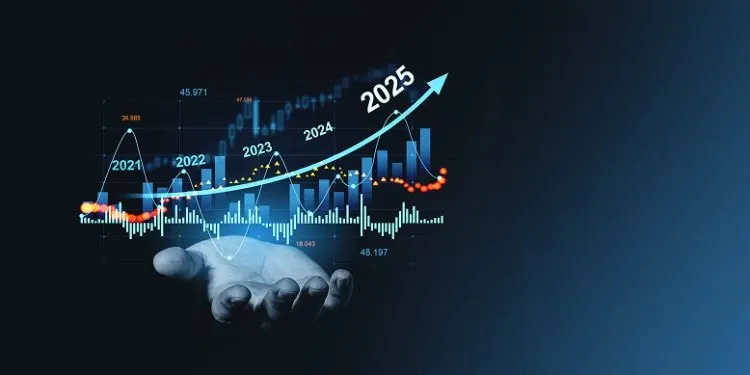
Did you know that global ETF assets exceeded $12 trillion in 2025? That's more than the GDP of the entire United States a decade ago. An ETF is an exchange-traded fund that tracks a specific index — think of it as a basket of stocks you can buy with a single click. Sounds simple? Because it is.
The story began in 1993, when the first ETF – SPY – was created, tracking the S&P 500 index. Since then, these instruments have evolved from niche products to a revolutionary investment tool.
Once, I met Aneta, a 34-year-old accountant from Kraków. She had no idea about technical or fundamental analysis. She simply bought an ETF on global stocks every month for 500 złotych. After ten years, her retirement portfolio was worth over 80,000 złotych. No magic – just consistency and ETFs.
Why are ETFs so popular in the market?
In this article, we will look at three key aspects. First, we’ll analyze their strengths and weaknesses – because, like any financial instrument, ETFs have their pitfalls. Then, we’ll show how to practically start investing, even if you only have 100 złotych a month.
Finally, we will discuss specific strategies for Polish investors in 2025. Which ETFs to choose? How to avoid tax surprises? These are the questions I hear most often.
We begin with a detailed analysis of benefits and risks – because before you invest your first złoty, you need to know what you’re getting into.
Pros and cons of ETFs: a cool-headed analysis of benefits and risks
Have you ever wondered why everyone talks about ETFs as the holy grail of investing? The truth is, it’s not black and white. Every coin has two sides, and ETFs are no different, with their own advantages and disadvantages.
These numbers don’t lie. The SPIVA study shows that 93.6% of active funds in the USA underperformed the S&P 500 over 20 years. That’s a pretty convincing argument for passive investing through ETFs.
But beware – not all ETFs are equal. I remember in 2022, observing a client who bought a leveraged ETF on NASDAQ with 3x leverage. It seemed like a great idea during the bull market. The problem was, when the bear market hit, this fund lost as much as 45% of its value. Leverage works both ways – it amplifies both gains and losses.
This shows how important it is to understand what you’re investing in.
There are no perfect investments. ETFs offer access to diversified portfolios for a small amount of money, but they still follow market laws. Sometimes they fall, sometimes they rise.
The key question is: are you ready for fluctuations?
Do you understand the difference between an ETF on the S&P 500 index and a leveraged product on cryptocurrencies?
Before moving on to specific steps on how to start investing, honestly consider your risk tolerance. Can you sleep peacefully when your investments lose 20% in a month? Because that happens more often than you think.
How to start investing in ETFs step by step
Want to finally start investing but don’t know how? I think the best approach is simply to take it step by step. It might sound a bit boring, but honestly – it’s the only way to avoid making silly mistakes at the beginning.
Choose a brokerage account that won’t eat up all your money in commissions. XTB offers 0 zł commission on ETFs, which sounds pretty good. Also, check if you have access to the Warsaw Stock Exchange (GPW) and international markets – you’ll need that.
Open an account and transfer your first funds. You don’t have to deposit a fortune right away – start with an amount that won’t hurt if lost. Pick your first ETFs. For a 15-year horizon, you might try something like an 80/20 split – 80% in an ETF on MSCI World (stocks) and 20% in an ETF on US treasury bonds.
Place your first order – but be mindful of trading hours on the GPW (09:00-17:05). You can choose a limit order (set a maximum price) or a market order (buy at the current price). A limit order is safer for beginners. Buy your ETFs according to your planned proportion. You don’t have to buy everything in one day.
Check your portfolio once a month, but don’t panic at every decline. That’s normal.
Now, about taxes – because nobody likes them, but you need to know. In Poland, you pay 19% capital gains tax. If you have an IKE or IKZE account, you can benefit from tax reliefs. Also remember that dividends from foreign ETFs may be subject to withholding tax – it’s an additional complication worth knowing about in advance.
💡Expert tip
Rebalancing sounds complicated, but it really isn’t. Once a year, check if your 80/20 ratio has gone off track. If your stocks have risen and now make up 85/15, sell some stocks and buy bonds. This will help you keep risk under control and realize gains.
That’s basically it. No need to overthink it – the first transaction is always the hardest, then it gets easier. Your next steps: how to practically leverage the power of ETFs
Now that you know how to buy ETFs, it’s time to act – but thoughtfully and systematically.
The most important thing is to maintain discipline over the years. Sounds boring? Maybe, but that’s the key difference between investing and gambling. Here are four crucial actions to implement immediately:
- Set a rebalancing schedule “once a year or when deviation exceeds 5 percentage points.” Example: you planned 60% stocks, 40% bonds. After a year, you have 67% stocks and 33% bonds. The deviation is 7 percentage points, so it’s time to rebalance – sell some stocks, buy bonds.
- Choose a tool to track your ETFs. Stooq offers great charts and is free, but the interface can be terrible. JustETF is a European database with accurate data on costs and dividends – perfect for research. XTB app? Convenient for broker clients but limited to their offerings.
- Monitor trends but without panic. Changes in regulations, new tech sectors, geopolitics – all influence ETFs. Just check the news once a week.
- Automate what you can. Standing orders, dividend reinvestment, notifications for rebalancing thresholds.
"ETF assets could reach 20 trillion USD by 2030" – this is the forecast from BlackRock analysts. What does this mean for us, Poles? More choices, lower costs, better liquidity. But also increased competition among providers and pressure for innovation. ETFs will become even easier to use.
I remember thinking that investing was only for wealthy people in suits. Then I saw an ordinary teacher from a small town building wealth through ETFs. Simply, systematically, without grand gestures.
Don’t wait for the perfect moment. There is no such thing. There are only more days when you can start building your financial future. The first 100 PLN in ETFs is a bigger step than another 10,000 PLN – do you realize that?