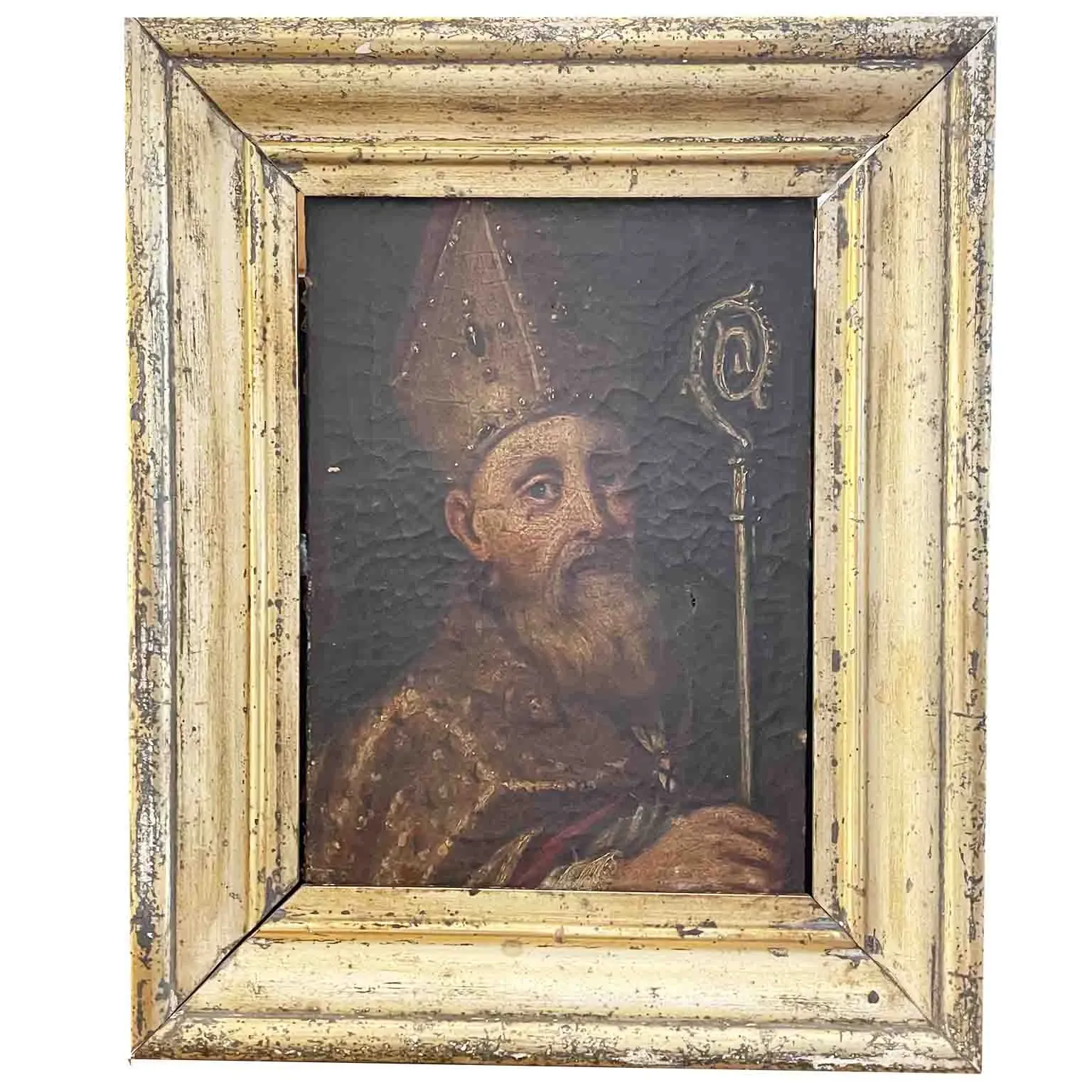
Today we would like to present to you a beautiful painting from the 18th century.
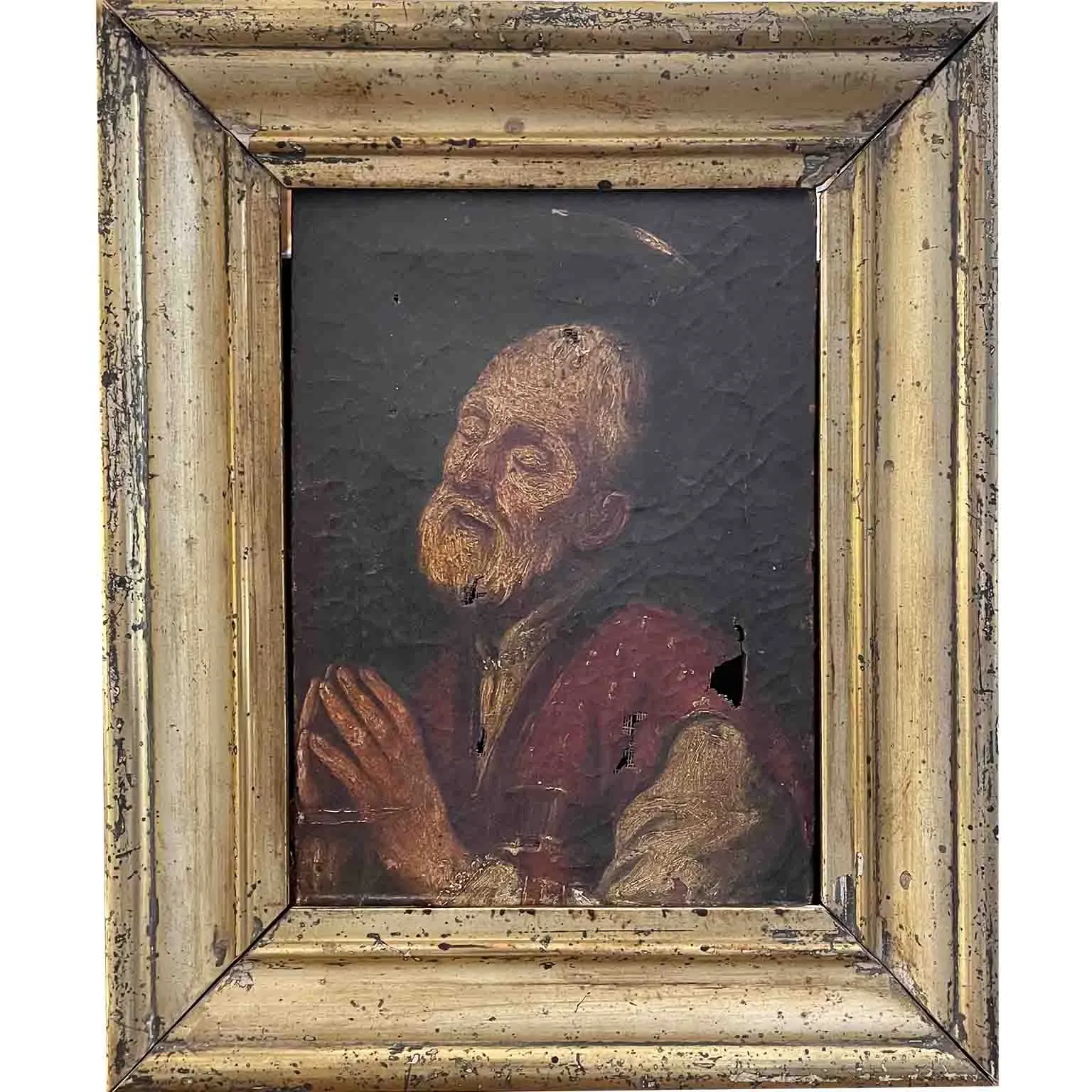
Portrait of a bishop with a crozier (circa 1700). The painting depicts a saintly bishop or church dignitary in a three-quarter view; the figure is turned three-quarters to the right, with a gaze full of solemnity and intensity directed straight at the viewer. The clergyman wears a mitre (a ceremonial headdress) richly decorated with jewels and geometric inlays, and holds a crozier (a staff topped with a golden spiral), symbolizing his role as a spiritual guide.
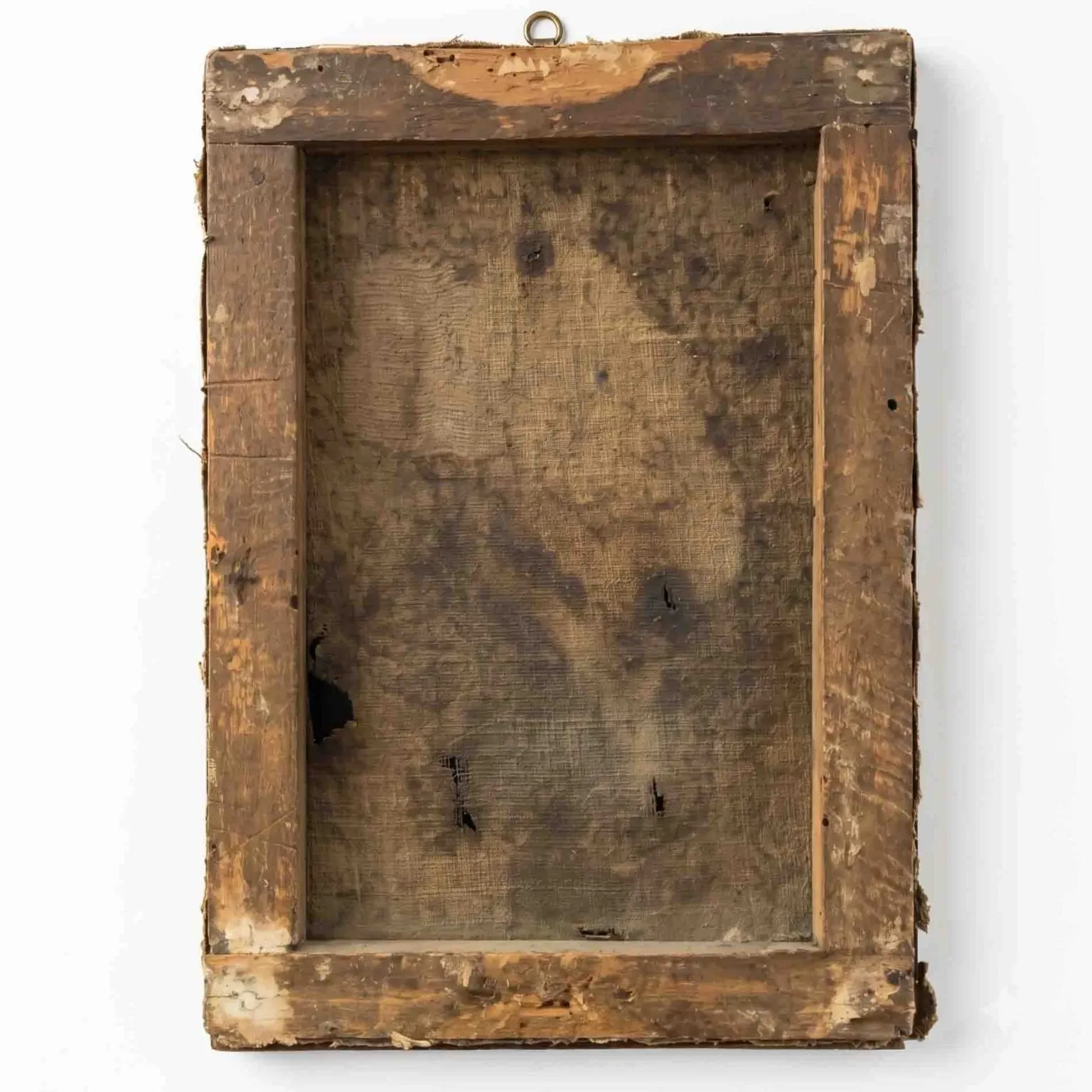
His face reveals a mature or elderly age; it is distinguished by a thick, dark beard falling to the chest and large, stern eyes painted with decisive brushstrokes. The figure is dressed in dark liturgical robes, decorated with gold embroidery or glitter (visible on the shoulder and chest), with a fragment of a reddish stole or band visible at the bottom. This work is a typical example of devotional painting and sacral portraiture from the Baroque or late Baroque period (17th–18th centuries).
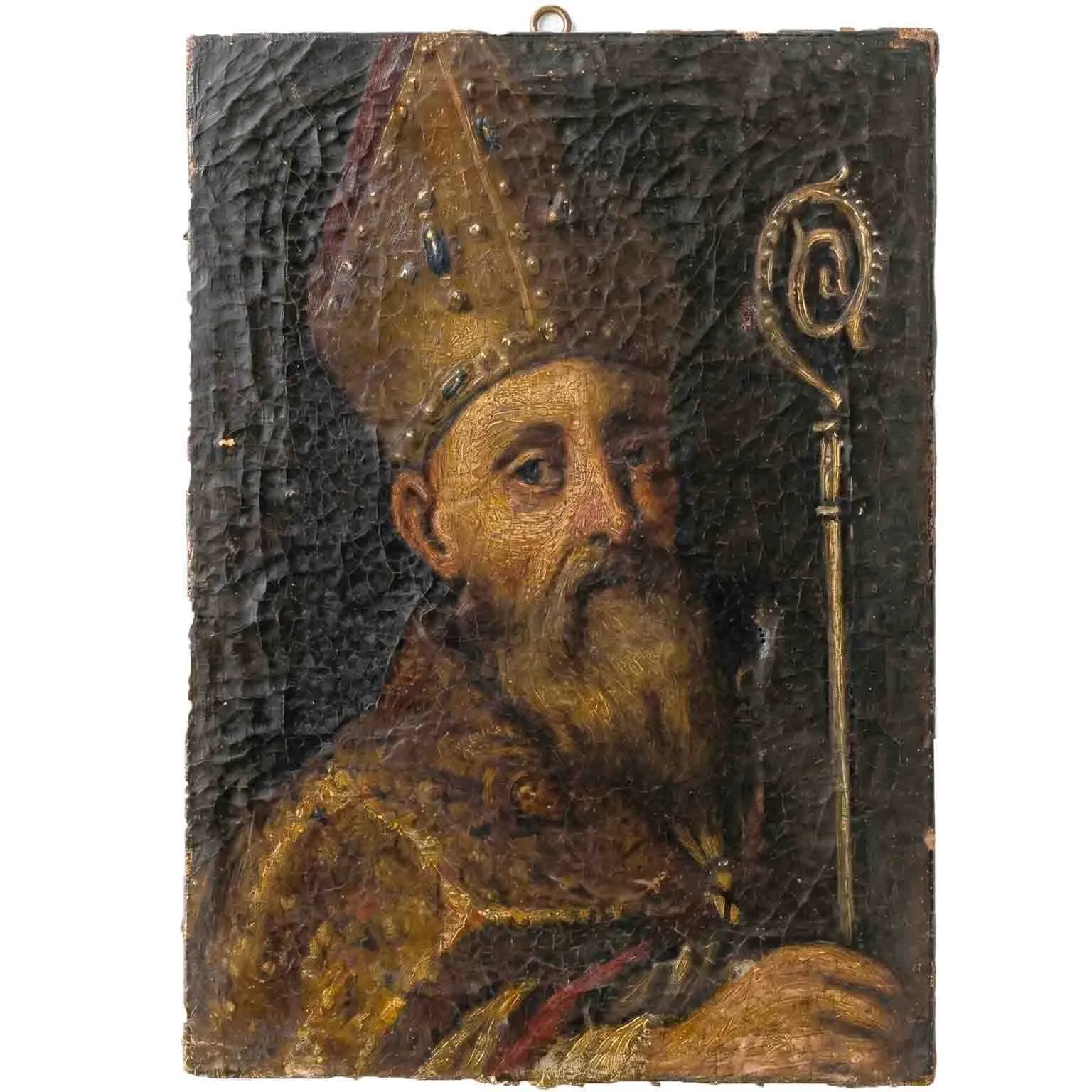
This style is characterized by strong chiaroscuro contrast (tenebrism), through which the face and golden symbols emerge from a completely dark background. Brushstrokes are decisive – in some parts of the face and beard, they are almost archaic – a feature typical of works created in provincial environments or schools of central and southern Italy, where dramatic expression of the depicted figure was a priority.
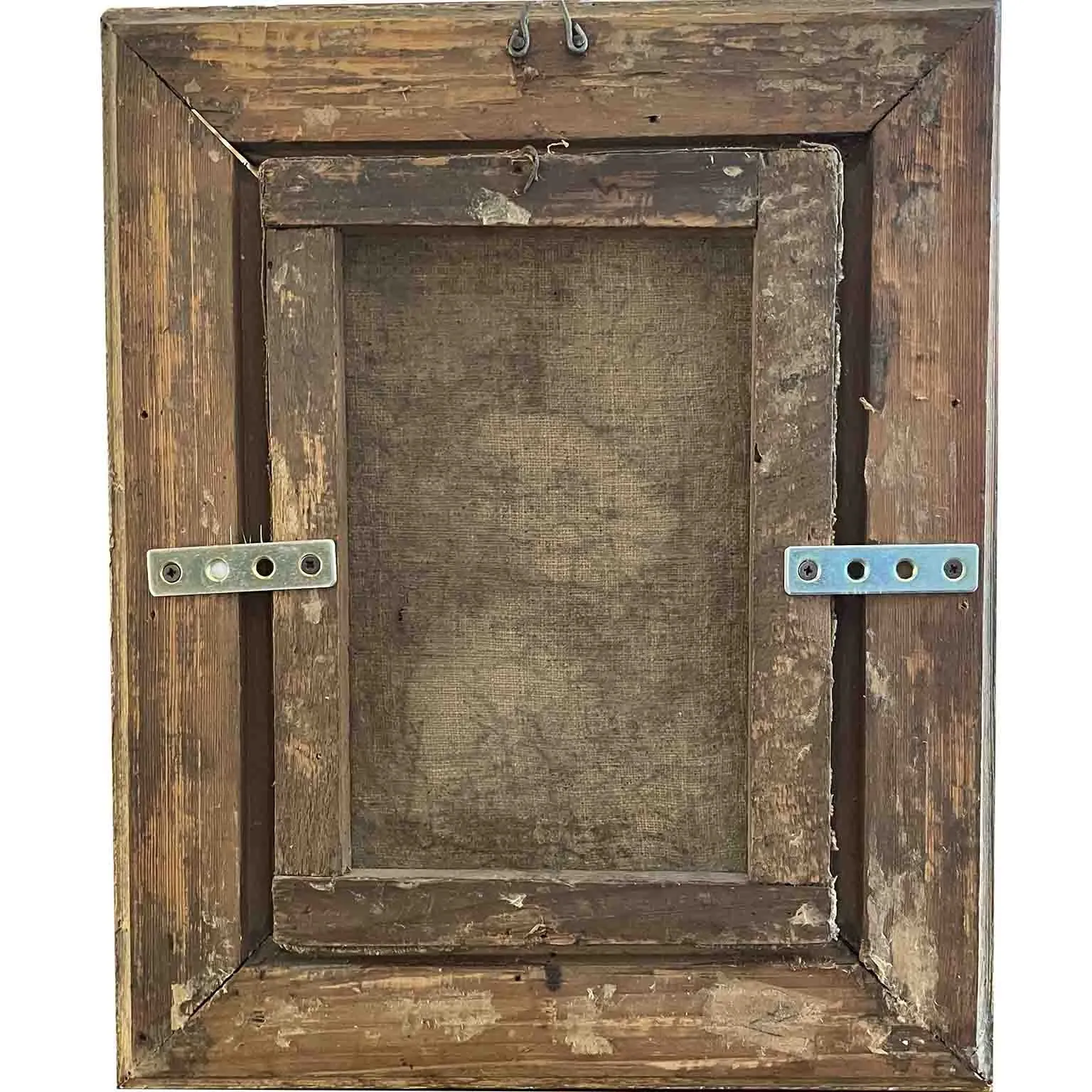
The painting shows clear signs of aging and structural changes affecting its readability: the entire surface is covered with a network of very deep, prominent craquelure (*crackle*), causing local flaking of the paint layer and giving the work a rough, highly textured surface. The protective varnish has significantly yellowed and darkened, flattening the half-tones and making the background almost completely black. Along the edges of the canvas (or substrate), small chips and paint losses are visible, likely caused by friction or previous framing. The work is presented in an antique frame finished with the *mecca* technique, with a slightly wider inner edge (lip).
Period: 18th century
Height: 34.5 (24.5) cm
Width: 28.5 (17.5) cm
Depth: 4 cm
More information: office@myluxuryproducts.com