We are pleased to present to you antique and unique angel sculptures.
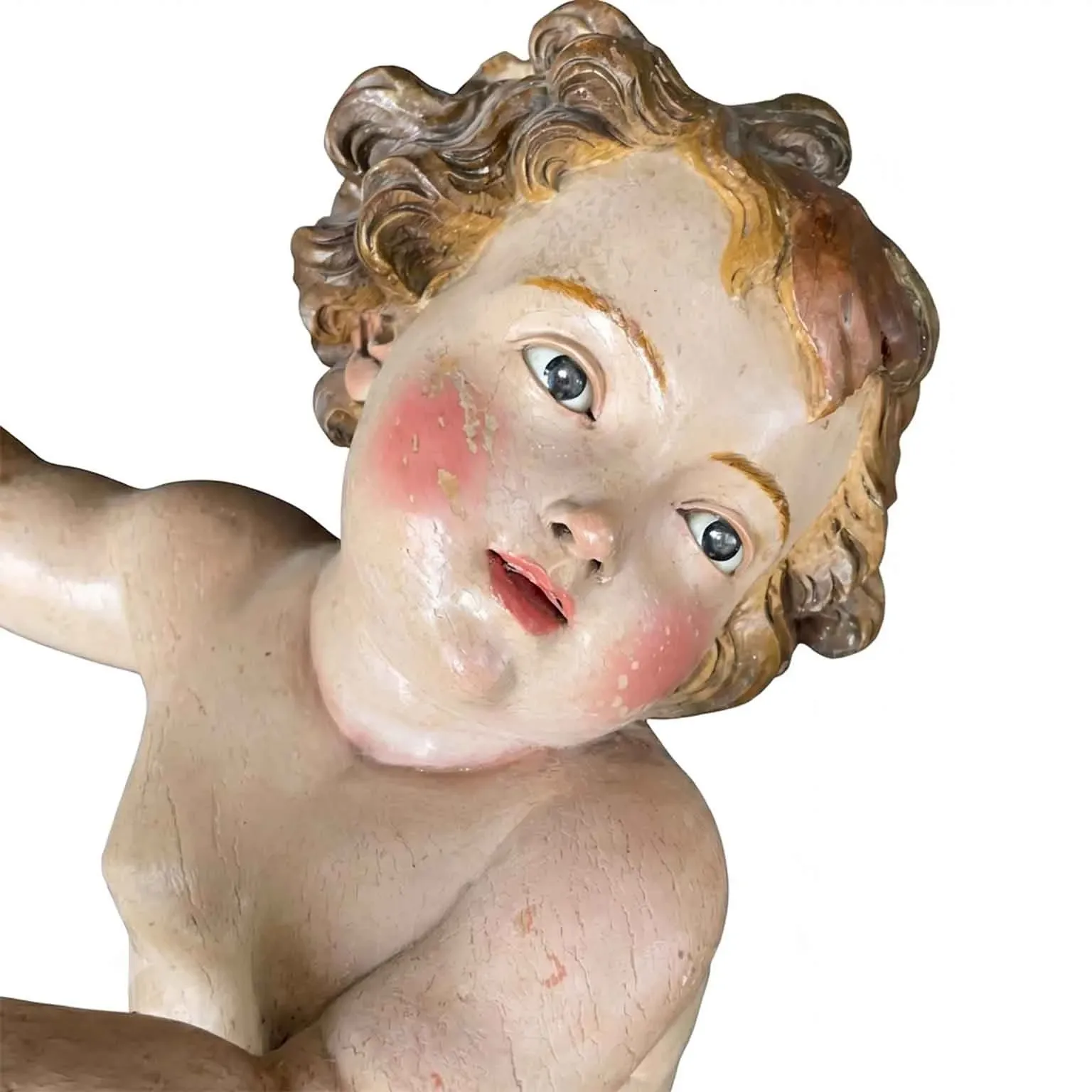
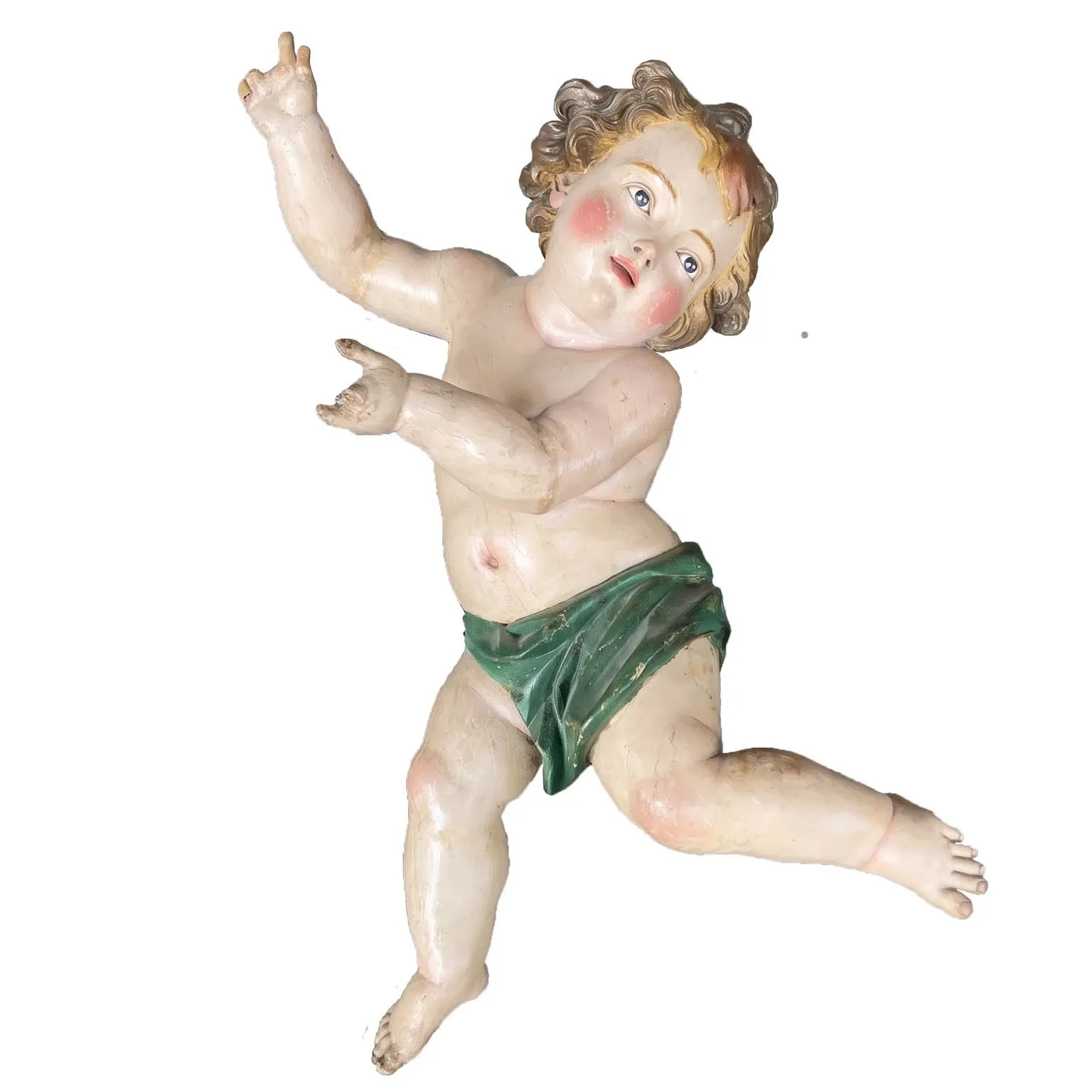
Figures stand out with full shapes, blushed cheeks, and brown, curly hair. They are depicted in a parallel arrangement, in a semi-reclining pose or floating in the air. The higher positioned putto has hips wrapped in drapery in Sienese yellow, while the figure below is draped in dark green. Both figures' arms and legs are arranged in dynamic poses. The surface shows clear signs of aging, including fine cracks in the polychromy (so-called craquelure), numerous abrasions, and small losses of the paint layer, revealing the underlying gesso and chalk ground.
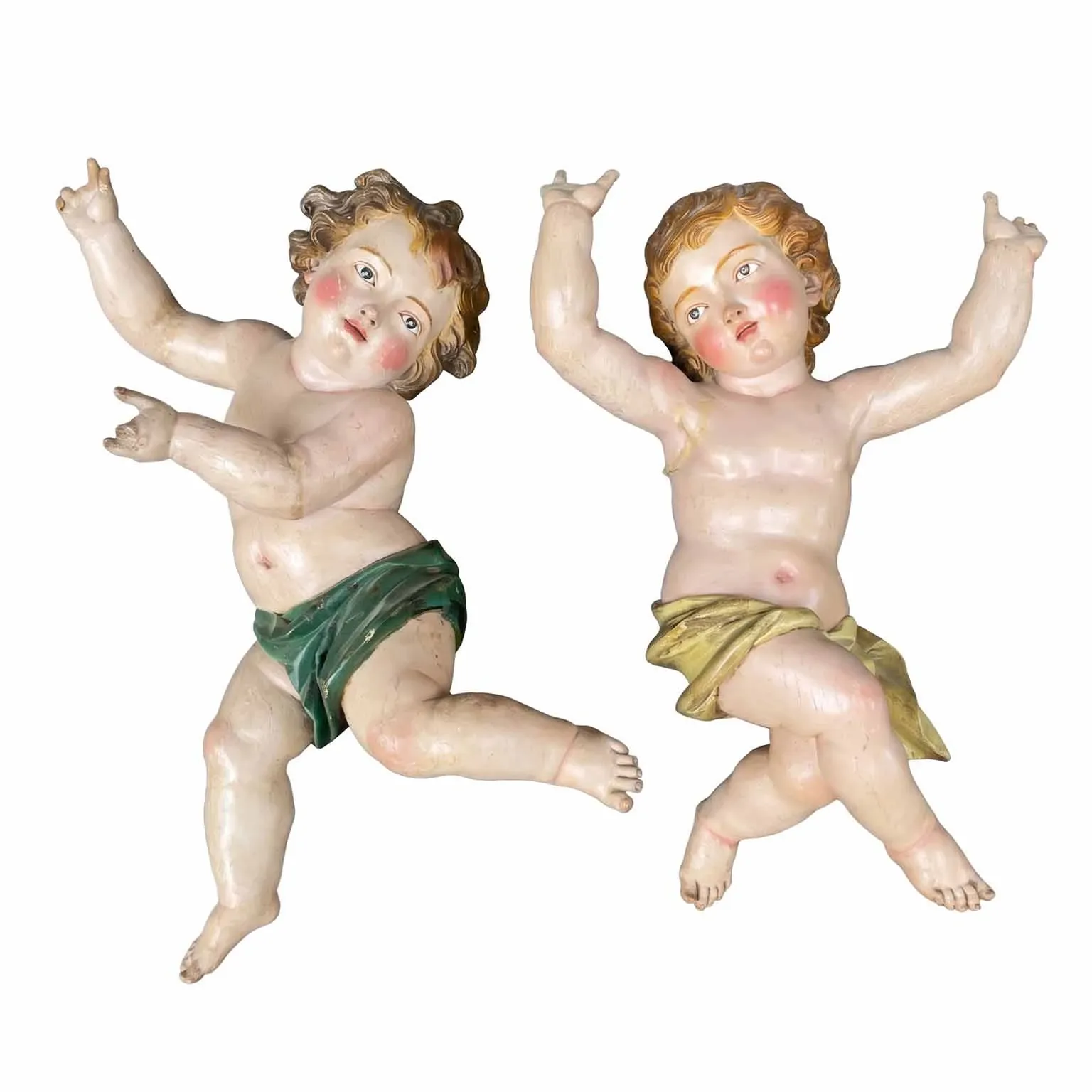
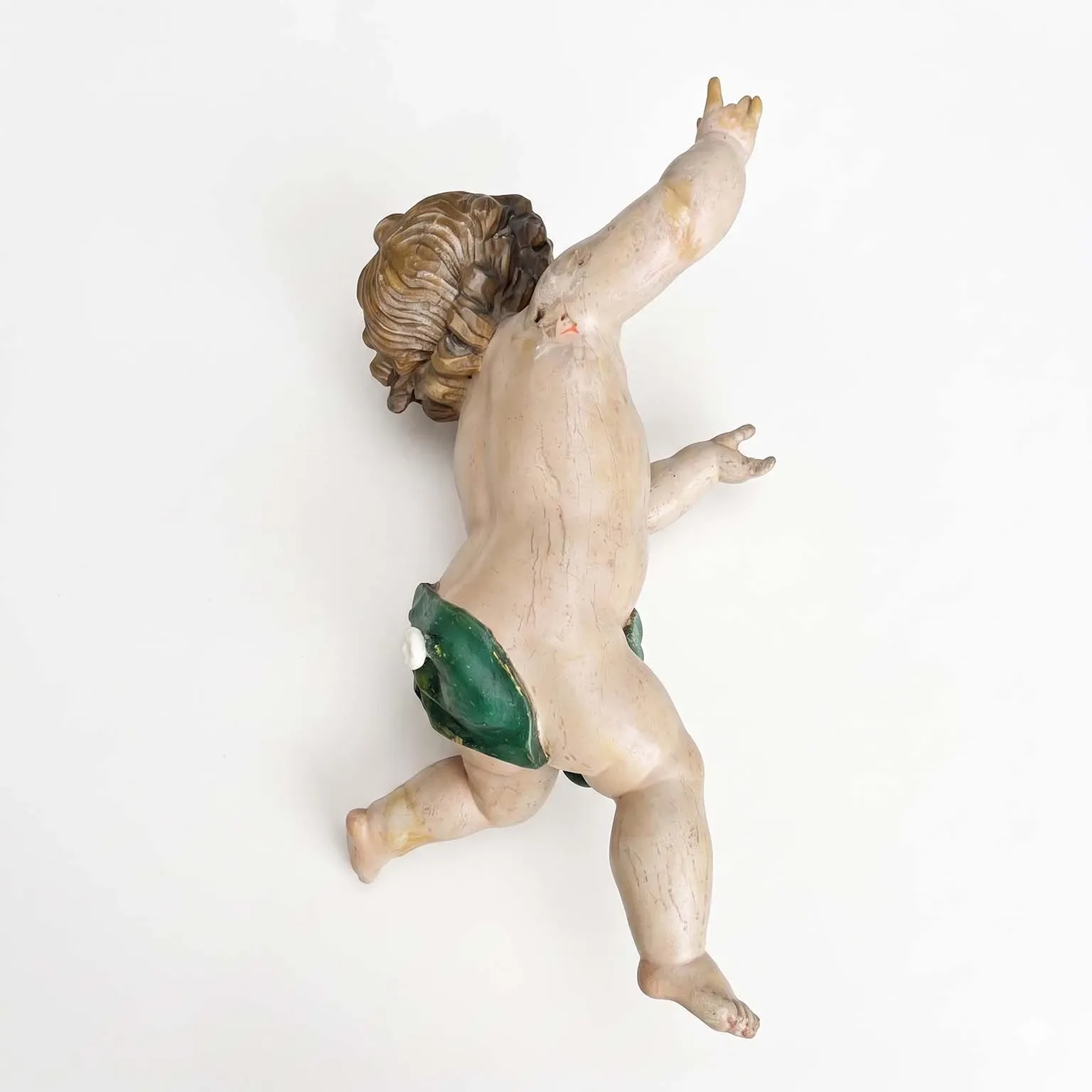
Both figures are wingless; although they originally had wings, these were added later and are not part of the original construction – as evidenced by the lack of traces of original joinery in the shoulder blades (wings were attached with small nails). The putti have glass eyes. The figure with yellow drapery shows traces of old restoration around the right armpit. Both cherubs have visible finger losses. Italy, 17th century.
The difference between *putti* and cherubs primarily stems from their origin: the former are secular and ancient, while the latter are sacred and biblical. *Putto* is almost always completely nude – often without wings or with butterfly or bird wings – and depicted during playful activities, such as holding garlands or playing instruments, in contexts unrelated to religion; cherubs, on the other hand, appear exclusively in sacred art. They are often shown only as a floating head surrounded by at least two wings – without a torso – emphasizing their purely spiritual nature, free from earthly corporeality.
Period: 17th century
Height: 53 (51) cm
Width: 42 (32) cm
Depth: 16.5 (14) cm
More information: office@myluxuryproducts.com