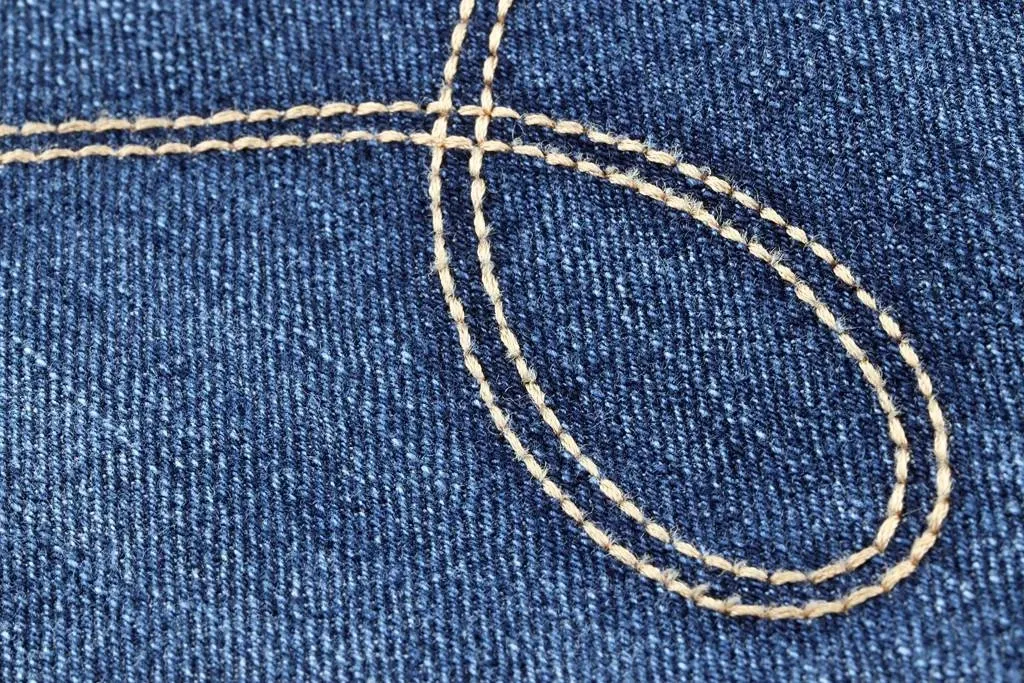
Jeans are an absolute classic of the genre and one of the hottest trends that has been with us continuously for many seasons. They have come a long way to hang in our wardrobes today. Considered a must-have in every closet, they serve as a foundation for many less or more casual outfits.
For many, this may come as a shock, but it turns out that the denim market is gradually entering a decline phase, and their sales are slowly decreasing. It is believed that a noticeable drop will occur next year and in the following years. How is it possible that the timeless jeans are no longer selling as well? Is this situation also noticeable in the Polish market?
And above all, what is the future of the denim market?
It seems that there are certain things that will always be in demand. Probably, this is not related to current trends, but to the fact that some items, thanks to their universality, have become a staple in mainstream fashion and remain there. Nevertheless, producers are tasked with responding to consumer needs and adapting the market to its fluctuations. According to recent research conducted by consulting firm Coresight Research, it is expected that this year, jeans sales in the United States will increase by only 6%, compared to an 18.8% growth in 2021, and in 2023, they may even slow down. For many denim enthusiasts, these figures may be surprising—so where do these numbers come from?
Old jeans versus new jeans
Starting from the beginning, how did the denim market establish its position in global sales? Tracking its history, one can observe that around the middle of the last century, denim gradually transformed from clothing worn solely by manual laborers into a product worn daily by everyone, regardless of age, gender, or wealth. This shift occurred because the properties of this fabric were appreciated, primarily durability and resistance to mechanical damage. It was quickly noticed that jeans do not wear out too quickly, do not lose quality after frequent washing, do not hinder movement, and do not cause discomfort. This led to the popularity of denim jumpsuits, and over time, simple denim pants as well.
This brings us to subsequent significant changes. Jeans began to penetrate mainstream fashion when, thanks to youth culture, they moved onto the streets. Hollywood stars also contributed to this, popularizing jeans worn straight out of American westerns. Soon, mass-produced denim clothing became affordable, allowing a significant portion of American society to purchase them. And this was the case for a long time, as most people could afford jeans, which contributed to their widespread acceptance.
Today, it is estimated that European and American consumers have on average four to six pairs of jeans in their wardrobes, with some variation between countries, where Italians and Americans are the most stocked, averaging six pairs. One might think this is still a considerable number, but it turns out it was even higher in the past, as confirmed by data from previous years. According to estimates by Première Vision, based on Euromonitor data, jeans consumption, which increased by only 0.7% in the years 2016-2019, in the United States, decreased by 4%, and in France and Italy by 4% and 4.8%, respectively. However, there was a strong rebound in 2020-2021, with growth of 27% in the United States, 14.6% in France, and 10% in Italy. This revival, therefore, was short-lived.
What is behind such a significant decline in sales?
This issue, as is well known, is related to the relationship between supply and demand, which is influenced by many factors. One of them is the geopolitical situation of the world and significant events mainly occurring in Western European countries and the United States. For several months, it has been discussed that, "in light of rising inflation caused by drastically increasing energy and raw material prices, as well as the consequences of the Russia-Ukraine conflict, global fashion consumption is not experiencing the expected recovery after the health crisis of 2020 and 2021." The words of the organizer of Première Vision fair, as reflected in a survey conducted in April 2022, seem to be supported by statistical data.
The crisis is having a very noticeable impact on the clothing market, as new garments are not considered essential items. In an effort to save money, expenses such as purchasing additional pants in different styles or colors will certainly be deprioritized. It is worth noting that the situation does not directly hit the denim market, but rather affects it more generally. But why is this so evident in the case of denim?Another factor contributing to the decline in jeans sales is the perception of jeans as a utilitarian purchase rather than a fashion product. Although it is widely believed that their aesthetic function plays a significant role, 58.5% of respondents in a survey in the United States indicated that their main motivation for buying jeans was to replace an old, worn-out pair. It turns out that although denim was once regarded as a material worth buying for its quality, in times of crisis its market may suffer considerable losses. People currently facing financial instability, if they own a good pair of jeans, are unlikely to buy new ones in the near future.
What is the situation in Poland?
Given the above findings, it is not surprising that the situation in our country looks similar, even if this phenomenon is not more visible here. Although we do not have detailed data on the decline in jeans sales within Poland, we should consider that the current inflation rate is more than twice as high as in America. Poland also feels the effects of the war in Ukraine more acutely, and changes in the quality of life for its citizens are more noticeable. According to a survey conducted by UCE RESEARCH and SYNO Poland, nearly 70% of Poles have reduced their shopping expenses in recent months. The cuts mainly affect clothing, with alcohol, sweets, and snacks ranking second.
Interestingly, the youngest (18-22 years) and the oldest consumers (56-80 years), living in smaller towns, are the ones most often cutting back on clothing purchases. This is an extremely difficult situation that we all are experiencing painfully, including producers. Large retail chains, noticing lower sales, are already gradually raising prices to compensate for their losses. Smaller businesses, especially in the denim market, may be struggling, particularly local businesses and handmade denim clothing.
Fabio Adami Dalla Val, curator of Denim Première Vision, explains that the denim market has always gone through cycles; today, these cycles have simply shortened. "Several producers from Pakistan and Bangladesh did not participate in the show because they currently have very low order levels, especially from American clients. Their production has dropped by as much as half." It is worth noting that it is the mass market that is experiencing the crisis, as stores are full but sales are declining. Additionally, supply chain issues are affecting many countries.
What to expect in the coming years?
It is difficult to estimate how the situation will change in the coming months and years. It is projected that in 2023, denim will account for 4.5% of the entire American apparel market, down from 5.5% previously. Although there are forecasts that the denim market should still grow in 2024 and subsequent years in the United States, it is unlikely to regain its pre-pandemic market share due to the stronger growth of sportswear sales. This social factor also plays a significant role. Globally, there is a noticeable post-pandemic trend towards wearing looser everyday clothing; we now reach for comfortable and warm tracksuits much more often than before—perhaps even more often than classic jeans in the near future.
Can we expect the end of the jeans era?
Relax, the situation is not that dramatic; there is only a slight chance that the denim market will collapse. It’s simply a matter of decreased sales caused by the current global situation. Many manufacturers are still ready to meet the demands of their consumers. The offer remains broad, and jeans styles are constantly evolving. It’s also worth remembering that larger clothing companies, luxury brands and fashion houses are less vulnerable to the crisis due to their reputation and the clientele their assortment targets. Many shoppers prioritize quality when purchasing clothing, and price plays a lesser role.Additionally, there are loyal customers who have been supporting certain brands for years. So, if you have a favorite brand whose jeans fit you perfectly, consider stocking up there again. Despite changing trends, jeans have never truly gone out of style. It can be assumed that this crisis is just one of the cycles that almost every market goes through.