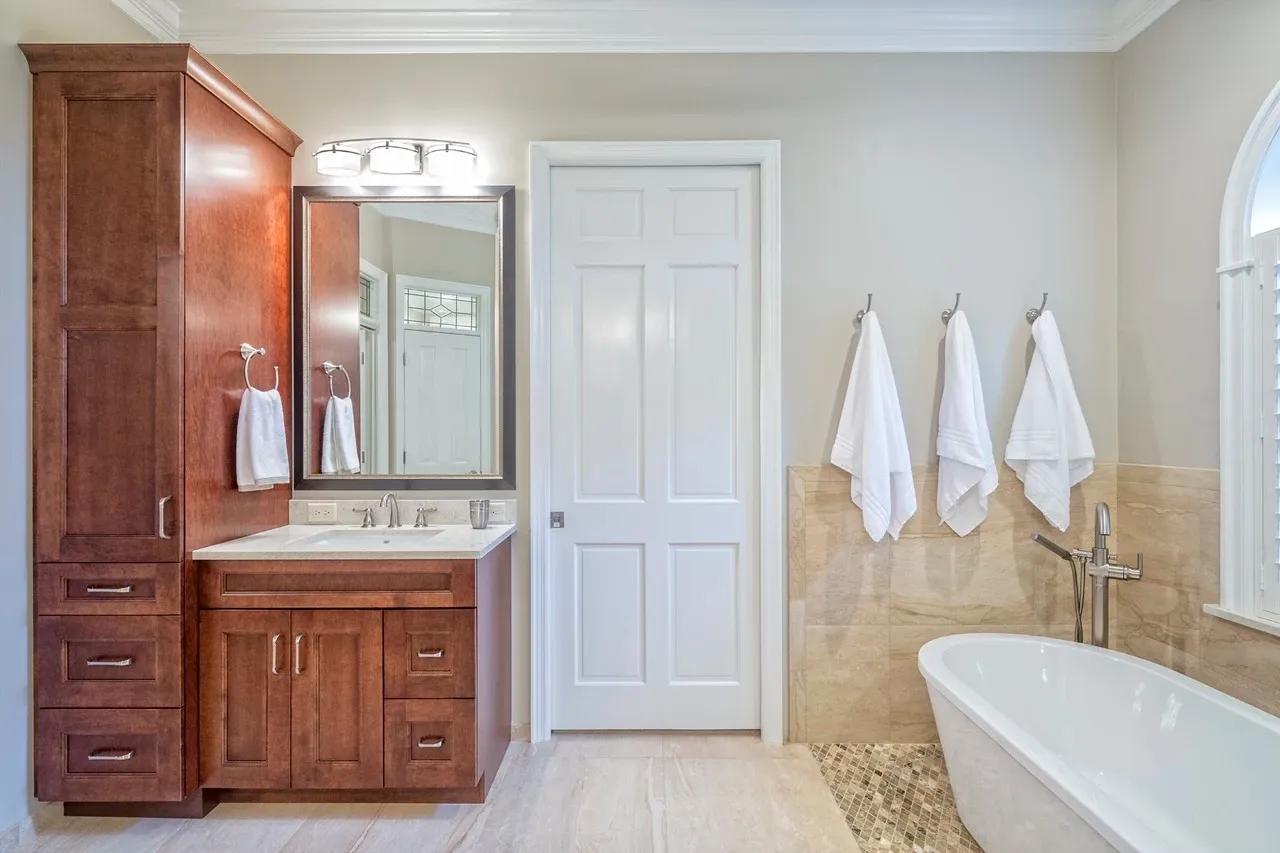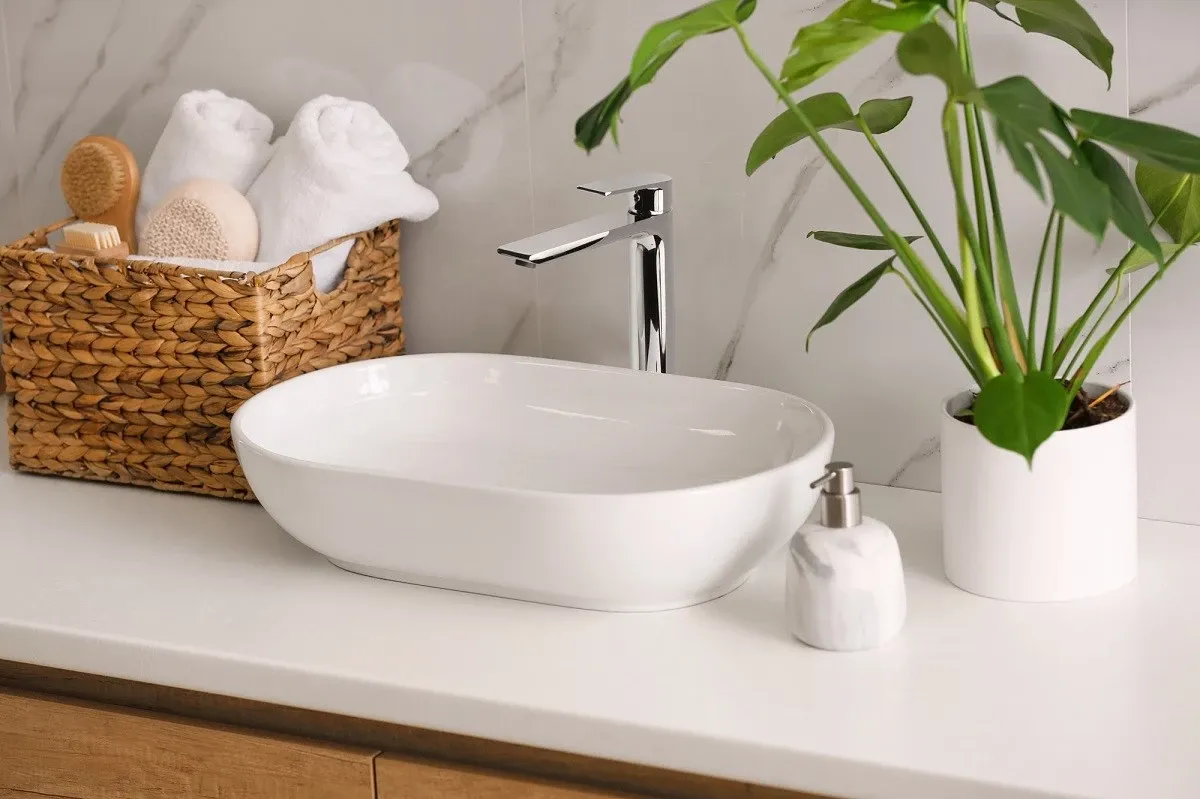
One of the most important elements of the washbasin area in the bathroom is the washbasin faucet.
The first, purely technical criterion for choosing is the size of the sink. A properly matched faucet will prevent water splashing and will make it easier to fill the basin with water if needed. It should also ensure comfortable use.
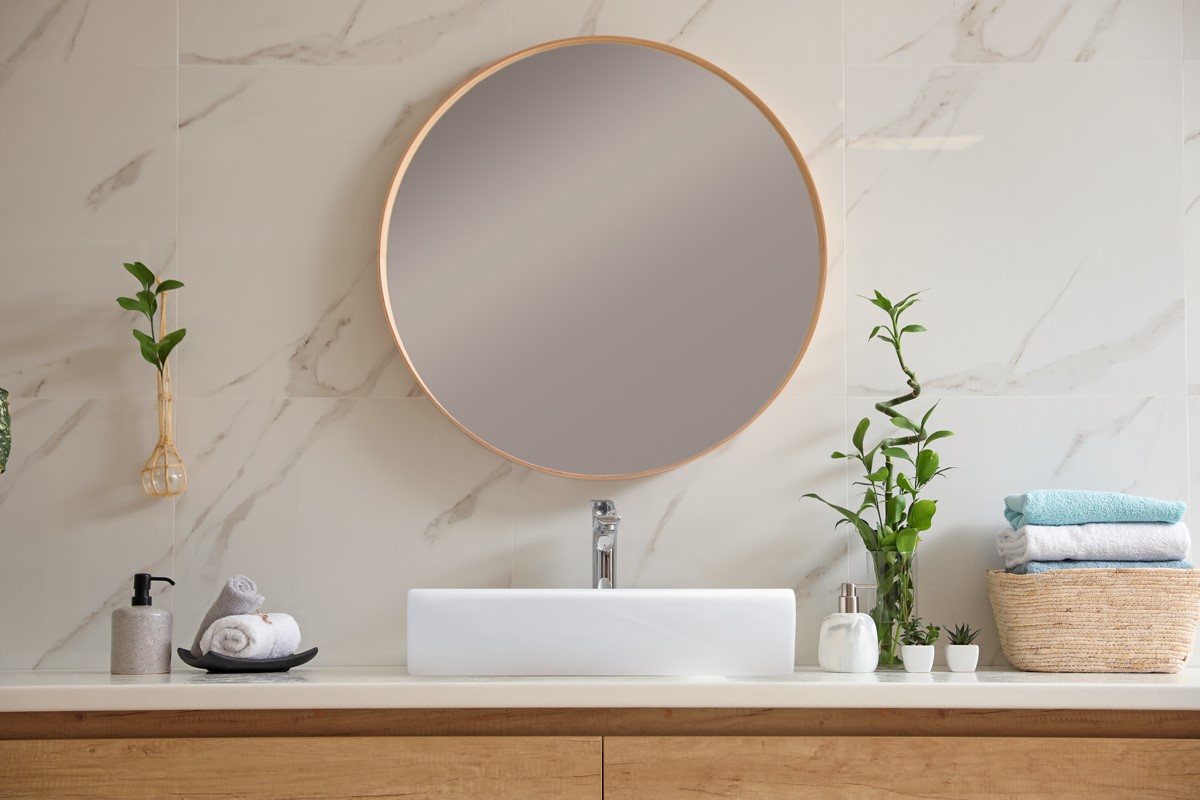
Washbasin Faucets – What Types Do We Have?
Depending on the installation washbasin faucets are divided into:
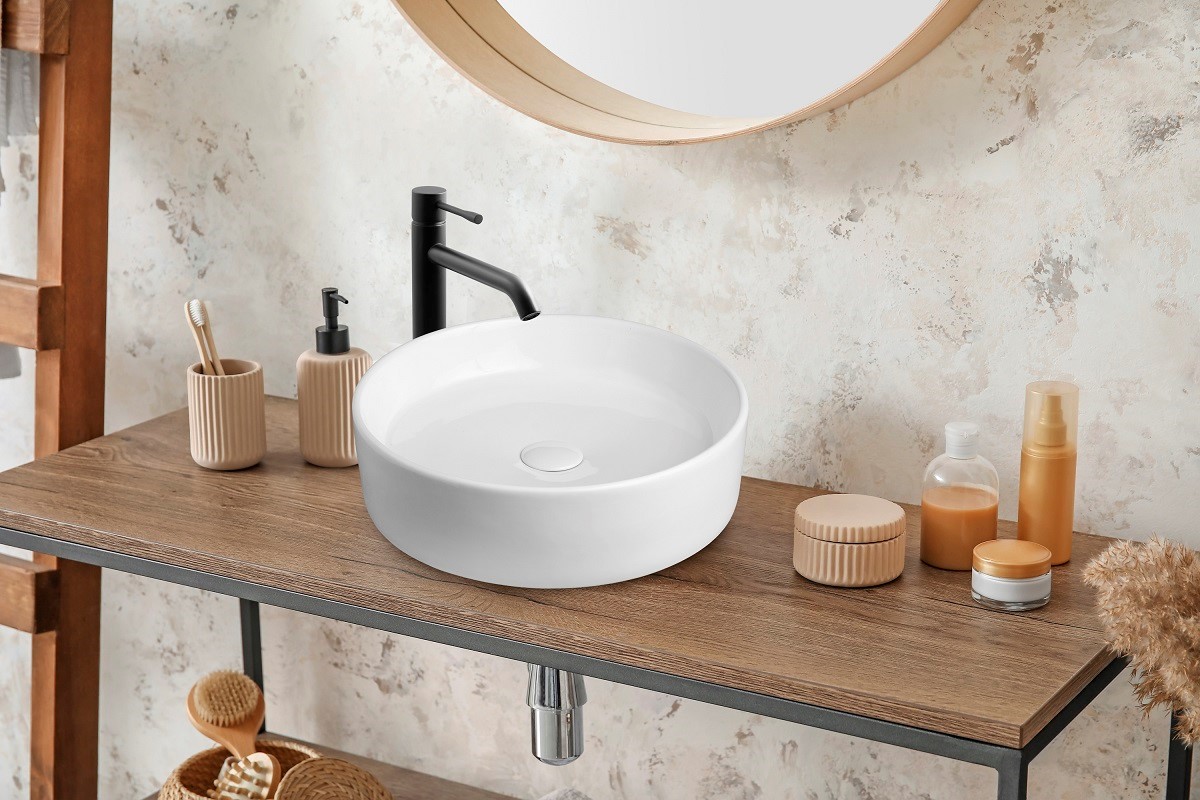
• deck-mounted, standing – very popular and most commonly used. They are installed in a
dedicated hole in the sink or on the countertop on which it stands. Depending on the type of sink and installation method, we can choose low, medium, or high faucets.
• wall-mounted concealed – practical, allowing better space utilization because the entire connection is hidden in the wall. They are distinguished by beautiful design and minimalism.
• wall-mounted surface-mounted – a version increasingly rarely seen, mostly in older buildings
• freestanding – an exclusive model, one of the hottest interior design hits, mounted on the floor. Stylish and modern, it will enhance the visual appeal of the bathroom space.
Depending on the operation method, washbasin faucets are divided into:
• single-handle faucets – convenient to use, easy to set the water temperature and flow rate
• two-handle faucets – often stylized, less frequently chosen due to higher water consumption than single-handle models, often used in retro bathrooms
• pneumatic or timed faucets – innovative solution, their design causes the water flow to automatically shut off after a set time
• electronic, touchless faucets – the most innovative type of washbasin faucets. They ensure hygienic hand washing while reducing water consumption.
The number of holes needed for installation classifies them into one-, two-, and three-hole models.
The next criterion is shape. The most popular are lever faucets with a stick-shaped handle, with angular finishes, and with a slim joystick handle. Faucets are designed in various styles. Modern styles feature simplicity and minimalism. Retro-style faucets are true works of art. They are mainly used in vintage, classic, and eclectic bathrooms.
The next aspect to consider when choosing a faucet is the type of spout. It is important to consider its height and shape. It should be appropriately matched to the depth and width of the sink. It can be short or long, straight or arched, fixed, pull-out, swivel, or cascade. A functional model is a movable spout, as it allows precise directing of the water stream in the desired direction.
Washbasin Faucets – What You Should Know?
Next parameter affecting the comfort of using a washbasin faucet is the noise level class. This indicator informs about the level of noise generated by the faucet. Another criterion for choosing a washbasin faucet is the material from which it is made. It is worth opting for a reputable brand that offers a warranty on its products. Most faucets are made of brass, ensuring that the body and spout are solid and corrosion-resistant. The material of the cartridge, which guarantees proper operation of the faucet, should also be considered. Ceramic models are the most durable and reliable. It is also advisable to choose a faucet coated with a special PVD layer, which has antibacterial properties and is resistant to scratches and mechanical damage.Popular Washbasin Faucets – What's Trending Now?
Another aspect to consider when choosing a washbasin faucet is color. The undisputed king of bathroom decor is chrome, which fits into any style. Faucets in black, white, or gold are also popular, as well as more vibrant shades like pink or orange, which can provide an interesting contrast in the design. Black faucets are especially suitable for industrial or minimalist bathrooms. Elegant gold adds sophistication and luxury to our bathroom. Additionally, almost any surface can have a glossy, satin, matte, or brushed finish.
Eco-friendly features in washbasin faucets.
The world is becoming increasingly environmentally conscious and strives to minimize negative impacts on the environment. Nowadays, we more often choose faucets that allow for sensible water usage and cost savings. You can opt for a lever faucet that operates in two stages — full water flow is only available after overcoming a noticeable resistance. Another eco-friendly solution is a lever equipped with an eco-button, which sets the water flow and temperature to a pre-determined level. It’s also worth noting the spouts fitted with aerators, which are mesh filters that oxygenate the water. Thanks to them, the stream remains sufficiently strong while using less water. A washbasin faucet significantly affects the comfort of use and the appearance of our bathroom. It’s important that it is trouble-free and reliable. Choosing one is a decision for years to come, so it should be well thought out.
SPONSORED ARTICLE