We choose a watch over months. We read about mechanisms, compare dials, check the case thickness to the tenth of a millimeter, and discuss the power reserve as if it were something that determines our happiness. And then we wear it for years on the same bracelet it left the boutique with — and we don't even notice that it is actually this element that most significantly influences how the watch looks on the wrist.
Let me be frank: the strap is half of the character of a watch. The same case on a steel bracelet says "office and suit," on a brown leather strap — "weekend out of town," and on matte rubber — "yacht, summer, tranquility." You don't need to buy three watches. One is enough, along with a few well-chosen straps.
The strap is half of the watch — it's a pity we forget that so often
Pick any model you know by heart and imagine it in three versions. Not only does the color at the wrist change. The proportions change — a narrower strap visually slims the case, a wider one adds bulk. The temperature of the entire styling shifts: cool, technical steel versus warm, soft leather. And the occasion for which the watch is suitable also changes. Collectors simply call this strap rotation and treat it as the cheapest way to own several watches for the price of one.
This is why changing a strap can be more satisfying than many purchases. The effect is immediate, costs a fraction of a new timepiece, and the wrist gets something that genuinely changes daily wear.
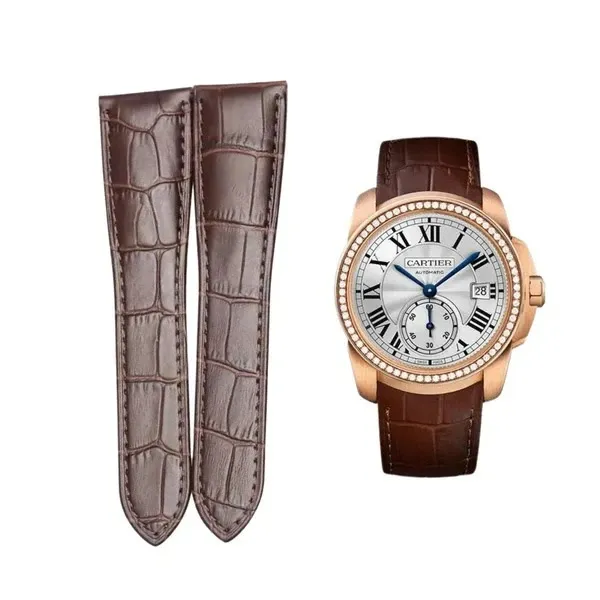 photo: helvetus.pl
Rubber that has risen to the top tier of luxury
A few years ago, rubber was associated with cheap sports watches and sticky rubber that started cracking after a season. Today, it’s quite the opposite. The most sought-after models from the top segment are now made on factory rubber straps, and the material once considered a compromise has become a conscious stylistic choice.
The reason is simple: FKM rubber simply performs better than most alternatives. It’s lightweight and warm to the touch, doesn’t stick to the skin in the heat, and doesn’t absorb sweat or water, making pools, the sea, or the gym no longer problematic. It doesn’t attract dust like cheap silicone rubber and doesn’t harden after a few months. Well-made, it has a deep, matte finish that looks expensive on the wrist, not beachy. Plus, it’s hypoallergenic — many people who previously experienced skin irritation now forget about that issue with rubber.
An added bonus is often the best: people stop saving their watches for special occasions. Instead of keeping them in a safe for rare moments, they wear them every day. That’s why more and more people are choosing premium watch straps made of FKM and treat their strap changes as part of the fun, not just a service necessity.
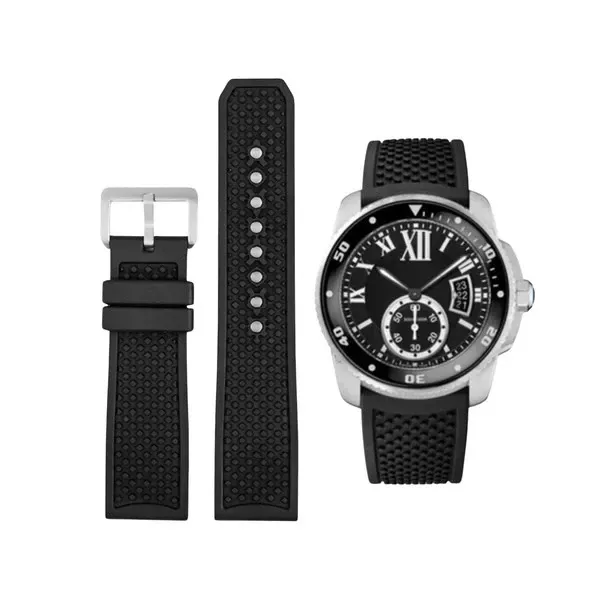 photo: helvetus.pl
Cartier on rubber? An apparent paradox that simply works
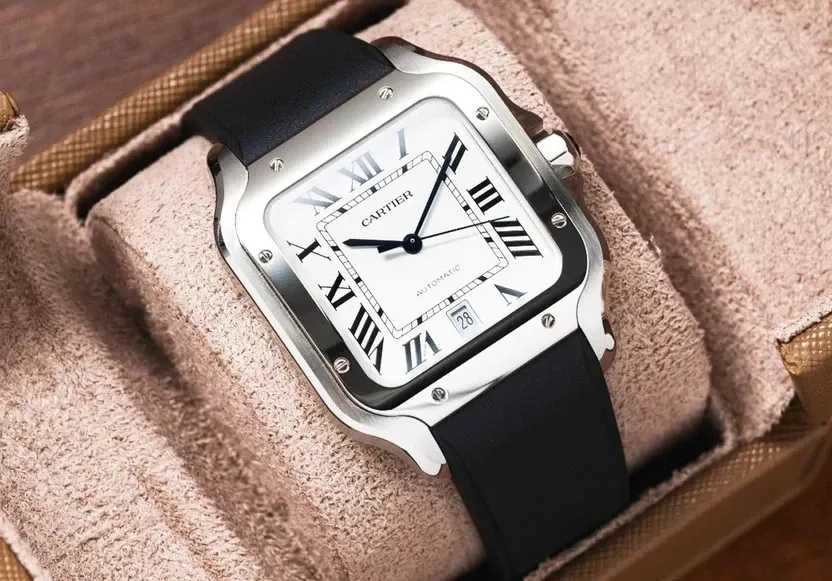
Usually, the opposition arises. “Cartier is elegance, rubber is sport, they have nothing in common.” It sounds logical — and it’s wrong. It’s precisely the tension between the classic case and the modern strap that creates the most interesting effect. The Santos, designed for aviation pioneers, almost begs for a technical, matte strap; on rubber, it looks fresh and surprisingly contemporary. The Tank or Ballon Bleu, on the other hand, gain a second, less formal life — suddenly suitable for shorts and linen shirts, not just under a cuff.
If you wear Santos, Tank, Dumont, or Ballon Bleu, well-fitting rubber straps for Cartier can rejuvenate a classic by a decade and make you reach for it more often. The key, however, is the word “fit”. Cartier has unusual, contoured ends, where a regular strap straight from the tailor would gap and ruin the entire line. It’s worth looking for solutions tailored specifically to your model — ones where the strap fits perfectly into the case, without gaps, and a quick-release mechanism allows you to change it in seconds, without a screwdriver or a visit to the watchmaker. Then there’s the color: classic black for suits, deep navy for everyday wear, and in summer, orange or blue, which can turn a serious watch into the most cheerful item in your wardrobe.How to recognize a good strap, not just a piece of rubber
The market for replacement straps is huge and very uneven. Before spending your money, check a few things — the difference between a good and an accidental strap is obvious from a distance:
- Fit to a specific model. A universal 20 mm strap is a gamble. A version designed for a particular case fits seamlessly and doesn’t gap at curves.
- Material, not just “rubber”. Genuine FKM rubber differs from cheap silicone in durability, finish, and that it still looks like new after a year.
- Finish and hardware. Even edges, a solid clasp, a well-thought-out quick-release system. These are details you can feel with every clasp.
- Warranty and service. Lifetime warranty on rubber straps, clear return policies, free shipping, and no customs fees indicate that the manufacturer stands behind their product, not just selling a one-time item.
The last point is often underestimated, but it’s what distinguishes a serious brand from an anonymous seller. If something is to sit on your wrist every day for years, comfort and the confidence that someone will replace it if needed are worth paying extra for.
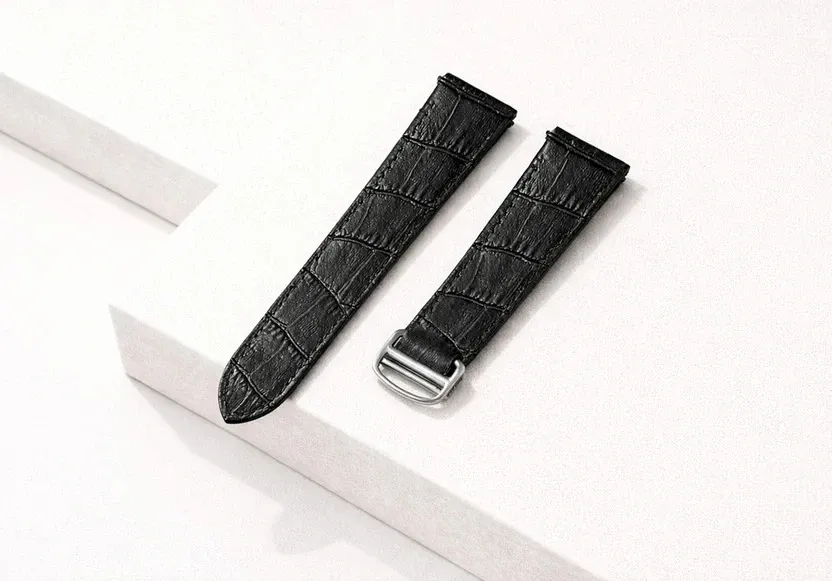 photo: helvetus.pl
The smartest upgrade starts with the case
There’s a certain irony in this. We spend a fortune on a watch, but the biggest change to its appearance can be bought for a fraction of that — without compromising on quality. You don’t need a new model to feel like you have a new watch. Sometimes, just flipping the case over reveals that the best upgrade has been there all along. A good strap doesn’t hide the classic — it finally allows it to speak with a full voice.
Sponsored article