
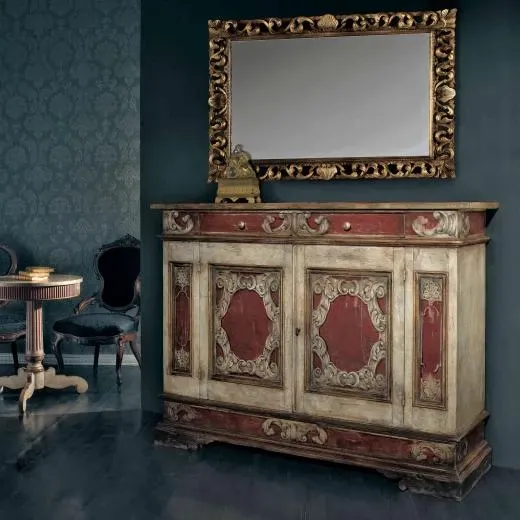
A sideboard is a piece of furniture that until recently was exclusively associated with grandma's kitchen. However, it is now making a comeback in a slightly different style. What is the history of the sideboard? What should you consider when choosing one?
A Brief History of the Sideboard
The sideboard was already known in the 15th century. At that time, it was used to store tableware and covered dishes. In a slightly more decorative version, this piece of furniture appeared in Italy around 1500. It was then called “credenzone” and served as an intermediate element between a chest and a cupboard. The sideboard took the form of a low, wide cabinet, which was closed at the front with a pair of doors, above which were placed drawers. Its decoration often featured ornate tableware, bowls, jugs, or goblets.
Especially striking were sideboards decorated with sculptural carvings with architectural motifs. In later years, this furniture also appeared in French cabinetry, where variants such as dressuar were created. This is a piece on tall legs, resembling a medieval Gothic pillar cupboard. In France, a somewhat more massive buffet with wide side-opening doors was also popular. Over time, the sideboard grew larger and taller. Large, richly decorated sideboards were characteristic of Polish design.
In traditional households, the function of the sideboard was served by a large piece of furniture used to store foodstuffs requiring a dry storage place, such as sugar or spices. It was also used to store tableware, tablecloths, and napkins. In the 19th century, the two-tiered sideboard became popular, with an upper, often glass-fronted part used to display decorative dishes.
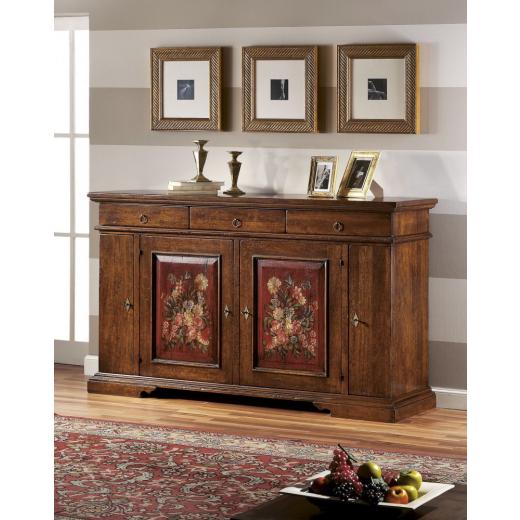
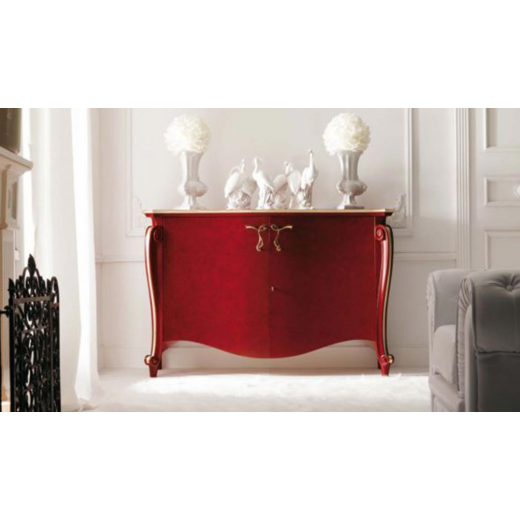
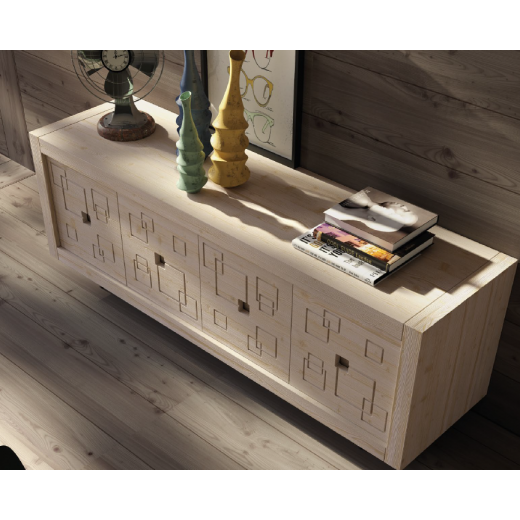
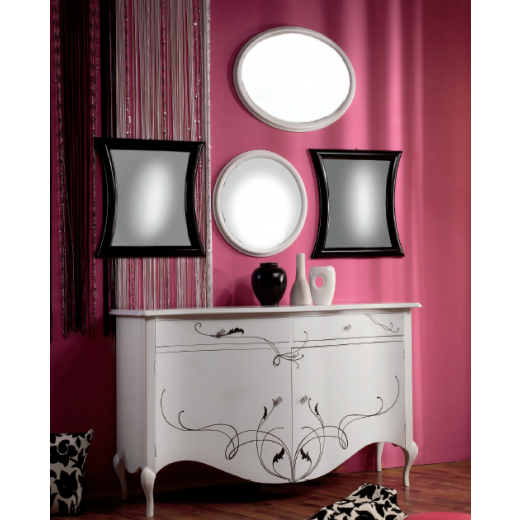
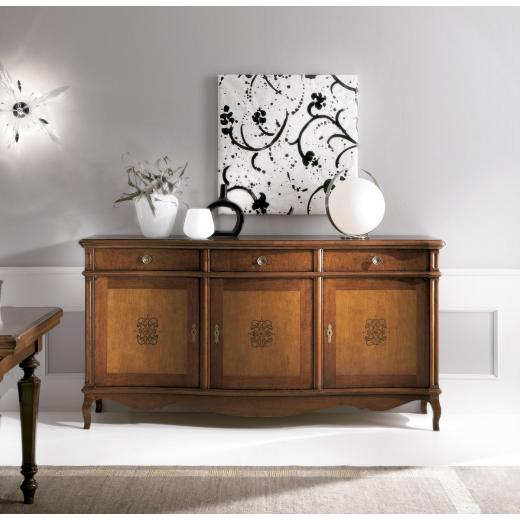
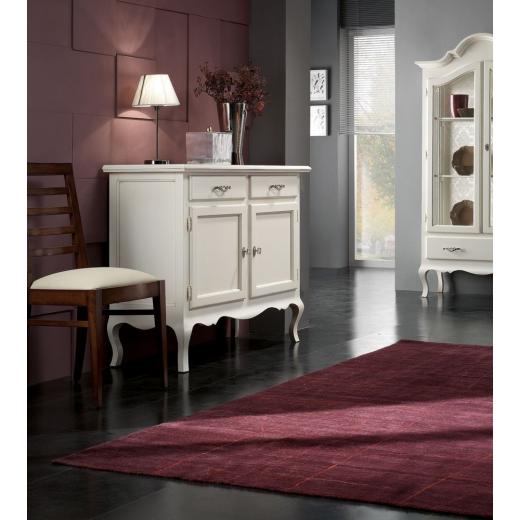
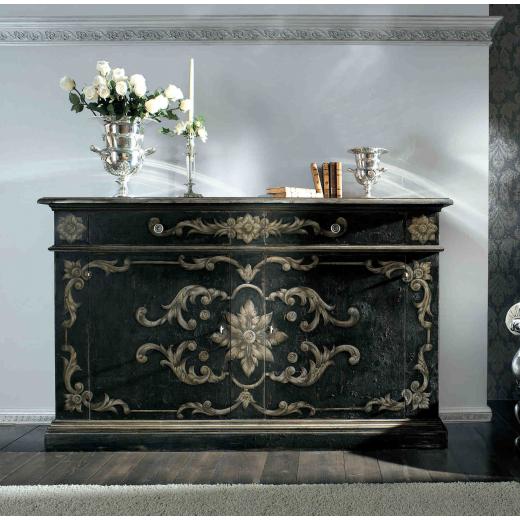
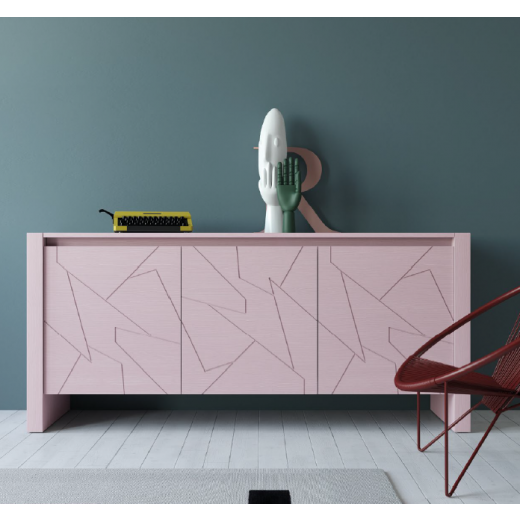
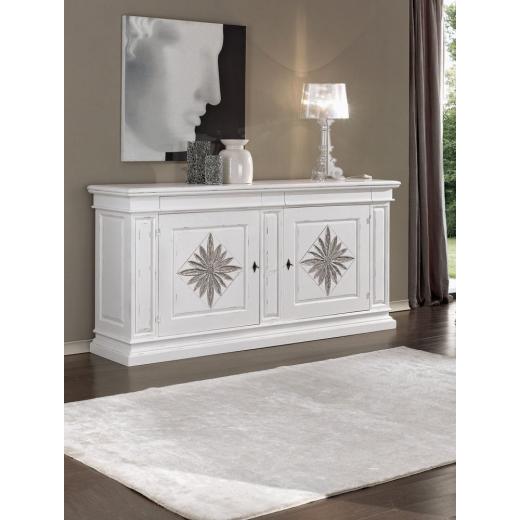
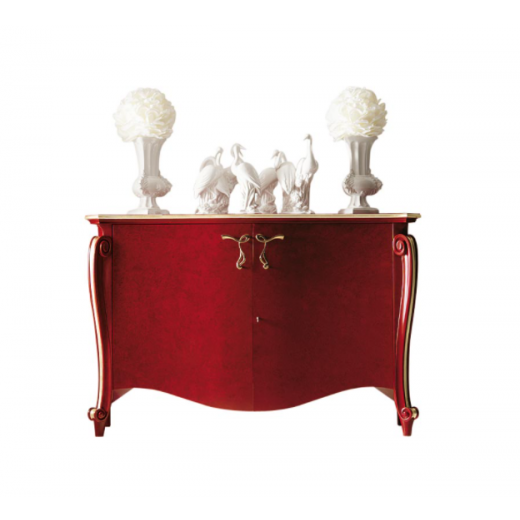
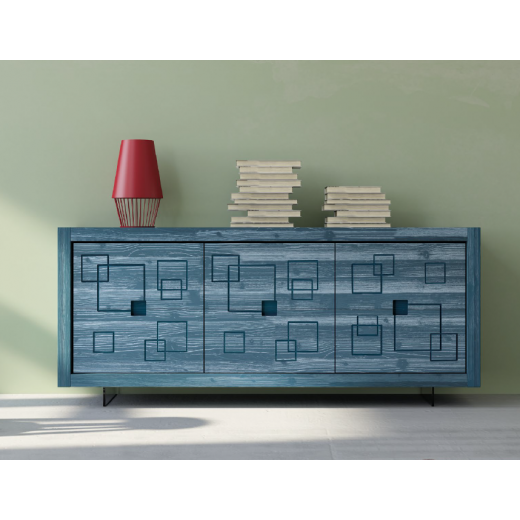
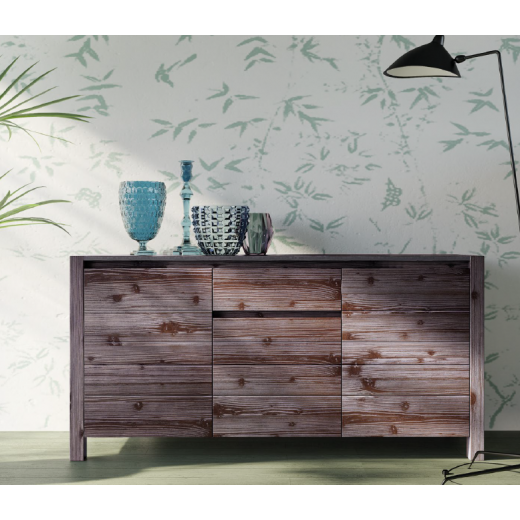
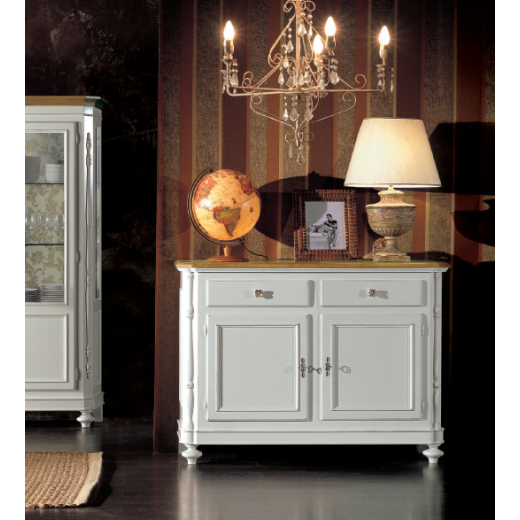
How to Choose the Perfect Italian Sideboard?
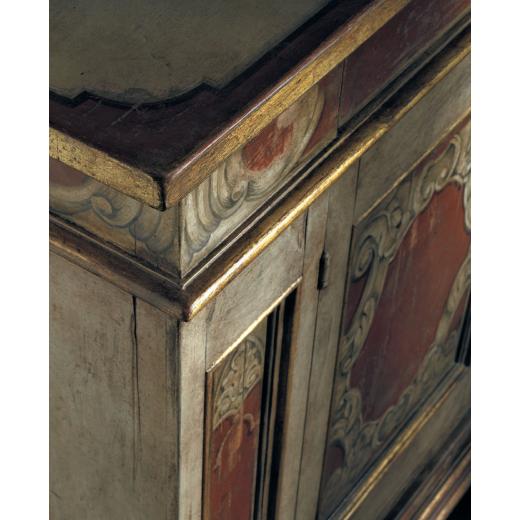
Wood is the most commonly used material for manufacturing sideboards. They can be kept in their natural brown color or feature shades of beige, white, or gray. Particularly impressive are models with an antiqued, distressed surface. This makes them ideal for interiors styled in a classic, Provencal, or Scandinavian manner.
Different models of sideboards may vary in dimensions and construction. Besides enclosed cabinets, they may also have open shelves or glass-fronted display cabinets, where you can place elegant tableware, family souvenirs, or favorite trinkets.
The sideboard is an extremely versatile piece of furniture that can be used in various rooms. For example, it can be placed in the kitchen, where it is perfect for storing cups, mugs, or bowls. Its lower part can be used for pots, tablecloths, less frequently used household appliances, or long-lasting food products like flour, grains, or pasta. Very practical are sideboards equipped with an additional countertop, on which you can place potted herbs, for example.
Another room where a sideboard works well is the dining room. Its enclosed sections are best used for storing tableware, while the open sections can display porcelain cups or decorative plates.