Many people who are not entirely familiar with interior design nuances mistakenly equate the colonial style with the Indian style. Although both can display certain similarities, it is important to emphasize that they are distinct types of decor. How do they differ, and which one might suit your home best?
Indian Style – a Touch of Bollywood in Your Home
If you were to describe Indian style in one sentence, it would be best defined as "oriental opulence". These arrangements are incredibly rich, sometimes, at least in Polish conditions, considered to be excessive or overly elaborate. However, there is no denying that Indian style is never dull or lacking in originality. There’s a lot happening here, and colors and patterns can be combined quite freely.
In Indian style, you can embrace the so-called artistic chaos – interiors in this arrangement enjoy a variety of fabrics, numerous accessories, and decorations, especially eye-catching ones – glass beads around lampshades or shiny trinket boxes. Additionally, it features vivid, lively colors – warm reds, deep orange shades, or sunny yellow can be interwoven with hues like turquoise, purple, or even bottle green.
Furniture and home accessories are equally rich in Indian style. Artistically carved, made from exotic wood, they can resemble colonial furniture (which is a certain element connecting both styles). When it comes to Indian furniture, one should speak of sturdiness and solidity, qualities rarely found in furniture available at chain stores.
Among decorative accessories, you should also include stylish items such as wooden, carved screens, incense holders, or elaborately decorated mirror frames.
Colonial Style – Oriental, but More Subtle
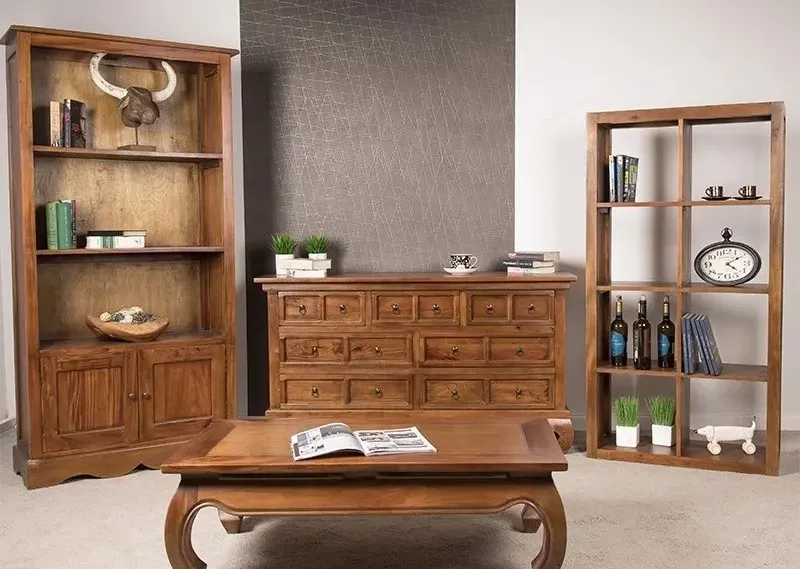
Colonial furniture is heavy, raw, and elegant. This style features very massive, decorative tables, cabinets, or benches that impress with their deep wood tones. Delicate, sometimes openwork carvings are crafted with attention to even the smallest detail.
In colonial style, color schemes are more subdued. Warm earth tones dominate, usually browns refreshed with white or dark green, reminiscent of oriental flora. The patterns are also somewhat more restrained, orderly, geometric, and symmetrical.
Decorative motifs prominently include animal themes (elephant figurines, wild cats), as well as ethnic elements – folk masks and similar symbols. All of this stems from the colonial roots of the style, originating from the times when Europeans colonized distant parts of the world. Driven by necessity, they attempted to adapt local decorations and furniture production techniques to familiar patterns from the old continent.
Which Style to Choose – Indian or Colonial?
The choice of style will, of course, depend on individual preferences – everyone likes different things and may find what others find irritating or delightful in each style. However, if we try to objectively compare Indian and colonial arrangements, it’s worth highlighting that:
• The color palette of Indian style is bold and suited to natural lighting, which in Poland is quite different from India, hence the effect will also differ,
• In colonial style, both furniture and accessories can be expensive, but they are extremely durable, aesthetic, original, and massive,
• Playing with Indian-style arrangements allows for many elements to be prepared at low cost – using patterned scarves, colorful cushions for the sofa, or creative second-hand lampshades.
SPONSORED ARTICLE